Review: Valerian and the City of a Thousand Planets

The first ten or so minutes of Valerian and the City of a Thousand Planets are a spellbinding reminder of just how good a Luc Besson movie can be.

First comes a nearly wordless exploration, save for David Bowie’s “Space Oddity,” of how the titular City came to be – the International Space Station is expanded first by international cooperation, and then by interstellar cooperation. Over the centuries it grows into a planet-sized home for countless alien races, gets renamed “Alpha,” and is sent floating off into deep space when it becomes so massive that its gravity threatens the Earth. This is followed by a tragic glimpse of the idyllic beach planet Mül and its primitive, innocent inhabitants, who are seemingly wiped out by an alien ship crashing and exploding. I would think such a small-scale explosion wouldn’t destroy the entire planet, but whatever. Maybe it’s a very small planet.

These two scenes are strong with showing rather than telling, excellent alien designs, and the richness of imagination that Besson brings to his science fiction tales. The problem is… right after these scenes, we’re tossed into the deep end with the main characters, and the plot actually starts. And sadly, these are the weakest points of Valerian and the City of a Thousand Planets, particularly the intensely weird performance of Dane DeHaan and the overabundance of fetch quests.

Major Valerian (DeHaan) and his partner Sergeant Laureline (Cara Delavigne) infiltrate the legendary extra-dimensional Big Market in order to secure the Mül converter – an animal that can reproduce any item by eating it. But when they get to Alpha to hand the converter over to their superior Commander Filitt (Clive Owen), he reveals that a strange radiation zone has appeared in the heart of the station… and then he is kidnapped by the humanoids from Mül.

Here’s where the plot essentially goes off the rails, because the story could more or less wrap up halfway through the movie. Instead, we’re treated to a series of side-quests that ultimately don’t accomplish anything for the main plot – after Valerian crashes, Laureline has to recover an all-seeing jellyfish from the butt of a whale so she can put it on her head to temporarily acquire psychic powers in order to find Valerian. No, really. And no sooner has she rescued him than she’s captured by hostile aliens, so Valerian now has to find a glamopod so he can infiltrate the aliens’ palace and rescue her, which means he has to infiltrate the red light district… it’s basically a giant oozing mass of filler and wasted time before we get back to the actual main storyline.

That might be okay if the main plot was one worth returning to, but alas, it isn’t. Once the beauty of Mül itself is removed from the story, it becomes a rather cliched tale of innocent flawless primitive natives whose lives are ruined by the Big Bad Military. It feels very much like a pale copy of James Cameron’s Avatar, which wasn’t exactly a scintillating example of originality in its own right.

It’s also graced with Dane DeHaan in the lead role, and he’s a truly baffling choice. The role of Valerian is written as a dashing, bad-boy rogue that others can’t help but be charmed by – the kind of guy who should be played by a young Harrison Ford or Kurt Russell. DeHaan looks more like a fifteen-year-old goth kid, with a voice that perpetually sounds like he’s trying to sound deep and intense. Watching him is a bizarre experience, particularly when he tries to romantically pursue Laureline – it’s like watching a teenage boy hitting on his long-suffering babysitter.

It’s also extremely uncomfortable, because the character crosses the line from romantic pursuit right into sexual harassment. He is repeatedly told by Laureline that she is disinterested in him romantically, but he keeps pestering her as she rolls her eyes and shoves him away. Naturally, this is depicted as charming and endearing, and that it’s just a matter of time until he wears down her resistance and wins her heart. It’s very unpleasant.

The other characters and actors are… okay. Delavigne isn’t given much to do, save be exasperated by everyone around her, but she’s competent enough. Rihanna has a brief but fairly memorable role as a shapeshifting prostitute who puts on a full song-and-dance routine for DeHaan, and she gives a mediocre but inoffensive performance. Clive Owen is also fairly good, although the supposed twist involving his character is fairly obvious to anyone who has ever seen this sort of science fiction before.

Valerian and the City of a Thousand Planets is something of a successor to James Cameron’s Avatar: profoundly cliched and not particularly interesting in plot, but visually entrancing and memorable. It’s just a shame that Besson couldn’t produce a script – or a cast – that lived up to those scintillating visuals.
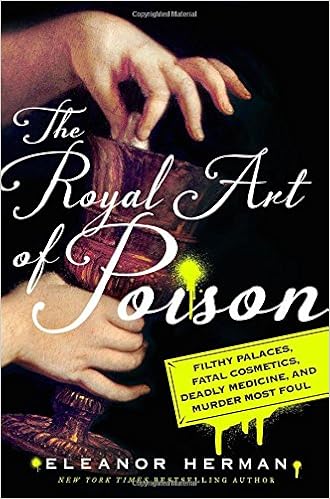
Recommendation: The Royal Art of Poison by Eleanor Herman

I don’t read as much nonfiction as I really should, partly because I tend to like stuff that is weird, colorful and as scandalous as possible without being too gross. I’m a bad intellectual snob, because I read more about the sex lives of artists and royalty than about the cause of World War II or the history of various sovereign nations.

Which leads me to Eleanor Herman, who wrote an entire book about poison. Poisonings today are pretty mundane, straightforward and unglamorous affairs, and usually happen because of Vladimir Putin. The Royal Art of Poison instead focuses mostly on ye olde poisonings in all their glorious lurid detail – there are poison factories, a woman who spent years selling an iocane-like liquid that she smuggled in holy water vials, princesses who died in agony, and all sorts of insane ideas about what could neutralize or detect poison. Think unicorns.

And they did some pretty crazy stuff. Not just the extensive poison-taster of stereotypical medieval lore, but servants who had to test the bed linens, the napkin, the silverware, the clothes, even the chamber pot.

But Herman also addresses the things that poisoned people by accident, ranging from heavy-metal makeup to sewage to archaic medicine (both folk and “learned”) to potions created to maintain the youth and beauty of royal mistresses. The most successful of them was a woman who, ironically, poisoned herself with gold… but hey, she died looking decades younger than her real age. I’m surprised Hollywood hasn’t tried to follow her routine.

And Herman also does a little detective work in chapters interspersed throughout the text, wherein she studies the cases of various people thought to have died – or even just rumored to have died – because of poison. Their symptoms are examined, and sometimes their mortal remains, and Herman forms hypotheses about what killed them. Sometimes it was almost certainly poison. But oftentimes it was a medical condition that they couldn’t yet diagnose which caused people’s unpleasant deaths, or perhaps something that poisoned a person but which was perhaps unintended.

And because of the people often included in this – popes, kings, mistresses, Borgias, Medicis, and so on – there is also a soupçon of other things that make life interesting. There are tombs destroyed by the French Revolution. There are assassination attempts (sometimes foiled by dogs). There is the pervasive belief that women who don’t have enough sex go crazy (but too much is bad too – apparently sex is like chocolate). There is cannibalism. There are corpses stuffed into beds with sick people. There are dead birds tied to people’s heads. There is an alcoholic elk.You cannot make this up.

I know I’m making this book sound kind of like it’s all clickbaity sensation, but it’s very educational – Herman just makes it incredibly fun to learn these things, about the way medieval/Renaissance people thought and saw the world, and the things they did in their daily lives. You’ll find out about the evolution of religious practices, the courtly interplay of love, murder and power, intellectuals and scholars, the lives of more obscure royals and nobility (mad King Erik), and other fascinating historical tales that are made more colourful in the telling.

So if you enjoy history told in its most fascinatingly strange and wonderfully memorable, this book is a must-read. Also, read Herman’s other books.

Random thoughts

I hate masks. Every time I try to speak through one, I get a mouthful of wet cloth. Breathing through them is horrible.

Jay Exci has an excellent Youtube channel.

I haven’t been to the library in weeks.

Books I want to check out: the Secrets of the Immortal Nicholas Flamel series, Seven Deadly Shadows, Call Down the Hawk, the fourth Percy Jackson book, some V.E./Victoria Schwab, the expanded edition of Neverwhere, etc.

Two Dresden Files books in one year? It’s Christmas come early!

And since Covid-19 has shut down the country, I cut my own hair.

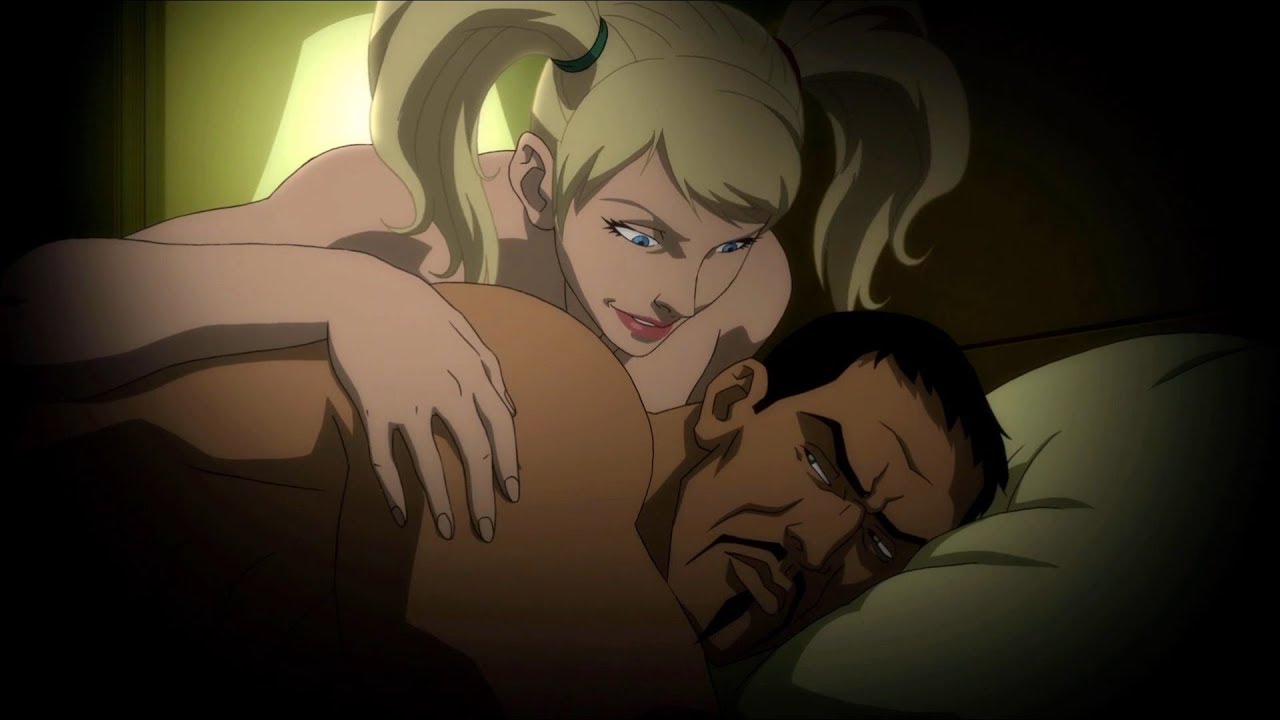
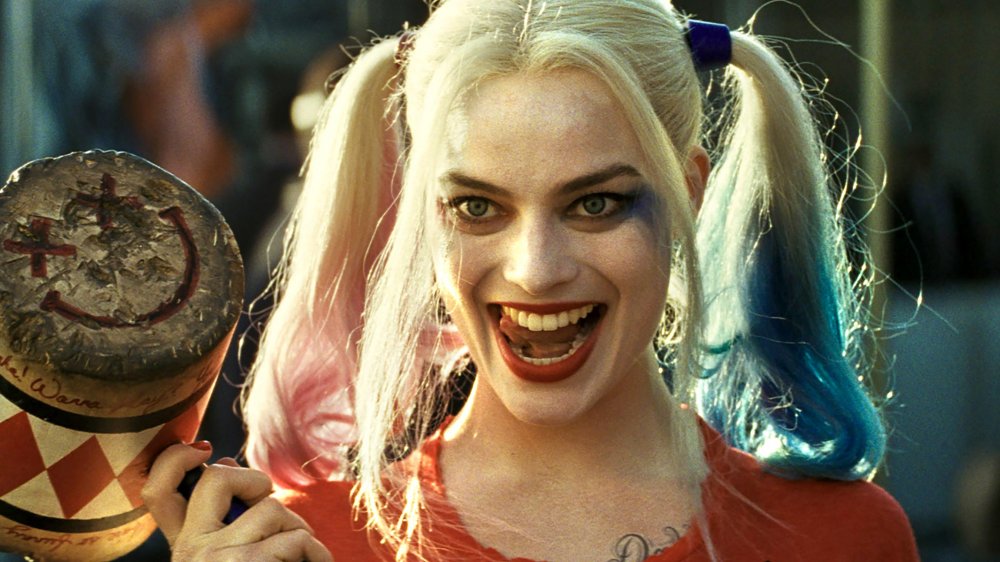
On Harley Quinn Part 2

And Harley Quinn is definitely considered one of those bad, unlikable people. Unlike with the DCEU version of Harley Quinn, we have it demonstrated for us that she’s crazy and dangerous in two different ways. First, when we first see her, she’s watching Looney Tunes on a phone, until a therapist takes it away from her… and Harley bites the woman’s ear off. That few seconds demonstrates what she is far more effectively than the DCEU Amanda Waller talking for several minutes about how she’s really crazy and dangerous, guys, REALLY. She’s as scary as the Joker, you guys! I swear! Please believe me!

It also establishes her kooky, somewhat childlike tastes. She likes laughing at cartoons, and ignores the strictures of prison rehabilitation in order to watch them.

The other is a scene in which Harley tries to use her sexuality to throw an intrusive security guard off his game, by pulling her jumpsuit top down and exposing her breasts. The guy’s response? Well, unlike in Suicide Squad, he isn’t immediately gaggling at her sexy body… instead, he screams “Don’t move, you crazy bitch!” and takes out his gun, implying that she is so dangerous and so insane that the sight of her is TERRIFYING and will override even the sight of a seminude, extremely attractive woman.

So, we have a woman who is established quickly as being dangerous and violent. However, immediately after establishing that, the movie quickly establishes that she is quirky and eccentric through dialogue. But even more importantly, it establishes that she is automatically drawn to authoritative male figures. Not just men like the Joker, note – she immediately voices her attraction to Deadshot, a man who is extremely unlike the Joker, being controlled, organized, focused, professional and sensible. However, he makes it clear that he’s the one in charge of the Suicide Squad, and that immediately draws Harley’s interest. And being Harley, she keeps pursuing him even though he really doesn’t give a damn about her.

A lot of people who have Harley “get over” the Joker and move on from him (such as in Birds of Prey) don’t seem to realize that being attracted to the Joker in the first place would indicate some serious, deep-rooted issues that wouldn’t magically end with a breakup. It’s not like she’s having a once-in-a-lifetime bad-boy fling that just got out of hand – she romantically attaches herself to a vile psychopath, and identifies with him so strongly that she styles herself after his gimmick. That indicates something that would take serious therapy and psychiatric intervention to even begin to unravel.

But the brilliant part of this movie is that it acknowledges both sides of Harley’s psyche. When the story begins, Harley has broken up with the Joker. It’s never explicitly said just what led to this breakup, but it is kind of hinted at when the Joker says about women that you can’t live with them, and can’t kick them from a moving car.

And this genuinely creepy scene is when we see that on some level, Harley is aware of how utterly screwed up she is, as she screams at Deadshot to let her go, and that she’s going to kill him for what he’s done to her. This is the closest Harley ever comes to full awareness of her own psychological twistedness, and the closest she comes to actually dealing with the wreck of her life due to her choice to be with the Joker.

But at the same time, we know this isn’t improvement. It isn’t empowerment. She’s following the same pattern with Deadshot, even to the point of addressing him as “puddin.” She isn’t attracted to Deadshot for healthy reasons – she’s attracted to him for the same reasons she’s attracted to the Joker, even though the two men are very different.

And because Harley isn’t actually fixing anything in her mind or her life, her screwed-up, twisted mind ends up circling back to the same old abusive relationship as usual. When the Joker manages to free himself from his Arkham cell, he encounters Harley and the Suicide Squad, and Harley immediately leaps on the opportunity to reunite with her “puddin,” to the point where she lies that her presence in Arkham was entirely a ruse to save him from captivity.

There is actually a brief pause between the Joker’s arrival and Harley’s embrace of him, and it actually made me wonder – when I first saw the movie – if she was actually sneakily finding a way to keep the Joker from killing Deadshot and the other surviving members of the Squad, or just seeking a way to escape Arkham without getting shot by him. However, it soon becomes evident that no, Harley is entirely in earnest.

And the demonstration that she’s completely in earnest in reuniting with the Joker – the man she previously tried to murder for “what he’s done to me” – is seen in her final fight with Batman. In this scene, Harley attacks Batman with dark tears dripping down her white-painted face, shouting that while the Joker might abuse her, “you’re the one that’s always hurting me!” Her self-awareness has been swamped by the familiarity of her abusive relationship, and rather than blaming the Joker for his abuse of her, she projects it onto a man who consistently interferes with the men she fixates her whole identity upon.

That’s what ultimately makes the Assault on Arkham Harley Quinn my favorite Harley Quinn: she’s complicated. She’s painfully realistic. She’s kind of a tragic figure, since she’s locked into the same patterns of destructive fixation on men who don’t care about her AT BEST, and she falls into her old abusive relationship again at the end. And yet, while clearly having some sympathy for her, the movie also doesn’t pretend that she’s in any way a good person – she is a violent psychopath herself, and she won’t magically turn into a semi-decent, semi-sane human being just because she’s away from the Joker…

… which is one of the biggest mistakes Birds of Prey made, with its much shallower, stupider version of Harley who is apparently nevertheless supposed to be likable and relatable. One thing Harley Quinn should ideally never be is “relatable.”

So that’s why Assault on Arkham’s Harley Quinn is probably the best depiction of the character to date. Agree? Disagree? Feel free to comment.

On Harley Quinn Part 1

I’ve come to the conclusion that, as far as I am concerned, the best version of Harley Quinn is from the movie Assault on Arkham.

I’m kind of picky about my Harleys. For instance, I’m not really a fan of the Harley-leaves-the-Joker-and-becomes-a-wacky-Deadpool-like-antihero way the character is often handled now, because I feel like her massively screwed-up personality and warped mind are on display with Mista J. It allows her to be bad and corrupted, but also kind of pitiable and sad. Turning her into a copy of Deadpool takes away what made her interesting in the first place.

Then there was that dreadful Batman and Harley Quinn movie, which tried to pad itself out with diarrhea gags, musical numbers, and R-rated humor that felt like it was written by a fourteen-year-old boy. But the worst part was how it moralistically wagged its finger at the audience for objectifying Harley Quinn… while it blatantly objectified Harley Quinn.

Suicide Squad: Hell to Pay? So-so movie, and Harley is suitably flaky and intentionally annoying, but I felt like it didn’t really reflect her nastier, weirder side. She seemed to be all kookiness.

Suicide Squad? Do not want. Birds of Prey? No thank you! The Suicide Squad? Reserving judgement, but James Gunn gives me hope that things will turn out for the best. Or at least entertaining.

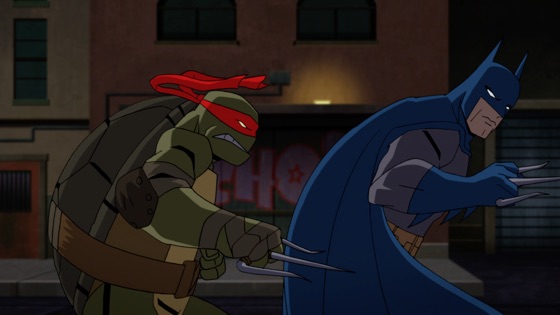
I do think she was handled interestingly in Batman: The Brave and the Bold, where she had a flapper aesthetic without losing her edge. And of course, I loved her role in Batman vs. Teenage Mutant Ninja Turtles, where she annoys the hell out of Shredder, demands her doctorate be respected, mutates into a hyena, makes out with the Joker in a way that is both “weird and gross,” and is a huge pain for the heroes in the second-act climactic battle.

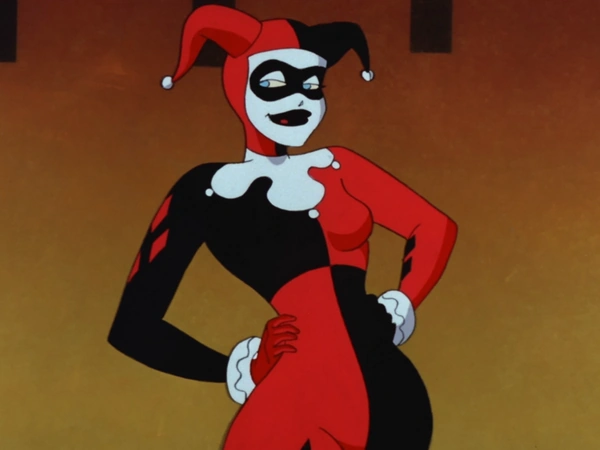
And of course, there’s the original Batman: The Animated Series, where the character came from – and which is still one of the best depictions of the character. For one thing, there was a whole arc in her interactions with Batman, growing from just being a henchwoman who obviously tries to kill the Dark Knight to kind of having a crush on him. At the same time, you see Batman’s opinion of her evolve, and he develops sympathy and even pity for her. It was a kids’ show so it was restricted in the way it could depict Harley, but they did get away with a lot, including showing an abusive Harley/Joker relationship that, scarily, is more adult and realistic than the one depicted in Suicide Squad.

Which brings me to Assault on Arkham, which is basically the movie that Suicide Squad was trying to be, but failed to be because David Ayer was also trying to make a darker, grittier version of Guardians of the Galaxy. The story is quite simple: the Suicide Squad is assembled by Amanda Waller, who wants them to break into Arkham Asylum (it seems to be harder to break in than out!) to recover something from the Riddler. Also, Batman is running around the place freaking out because the Joker has a dirty bomb hidden somewhere in Gotham.

If you were one of the many people disappointed by Suicide Squad, then Assault on Arkham might make you happy, because it does everything right that Suicide Squad did wrong. The biggest difference is that Ayer tried to make the bad guys in his movie ultimately heroic, and pushes the importance of working together and friendship. And… that doesn’t work for a team of murderous sociopaths that include a cold-blooded assassin whose only soft spot is somebody who isn’t on the team, a cannibal, a psychopath’s psychopathic girlfriend, a woman who doesn’t care about anyone else on the team (and isn’t really a part of it), and Slipknot.

(Admittedly, Slipknot might be a big fan of friendship and working together, but we don’t know because he dies about two minutes after being introduced, because he was kind of an idiot)

Honestly, the only person for whom that entire arc makes sense is El Diablo, a gang member who killed his family. Because unlike the others, he at least feels bad about it. And well, you have to have some cooperative skills if you’re in a gang.

It feels like Ayer wasn’t really comfortable with making a movie about bad people (as evidenced by Harley stealing a purse and explaining with a cringy “we’re BAD GUYS!,” as if shoplifting was a sign of her being a psycho). There’s always the feeling that he’s trying to paint them as not being as bad as they’re supposed to be, because he can’t bring himself to have them do bad things or act like the sociopathic losers they are.

There is none of that in Assault on Arkham. The best part of the movie is that the Suicide Squad do not act like friends. Oh, a few bonds (some very short-lived) do form between members, but for the most part these are bad people who dislike each other, don’t work well together, and take the absolute first chance they get to stab each other in the back. In fact, the climax of the movie is everything going to hell because these idiots have caused so much mayhem and disarray, and even as Arkham Asylum bursts into mass violence, they are still fighting each other. The characters are fun to watch, but they are definitely not depicted as good people or in any way likable.

I’m going to split this blog in half, because it’s getting too long.

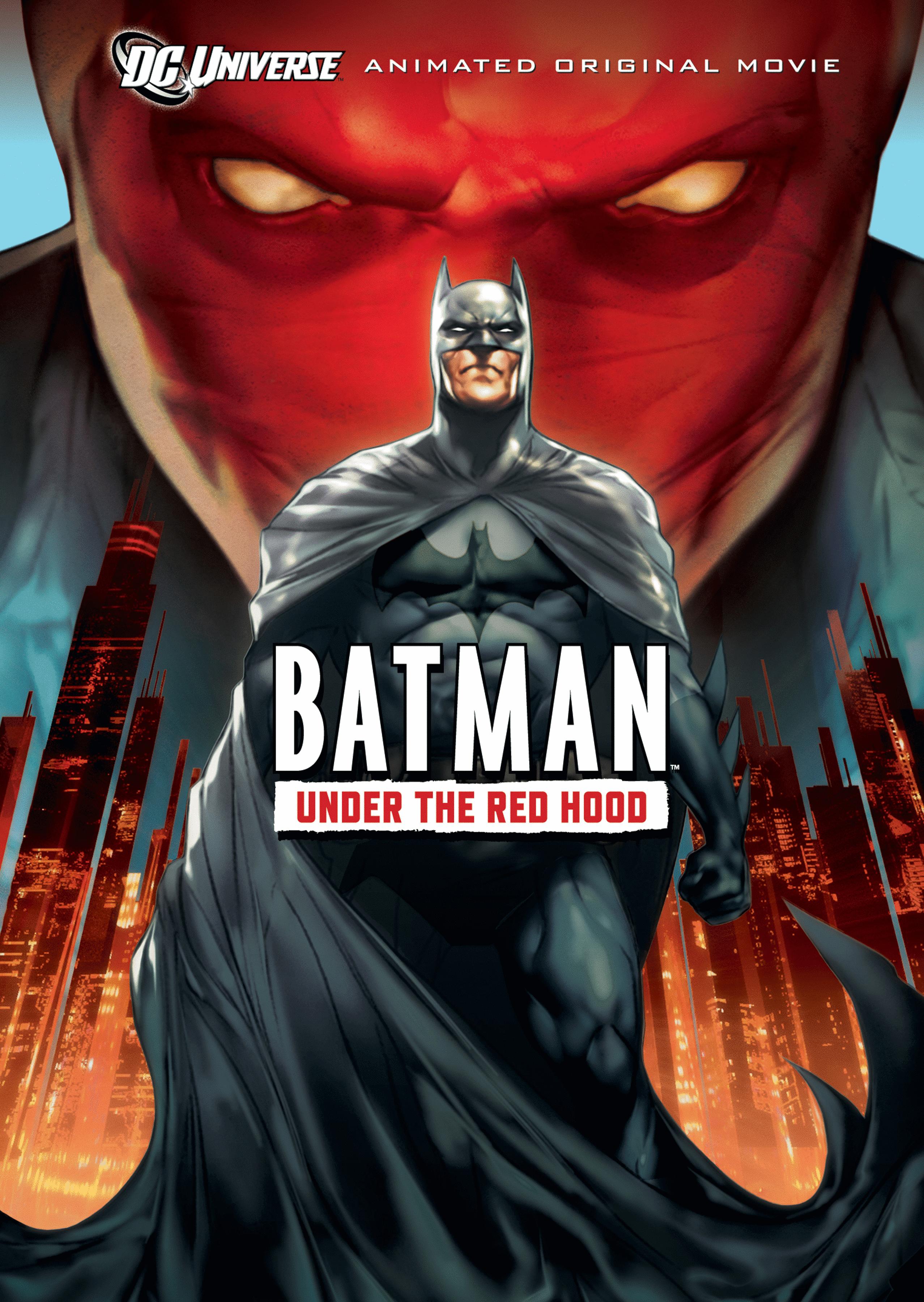
Review: Batman: Under The Red Hood

One of the most shocking events in DC Comics’ history was the death of Jason Todd, best known as the second Robin. As I understand it, the character was not popular, and DC eventually polled its readers to see if he should live or die… and he ended up savagely beaten with a crowbar and blown up, so you can imagine how the poll went.

But nobody really stays dead in comics – not major characters, anyway – and one of Batman’s greatest losses comes back to haunt him in “Batman: Under the Red Hood.” This is DC’s animation at its best – a tightly-written, dynamic mystery that unfolds like a bloody black rose, with Batman’s failures and losses at its heart, slowly building up to a conflict between him and the mysterious Red Hood.

Five years after the death of Jason Todd, a masked vigilante known as the Red Hood (Jensen Ackles) appears in Gotham and quickly takes over most of the city’s drug trade. After a disastrous incident involving a superpowered robot, Batman (Bruce Greenwood) and Nightwing (Neil Patrick Harris) encounter the Red Hood – and Batman quickly realizes that this is someone he knows, but he isn’t sure who. And after a second clash, he finds that Red Hood knows his true name.

Red Hood’s new dominance has also brought him into conflict with Black Mask (Wade Williams), a violent crime lord who is driven to extreme measures to take out his new enemy. Of course, his attempts only end up escalating the war, especially when the Joker gets involved. And at the same time, Batman delves into the mystery of who the Red Hood is and what brought him back to Gotham – and finds himself in a final standoff of revenge, hatred and loss.

It’s pretty obvious from the beginning of “Batman: Under the Red Hood” who the mysterious Red Hood is – the big mystery is how he’s returned to life, and what his ultimate plan is. And while Batman peels away the layers of the mystery, the story focuses on the magnitude of the Red Hood’s rise to power – he’s a new power player who uses Batman-like stealth, physical prowess and cunning to bloodily carve his way into the heart of Gotham’s underworld.

The story is a slow burn, but it’s kept from ever getting boring with sporadic bursts of action – falling helicopters, exploding chemical factories, people being set on fire, a troupe of murderous cyborgs, and so on. However, the violence and action never eclipse the emotional side of the story, which is present from the very first scene in which we see Batman desperately trying to get to an endangered Jason Todd, all the way to his climactic fistfight on top of a church.

This is, at its heart, a story about Batman’s losses, his failures, and his pain, and it’s hard not to feel for the Dark Knight as he’s confronted by something even more painful than Jason’s loss: the possibility that his beloved foster son has become his enemy. Red Hood is a more enigmatic character – sometimes he’s deadly serious, sometimes he’s laid-back and quippy. It’s only at the story’s climax that we see what has really driven him all this time, and where his anger has brought him.

Greenwood does a very solid job as Batman – stoic, a little stiff, but with some passionate emotion running under the surface. Ackles does an excellent job with Red Hood both in serious and in quippy mode, able to switch between the two at the drop of a hat. Harris makes a solid Nightwing, who is quirky and chatty and sort of floats out of the plot eventually. And while viewers may be used to Jokers with higher-pitched voices, John DiMaggio’s gritty, sinister-sounding Joker is a pretty chilling one.

DC Comics has made many good animated movies, but “Batman: Under the Red Hood” is probably one of their best – a sublimely dark, tragic thriller that is riveting right to its end. Just try looking away.

Recommendation: Batman Vs. Teenage Mutant Ninja Turtles

I’ve written a review of this movie, but I feel the need to gush about how much I love it.

I think what I really like about it is how respectful it is to both franchises. Too often in crossovers, one or the other side is neglected or made to look less competent or less important. This is especially a danger when one of the sides is known for being superhumanly awesome, like Batman.

But I felt like this movie highlighted the strengths and weaknesses of both the Bat-Family and the Ninja Turtles. Obviously they’re very different; Batman is measured and plans out things far in advance, while the Turtles tend to fly by the seat of their nonexistent pants. And this does cause conflict between them as the story unfolds, since Batman is used to people following his lead, and he gets kind of pissy when the Turtles just dash into the conflict. However, it is also shown that there are downsides to Batman’s approach as well, since he’s easily distracted from the main scheme of Shredder and Ra’s al Ghul by a mass breakout and mutation at Arkham Asylum. The Turtles are, in a sense, more focused than Batman because they are fixated on Shredder and his plan, and don’t really want to get involved in all the other criminals running amok in Gotham.

And this can be seen in the villains. Ra’s al Ghul knows exactly how to distract Batman long enough to get the cloud-seeder he wants. But Shredder doesn’t know why the hell Ra’s is doing this, because his enemies probably wouldn’t stray off the path of hunting him just because a mental asylum went boobies-up for the sixth time this month.

So I really like that both the Turtles and Batman have weaknesses and strengths, and Batman’s awesomeness (expertly outlined by Michelangelo) is balanced out by the Turtles’ varied gifts working in tandem. And it works especially well because the different Turtles are paired with different members of the Bat-Family, sometimes because they are similar and sometimes because they are wildly different.

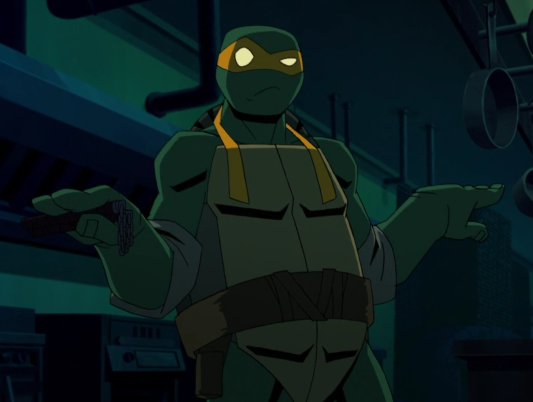
And while all four of the Turtles are wonderfully characterized, I especially loved Michelangelo in this movie. Obviously, the characterization of Michelangelo over the years has really varied – he’s been a surfer dude, a tease and agitator, a space-case flake, and so on. But he’s always had a sweetness and an open-heartedness as a part of his character, which is best seen in the IDW comic book series, where he’s the most sensitive and childlike of the Turtles.

And he isn’t that different in this version. But in this one, he’s the enthusiastic one – he thinks Gotham is the coolest place he’s ever seen, and he loves every strange wacky detail about the place. His brothers are a little more laid-back about Gotham, its dangers and its oddities, but Michelangelo is delighted by gunbrellas to the point of ignoring his own safety. His enthusiasm is clearly the enthusiasm of the makers of this movie, and sometimes it feels like the audience is being carried along by his joy over polar bears with ice guns and police zeppelins.

“Does New York have mad blimps flying around for no reason? I mean, what are they for? I love ’em!”

Michelangelo, Batman vs. Teenage Mutant Ninja Turtles

And I think his enthusiasm is integral to emphasizing how much the people who made this movie loved the franchises: by having a character whose defining trait is how much he loves everything he comes across.

I also love his relationship with Alfred. Obviously it’s played for laughs, with the most rambunctious of the Ninja Turtles bumping up against Batman’s prim butler, who doesn’t understand Michelangelo’s love of skateboards and “greasy cheese bread.” But I enjoy the fact that neither one of them is acting in a way that is illogical to his character.

Michelangelo skateboarding through stately Wayne Manor and crashing into Alfred might seem like he’s being an asshole, but stop and think about it: not only is he a teenager, with all the dumb moments that come with a developing brain, but he’s literally been raised in a sewer. He’s probably not used to being able to skateboard wherever he pleases, and so Wayne Manor just seems like a giant empty space full of awesome curves and obstacles to him.

Obviously he figures out that Alfred doesn’t like this by the end, but it’s clear that he never skateboarded with malicious intent.

Alfred, for his part, is clearly not used to normal teenagers – insofar as you can call the Turtles “normal,” they are at least more normal than Bruce presumably was at the same age. And when you consider the Robins he’s dealt with over the years, usually scarred orphans or Damian Wayne… Alfred probably has no idea what a normal teenage boy is like, with bad table manners and dumb stunts on the stairs.

So that’s my thoughts for the time being on Batman vs. Teenage Mutant Ninja Turtles. Possibly more later. If you’re one of the two-and-a-half people reading this blog, absolutely check out the movie.

Review: Dolittle

There have been two notable adaptations of Hugh Lofting’s Doctor Dolittle books – a Victorian fantasy adventure, and a doofy Eddie Murphy comedy with plenty of scatalogical humor and wisecracking animals.

And the biggest problem with “Dolittle” is that it tries to be both of these things at the same time, which makes it both stupid and kind of bipolar – one minute it’s trying to be a charming, quaint fantasy tale, the next it’s making jokes about dogs sniffing butts. It’s also a painful waste of a very talented cast, most of whom are playing animals with exactly one character trait apiece, but the biggest waste is obviously Robert Downey Jr.

As a very well-animated introduction explains, Dr. John Dolittle (Robert Downey Jr.) is a veterinarian who has the ability to speak to animals. But after the death of his wife, he locked himself away in a remote estate with his colorful array of animals, wanting nothing to do with the human race because… well, no good reason, actually. He just kind of does.

Years later, a kind-hearted boy named Tommy Stubbins (Harry Collett) accidentally shoots a squirrel, and takes it to Dolittle. Dolittle, it turns out, has become an insane recluse with mice living in his Old Testament beard. At the exact same time, Lady Rose (Carmel Laniado) brings news from Queen Victoria: she has become deathly ill, and needs Dolittle’s help. And after Dolittle decides for purely selfish reasons to help, he discovers that the queen has been poisoned. 

Since the only cure for the poison is a magical cure-all fruit from a far-off mythical island, Dolittle sets sail to find it – and of course his ship is entirely crewed by bickering, not-very-bright animals, as well as Stubbins (who jumped on at the last minute). Their only hope for finding the island is to head to a hostile pirate island and steal back a valuable journal, but Dolittle and Co. soon discover that they are being pursued by a British warship, led by Dolittle’s rival, Dr. Blair Müdfly (Michael Sheen).

“Dolittle” is one of those movies that is just…. dumb. The setting and the overall arc of the plot seem to indicate that this is meant to be a quaint, enchanting, adventure-laden fantasy story. The sunlit, nature-draped setting of Dolittle’s home (where carnivores somehow never eat any other animals), the dragon, the rambunctious pirate island, and scenes like Dolittle’s ship being towed by whales – they all seem to be from a story concept that might have actually been good.

The problem is, the movie is dumb. For instance, the entire plot revolves around an assassination plot (using one of those convenient movie poisons that, if counteracted in time, does zero physical harm) to take the throne from Queen Victoria. The problem is, buying into this central plot point requires you to be really ignorant about Queen Victoria, and British primogeniture in general. It only succeeds in making the obvious villain look like a bumbling fool.

But the biggest source of stupidity is the animals. They are stupid. Each one has one character trait apiece (being scared, being angry, being French, saying “bro”), and most of them talk in anachronisms (such as quotes from “The Godfather” and “Rush Hour”). Not only do their idiotic interactions eat up valuable time that could have been used to actually tell the story, but the jokes are rarely, if ever, funny. For instance, there’s a running gag that Dab-Dab the duck cannot tell medical instruments apart from vegetables. In its very first appearance, this joke is dragged out several times, until you just want to shriek “Cut cut cut!” at the screen.

And the quaint Victorian setting is somewhat at odds with the copious lowbrow humor, such as a tense scene involving a tiger that ends with testicular trauma, which is dragged out as if it were super-serious. And of course, the infamous scene involving a dragon’s butt and bagpipes.

I usually love Robert Downey Jr’s acting, so it is to my sorrow that I must report that he is shockingly bad in this movie – he gives a strangely affected, twee performance, with a head-scratchingly bad Welsh accent that makes him sound like he’s doing an impression of someone else. And his personal charisma isn’t enough to make Dolittle likable – he comes across as a nasty, selfish, childish man-child for most of the movie. Collett is so nondescript that he barely makes an impression, and Sheen gives a mad-eyed, hammy performance that screams “I’m in a bad kids’ movie and I know it.” 

Pretty much all of the animals are played by big-name actors such as Rami Malek, John Cena, Selena Gomez, Ralph Fiennes, Tom Holland and Kumail Nanjiani, and except for Emma Thompson’s Polynesia, it was a waste of money. None of them give a very good performance, and most of their voices aren’t distinctive enough for it to have been worth the effort. 

Its bipolar personality is probably the most memorable thing about “Dolittle” – aside from that, it’s just another stupid lowbrow comedy aimed at children, on the assumption that they have no taste. Not worth watching.

Review: Cats

I have seen terror. I have seen fright. I have seen fear. I have seen horror, curdling the mind to insanity. I have seen unreal shapes twisting in the darkness, misshapen and ghastly, devouring the innocent souls that are unlucky enough to cross their paths. I have seen them worship death, sending lost souls into the night, into the shadows. I have seen madness.

I have seen… “Cats.”

Okay, the movie “Cats” is not nearly as bad as my Lovecraftian hyperbole would make you think. But there’s no denying that this movie is a mess of nearly cosmic proportions – nearly everything that it does is done wrong, with a blissful lack of awareness as to how it is horrifying its audience with a feverish sea of sexualized CGI fur, confusing dialogue and the occasional blood sacrifice. The only enjoyment to be found here is purely ironic.

A young cat named Victoria (Francesca Hayward) is abandoned in an alleyway, and is quickly found by the Jellicle Cats. What are Jellicle Cats? I have no idea. The movie never really explains it, except that they apparently have a Jellicle Ball where the Jellicle Choice is made – specifically, one of them is chosen to die and be reborn. Yes, it does sound like a cult.

What we do know is that there are a lot of them, and they helpfully introduce themselves with a song every time Victoria encounters a new one – the rambunctious contrarian Rum Tum Tugger (Jason Derulo), the cockroach-consuming domestic tyrant Jennyanydots (Rebel Wilson), the ever-hungry Bustopher Jones (James Corden), the mischievous Mungojerrie and Rumpleteazer (Danny Collins and Naoimh Morgan), the possibly-senile Gus (Ian McKellen), and so on.

There’s also Macavity (Idris Elba), a malevolent sorcerer cat who is determined to be the Jellicle Choice by taking out (non-fatally) any of the other suicidal cats, even though the Jellicle matriarch Old Deuteronomy (Judi Dench) has vowed she will not choose him. Also, there’s the outcast cat Grizabella (Jennifer Hudson), who is shunned by the Jellicles and just sort of hangs around being sad.

It’s honestly difficult to summarize “Cats,” because it doesn’t have much of a plot – at least three-quarters of it is just cats introducing themselves (or each other) with songs based on T.S. Eliot poems. As soon as one cat finishes introducing him/herself to Victoria, another one bounces in to sing all about him/herself. At some point you just want SOMETHING, ANYTHING to happen other than cats introducing themselves, but by that time, the movie is practically over.

And it manages to be both boring and horrifying. There are some artistic choices here worthy of a fever dream, such as Jennyanydots peeling off her skin (thankfully, she has another one underneath it) and devouring little humanoid cockroaches. Or Rum Tum Tugger flipping open his coat like a flasher (why are any of these cats wearing clothes?). Or Gus spewing literally incoherent gibberish. Or everybody tripping on catnip. Or the final salute to Bovril. Somehow, the movie has all this bizarre, uncomfortable stuff happening in it, yet it also bores you to sleep. How is that possible?

And of course, there’s the special effects. Someone apparently decided to imitate the style of the stage play, in which humans dance around wearing cat costumes – or in this case, CGI fur. But with stage productions, there’s a suspension of disbelief in which the audience accepts that what they are seeing is not to be taken literally because live productions cannot give us literal cats singing and dancing. Movies, on the other hand, CAN give us these things, and thus we go into them with the mindset that what we see is literally what we are expected to see.

As a result, “Cats” seems less like a musical about a bunch of felines living in their own little subculture, and more like a post-apocalyptic world devoid of humans, where cats have mutated into humanoid creatures with PEOPLE faces, hands, feet and sometimes breasts. It’s very unnerving, and the uncanny valley effect isn’t helped by the face that sometimes people’s faces tend to float in front of their heads, too large or too small for the rest of them.

The acting doesn’t really help either – a few actors are mediocre (Judi Dench), and the rest range from bad to bizarre. Rebel Wilson and James Corden are both intensely annoying, and apparently are included just so we can laugh at how fat they are. Ian McKellen seems drunk. Idris Elba is grandstanding in a comical way (he yells “ME-OW!” every time he teleports). And Hayward – who is an excellent dancer – just sort of floats from one scenario to the next with a vaguely amazed smile, or a vaguely sad expression.

“Cats” is one of those bad movies that actually deserves study, so you can understand the thousands of little ways that it utterly fails to be anything it sets out to be. Consider this feline neutered.