I love Batman. I love Batman media, from the Adam West TV show to the dark gothic animated series, from The Batman from the early aughts to the Christopher Nolan trilogy. I fully expect to love The Batman (movie, not series). No, I do not love, or even like, the Joel Schumacher movies, but I do sometimes watch them if I want to laugh and cringe at the same time.
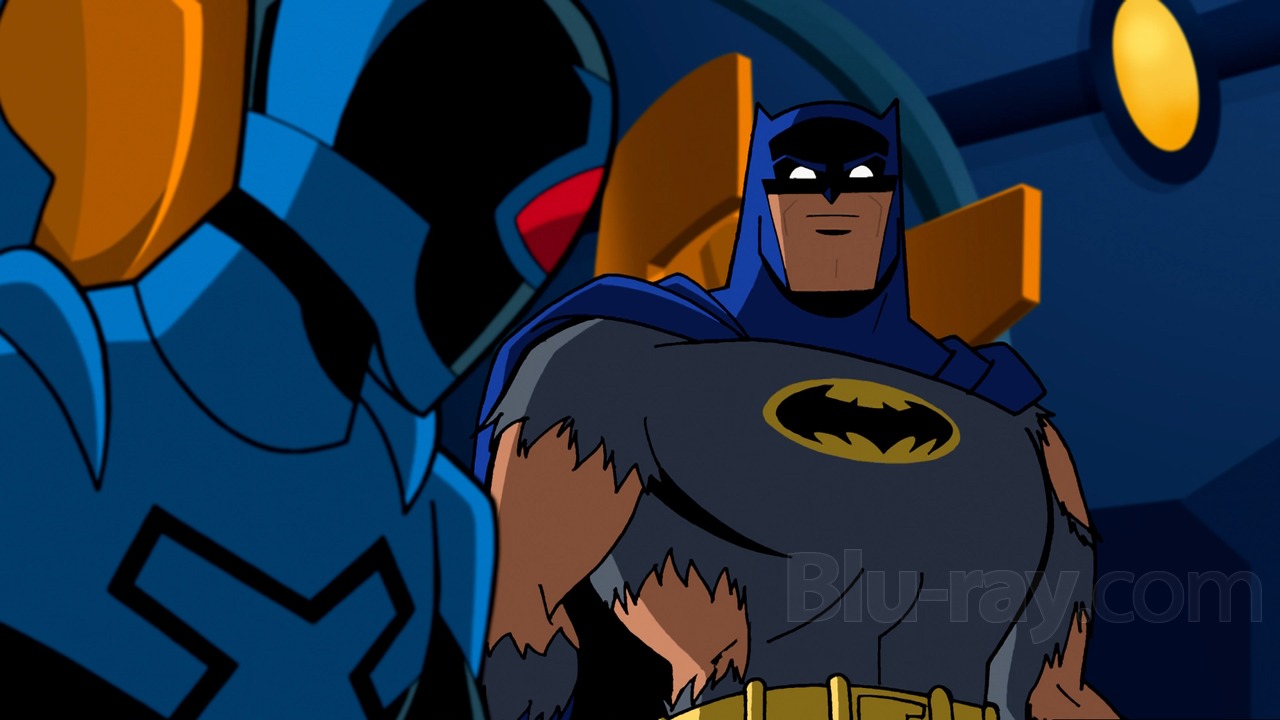
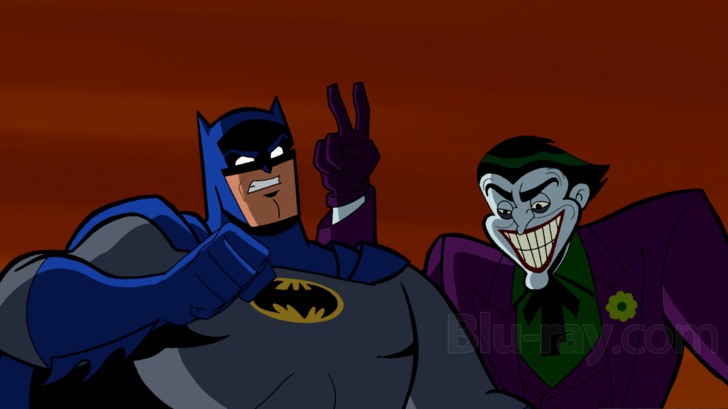
But one show that seems to get overlooked sometimes in the world of Batman media is Batman: The Brave and the Bold, an animated show that aired from 2008 to 2011, before being sadly cancelled in order to make way for Beware the Batman. Not that Beware the Batman was bad, but it didn’t have the heart and soul of Batman: The Brave and the Bold.
And this heart and soul are easy to identify: the people who made this movie not only love Batman and his history, they love the entire DC Comics universe. Not just the major heroes like Superman and Wonder Woman (who are only introduced in the final season), but characters obscure (the Metal Men) as well as iconic. And old as well as new – lots of characters from decades ago (Adam Strange, Wildcat), alongside newer characters like the third Blue Beetle Jaime Reyes (who has many appearances as a fledgling hero who needs Batman’s guidance) and Ryan Choi (the third Atom).
And it’s all done with immense respect and liking for these characters, whether they’re good or evil. For instance, one of Jaime Reyes’ first episodes sees him trying to investigate the legacy of past Blue Beetles, which allows the makers of this series to pay homage to the previous iterations, especially Ted Kord. You can feel all the love they have for DC’s whole history and all their characters, including the goofy and weird ones. Like, I had never heard of Gentleman Jim Craddock before this – I know technically he appeared in one of the DCAU series, but I honestly don’t remember him because he wasn’t put center stage. Or Red Tornado, who just doesn’t get as much attention as his earnest little robot self deserves. Or the Weeper. There’s actually a supervillain whose signature is CRYING.
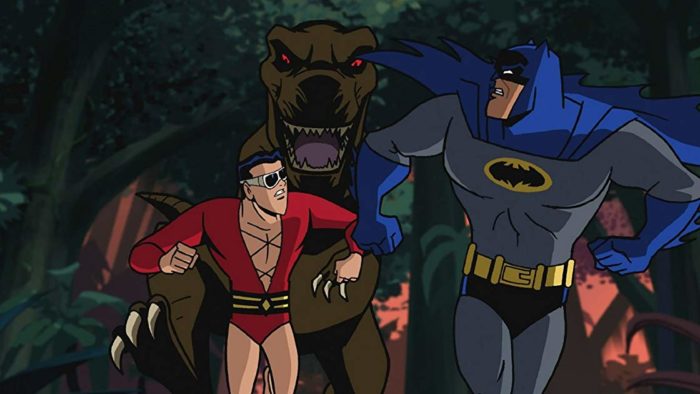
Basically, every episode features Batman teaming up with some other superhero (sometimes a group of them, like the teen rebels known as the Outsiders) and dealing with a problem on other planets, or in another time period, or on Dinosaur Island, or England, or parallel universes, or in Batman’s own body (Aquaman and the Atom go on a Fantastic Voyage to cure Batman of silicon-based critters). Sometimes we don’t even know how Batman came to be where he is, such as when he pops up in the Old West to save Jonah Hex (who promptly insults his supersuit).
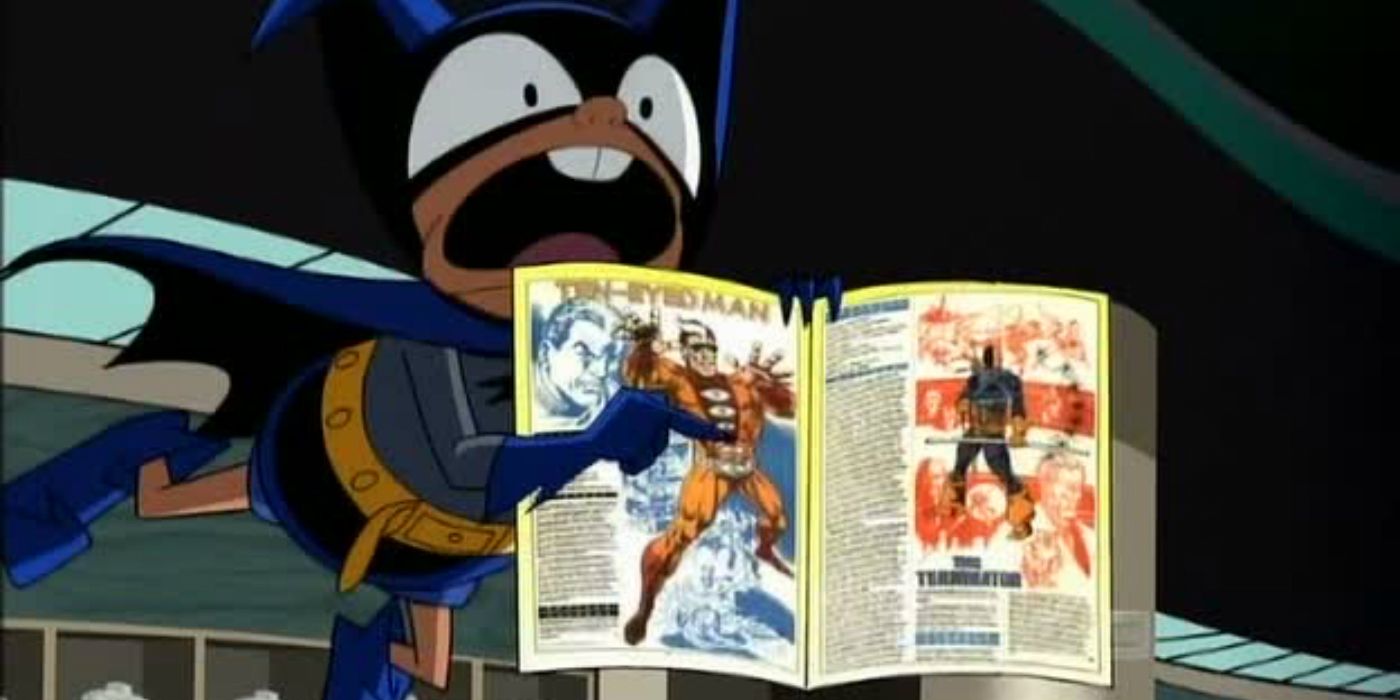
Okay, the focus isn’t always 100% on Batman and his team-up. One whole episode is about Aquaman going on a family vacation, during which he is forbidden to superhero. It even highlights the nature of Batman’s mythos and his fandom in some fourth-wall-breaking encounters with Bat-Mite.
And it’s wonderfully bonkers, and very much embraces the corniness (Diedrich Bader says the most hilariously cheesy things) of old comic books. It wants to be fun, and it IS fun, balancing out plot and characterization with the need to entertain. I mean, one episode has a sitcom version of Aquaman’s life! Another one was clearly dreamed up just because they wanted Batman to team up with Sherlock Holmes.
But it’s worth noting that not all is funny and goofy. There are serious conflicts in here, such as the invasion of Starro that spreads across the second season, and which ends with a truly heartrending loss. Or the ongoing battle against Equinox, a force that seeks to balance out order and chaos, and is willing to do horrifying things to make that happen. There’s also Chill of the Night, a really magnificent and totally serious episode in which Bruce Wayne’s soul is literally held in the balance, as he discovers who was responsible for his parents’ death.
It also has a great voice cast – you’re guaranteed to be a big fan of at least one person who had a hand in this. Diedrich Bader is an outstanding Batman (probably why they brought him back for the Harley Quinn show), and it has homages to Batman’s past by having Adam West and Julie Newmar play the Wayne parents, as well as Kevin Conroy playing an alternate-universe Batman.
So if you’re a fan of Batman, or even just of DC comics and its history, then this series is one you definitely need to see. Even if you don’t normally watch lighter incarnations of the Dark Knight, this is clever and well-written, and its love and joy are infectious.
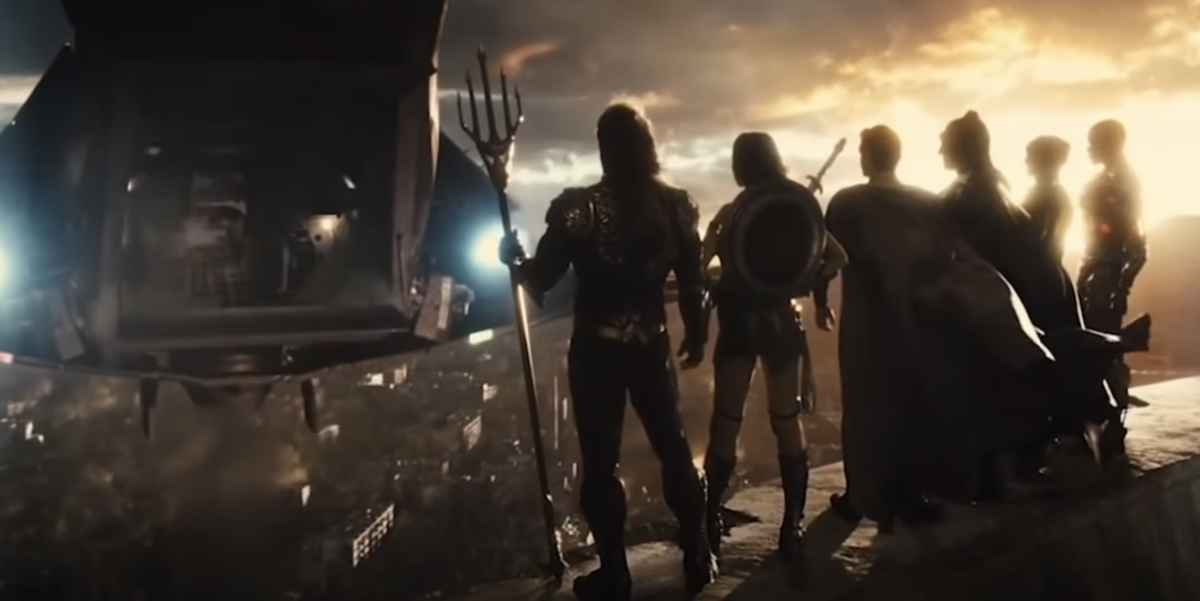
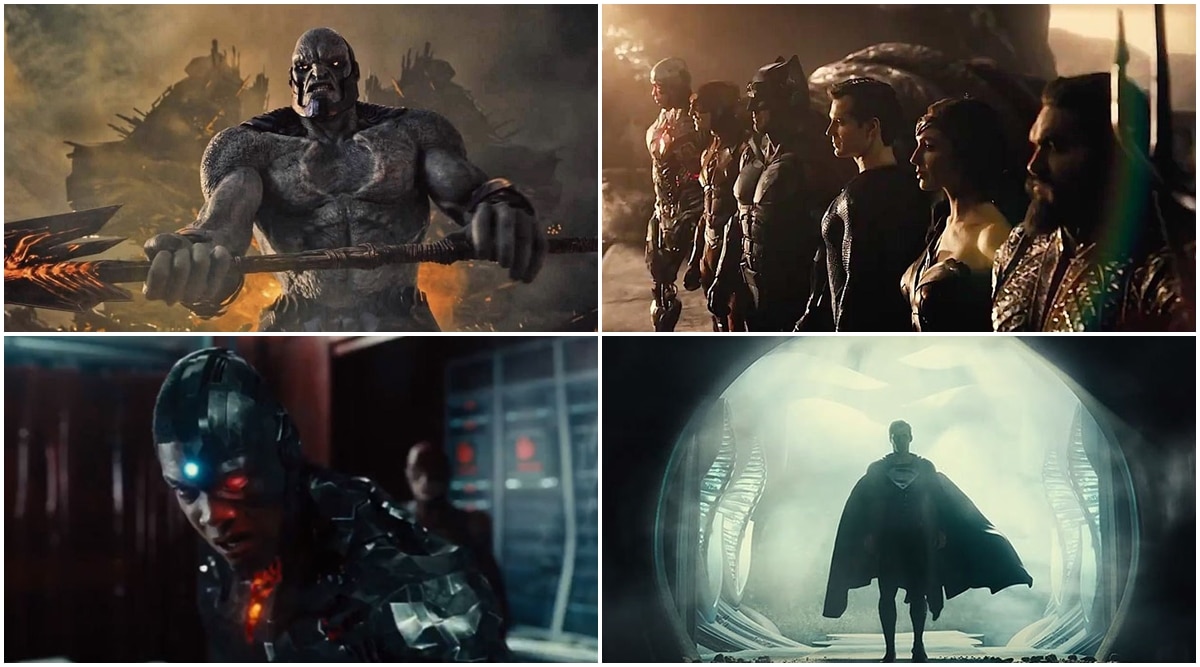
So, having explained my complicated thoughts on Zack Snyder, my uncomplicated thoughts on Joss Whedon, and my perception of the theatrical cut of Justice League, here are my thoughts on what we see in the Snyder Cut trailer:
1. First, the choice of music. I was a little offput by the choice for two reasons. One, “Hallelujah” doesn’t seem entirely in tune with the operatic scif-fi-fantasy environment…. and two, Zack Snyder used this before. In Watchmen. During an absurd sex scene. Erm. Okay. I guess he likes the song.
But as the trailer went on, I minded it less and less. For one thing, the new footage we’re seeing is actually edited pretty well to flow along with the music. For another, the music kind of complements both the warmer, more human moments we see, and the grander, more epic moments as well. So… yeah, the music is all right with me.
2. Then we see Darkseid right at the beginning of the trailer, which… well, people are a little divided about how he looks, but as I understand it, this is Darkseid before he actually became Darkseid. I’m cool with that, and want to see more.
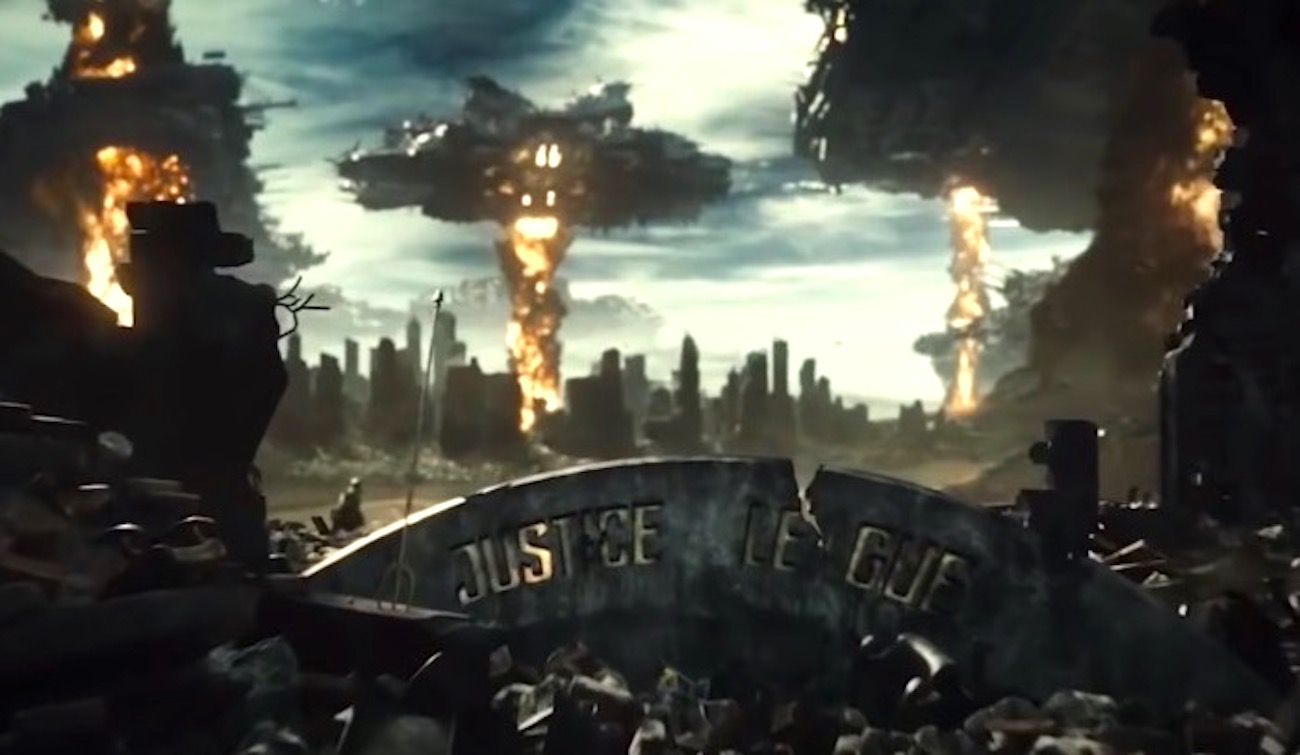
3. The movie seems to have a lot more alien-attack aspects than the theatrical cut, which I am absolutely on board with. Honestly, the scope of the theatrical cut never felt as big as it should have – most of the fights were relatively small skirmishes, and Steppenwolf just sort of boom-tubes in and out of wherever he is with a handful of Parademons. Even the climax, which overruns a Russian town, feels small because… it’s just a town, not even a big city.
So I was glad to see some big alien ships raining destruction on major cities, and signs of their actual destruction in the Justice League HQ. Which, hopefully, will not be Wayne Manor as in the theatrical cut, because that was stupid – if Bruce is going to openly turn his house into the JL clubhouse, he might as well just announce to the world that Bruce Wayne is Batman.
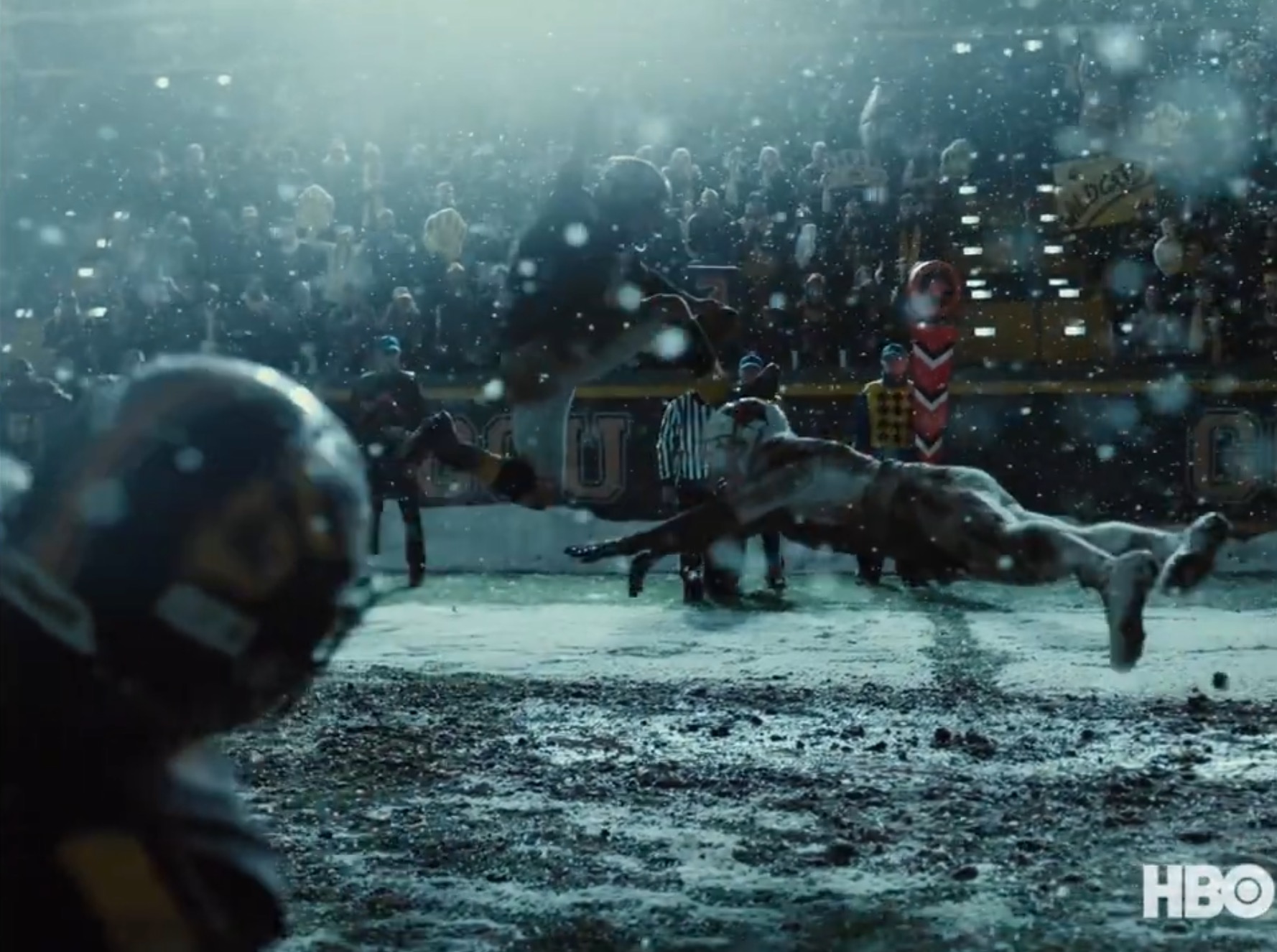
4. I perked up considerably when I saw the football game being shown, presumably either in flashback or an early scene set shortly before Cyborg is turned into, well, a cyborg. And this is because Cyborg’s story is probably the most bungled part of Josstice League.
Hear me out: in any story about a character forced to undergo traumatic change, you need to see both a Before and an After. We need to see the transition, the change in this person to feel how much their circumstances have hurt, traumatized and altered them as a human being. But in Josstice League, we only see the After. We see Cyborg angsting about his inhumanity and his robotic body… but we never see what he was before. Was he happy? An extrovert? How did he interact with others? How did he see himself? Did he have friends? What precisely has he lost?
We never see. We don’t know the “old” Victor Stone. There are only a few seconds of pre-Cyborg Victor seen, and in those, his body is mostly obliterated. How can I be emotionally invested in the change this character has experienced, when I don’t know what he used to be BEFORE the change? I couldn’t, and honestly Cyborg was my least favorite character because by the end of the movie, all I had seen was pouting and angsting. They didn’t really dive into his feelings and his trauma; they just had him bro out with a couple of other guys, and get over his pain at the end.
The Snyder Cut looks like it’s going to be rich with Cyborg – we see him struggle, we see him losing someone he loves, ripping up a grave, and we’ll see him when he was just an ordinary college guy playing football. I expect to like Snyder Cut Cyborg much better than the theatrical cut’s.
I also wonder what is up with the image of Victor (still in his human form) redirecting a sky full of missiles.
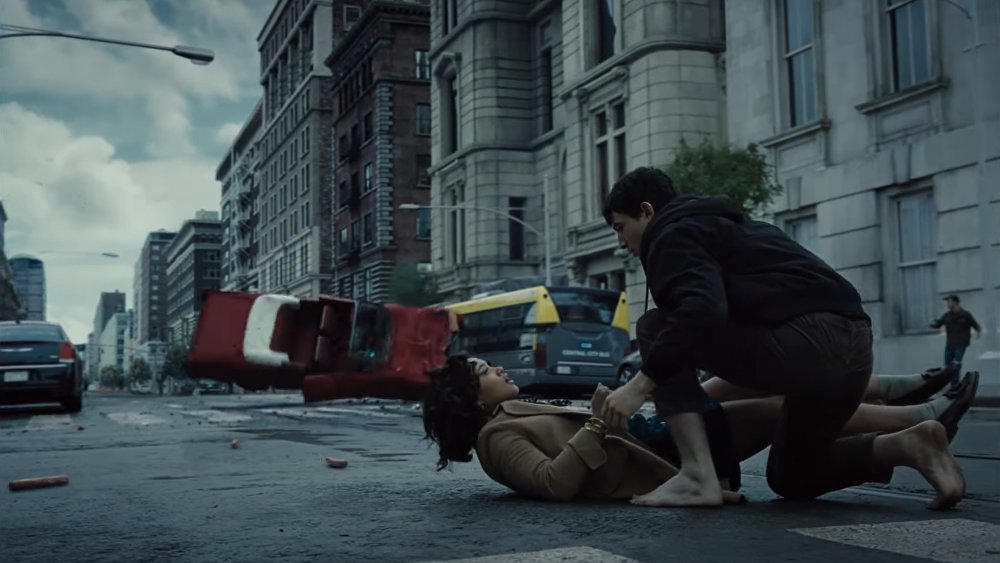
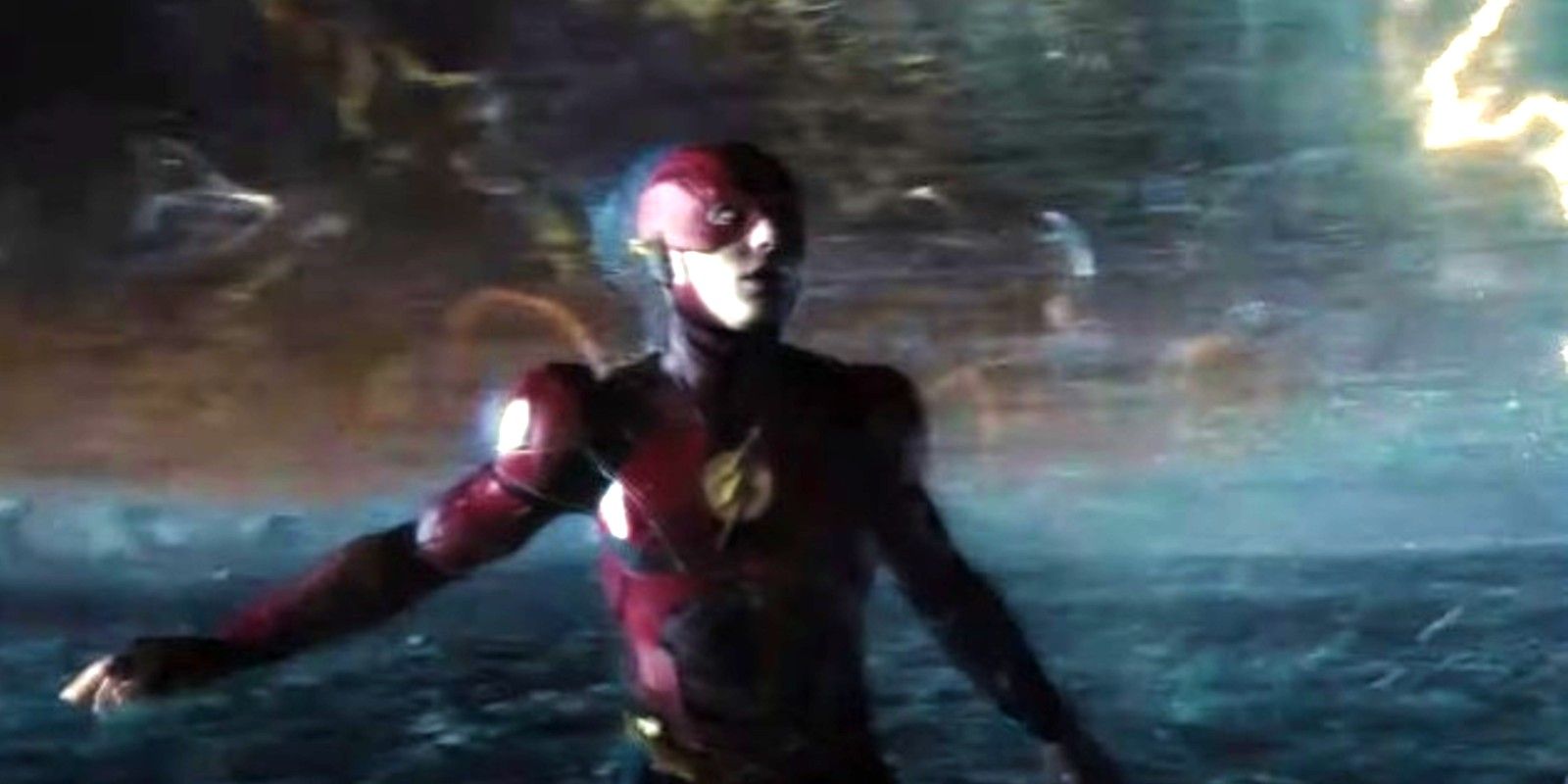
5. There’s also some superheroing for Barry Allen, who is shown rescuing a young woman – I assume it’s Iris, given how the camera lingers on her face – from a car crash.
This seems to be part of a more serious, less “look at how quippy and quirky I am! I’m written by Joss Whedon!” take on the Flash. You know, a Flash who has a serious part to play in the plot, rather than a Flash who faceplants in Wonder Woman’s boobs (such feminism, Joss!) and rambles about brunch. I admit I found the Flash amusing when I first saw the theatrical cut, but time has changed my opinion.
I’m not entirely sure what the Flash’s place in the Snyder Cut plot is, but the glimpses we have indicate that he is going to be doing something more cosmic, more important, more GRAND.
6. Batfleck… sigh. I am going to admit my bias right out of the starting gate: I do not like Batfleck. This is partly because I disagree with Zack Snyder’s handling of the character in Batman V Superman, but it’s also because I dislike Ben Affleck as a human being and as an actor. I just have never seen a good performance from him; he always seems incredibly wooden and douchey to me.
And honestly, Batfleck was a weak point in Justice League. I do not say this because I dislike either the character or the actor – I say this because I love the character of Batman. Batman’s whole point as a member of the Justice League is that he can stand shoulder-to-shoulder with the overpowered superhumans like Wonder Woman or Superman, because he uses his brains and his technology to compensate for his lack of superpowers. He is their equal.
But in the Josstice League cut, Batfleck feels like a liability. He seems to spend most of the action scenes bouncing around at the end of a grappling hook, avoiding getting attacked by others. When he does go up against someone else, he gets hurt physically in ways that the others do not. He seems less competent, more fragile, less capable. You’re left wondering why this guy is even going into battle if he contributes so little compared to, say, the butt-kicking Wonder Woman.
But he looks like he’s actually holding his own in the Snyder Cut trailer, where he’s using his body armor to block blasts of energy. So I have real hope that Batfleck is actually going to demonstrate that he’s an asset in these fights, not just a guy who swings around a lot.
Oh, and I’m looking forward to Batfleck’s Whedonisms like “I don’t NOT like you” and “something’s definitely bleeding” being excised. Batman should never sound like a Whedon character in a life-and-death situation. NEVER.
7. A few of the scenes look familiar, if you’ve seen the theatrical cut, but they’re definitely different. It looks like the conversation between Martha Kent and Lois Lane is different, and probably going to be less painfully cringy. Martha is apparently going to pop in during the cornfield scene. And Aquaman’s encounter with Mera looks like it will be somewhat different, given his defiant attitude and her look of distress.
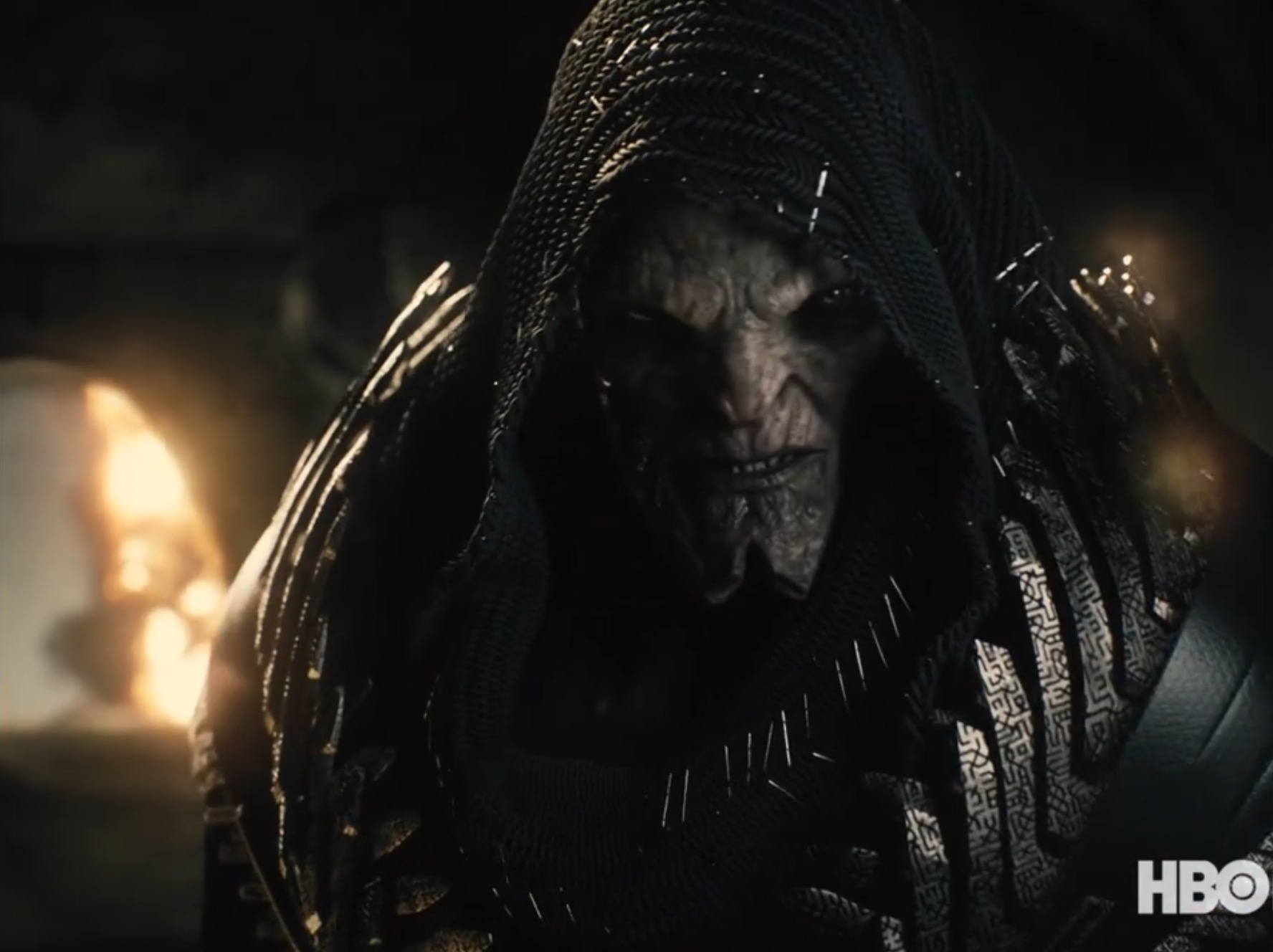
8. Desaad! At first I thought this was Steppenwolf in another outfit because… well, I’m only a moderate comic-book geek with gaps in my knowledge, and I only know about some of the residents of Apokalips. But I’m told it’s the character Desaad, and I’m very curious to see what he is all about. It certainly makes the movie feel more expansive and operatic to have multiple people from Apokalips appear.
9. It also looks like a very different fate is in store for Silas Stone. If you remember from the theatrical cut – you probably don’t – he gets captured and then rescued, and at the end everybody is happy and smiley. But in the Snyder Cut, it seems that his exploration of the Motherbox has some unfortunate results. I smell character development for Cyborg!
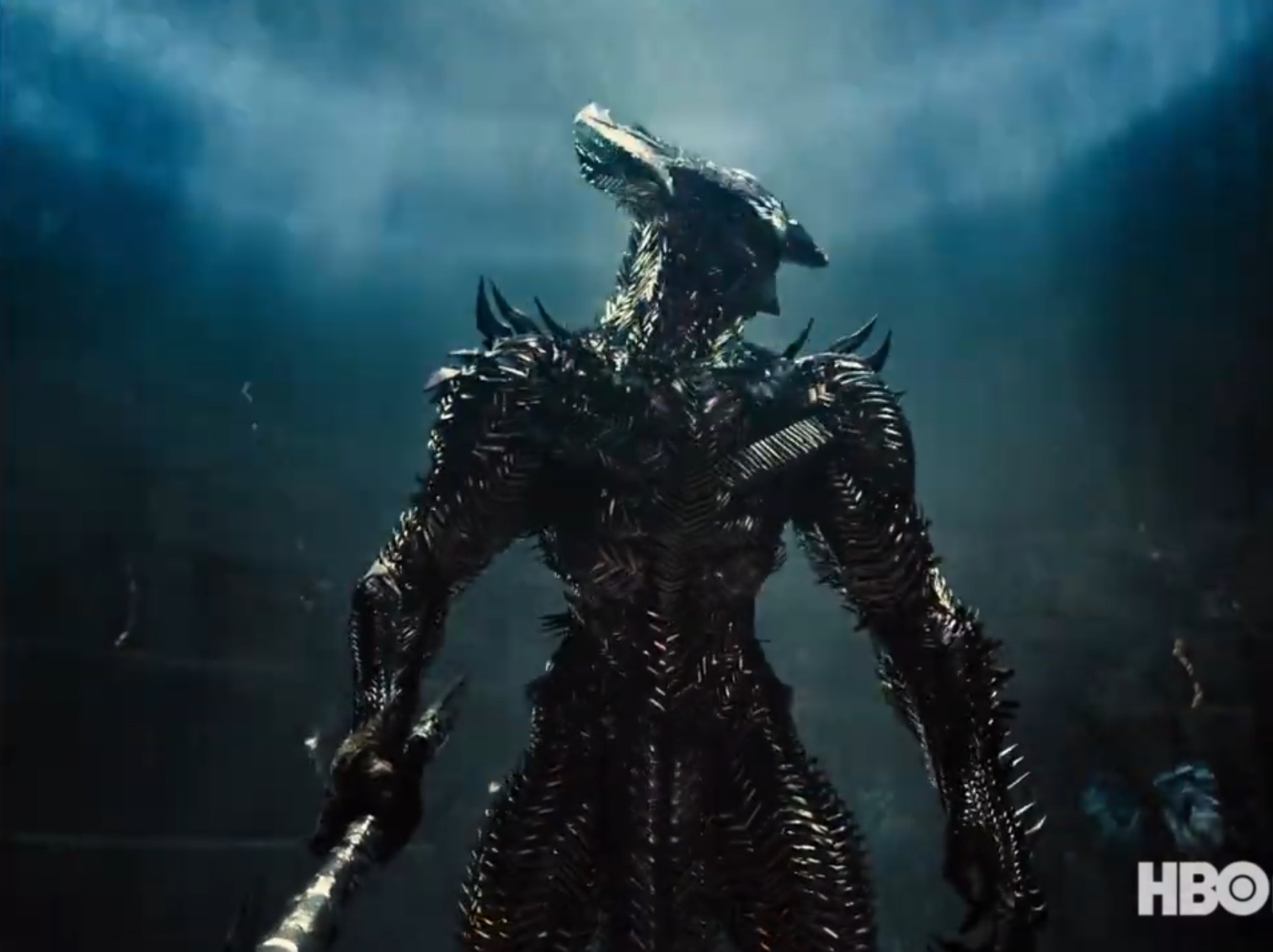
10. The redesign of Steppenwolf. Oh, man, this is beautiful to behold. I don’t know what they were thinking with his design in the theatrical cut, but it was terrible. Nobody liked it. It was partly that it didn’t feel finished, as if they literally did not have time to finish rendering the character properly.
But it was a bad design at its root. It was just some grayish guy in a big hat, and he wasn’t very intimidating or impressive at all. I can only assume that WB didn’t want anything too scary, so they insisted on this dumbed-down design. There were other designs, oh yes. You can google them and see the much more intimidating version that was originally conceived.
The Snyder Cut’s design… actually looks menacing. He no longer just looks like a creepy guy in a big hat, but a truly alien creature encased in rippling living armor. There’s some influence from the Destroyer robot featured in Thor, but you know what? I’ll take it.
Oh, and there’s a really dynamic imagine of a black-clad Superman punching Steppenwolf in the face.
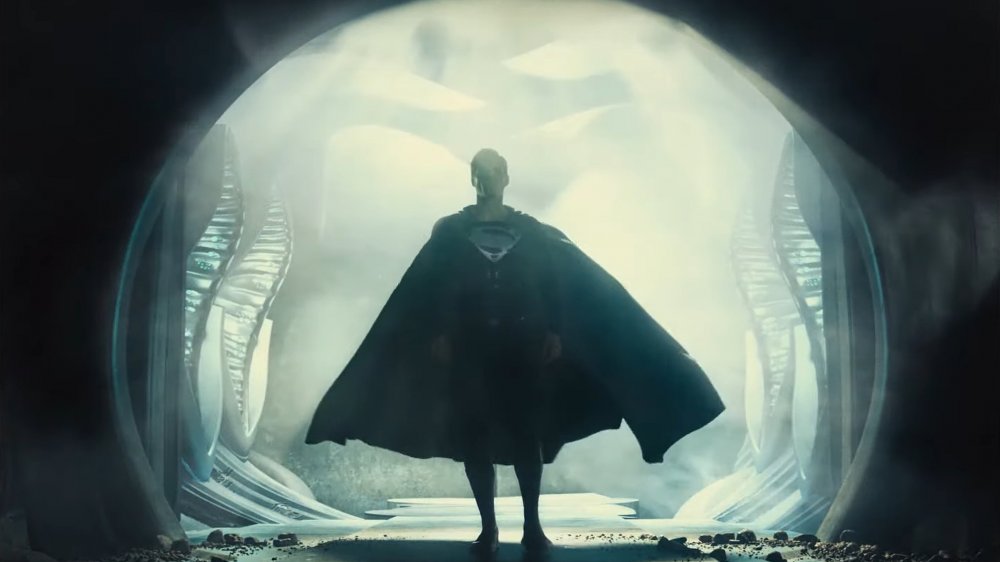
11. Speaking of the black-clad Superman, I find myself wondering where the suit comes from and how he’s wearing it. I mean, when we last saw him, he was buried and presumed dead. Does his normal costume turn black when he needs to soak up some yellow sun rays? Does someone in the cast recover this for him? Are we going to have a post “Death of Superman” scenario where his body vanishes, and he later turns up alive and well?
I’m sure this will be explained in the movie. I’m just very curious.
12. Batfleck’s final line is perhaps the one thing I wasn’t enthused about in this trailer, just because it’s a very clunky line. But you know what? If that is the only problem the Snyder Cut has, I will be a happy viewer.
So anyway, those are my thoughts about the trailer for the Snyder Cut. Overall, it looks like a vast improvement on the Frankenstein cut, and I am going to give Snyder a legitimate chance to wow me with his vision.
So I’ve been watching the new DC Fandome trailers and… I’m actually kind of getting stoked about their forthcoming releases. The Batman looks pretty good so far, and Robert Pattinson is living up to my expectations of his considerable talent, and The Suicide Squad looks like it will put being fun and weird above being dark and gritty.
But I think the most buzz is about the long-waited, long-rumored Snyder Cut of Justice League, which fans nagged and screamed and demanded for so long that eventually WB threw up its hands and gave in. So now we’re getting what seems to be an entirely different movie, with all of the material that Joss Whedon filmed ripped out and replaced with Zack Snyder’s original plot.
Let’s be frank here: the theatrical cut – which some are naming the “Josstice League” – was a mess. They took a film that was more or less complete, ripped out giant chunks of it, and then gave it to a completely different director to patch back together with his own material, to the detriment of some of the storylines (especially Ray Fisher’s Cyborg, who has made his distaste for Whedon very clear).
Whedon and Snyder… each makes the other’s style look bad. Whedon makes Snyder look dour, pompous, colorless and grim. Snyder makes Whedon look flimsy, insubstantial, obnoxiously self-satisfied. It’s a Frankenstein monster of a film whose two disparate styles are actively fighting against each other. It simply could never succeed artistically as what it is, and I almost feel sorry for it because of that.
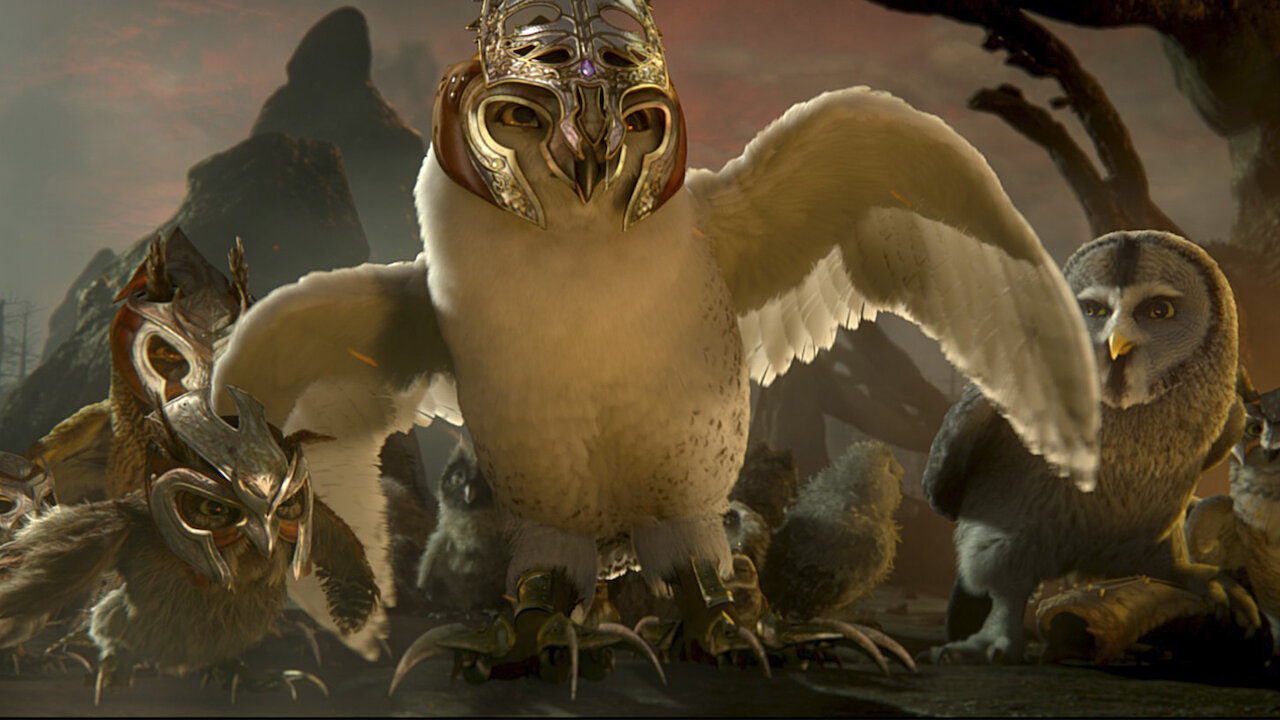
Now, I am as critical of Zack Snyder as anyone. I don’t like his unheroic take on Batman, and I disagree with the constant deconstruction of superheroes through Superman. I do understand what he’s trying to do, but I don’t think he’s doing it well or with the right characters – Batman V Superman had many things that were done wrong. However, I do think he’s a talented filmmaker. I love Watchmen, 300, Legend of the Guardians: The Owls of Ga’Hoole (very underrated, definitely watch it), and I like Man of Steel despite its flaws. He does have vision and a unique style, and that’s increasingly rare in the movie world.
So… I’m glad he’s getting the chance to show the world his vision for Justice League. I don’t think it will be the Holy Grail of superhero cinema, but I do think it will have a consistent narrative and style and tone, which already puts it leagues above and beyond the Josstice League cut we got in theaters. I expect it won’t have the bipolar mood swings that so bothered me, with characters talking seriously about world-ending threats before having the Flash babble about something inconsequential.
It will also not have Henry Cavill’s CGI upper lip, which was hideously distracting, especially as it was the very first thing you saw in the film. Goodbye, CGI Upper Lip. We won’t miss you.
And I admit some bias in my interest in the Snyder Cut as well. I have mixed feelings about Zack Snyder, but I have never had the feeling that he’s an unpleasant person. And he’s been done dirty by WB. Whatever my issues with Batman v. Superman, I’m honestly glad for him that he can show people what he was building up to, what he dreamed up. He’s had a rough few years, so it’s nice that something good is coming out of it.
But I don’t like Joss Whedon, and I never have. I disliked Joss Whedon long before it was cool to dislike him because he was found to be “problematic,” because I always got an asshole vibe from him. Furthermore, I was somehow never charmed by his writing. I admit that there were jokes in Avengers that I laughed at, and I acknowledge intellectually that he is an objectively talented writer. But I’ve never been dazzled by Buffy or Firefly or any of the other shows he’s produced, because I always felt like he was waving keys in front of my eyes to cheaply elicit my approval.
I’ve always felt that Whedon is completely in love with his own cleverness and his quips and one-liners and his self-serving feminist cred. And he crafted an image that allowed people to think they were cool and smart if they were fans of his… sort of like a cult. He’s always seemed incredibly smug, intolerant and superior to me, and so it did NOT surprise me that he was eventually outed as a cheating hypocrite who has been using fans and feminists for his own ends for years.
And he’s a colossal asshole to his actors, apparently, as revealed by Ray Fisher. Fisher didn’t specify how, to my knowledge, but I wonder if racism was involved since Fisher (the one black member of the cast) is the only one who has spoken out.
So yeah, considering how badly flawed the Josstice League movie was, primarily because of the needs-to-be-annulled marriage of Whedon and Snyder’s styles… I’m more than ready to see what Zack Snyder has crafted. I’m fine with saying adios to Whedon’s mediocre contributions.
The Book of Kells is Ireland’s greatest treasure: an ancient book filled with exquisite illuminations.
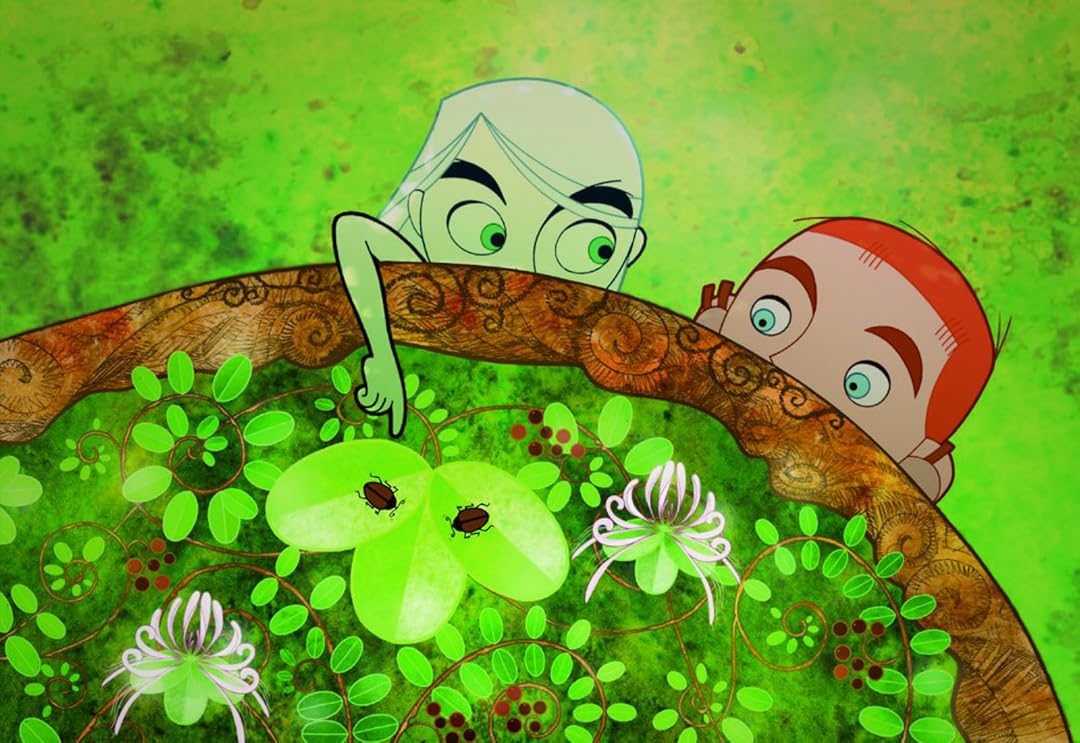
Technically, “The Secret of Kells” is a fictionalized account about the making of that book. But it’s far more than that — it’s a visual hymn to Ireland’s history, a coming-of-age tale, and a parable about Christianity coming to Ireland. Modern animation is suffused with exquisite Celtic art, music and a sense of fairy magic, and wrapped around a seemingly simple story about a boy learning about the power of art.
Abbot Cellach is determined to save the Abbey of Kells from the Viking invaders, so he’s having the monks (including his nephew Brendan) build a vast wall around the abbey. But when the illuminator Brother Aiden arrives, he brings with him the legendary Book of Iona. Brendan is fascinated by the Book, and ventures out into the forest — against the abbot’s orders — to fetch ink-making supplies for Aiden.
He befriends a strange fairy girl named Aisling, and nature’s beauty inspires his art — until his uncle discovers that he’s sneaking out, and forbids him to have anything to do with the forest or Aiden. But Brendan still wants to become a true master of illumination. And to finish the Book, he must go outside the abbey once more, and snatch away the magical Eye of an ancient sleeping evil…
You can see this movie from many angles — it’s a coming-of-age story, a homage to Irish culture, a story about the importance of art, and a parable about Christianity supplanting Celtic paganism (whilst drawing on its beauty and richness). But however you see it, “The Secret of Kells” is a beautiful story with a calm simplicity, and a slightly quirky sense of humor.
It also tackles some darker, more mature themes — Brendan is exiled to a dungeon for disobeying his uncle, and he ventures into the cave of an ancient god surrounded by wriggling black roots. But directors Tomm Moore and Nora Twomey drop in lots of beautiful little moments as well, such as Aisling magically “singing” Aiden’s cat into a floating spirit.
It also has a truly unique style of animation: “Kim Possible” style (simple designs with lots of sharp and/or rounded edges) with vibrant jewel-toned backdrops (the sunlit emerald hues of the forests). The best parts are when Celtic symbols and art are woven in, especially since they tend to float through the air like butterflies.
The writers also give great care to sketching out characters — Brendan, the little monk who discovers the “miracles” of the world; Aisling, the elusive wolf-girl who assists him; and the grandfatherly Brother Aiden. On the flip-side we have Abbot Cellach, whose obsession with keeping Kells safe causes him to shut out art and beauty. No, he’s not a 2-D bad guy — he’s just desperate to preserve his community against the onslaught of their enemies.
Obviously it’s not on the level of the Book of Kells, but “The Secret of Kells” is still a beautiful work of cinematic art. Adults will love it, kids will love it, and anyone with the blood of Ireland will marvel.
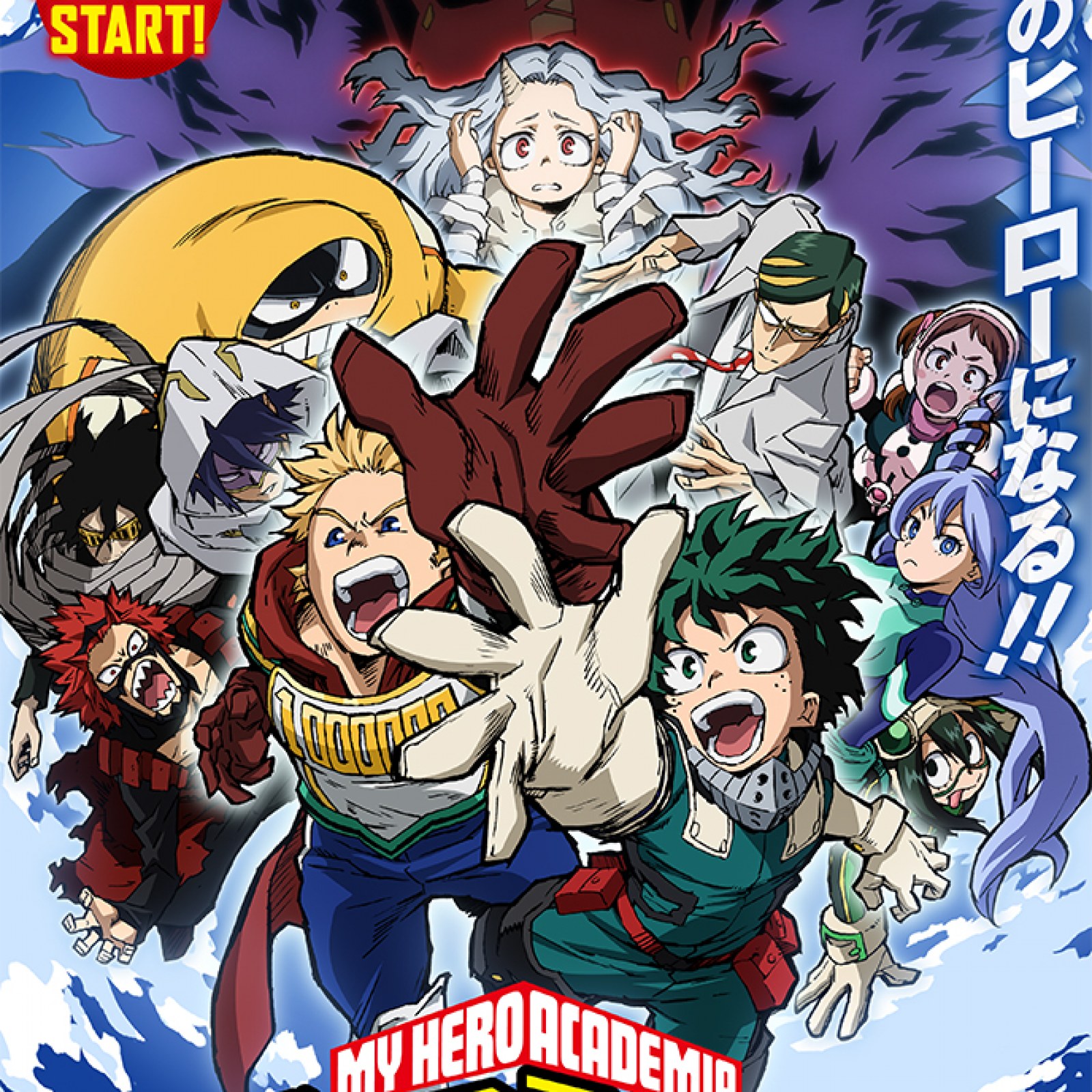
The world of superheroing has changed forever, because the Symbol of Peace has stepped down into retirement… and his successor isn’t really ready to take up his mantle. In fact, Izuku Midoriya is only just entering the world of professional superheroes, and he has a lot to learn.
And he jumps into the deep end in “My Hero Academia Season Four Volume One,” which follows a handful of the Class 1-A students onto Hero Work Studies. No, not like their last internships — these ones take them right into the thick of superhero action, while also introducing a sinister new enemy with a very different kind of evil plan. And, you know, a colorful array of new superhero characters.
Izuku becomes determined to do his Hero Work Studies internship with Sir Nighteye, the straitlaced and grim former sidekick of All Might. Unfortunately, Nighteye has a personal dislike of Midoriya, believing that he is an unworthy successor for All Might; though he allows the boy to join his agency as an intern, he is still convinced that the talented and disciplined Mirio is the right kid for the job.
This puts Izuku in the middle of Nighteye’s investigation into the Shie Hassaikai, a yakuza organization run by the sinister Overhaul — and it becomes personal when he stumbles across a small girl named Eri, whom Overhaul is keeping captive. At the same time, Kirishima encounters bullets that can temporarily erase people’s quirks, which Nighteye believes are connected to the Shie Hassaikai and the little girl.
This investigation leads to a massive team-up of heroes and their interns — including Izuku, Ochaco, Asui, Kirishima and the Big Three — attempting to take down the Shie Hassaikai and rescue Eri. But they find that Overhaul is prepared for their attack, with the vicious Eight Precepts of Death ready to kill anyone who tries to stop their master. And that’s not even taking into consideration that Overhaul is ridiculously powerful himself, or that he has a connection to the League of Villains.
Just a warning: if you’re a big fan of the Class 1-A students other than Izuku, Ochaco, Asui or Kirishima, you’re not going to have much of your favorites this half-season. It focuses far less on school-related antics and more on professional superheroing with actual pros, which gets moderately dark, graphic and violent. You can tell things are going to get nasty when Overload casually liquefies someone’s upper body (and no, I won’t say whose).
The first half of the arc is a relatively slow burn, balancing between the mundane detective work the heroes are doing and the complicated relationships between All Might, Midoriya and Nighteye. And once the infiltration starts, the series goes full shonen, focusing on a series of fights between Overload’s powerful goons and the various heroes and teenagers. Lots of punching, lots of blood, lots of giant octopus tentacles, lots of weird wibbling wobbling corridors.
Izuku also has to face some personal obstacles in this arc, discovering that Nighteye dislikes him as the One For All holder, and wants him to fail. This also leads to some friction with All Might, and the discovery that his mentor has been keeping a dark secret about himself. Kirishima also experiences some growth as a character, as we see him struggling to use his abilities to fight villains, even as we see what spurs him on to be a hero despite his lack of a flashy Quirk.
And there are a number of smaller stories being juggled — Sir Nighteye’s tragic fallout with All Might and the present distance between the two men, Mirio’s conflict with Overhaul to save Eri, the presence of the friendly and orb-shaped Fatgum, and Tamaki’s struggle to overcome his crippling social awkwardness and turn his Quirk into a devastating power. You know he’s a brilliant hero when he can take on three powerful Quirk users at the same time.
Compared to the arcs that came before, “My Hero Academia Season Four Volume One” is focused less on school and more on the dark and bloody business of pro superheroing. A great balance of powerful emotion and explosive action.
I am sick unto death of people responding to criticism of a needlessly dark, pointlessly depressing ending with “Well, in real life, sometimes you don’t get happy endings. That means it’s good!”
No, it doesn’t.
I am not saying that every story needs to have a happy ending, because that would be stupid. Since time immemorial, there have been stories with sad endings. One of the greatest SF/F movies is The Thing, where the best case scenario is that the only two remaining characters die in a few hours, and the entire Earth doesn’t get swallowed up.
The difference is, in that movie the realism EARNS a sad ending. It doesn’t come out of nowhere. The story whittles down the cast little by little, keeping them isolated and self-contained, highlighting the horrors they face, and making it clear that they’ll do whatever it takes to save the Earth. So it doesn’t feel out of place when the main characters are essentially condemned to death by their own actions, because that outcome naturally evolved from the stuff they had been doing and the place they had been.
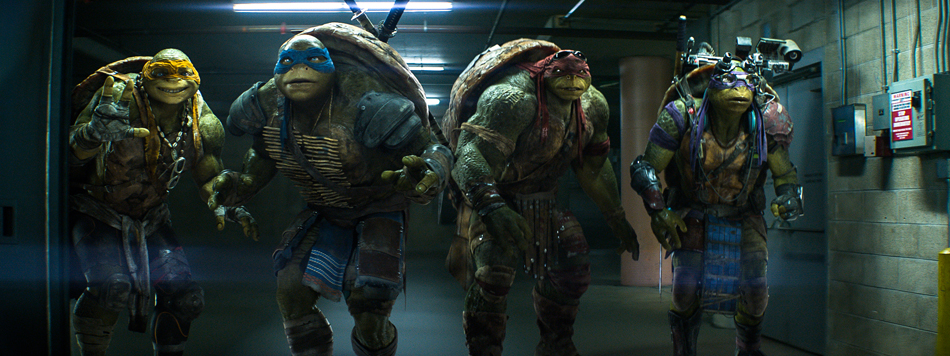
Compare it to, say, the movie Justice League Dark: Apokalips War or the planned finale of the 2012 Teenage Mutant Ninja Turtles series (before Nickelodeon stepped in and declared it was another dimension or an alternate future or whatever). There was nothing to build up to those dark miserable outcomes. It’s the writing equivalent of “Rocks fall, everybody dies” — the people creating it simply decided to make everything go to hell so it could be crappy. They ultimately made everything that had come before MEANINGLESS for the sake of a dark, unhappy outcome, rather than writing a finale that actually feels satisfying for the audience and draws from what has come before.
Why? Do they think it’s “deep” if a story has a miserable ending, even if that ending isn’t earned and doesn’t naturally stem from anything? Do they think that happy endings “suck,” like some tiresome fourteen-year-old edgelord?
And as a final middle finger to the people who whine that “real life sometimes doesn’t have happy endings,” I ask you: why do you want the worst of reality reflected in fiction? Because when you introduce body-snatching alien parasites, mutant turtles and superheroes on the level of Superman, you have lost claim to “real life.” There are varying degrees of “reality” in any form of fiction, and sci-fi/fantasy is where it has the loosest control over the narrative.
Want to cure someone of cancer? There’s magic and alien technology for that! Want to leave your mundane job behind? That can happen! As long as it’s done with internal consistency and good writing, you can do all sorts of stuff that doesn’t happen in “real life.”
So why should “real life” have a stranglehold over the endings of sci-fi/fantasy TV/movie series/books? If your narrative conventions allow you to do all sorts of incredible unbelievable unrealistic things, why are you inexplicably determined to make “real life” the benchmark?
And considering that “real life” is incredibly sucky and there are no long-term happy endings because we all die, why the hell should our fiction reflect that? Why shouldn’t we have happy endings in fiction?
And again, I’m not saying every ending has to be puppies and rainbows. A good example of a satisfying finale would be Avengers: Endgame, which mixes the tragic with the triumphant. We lose characters we’ve come to love over the course of many years of movies, but it feels earned because their deaths MEAN something to the story. They weren’t killed off because “happy endings suck and we’re edgy,” and the overall feeling is that because they sacrificed their lives, the world has a chance to be a better place where the people they’ve saved can live on.
So a bittersweet or sad ending is not necessarily a bad ending, but it has to be based on something more artistically valid than “well, sometimes there aren’t happy endings in real life and the good guys don’t win!” That is an excuse, not a reason.
If you are giving your story an unhappy, depressing ending just to have it be unhappy and depressing, you are doing a disservice to your art, your characters and your audience. So don’t do it.
So I was watching the Cosmonaut Variety Hour, which is a great show by a very dryly clever man who reviews various geek media. I don’t always agree with his conclusions, but I do always enjoy watching him reach those conclusions, and it’s also fun when he joins forces with his friends to riff on things.
Go watch his show. It’s good. His reviews of the movies Ax ‘Em and Bright are especially good.
Anyway, a recent video he made was about the movie Aquaman, which I am rather fond of. It’s not high art, but it is a big shiny blockbuster with good direction, dazzling visuals, some silliness, some horror, fairly likable characters, and a plot that more or less makes sense. But Marcus (the guy who makes the show) has often held up Aquaman as a bad film, although in his latest video he kind of softens towards it and gives it a middling grade.
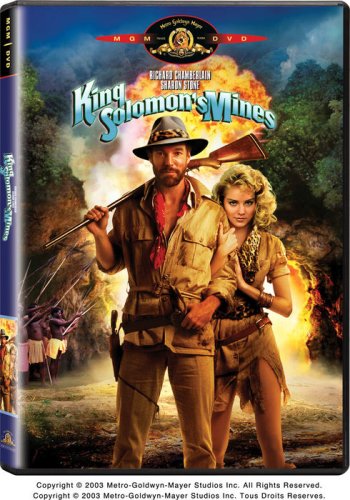
And one of Marcus’ main points is, quite simply, that Aquaman has a lot of cliches (although sometimes I think he means tropes, or derivative content). It has the whole King Arthur archetype of the true-king-with-the-magic-weapon-he-needs-to-ascend-the-throne, it has the relatives fighting for the throne thing, it has the Indiana Jones sequence in the Sahara and Italy where a strange mystical item paired up with a particular statue will show the exact spot… you get the idea.
And… strangely, I don’t really care.
And I think that is because it takes these tropes, cliches and archetypes, and does them pretty well… or at least, it does them better than other movies that try to do the same thing.
For instance, think back on movies that have ripped off the Indiana Jones films. Most of them… are very bad. Even the ones that are considered good are actually quite bad.
But I enjoyed the Indiana Jones portion of Aquaman, because it fit neatly into the movie as an organic part of the plot development, and it was the sort of wildly improbable thing you would find in those films.
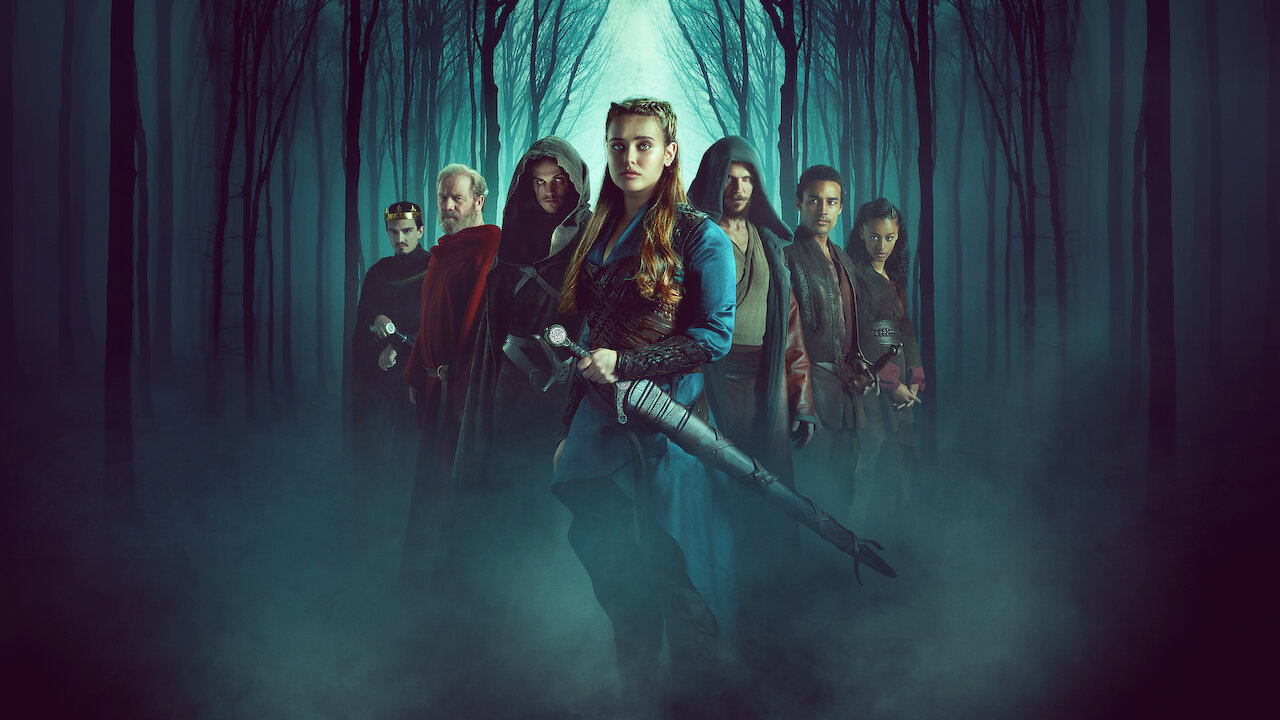
Or take the King Arthur angle. Do you know how many good King Arthur movies, miniseries or TV shows there have been in the last twenty years? Not very many! We have stuff like Transformers: The Last Knight, Mists of Avalon, Cursed, Camelot, King Arthur: Legend of the Sword… poor King Arthur hasn’t had a good time lately. I haven’t seen Merlin, but I’ve heard mixed things.
And in YA fiction, they’re trying to either turn him into a teenage girl or make him irrelevant because of a teenage girl (Cursed), because YA fiction. No, I am not reading those books, and you can’t make me. I tried to read Cursed, and it was… unpleasant.
But the Arthurian overtones and the trajectory of Arthur Curry’s growth into a king is… both familiar and satisfyingly different. Yes, it’s the familiar arc of an unknown True King acquiring a legendary weapon in order to become a powerful king, which has been around in European-influenced media for many centuries. But it’s also unique enough with stuff like the Karathen and the actual combat with the tridents — which grows naturally from another fight earlier in the story — that it doesn’t just feel like someone copy-and-pasted DC comics names into a legend.
Complete originality is virtually impossible in storytelling. Even Shakespeare made a lot of adaptations and remakes. Seriously, look into the history of many of his stories, and you’ll find that most of them were derived from existing tales, including other plays. Bring that up when someone moans about rebooting some movie franchise from thirty years ago and how nothing is original like in the good old days.
But the lesson here seems to be that if you can’t be original, then at least handle your cliches and tropes with skill and talent, and make them more entertaining than other films/books/TV shows/etc. that handle the same content.
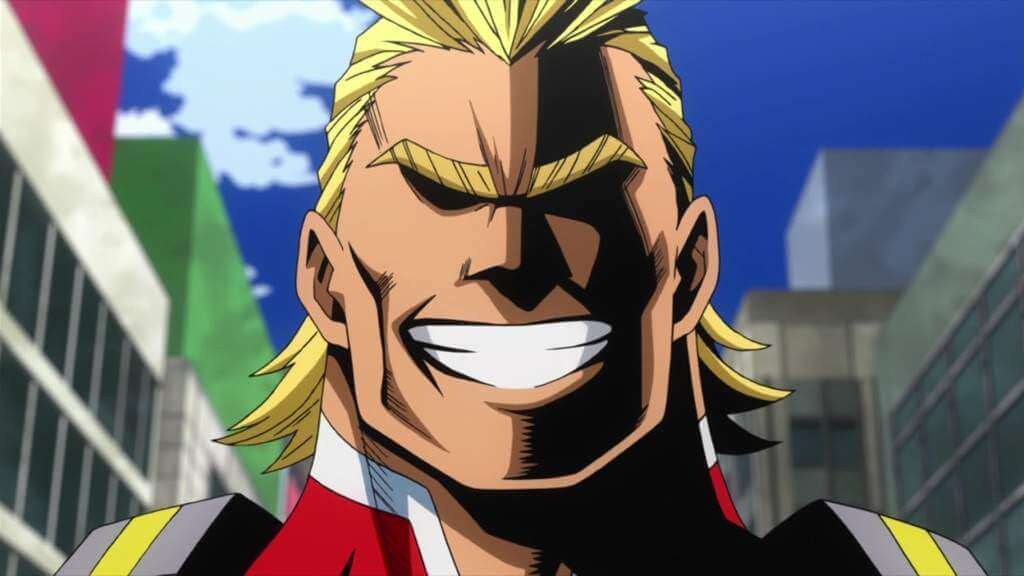
That’s part of the appeal of My Hero Academia. It tackles a lot of things in comic books that are taken for granted, and examines them while fleshing them out. All Might is obviously a Superman-like character (different backstory, but quite similar to early Superman, including jumping instead of flying), which makes him a superhero cliche. He looks like a cliche, he sounds like a cliche, he acts like a cliche. But it’s because he’s a walking cliche that the story can subvert the cliche with his successor (a scrawny crybaby), examine him in greater detail and reveal different sides of him that you wouldn’t expect.
So I guess the lesson is… avoid cliches if you can, but if you need to use cliches, tropes and archetypes in your work, just make sure that you make it really entertaining, and add enough spice and twists to your characters and world that the audience will feel rewarded for going down a familiar road.
I don’t think it’s a controversial statement to say that most of the world’s population is bothered by bugs. We don’t like them on us, near us, or in anything we make regular contact with like food or bedding. Yes, some people eat them, but we don’t like them alive.
So what do you think would happen if a mutant strain of bugs got as large as humans… and developed camouflage to allow them to walk amongst us? Aside from a lot of screaming and bulk purchase of Raid, it would apparently turn out like the events of the “Mimic Three Movie Collection” — a slow decline from Guillermo del Toro at his most tampered-with, to a sort of “Rear Window” with giant bugs.
In the director’s cut of del Toro’s “Mimic,” children are ravaged by a cockroach-carried disease, forcing Dr. Susan Tyler (Mira Sorvino) to create a drastic a solution — a sterile mantis/termite crossbreed that will destroy the cockroaches, then die. Of course, it doesn’t — a few years later she stumbles across a Judas larva, just before street urchins and subway dwellers start going missing. When an enormous dead insect is found washed into the water treatment plant, Susan knows for sure that the Judas bug has not only survived and reproduced — but it’s evolving at a ghastly rate.
Meanwhile, her hubby Peter Mann (Jeremy Northam), subway cop Leonard (Charles Dutton) and an immigrant (Giancarlo Giannini) looking for his autistic son all venture down into the deserted subways. But Susan has run afoul of the Judas insects — and as all the humans huddle in an abandoned subway car, she finds that the insects have evolved even further than she thought.
And because Hollywood loves it some sequels, “Mimic 2” debuted sans del Toro, and focused a scaled-down story on a supporting character from the first movie. Men are being found de-faced and hung up on wires, and the only thing the victims had in common is that they went on dates with Remy (Alix Koromzay), who has somehow gone from a quirky entomologist to a quirky inner-city schoolteacher who is obsessed with bugs. Well, it turns out that there’s a male Judas bug on the loose in Remy’s school… and it wants to mate with her. Eww.
Then we have “Mimic 3: Sentinel,” which asks the compelling question: what kind of giant-bug movie would Alfred Hitchcock make? I don’t know the answer, but it probably wouldn’t be “Mimic 3: Sentinel.”
Marvin (Karl Geary) was one of the last survivors of the roach-borne disease, and is now confined to a special sterilized room. So he spends his days spying on people, including his drug-dabbling sister Rosy (Alexis Dziena), his neighbor Carmen (Rebecca Mader) and a weirdo he calls the Garbageman (Lance Henriksen). When he notices that people are disappearing, he tries to alert the police that something weird is up… and yes, it involves a Judas bug.
Put in the bluntest possible terms, the Mimic trilogy is made up of one pretty-good-but-not-del-Toro’s-best horror movie, and then two sequels that… aren’t very good. Del Toro’s film is a grimy, slow-build of shadowy horror, which takes full advantage of just how creepy bugs can be, especially in an urban setting. Lots of rusty pipes and eerie underground tunnels swarming with eyeless horrors.
The sequels, though? Well, the second movie has atmosphere, with dark corridors and steam-filled rooms… but the big twist is pretty predictable, and there’s an uncomfortably misogynistic undercurrent to having the only female character be present for her babymaking potential. And the third movie…. feels like a lost TV pilot for an ongoing “Mimic” TV show, honestly, and the climax bounces out of nowhere without much warning or resolution. But it has Lance Henrikson!
The “Mimic Three Movie Collection” is a good way to visit the least of Guillermo del Toro’s movies — a solid horror movie, with two sequels that aren’t as good but might make for a nice spooky watch.
Okay, something I have to get out of the way when discussing the live-action reboot of the “Teenage Mutant Ninja Turtles”: the redesigns of the Turtles are pretty awful. First, they decided to make them big — the Turtles are reimagined as being at least six-and-a-half feet tall, but they move in a strangely weightless manner… because CGI.
Secondly, the designs are far too busy. You can see every bump on their skin, which is pretty unappealing. Furthermore, very Turtle is slathered in characteristic adornments and pieces of clothing that do nothing but distract. Why is Raphael wearing a belt with other belts hanging off it? Why is Leonardo wearing wooden chest armor? Why is Michelangelo carrying around a pair of sunglasses that won’t fit his head?
Thirdly, their faces… look kind of like stretched noseless human faces. It trips the uncanny valley meter.
But even if you can get past the weird appearances of the Turtles, the live-action “Teenage Mutant Ninja Turtles” reboot is not a very good movie. The Turtles’ origin story is filled with inexplicable holes, and the characters are thinly-developed at best — including the Turtles themselves, but most of all the villain, whose motivations can be summed up as “he’s rich and he wants to get richer.”
Reporter April O’Neil wants to tackle serious reporter stuff, like the gang wars that are being thwarted by mysterious vigilantes. But alas, nobody takes her seriously because she’s played by Megan Fox. But one night when the terrorists known as the Foot Clan attack some random people in a subway, she encounters those four vigilantes — giant mutant turtles who also happen to be elite ninjas. And get this: they were her childhood pets. Not kidding.
April’s search for the Turtles — and an explanation for how they ended up mutant ninjas — leads her to the obviously evil Eric Sacks. When the Turtles capture April so that they can explain their origin story to her, she inadvertently leads the Foot Clan directly to them — and I wish I could say that their sworn nemesis Shredder attacks, but in this movie he’s not so much a bitter foe as…. some guy they don’t really know.
“Teenage Mutant Ninja Turtles” is… not a terribly good movie. One of its biggest flaws is that it is less a story about the Turtles than a story about April O’Neil. Oh, the Turtles are important parts of the story, but the main arc is actually April’s — and so is pretty much the entire first act, in which the Turtles’ roles are basically cameos.
It also has a plot that is both simple and full of holes — it has all the hallmarks of several rewrites (Splinter and Shredder recognize each other despite never having met), and has some head-slapping idiocies (Splinter teaches the Turtles ninjutsu… from a picture book). The central conflict with Sacks especially feels like it was neutered somewhere along the line, given that the villain role is split between two people. And, you know, the fact that Sacks’ motivation is very stupid.
All the characters are pretty thin. This is especially shown in the Turtles — they each have one stereotypical character trait and not much else. Donatello is a nerd, Leonardo is vaguely leaderesque, Mikey seems like a budding sex offender who wants to kidnap April and keep her tied up in a dungeon, etc. Raphael has the most uneven characterization — he basically is just angry for most of the movie, only to vomit up the rest of his characterization in thirty seconds at the movie’s climax.
That said, most of the voice acting is pretty good, especially Alan Ritchison as Raphael and Tony Shalhoub as Splinter. The exception is Leonardo — for some reason, they decided to dub over Pete Ploszek’s voice with Johnny Knoxville, who sounds like a very unheroic fortysomething with an alcohol problem. As for the humans, Fox is not terribly good as April, but not unbelievably bad either, while William Fichter is profoundly meh.
“Teenage Mutant Ninja Turtles” tries to give a new spin to the Turtles’ origin story, but the thin characters and abundant plot holes make it more of a chore than a delight. Also, Mikey is creepy.
The nights are cloudy, the alleys are dark, the men are dangerous, bars are smoky and femmes are fatale. “Sin City” is a thing of dark, bloody beauty.
And so goes the world of Frank Miller’s magnum opus comic book series, which is also arguably what caused him to go off the deep end. Director Robert Rodriguez adapts the first three volumes of the “Sin City” with almost stunning fidelity, both in the grotesquely bloody subject matter and in the black-and-white noir atmosphere.
“Sin City” is actually made up of three stories: In the depths of Basin (Sin) City, scarred hulk Marv (Mickey Rourke) sleeps with a beautiful prostitute (because Frank Miller), Goldie (Jaime King), only to find her dead beside him the next morning. Enraged, he goes on a killing spree to find her murderer, and learns that sinister cannibal Kevin (Elijah Wood) is responsible. But there’s a powerful figure behind Kevin, who calls the shots.
Elsewhere in Sin City, Dwight (Clive Owen) does his best to defend Gail (Rosario Dawson) and the other Old Town prostitutes (because Frank Miller). But when Dwight kills a crooked cop, he has to somehow cover up the crime. And Hartigan (Bruce Willis), a cop with a failing heart, goes out of his job with a bang: He rescues little Nancy Callahan from a child molester who happens to be a senator’s son. Hartigan is jailed, and when he gets out, he finds that Nancy (Jessica Alba) has grown into a lasso-twirling stripper (because Frank Miller). But the senator’s son — nicknamed Yellow Bastard — is still after her.
“Sin City” is one of those few comic book adaptations that doesn’t seem… well, cartoonish. Sure, it’s the very image of noir, but the grim tone and grey characters are very real. It’s not a movie for the fainthearted, but whoever enjoys the films of Quentin Tarantino (who directed one scene here) will surely be blown away.
Like “Sky Captain and the World of Tomorrow,” this film is done almost entirely digitally, which gives it a uniquely slick, shadowy style. But unlike “Sky Captain,” it has substance as well as style. All the sets and props are done with computers, and nearly everything is in black and white. Here and there we get a splash of colour — red lipstick and matching dress, Yellow Bastard’s face, green eyes — to let us know when something is significant.
As for the story, the contents of three “Sin City” comic books are interwoven here, and Rodriguez is constantly faithful: A lot of these shots could have been lifted straight from the comic’s pages. He also preserves the stark, black-and-white style that the graphic novels are known for, splattered with blood and sharply directed. It’s not realistic, despite its grittiness, but it is viscerally fascinating.
And despite all that blood and the Elijah Wood cannibal, the movie has a dark sense of chivalry… though it’s somewhat marred by Frank Miller’s characteristic tendency to depict all women as prostitutes. Each story is about an outcast man defending a woman’s honor, safety, or memory, even if he sacrifices himself in the process. “Sin City” wears its heart on its sleeve, even if that sleeve is bloodstained and torn.
Most of the actors do wonderful jobs — Owen’s dark photographer, Rourke’s scarred strongman, Stahl’s revolting Yellow Bastard, and Alba’s surprisingly sweet stripper. Only a few, like Brittany Murphy, have lackluster performances. But perhaps the most memorable performances come from Bruce Willis and Elijah Wood. Willis plays his aging cop role with unusual grace, even when tearing the genitals off Yellow Bastard. And Wood plays Kevin with both creepy evil and spiritual ecstacy. All without saying a word.
“Sin City” is a remarkable, bleak, intense movie — a halfway point between Tarantino and Raymond Chandler, crafted in the style of a graphic novel. An outstanding piece of work.









 The Forest