A problem with the Inheritance series

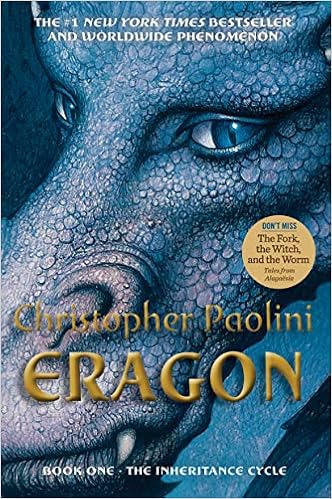
I’ve been thinking about Christopher Paolini and the Inheritance series lately, and about the large quantities of virtual ink spilled over the years because of it. The series has a lot of problems with it – the derivative world-building, the Gary Stu protagonist, the clumsy insertion of the author’s views about things like vegetarianism, the screwed-up morality, the wildly unrealistic depictions of battle, and so on and so forth.

But I think a lot of the problems stem from the one thing: the author was growing up as he wrote the series.

In case you are unaware of this series, Christopher Paolini was a teenager when he wrote the book Eragon. He was initially self-published, but was almost immediately picked up by Knopf and became a bestselling author. Now, I am not saying that a young person cannot be a good writer. It doesn’t happen very often, as I’ve seen firsthand, but it can happen.

The problem is that if you read the Inheritance series, it becomes obvious that certain parts of Paolini’s beliefs, thoughts and behavior were… not set in stone. As a child, you more or less align with what your parents think and believe. When you’re a teenager, and sometimes even when you’re a twentysomething, you are figuring out what you think, how you see the world, and what you believe is right. Sometimes it ultimately aligns with what your parents think, and sometimes it doesn’t. The point is, those decisions and how you work them out are a part of growing up.

Take religion. The second book, Eldest, is extremely anti-religion, depicting the atheist elves as rational, intelligent and superior in every way, and the religious dwarves as overemotional unintelligent inferiors. Sort of like how many a douchebag atheist likes to depict the world, rather than how it actually is.

And then, at the beginning of the third book… he also features a chapter devoted to cannibalistic religious rituals that honestly feel like anti-Catholic propaganda by someone who doesn’t actually know anything about the religion.

And then… later in the book… Eragon encounters a god. It doesn’t make much of an impression, oddly.

And then in the fourth book, he sort of goes, “I dunno, maybe there are gods, but I’m so awesome and have so much power that I don’t need gods for anything, and obviously they don’t care about anyone anyway.” Which is really a very stupid and illogical perspective, especially written by a mere weak fleshy meatbag like the rest of us, but it demonstrates an evolution of thought over the course of the entire series and the better part of a decade. The perspective, which at least admits the possibility of gods, here is not the same as it was in Eldest. And while this conversation shows no deep or consistent theological musings, he still demonstrates more thought than he showed in Eldest, where the depth of his theological examinations was “LOL religious people suk and atheists are awesome.” At least he was answering points that actually sounded real, and didn’t do it in a condemnatory or bigoted manner.

Here’s another: vegetarianism. We return to Eldest once again, in which Eragon becomes a vegetarian when spending time with the Mary Sue elves. Because they’re elves, and everything they do, think and believe is absolutely perfect, and so on and so forth. This is depicted as the only moral way to live, and that animals should not suffer for human (or elf) consumption (despite Arya wearing leather clothes. Oops). I’m not going to get into a debate about the morality of eating animals, I’m just saying that this is what he presents as the unwavering moral thing to do.

And then… in Inheritance, Eragon starts being tempted by meat, and eventually he decides hey, if he’s offered meat socially, he’ll have a little, and that moderation is an acceptable way to live. After that, he starts eating meat again.

Again, it shows a change in perspective over several years, and it demonstrates that Paolini’s perspective wasn’t a particularly solid one. I’m not saying people older than their teens and early twenties can’t change their opinions or perspectives – far from it. I am saying that the time when Paolini wrote these books was a period when a person is still figuring themselves and their perspectives out.

And there are other things in the series that would point to the naiveté of youth and a lack of personal experience. For instance, the condemnation of the king levying taxes in the first book. Not excessive taxes, like in the Robin Hood folklore – just the fact that taxes exist at all. It’s very much a child’s understanding of how the world works, and it doesn’t do the book any favors to include such a childish perspective.

Simply put, Paolini was growing up and figuring himself out as he wrote these books. He would have been better served by waiting a decade before publishing anything.

For a comparison, let’s take George Lucas. When Lucas made the original Star Wars, he was considered a young bright star on the rise. But he was in his early thirties by then. He was a man. He had grown up completely. Hence why there isn’t a massive shift in perspectives over the course of the original trilogy. There are changes, such as the identity of Luke’s father, but those are more due to Lucas changing the story as he wrote it, rather than some kind of shift in the way he saw the world.

Anyway, since he has hopefully settled down in his opinions and viewpoints, I am going to give adult Paolini a chance to impress me with his new science fiction novel, To Sleep in a Sea of Stars. As long as there are no screeds against meat or religion, anyway.


Upcoming sequels

So probably my biggest anticipated sequel is the second book of Maggie Stiefvater’s Dreamer trilogy. I’d love to refer to it by title, but Amazon doesn’t have it yet. Anyway, I practically get drunk on Maggie Stiefvater’s prose, so I’m dying to have more.

I’m also looking forward to Aurora Burning, the sequel to Amie Kaufman and Jay Kristoff’s Aurora Rising, which was probably one of my favorite sci-fi reads of last year. Without revealing too much about it, it has a lot of mystery, elf aliens, the Great Ultrasaur of Abraaxis IV, and it mingles a sense of humor with some very serious galaxy-threatening consequences, and a tinge of tragedy as well. So I do want to find out more.

Sarah J. Maas is releasing a fourth Court of Thorns and Roses book, but I don’t know anything about it.

After making a swerve into Japanese folklore, Julie Kagawa is going back to her Iron Fae series, and this time she’s writing about Puck. I’m all in.

Random thoughts

I hate masks. Every time I try to speak through one, I get a mouthful of wet cloth. Breathing through them is horrible.

Jay Exci has an excellent Youtube channel.

I haven’t been to the library in weeks.

Books I want to check out: the Secrets of the Immortal Nicholas Flamel series, Seven Deadly Shadows, Call Down the Hawk, the fourth Percy Jackson book, some V.E./Victoria Schwab, the expanded edition of Neverwhere, etc.

Two Dresden Files books in one year? It’s Christmas come early!

And since Covid-19 has shut down the country, I cut my own hair.

On Harley Quinn Part 2

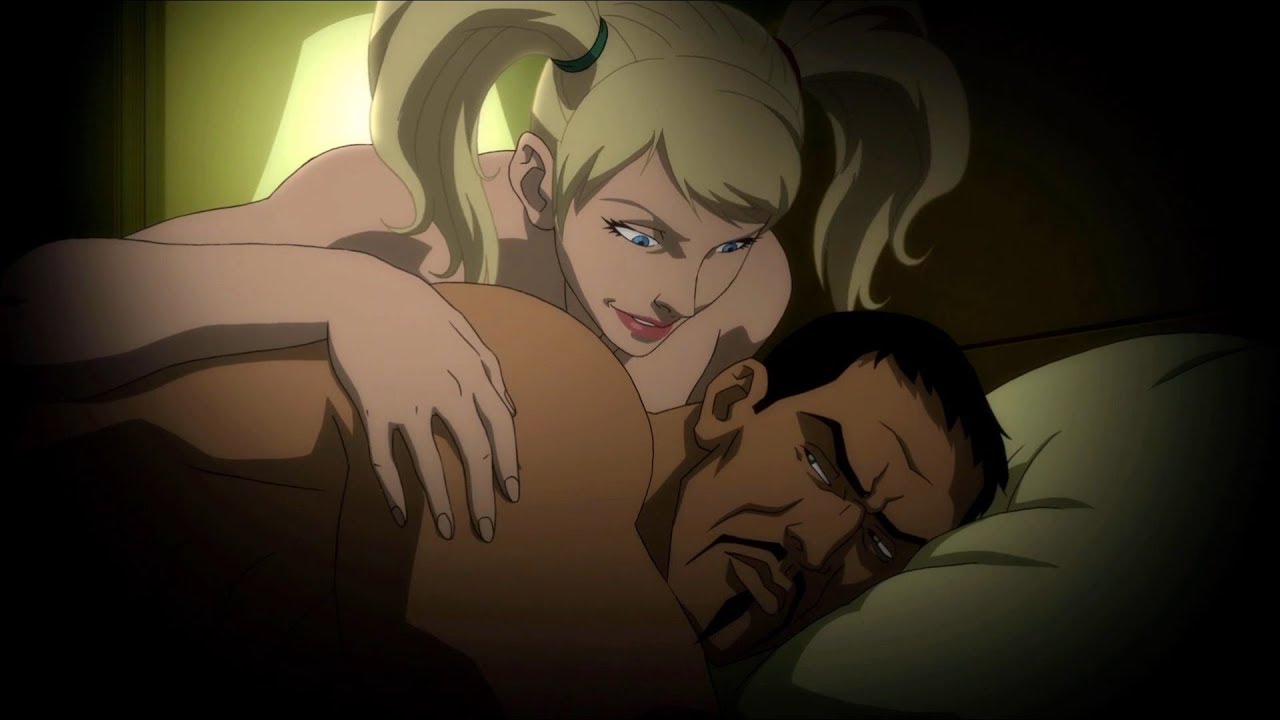
And Harley Quinn is definitely considered one of those bad, unlikable people. Unlike with the DCEU version of Harley Quinn, we have it demonstrated for us that she’s crazy and dangerous in two different ways. First, when we first see her, she’s watching Looney Tunes on a phone, until a therapist takes it away from her… and Harley bites the woman’s ear off. That few seconds demonstrates what she is far more effectively than the DCEU Amanda Waller talking for several minutes about how she’s really crazy and dangerous, guys, REALLY. She’s as scary as the Joker, you guys! I swear! Please believe me!

It also establishes her kooky, somewhat childlike tastes. She likes laughing at cartoons, and ignores the strictures of prison rehabilitation in order to watch them.

The other is a scene in which Harley tries to use her sexuality to throw an intrusive security guard off his game, by pulling her jumpsuit top down and exposing her breasts. The guy’s response? Well, unlike in Suicide Squad, he isn’t immediately gaggling at her sexy body… instead, he screams “Don’t move, you crazy bitch!” and takes out his gun, implying that she is so dangerous and so insane that the sight of her is TERRIFYING and will override even the sight of a seminude, extremely attractive woman.

So, we have a woman who is established quickly as being dangerous and violent. However, immediately after establishing that, the movie quickly establishes that she is quirky and eccentric through dialogue. But even more importantly, it establishes that she is automatically drawn to authoritative male figures. Not just men like the Joker, note – she immediately voices her attraction to Deadshot, a man who is extremely unlike the Joker, being controlled, organized, focused, professional and sensible. However, he makes it clear that he’s the one in charge of the Suicide Squad, and that immediately draws Harley’s interest. And being Harley, she keeps pursuing him even though he really doesn’t give a damn about her.

A lot of people who have Harley “get over” the Joker and move on from him (such as in Birds of Prey) don’t seem to realize that being attracted to the Joker in the first place would indicate some serious, deep-rooted issues that wouldn’t magically end with a breakup. It’s not like she’s having a once-in-a-lifetime bad-boy fling that just got out of hand – she romantically attaches herself to a vile psychopath, and identifies with him so strongly that she styles herself after his gimmick. That indicates something that would take serious therapy and psychiatric intervention to even begin to unravel.

But the brilliant part of this movie is that it acknowledges both sides of Harley’s psyche. When the story begins, Harley has broken up with the Joker. It’s never explicitly said just what led to this breakup, but it is kind of hinted at when the Joker says about women that you can’t live with them, and can’t kick them from a moving car.

And this genuinely creepy scene is when we see that on some level, Harley is aware of how utterly screwed up she is, as she screams at Deadshot to let her go, and that she’s going to kill him for what he’s done to her. This is the closest Harley ever comes to full awareness of her own psychological twistedness, and the closest she comes to actually dealing with the wreck of her life due to her choice to be with the Joker.

But at the same time, we know this isn’t improvement. It isn’t empowerment. She’s following the same pattern with Deadshot, even to the point of addressing him as “puddin.” She isn’t attracted to Deadshot for healthy reasons – she’s attracted to him for the same reasons she’s attracted to the Joker, even though the two men are very different.

And because Harley isn’t actually fixing anything in her mind or her life, her screwed-up, twisted mind ends up circling back to the same old abusive relationship as usual. When the Joker manages to free himself from his Arkham cell, he encounters Harley and the Suicide Squad, and Harley immediately leaps on the opportunity to reunite with her “puddin,” to the point where she lies that her presence in Arkham was entirely a ruse to save him from captivity.

There is actually a brief pause between the Joker’s arrival and Harley’s embrace of him, and it actually made me wonder – when I first saw the movie – if she was actually sneakily finding a way to keep the Joker from killing Deadshot and the other surviving members of the Squad, or just seeking a way to escape Arkham without getting shot by him. However, it soon becomes evident that no, Harley is entirely in earnest.

And the demonstration that she’s completely in earnest in reuniting with the Joker – the man she previously tried to murder for “what he’s done to me” – is seen in her final fight with Batman. In this scene, Harley attacks Batman with dark tears dripping down her white-painted face, shouting that while the Joker might abuse her, “you’re the one that’s always hurting me!” Her self-awareness has been swamped by the familiarity of her abusive relationship, and rather than blaming the Joker for his abuse of her, she projects it onto a man who consistently interferes with the men she fixates her whole identity upon.

That’s what ultimately makes the Assault on Arkham Harley Quinn my favorite Harley Quinn: she’s complicated. She’s painfully realistic. She’s kind of a tragic figure, since she’s locked into the same patterns of destructive fixation on men who don’t care about her AT BEST, and she falls into her old abusive relationship again at the end. And yet, while clearly having some sympathy for her, the movie also doesn’t pretend that she’s in any way a good person – she is a violent psychopath herself, and she won’t magically turn into a semi-decent, semi-sane human being just because she’s away from the Joker…

… which is one of the biggest mistakes Birds of Prey made, with its much shallower, stupider version of Harley who is apparently nevertheless supposed to be likable and relatable. One thing Harley Quinn should ideally never be is “relatable.”

So that’s why Assault on Arkham’s Harley Quinn is probably the best depiction of the character to date. Agree? Disagree? Feel free to comment.

On Harley Quinn Part 1

I’ve come to the conclusion that, as far as I am concerned, the best version of Harley Quinn is from the movie Assault on Arkham.

I’m kind of picky about my Harleys. For instance, I’m not really a fan of the Harley-leaves-the-Joker-and-becomes-a-wacky-Deadpool-like-antihero way the character is often handled now, because I feel like her massively screwed-up personality and warped mind are on display with Mista J. It allows her to be bad and corrupted, but also kind of pitiable and sad. Turning her into a copy of Deadpool takes away what made her interesting in the first place.

Then there was that dreadful Batman and Harley Quinn movie, which tried to pad itself out with diarrhea gags, musical numbers, and R-rated humor that felt like it was written by a fourteen-year-old boy. But the worst part was how it moralistically wagged its finger at the audience for objectifying Harley Quinn… while it blatantly objectified Harley Quinn.

Suicide Squad: Hell to Pay? So-so movie, and Harley is suitably flaky and intentionally annoying, but I felt like it didn’t really reflect her nastier, weirder side. She seemed to be all kookiness.

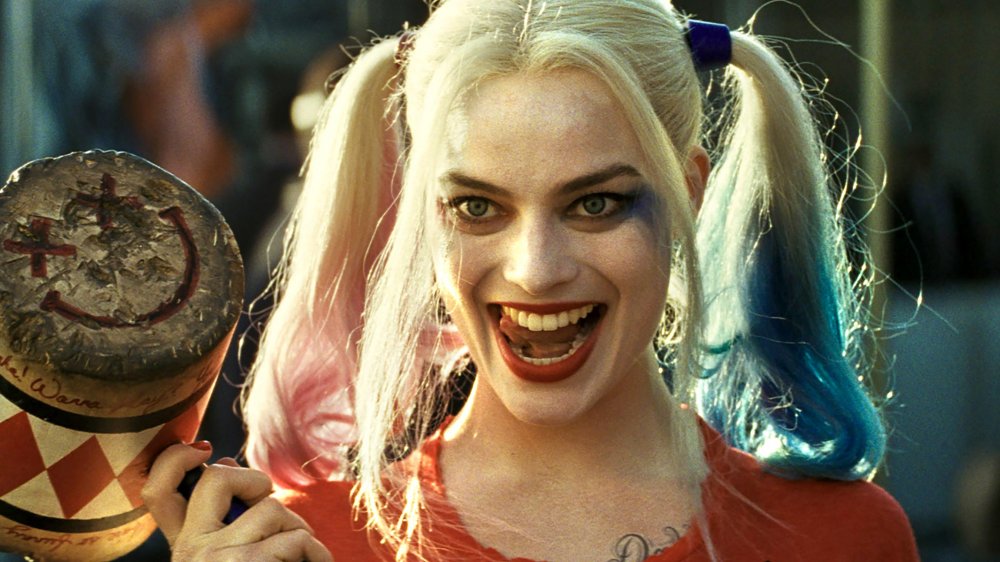
Suicide Squad? Do not want. Birds of Prey? No thank you! The Suicide Squad? Reserving judgement, but James Gunn gives me hope that things will turn out for the best. Or at least entertaining.

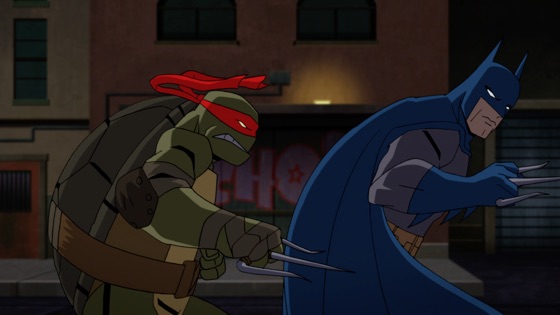
I do think she was handled interestingly in Batman: The Brave and the Bold, where she had a flapper aesthetic without losing her edge. And of course, I loved her role in Batman vs. Teenage Mutant Ninja Turtles, where she annoys the hell out of Shredder, demands her doctorate be respected, mutates into a hyena, makes out with the Joker in a way that is both “weird and gross,” and is a huge pain for the heroes in the second-act climactic battle.

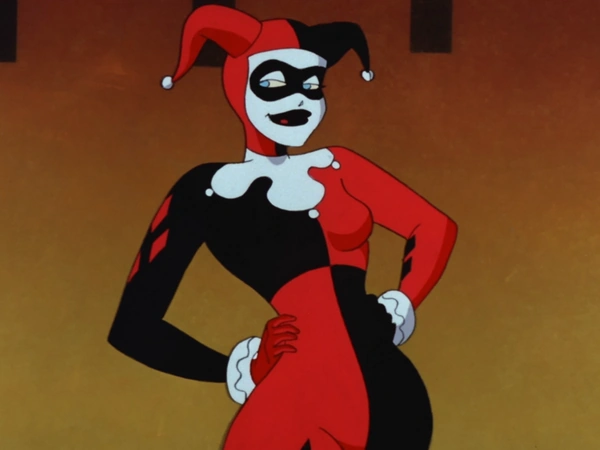
And of course, there’s the original Batman: The Animated Series, where the character came from – and which is still one of the best depictions of the character. For one thing, there was a whole arc in her interactions with Batman, growing from just being a henchwoman who obviously tries to kill the Dark Knight to kind of having a crush on him. At the same time, you see Batman’s opinion of her evolve, and he develops sympathy and even pity for her. It was a kids’ show so it was restricted in the way it could depict Harley, but they did get away with a lot, including showing an abusive Harley/Joker relationship that, scarily, is more adult and realistic than the one depicted in Suicide Squad.

Which brings me to Assault on Arkham, which is basically the movie that Suicide Squad was trying to be, but failed to be because David Ayer was also trying to make a darker, grittier version of Guardians of the Galaxy. The story is quite simple: the Suicide Squad is assembled by Amanda Waller, who wants them to break into Arkham Asylum (it seems to be harder to break in than out!) to recover something from the Riddler. Also, Batman is running around the place freaking out because the Joker has a dirty bomb hidden somewhere in Gotham.

If you were one of the many people disappointed by Suicide Squad, then Assault on Arkham might make you happy, because it does everything right that Suicide Squad did wrong. The biggest difference is that Ayer tried to make the bad guys in his movie ultimately heroic, and pushes the importance of working together and friendship. And… that doesn’t work for a team of murderous sociopaths that include a cold-blooded assassin whose only soft spot is somebody who isn’t on the team, a cannibal, a psychopath’s psychopathic girlfriend, a woman who doesn’t care about anyone else on the team (and isn’t really a part of it), and Slipknot.

(Admittedly, Slipknot might be a big fan of friendship and working together, but we don’t know because he dies about two minutes after being introduced, because he was kind of an idiot)

Honestly, the only person for whom that entire arc makes sense is El Diablo, a gang member who killed his family. Because unlike the others, he at least feels bad about it. And well, you have to have some cooperative skills if you’re in a gang.

It feels like Ayer wasn’t really comfortable with making a movie about bad people (as evidenced by Harley stealing a purse and explaining with a cringy “we’re BAD GUYS!,” as if shoplifting was a sign of her being a psycho). There’s always the feeling that he’s trying to paint them as not being as bad as they’re supposed to be, because he can’t bring himself to have them do bad things or act like the sociopathic losers they are.

There is none of that in Assault on Arkham. The best part of the movie is that the Suicide Squad do not act like friends. Oh, a few bonds (some very short-lived) do form between members, but for the most part these are bad people who dislike each other, don’t work well together, and take the absolute first chance they get to stab each other in the back. In fact, the climax of the movie is everything going to hell because these idiots have caused so much mayhem and disarray, and even as Arkham Asylum bursts into mass violence, they are still fighting each other. The characters are fun to watch, but they are definitely not depicted as good people or in any way likable.

I’m going to split this blog in half, because it’s getting too long.

Recommendation: Batman Vs. Teenage Mutant Ninja Turtles

I’ve written a review of this movie, but I feel the need to gush about how much I love it.

I think what I really like about it is how respectful it is to both franchises. Too often in crossovers, one or the other side is neglected or made to look less competent or less important. This is especially a danger when one of the sides is known for being superhumanly awesome, like Batman.

But I felt like this movie highlighted the strengths and weaknesses of both the Bat-Family and the Ninja Turtles. Obviously they’re very different; Batman is measured and plans out things far in advance, while the Turtles tend to fly by the seat of their nonexistent pants. And this does cause conflict between them as the story unfolds, since Batman is used to people following his lead, and he gets kind of pissy when the Turtles just dash into the conflict. However, it is also shown that there are downsides to Batman’s approach as well, since he’s easily distracted from the main scheme of Shredder and Ra’s al Ghul by a mass breakout and mutation at Arkham Asylum. The Turtles are, in a sense, more focused than Batman because they are fixated on Shredder and his plan, and don’t really want to get involved in all the other criminals running amok in Gotham.

And this can be seen in the villains. Ra’s al Ghul knows exactly how to distract Batman long enough to get the cloud-seeder he wants. But Shredder doesn’t know why the hell Ra’s is doing this, because his enemies probably wouldn’t stray off the path of hunting him just because a mental asylum went boobies-up for the sixth time this month.

So I really like that both the Turtles and Batman have weaknesses and strengths, and Batman’s awesomeness (expertly outlined by Michelangelo) is balanced out by the Turtles’ varied gifts working in tandem. And it works especially well because the different Turtles are paired with different members of the Bat-Family, sometimes because they are similar and sometimes because they are wildly different.

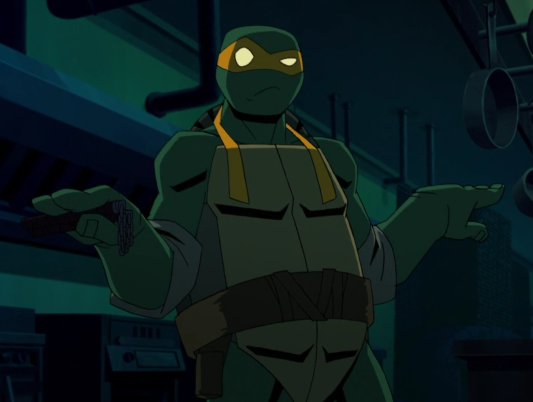
And while all four of the Turtles are wonderfully characterized, I especially loved Michelangelo in this movie. Obviously, the characterization of Michelangelo over the years has really varied – he’s been a surfer dude, a tease and agitator, a space-case flake, and so on. But he’s always had a sweetness and an open-heartedness as a part of his character, which is best seen in the IDW comic book series, where he’s the most sensitive and childlike of the Turtles.

And he isn’t that different in this version. But in this one, he’s the enthusiastic one – he thinks Gotham is the coolest place he’s ever seen, and he loves every strange wacky detail about the place. His brothers are a little more laid-back about Gotham, its dangers and its oddities, but Michelangelo is delighted by gunbrellas to the point of ignoring his own safety. His enthusiasm is clearly the enthusiasm of the makers of this movie, and sometimes it feels like the audience is being carried along by his joy over polar bears with ice guns and police zeppelins.

“Does New York have mad blimps flying around for no reason? I mean, what are they for? I love ’em!”

Michelangelo, Batman vs. Teenage Mutant Ninja Turtles

And I think his enthusiasm is integral to emphasizing how much the people who made this movie loved the franchises: by having a character whose defining trait is how much he loves everything he comes across.

I also love his relationship with Alfred. Obviously it’s played for laughs, with the most rambunctious of the Ninja Turtles bumping up against Batman’s prim butler, who doesn’t understand Michelangelo’s love of skateboards and “greasy cheese bread.” But I enjoy the fact that neither one of them is acting in a way that is illogical to his character.

Michelangelo skateboarding through stately Wayne Manor and crashing into Alfred might seem like he’s being an asshole, but stop and think about it: not only is he a teenager, with all the dumb moments that come with a developing brain, but he’s literally been raised in a sewer. He’s probably not used to being able to skateboard wherever he pleases, and so Wayne Manor just seems like a giant empty space full of awesome curves and obstacles to him.

Obviously he figures out that Alfred doesn’t like this by the end, but it’s clear that he never skateboarded with malicious intent.

Alfred, for his part, is clearly not used to normal teenagers – insofar as you can call the Turtles “normal,” they are at least more normal than Bruce presumably was at the same age. And when you consider the Robins he’s dealt with over the years, usually scarred orphans or Damian Wayne… Alfred probably has no idea what a normal teenage boy is like, with bad table manners and dumb stunts on the stairs.

So that’s my thoughts for the time being on Batman vs. Teenage Mutant Ninja Turtles. Possibly more later. If you’re one of the two-and-a-half people reading this blog, absolutely check out the movie.