One of the biggest problems in today’s world is that people will believe whatever they are told, even if the truth is easily findable through things like search engines and repositories of ancient texts. And one of those things is the legend of Medusa, which… most people really misrepresent online. Frequently, people misrepresent it (sometimes deliberately, but mostly due to ignorance).
If you go by the stories told on social media, the story of Medusa needs to be “reclaimed” because the original Greek legend is about an unfortunate priestess who was raped by Poseidon, and then cursed by Athena. According to those people, it’s a powerful story about a woman victimized by patriarchal cruelty, which needs to be regarded as a tragedy unintended by the Greeks, and her slaying by Perseus is a further tragedy and deeply unfair.
There’s one slight problem: it’s not true.
That is NOT the original Greek legend. In the original Greek legends, Medusa was – like most monsters – born a monster. She was never a human woman, cursed or otherwise. She was the product of a minor sea god and his sister/wife, and she and her sisters were always monstrous. Whether she should have been killed is another question entirely, but she was definitely never a human woman.
The whole backstory about her being a priestess cursed after sleeping with Neptune/Poseidon? That was the invention of a later poet, Ovid. Ovid was not an ancient Greek. Or a Greek at all. He was a Roman, born much later. He essentially wrote a fanfic about Medusa that… I don’t know, he thought was cooler and more interesting than the original tale.
Similarly, the idea that she was raped and victim-blamed is a modern invention. Nothing such appears in the original myths, and Ovid never depicts her as having been raped; he depicts it as purely consensual, if extremely stupid. It’s not a part of the “original” myths, as many people online will tell you it is – it’s about reinventing this minor mythological figure as a victimized mascot. Furthermore, even if you treat Ovid’s version as the “original,” it effectively strips the character of all accountability for the stupid decision to have sex in Minerva’s temple. Yes, it’s still wrong in the story to curse her, but in ancient myths where humans are little pawns thrown around by the gods, what would you expect to happen when you have sex with a god in the temple of another god who doesn’t like the first god very much?
So, to everyone… PLEASE stop promoting this myth about the myth. Myths should be examined and analyzed for what they are, not for the fan-fiction people write about them. Yes, write books and stories that reimagine, reinvent or explore those myths… plenty of excellent books do that, and have done for thousands of years… but don’t present those stories as being the real, “authentic” versions of the legend.
Extensive spoilers for Death on the Nile, “The Adventure of the Blue Carbuncle” and BBC’s Sherlock.
So, I’m back again.
And earlier today, I was listening to a video someone made about the many flaws of the BBC show Sherlock, which was a massive success as a show but also a terrible Sherlock Holmes adaptation. For many reasons, but I think the biggest one is that they fundamentally got Sherlock Holmes WRONG as a character, depicting him as an obnoxious, self-absorbed sociopath who desperately needs to be taught about the wonderfulness of friendship and empathy and rainbows and sunshine and puppies, et cetera. Feel free to vomit.
And it occurred to me as I listened… this isn’t the first time I’ve seen something like that.
I saw it a few years ago in the absolutely heinous big-screen adaptation of Death on the Nile by Kevin Branagh, which absolutely raped every single character in it. Zero attempts to make it feel timeless, realistic or elegant, zero attempt to adapt Christie’s brilliant story, motives or characters; just trashy Hollywood crap. Seriously, if you want to watch the story, watch the old 197os version with Peter Ustinov, Mia Farrow and David Niven. Pretty faithful (they condense a few characters and add a motive, but mostly correct), visually stunning, and not as obnoxiously horny or preoccupied with current-day politics.
But one thing that really galled me was the need to depict Hercule Poirot as being a detective ONLY because he’s traumatized and grieving. Apparently Kenneth Branagh… cannot grasp a human being who wants to understand the mechanics of a crime, who wants to unlock a puzzle, who relies on rationality, intelligence and deduction. He evidently thinks that a person who has those qualities must have been traumatized into it, because otherwise he’d “care” more and abandon being a detective.
And I think the same thought process went into Sherlock. Spoilers for a show that’s been out for years and everybody has already heard about it, but in case you haven’t and you still want to watch it, I’m going to spoil the final episode.
Ready?
Ready?
Ready?
Okay, in the final episode of Sherlock it’s revealed that Sherlock’s entire personality has been shaped by the fact that his sister murdered his best friend when he was a then-normal little boy, and that’s why he’s a “high-functioning sociopath” who’s obsessed with solving crimes. Everything he does, everything he is, is once again the result of horrible trauma that made him a “broken” person who needs to be shown the power of friendship and empathy. Gag me with a spoon.
… not to mention that Steven Moffat and Mark Gatiss seem to think that superior deductive abilities are essentially a precognitive superpower. They pretty clearly have a surface-level-only understanding of what an intelligent person’s mind is, and how it works; that kind of intelligence apparently seems like magic to them, whereas the original Holmes stories always explained Holmes’ deductions in detail, and the character himself always emphasized that other people could learn to do what he did.
These two depictions of legendary detectives are… really weird. The people making them seem to think that only a broken, mentally-scarred person could become a pragmatic, intelligent, deductive person, and that something is “wrong” or “missing” from them. That’s… a scary attitude to have. Not scary to the people who have it, but scary for the wildly anti-intellectual bent that it shows.
I think what both of these abominations show is that some people are extremely frightened of people who are genuinely intelligent – not just smart or clever, but geniuses or in some sort of elite field. They themselves are not intelligent – sometimes they’re really, really stupid – and so they try to defang what frightens them by imagining that those scary, scary smart people are actually just broken and scared, and that’s why they value intellect.
Furthermore… I think this is also coming from people who not only are scared of intelligence, but genuinely devalue it. I think they’re people who mainly value “feelings” and emotions and empathy, and think those are the most important factor. The existence of characters like Sherlock Holmes (the patron saint of deductive reasoning) and Hercule Poirot (he of the little grey cells) upset them, because those characters rely primarily on rationality, deduction and knowledge, not emotions and feefees. Even their knowledge of emotions and feelings tends to be psychologically based – they analyze and they apply their knowledge to figure out motives and actions. They do NOT turn into neurotic emotional messes who need extensive therapy because of their crippling personal problems.
And contrary to the stereotype of Holmes, he and Poirot are not people devoid of emotion or connection to others. In Death on the Nile, one of the most striking series of interactions is Poirot’s interactions with Jacqueline de Bellefort, a young woman seemingly stalking her ex-lover and his new wife (who was also her best friend). Due to his knowledge of psychology and the nature of evil, Poirot recognizes that Jackie is falling prey to evil, but knows she still has the chance to turn back and save herself. He genuinely wants her to not put her murderous plan into motion, not just for the sake of her victim, but for the sake of her own soul. She doesn’t do as he urges, and it genuinely saddens Poirot by the end that this bright young woman ultimately chose to destroy herself and several other people, when it could have been avoided easily.
Sherlock Holmes doesn’t usually get quite as personal in his stories, but he often shows sympathy and compassion for others in his stories. “The Adventure of the Blue Carbuncle” is notable for ending not with an arrest, but with Holmes letting the thief go because it’s Christmas, and he’s confident that the man won’t offend again. That’s not the actions of an emotionally stunted sociopath, but of someone who does care very deeply about others, even if he tries to stay detached.
So making these stories, you have people who are not very smart… and who rely on emotions and empathy for everything, including their storytelling… while ironically being so un-empathetic that they can’t grasp the mindset of a person who is rational, intelligent and deductive, so they depict someone different from themselves as “broken” or “defective.”
I guess it’s not surprising that such Moffat, Gatiss and Branagh can’t grasp the value of a steel-trap mind, or detective stories written by two of the greatest masters of the genre. Their own minds are mush. So I’d like to ask them, most politely: stop adapting mystery stories. Stick to bad melodrama, which is more your speed. You’re not good at mysteries, and you’re not good at writing geniuses.
Every author has a trail of half-finished outlines, ideas or books that just didn’t work out. Books in embryo, which may or may not eventually be finished and released to the public. And apparently Brandon Sanderson is no different… he’s got whole novels that just aren’t published.
I’ve been reading them lately, and honestly, it’s a shame that these books weren’t published and canon to the Cosmere, because they’re pretty good overall. Although I understand why, obviously, Way of Kings Prime isn’t – it’s basically an earlier draft of a now-published novel that is drastically different in form now. It’s interesting as a look into the evolution of the novel we eventually got.
But the other two books are different. One was revised and released as a graphic novel, with some significant changes (such as a supporting character’s gender and family life) and the other just hasn’t been published officially in any form, although as I understand it, the worldbuilding is canon. White Sand takes place on a tidally-locked planet where half of it is in darkness and half in light, and the main character is a very weak sand mage who ends up accidentally becoming the leader of his order. And also they’re on the verge of being disbanded, and most of them have been murdered, and he has to somehow fight with sand-magic without being able to do more than a small amount of it.
The other is Aether of Night, kind of a cross between a Shakespearean comedy and a high-stakes high fantasy. It follows a prince/priest who ends up becoming king when his identical twin brother, who was the actual heir, is killed by mysterious shadow creatures, along with their father and a lot of other people. And those mysterious creatures are constantly invading their country and trying to overwhelm the populace, and they’re associated with a pair of feuding gods.
… and at the same time, there is also this comedic aspect, in that the former-priest-turned-king has to also select a wife from several candidates. They’re from different countries, religions and cultures, with different attitudes towards getting the prize, and some of them have their own agendas, and there are diplomatic repercussions to his choice. So as much as I enjoyed the book, I can see why Sanderson wasn’t really satisfied with the combination of high-fantasy potential apocalypse/Shakespearean comedy. You’re like, the world is potentially ending and over half the population is gonna die… so why are we hearing about some guy trying to figure out which girl he’ll marry?
And I just found out that he has another unpublished book called Dragonsteel, which I do not know anything about and which I now have to read. So stay tuned.
So, watch the above video before reading more. Be sure to see other videos by KrimsonRogue – he’s one of the few Booktubers I follow religiously, and watch every video he makes.
I am not entirely sure what this man he’s talking about is on. I have personal experience in this, because – not to boast – I was a pretty advanced reader as a young child. In first grade, I read The Hobbit. The next year, I read The Lord of the Rings. I read so quickly and at such a level that my teacher effectively stopped expecting me to read the books supplied by the school for a book club, because I blew through them too fast. Then she tried to hold me back from surpassing my peers, but that’s a tale for another day.
And then there was the library. I went there at least twice a week, and over the next years, I was able to find plenty of books that were appropriate for kids, but advanced enough for my reading skills. Just in the kids’ section, there were the Chronicles of Prydain, the Dark is Rising Sequence, Diana Wynne-Jones, the Riddlemaster trilogy, the Green Sky trilogy, the Earthsea books, and so on.
And I did not restrict myself to the adult section – I prowled through the teen section and the adult sections as well, and picked up a number of authors that I still read – stuff like Arthur C. Clarke. Not just in fantasy and sci-fi either. I developed a love for murder mysteries then, thanks to Agatha Christie, Ngaio Marsh, Elizabeth Peters, etc. I also checked out biographies of various people who sounded interesting. And, of course, I checked the new arrivals religiously, in case there was something there that I might be interested in.
And the options for reading for kids were far, far more limited back then. There was no Rick Riordan, no Five Nights at Freddy’s, no Shannon Messenger, no Marissa Meyer, Garth Nix was early in his career, etc.
I’m sorry, but I don’t buy for a second that there’s some sort of shortage of books for children who read at a more advanced level. It doesn’t make sense logically, because a child who can read above their grade is capable of reading books for older readers… AND FOR KIDS. The pool of available books is not diminished, it’s INCREASED. I was capable of reading books like Lord of the Rings, sure, but I still read plenty of high-quality, intelligent, challenging books aimed at kids.
I can think of a number of books for younger readers that are as complex and well-written, if not more so, than many adult works I’ve read. Take Marissa Meyer’s Lunar Chronicles – I would have eagerly devoured a series about a cyborg Cinderella. Such books are usually aimed at young adults and kids not because they lack the qualities supposedly required by adult fiction, but because their protagonists are young.
Evidently this guy didn’t learn the lesson that the Harry Potter franchise supposedly taught us – that you’re not locked into a particular age group’s reading material. Adults can read kids’ books, and kids can (if properly screened) read books for older readers. I read books for 9-12-year-olds, young adults AND adults – and I do not have a dearth of books to read these days. Even though a lot of the new releases don’t appeal to me, I still have a to-read pile that is dauntingly huge.
And yet, with countless people telling him how wrong he is, that kids are not doomed to have nothing to read if they’re more advanced readers… he still is willing to die on this hill. Insisting that having kids who are academically advanced – especially in reading – is bad for them and is only inflicted on them by borderline-abusive parents. Considering that the American school system is a global joke that regularly churns out illiterate adults with no skills or relevant knowledge, we could use a lot more kids who are not just learning, but learning beyond what could be expected of them.
And as KrimsonRogue points out, the professed cost of constantly obtaining books is easily offset with a library card. Fun fact: library cards are free. So is checking out anything with them. For a bookish child, there’s nothing more delightful.
Despite protestations to the contrary, I have to wonder if he truly has kids who are ahead of their grade, or whether they’re dead average… and that bothers him, so he insists that it’s actually better for kids to NOT be smart and advanced to offset his discomfort. Maybe I’m wrong. But he seems very insistent that this is the case, and not willing to listen to anyone else’s perspective.
Disclaimer: I received a free copy of this book from Netgalley in exchange for an honest review.
If I could succinctly describe Taran Matharu’s new book, it would simply be: “Eragon” if it were written for adults, by an adult.
Which is to say, “Dragon Rider” is a high fantasy with a lot of cultural richness and depth rather than Star Wars/Lord of the Rings tropes. It’s set in a world reminiscent of our own, but with soul-bindings to fantastical creatures like gryphons, dragons, chamroshes and various prehistoric beasts, and gives us a suitably underdog hero with the odds against him – and a baby dragon to help him bounce back.
As the third, least important son to the dead king of the Steppefolk, Jai is kept as a hostage in the Sabine Empire’s court. Specifically, as the personal attendant to the elderly, neglected ex-emperor Leonid. It gives him a front row seat to the dynamics of the new emperor’s court, but no respect – and a lot of hostility from the crown prince Titus and his friends, who see the Steppefolk as their barbarian inferiors. When Jai catches wind of a conspiracy against the visiting Dansk king, whose daughter is to marry Titus, he does his best to stop anyone from dying… only to lose everyone important to him.
And soon he finds himself lost in a freezing wilderness, surrounded by corpses… and most unexpectedly with a dragon egg. Without meaning to, he ends up soulbinding to the white infant dragon – and also ends up running into a prickly Dansk handmaiden named Frida, who knows something about being bound to a dragon. To save himself and his hatchling, Jai needs to get back to the Steppefolk, but staying alive in Sabine territory is the bigger immediate problem.
Taran Matharu’s fantasy world is reminiscent of our own in a lot of ways, mostly culturally: the Dansk (Northern European), the Steppefolk (Central Asians), the Sabines (Southern Europeans) and hints of other cultures like the Phoenix Empire (East Asia). It lends a lot of richness and depth to a fantasy story that is basically about becoming the spiritually-bonded partner of a mythical creature, and Matharu manages to evoke the feeling of a lot of history and complexity behind his tale.
It’s also distinctive because it takes some cues from Chinese cultivation fiction; it’s not a precise copying of its tropes, but the general ideas are there and integrated into the idea of soulbinding. The person in question learns how to acquire and store magical energy in a physical core, becoming stronger, physically purer and in possession of magical abilities. But it doesn’t make them all-powerful, and having a dragon doesn’t really keep Jai from being in constant danger (especially since she’s so small). So there’s plenty of suspense, action, grit, gore and dramatic confrontations.
Jai himself is a good underdog hero – not particularly exceptional, but he starts off as an ordinary kid that nobody expects anything from, relegated to a role nobody wants (which involves wiping an old man’s butt). He first starts to flower when he deduces that a conspiracy might be afoot, and tries to do the right thing – only for everything to implode in front of him. His relationships with other characters are pretty well-developed and enjoyable – his potentially romantic, slightly prickly connection with Frida, his immediate loving bond with Winter, and the quasi-father/son relationship he has with Leonid (who, to complicate things, personally executed Jai’s actual father). And then there’s Rufus, the mysterious old warrior with his own motives and complex history.
“Dragon Rider” takes a little time to get to any serious draconic action, but the destination is well-worth the journey. Well-rounded, vibrant and gritty, with plenty of room to flower in the future.
Disclaimer: I received this book in exchange for a review from Netgalley. All opinions are my own.
Ah, time loops. An old sci-fi trope, but a good one – you relive the same short period of time, over and over, until you can find some way out of it. Such a loop forms the backdrop of “A Quantum Love Story” by Mike Chen, a clever and warmhearted little sci-fi tale with an oddball romance blooming at its heart, and a message about the importance of really living life instead of just existing.
Tennis-player-turned-scientist Mariana Pineda is grieving over the loss of her best friend/stepsister, and decides to quit her job at a facility with a revolutionary particle accelerator. But on that fateful day, she has a weird encounter with a technician named Carter Cho, gets hit with a beam of green energy… and awakens on the previous Monday morning. She’s now in a four-day time loop alongside Carter, who has already relived the same few days several times.
The two of them put their heads together to try to figure out a way to break the loop and return to regular life… even though Mariana discovers that there’s a kind of freedom and joy to spending time with Carter, free from worries about money, personal problems or cholesterol. The two of them begin to fall in love as Carter teaches Mariana about how to really live her life… but when his memory starts to disappear, their only chance for happiness is to break free once and for all.
There’s a kind of warm, quirky, friendly, comfortable quality to “Quantum Love Story,” despite the well-worn sci-fi premise. Mike Chen takes his time not only handling the scientific aspects of the story (Mariana provides a lot of the technobabble and theoretical substance) and the mystery of how the time loop occurred, but the slowly blooming relationship between the two lead characters as they get to know each other.
And the titular quantum love story is pretty charming, although not overwhelming or mushy – honestly, the story would work just as well if the characters were just friends. Chen depicts the relationship between Carter and Mariana as one that enriches both their lives, especially since Mariana has lived a rather sterile, staid, lonely life. Her blossoming connection with Carter is about teaching her how to live – mostly through his lusciously sensual love of food, which he has a natural gift for.
Since the story revolves around the lead characters almost exclusively, Chen has to make them very likable, or the titular love story would be torture. And fortunately, they ARE likable. Mariana starts as a tightly-closed bud of a person who has encountered happy free-spirited people, but never been one herself; it’s only with Carter’s influence and the freedom afforded by the loop that she starts to unfold. Carter is her opposite – a man who, despite the disappointment of his parents, seizes every opportunity to be happy and enjoy life. And food. So much food. Food food food.
“A Quantum Love Story” is a charming intersection between a light romance and a sci-fi mystery – a story about not only breaking out of time loops, but out of the ruts where people live their lives. Thoroughly enjoyable in every dimension.
Many years ago, I remember seeing news items about Anne Rice writing a new book about immortals living in Atlantis. But after that, the book seemed to be forgotten.
I can only assume that Anne Rice submitted the book, was rejected, and then reworked and repackaged it as a Vampire Chronicle, because there is no other explanation for a book like “Prince Lestat and the Realms of Atlantis.” Aside from the hilariously pulpy title, this cascade of baffling failure feels less like an elegant, history-spanning tale of vampires… and more like the bizarre, New-Agey love child of “Highlander 2” and the “Super Mario Bros” movie.
Now the host to the ancient spirit Amel, Lestat has been having strange dreams of an advanced city being destroyed and swallowed up by the sea. Guess what it is. At the same time, the malevolent Rhoshamandes has captured a strange, not-quite-human person named Derek, and held him captive to exploit what he knows. One thing Derek does know is that he is not the only one of his kind on this world. And he needs to find Amel.
As the vampire community becomes aware of the others — and terrified of them — Lestat attempts to unravel the secret origins of Amel and how exactly he has a connection to Atlantis (or Atalantaya, as Rice calls it). But the story of the mysterious immortals will not only explain the origins of Amel (and thus of vampires), but explain the origins of human civilization.
I can only conclude that Anne Rice has been watching a lot of “Ancient Aliens” and old sci-fi movies, and reading some of the weirder New Age books out there. Otherwise, there is little explanation for why she would turn her established mythology inside-out. The supernatural is sacrificed for pseudo-science (frequently less plausible), and the murky mythic origins of the vampires and civilization itself are given a whole new explanation.
Want to know what the new explanation is?
Really?
Really, really want to know?
Okay, the explanation is that Atlantis was run by immortal aliens called Replimoids — yes, really — sent to unleash a plague on the world so that all mammal life would die, because the Replimoids’ makers believe that the only dominant life that should evolve is reptilian life… because mammals have too many feels. But in a nauseatingly humanistic twist, the Replimoids become infatuated with how wonderful human beings are, because we have love and community and “fairness.”
Yes, it does sound like a spectacularly bad B-movie from the 1950s, and Rice handles it just as well — her visions of Atalantaya are painfully pedestrian (a pastel-colored Manhattan, full of floaty-clothed hippies and New-Agey futuristic tech) and bizarrely preachy (more bigotry against Christianity, which she claims was made up by the evil reptile aliens). And the science-fictiony things she makes up are almost ludicrous enough to be written by L. Ron Hubbard (the Replimoids are a combo of all species on Earth!).
The first half of the book is not much better — it’s mostly various vampires hanging around and discussing things together, including an interminable talk between Lestat and various ghosts and spirits. It has the occasional grotesquely memorable scene (a bizarre scene where a severed hand grows a face and starts BREASTFEEDING from a man), but mostly Rice focuses on luxury porn and vampires chatting. It really feels like padding to expand the central story of Atalantaya to the full length of a book.
As for Lestat, he’s become almost a parody of himself — he loafs around, declaring his love for every person he encounters and contemplating how boring it is to be a ruler. The only one of the Replimoids to be developed is Derek, a wilting weeping woobie; everyone else is either a vampire cameo or an undeveloped shell. The only character who ended up interesting me was Amel, mainly because he is snarky, cynical and irritable — a pleasant antidote to the love-obsessed vampires and drippy aliens.
It is quite literally difficult to believe that the woman who wrote “Interview with the Vampire” and “Queen of the Damned” could destroy her own legacy quite so effectively. And yet, there is “Prince Lestat and the Realms of Atlantis.” Q. E. D.
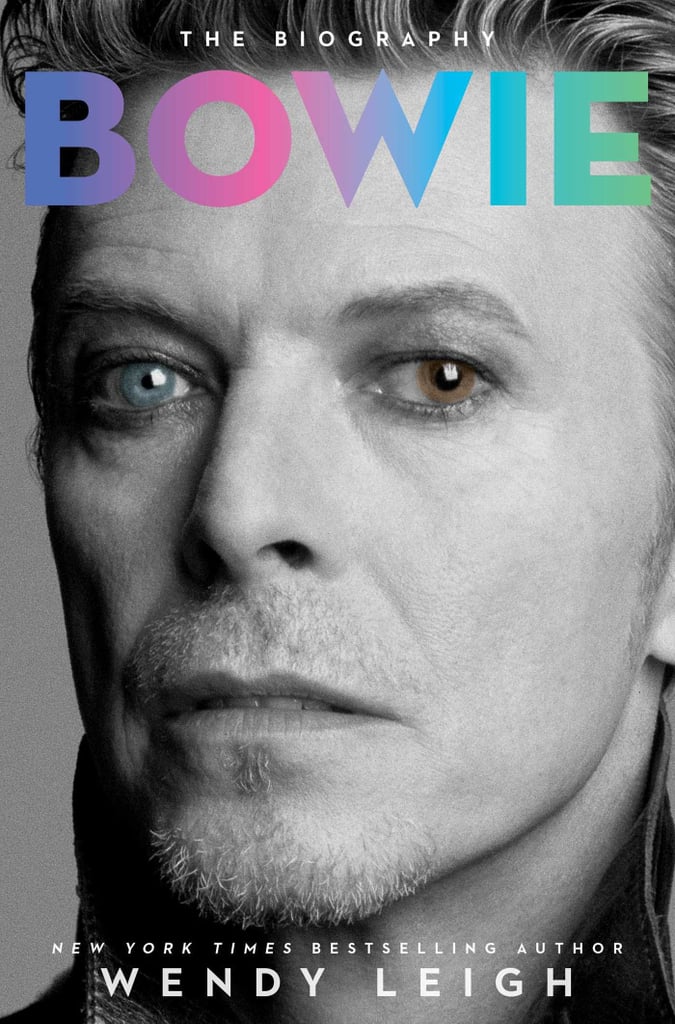
David Bowie’s sexuality was an integral part of his musical career — his gender-bending, elegantly androgynous appearance and his declarations of bisexuality.
It also seems to be the only part of his career that Wendy Leigh is actually interested in, because that is the unifying theme of the rather pretentiously-named “Bowie: The Biography.” While most of Bowie’s career is examined, Leigh merely skims over the parts of it that didn’t revolve around him having sex, who he was having sex with, how they were having sex, and preferably as many details as possible (like drag queens banging on the door).
Technically Wendy Leigh gives a pretty decent account of Bowie’s life, both on and off stage — his early life with a feisty and unconventional mother, his early music career and struggles to make it big, his involvement in the cultural attitudes that swept England at the time, his relationships with other musicians, his two marriages and fatherhood, and how he settled down from a wild rock god to an immortal, eternally-cool one.
But she seems oddly preoccupied by his sex life, which she establishes early in the book when she talks about how he asked, in a most gentlemanly way, for a sexy young woman to accompany him for a quickie in the bathroom. From there, Leigh almost fixates on who/what/when/where/why/how Bowie had sex — his bisexuality, his swinging lifestyle with his ex-wife Angela, the orgies held at their houses, his shocking pronouncements about his sexual identity, his various onstage personae… and of course, every single person he ever slept with, as far as I can tell.
In fact, she almost seems to lose interest when Bowie divorced Angie, and eventually settled into a life of monogamous contentment with Iman instead. While technically referring to this as another stage in his amorphous sexual life, Leigh seems to grow bored with Bowie after that — the final chapter of the book covers a good fifteen years of his life, but skims by everything in it quickly, as if she were just desperate to finish now that the salacious stuff is past.
In other words, this might as well have been called “Bowie: The Sexual Biography.” And as such, it’s kind of tiresome — like receiving a thin slice of meat smothered in cotton candy. You end up wanting more substance, but keep receiving nutritional fluff. While details of Bowie’s sex life are part and parcel of any biography of the man’s life, they’re so prevalent and so excessive in this book that you end up wishing she would focus on any other part of his life.
It even seeps into how Leigh addresses other people in Bowie’s life, such as her coverage of his ex-wife Angela, which is quite detailed but ultimately about her jealousy and all the kinky things she and Bowie did. But it’s not only what she includes (I didn’t need to repeatedly hear about hookups with random ladies in the bathroom) but what she leaves out; the detail wouldn’t be as out of place if she had given the same treatment to his career. However, it often feels like the career is treated as window-dressing rather than the central show.
Leigh’s writing is fairly decent, and she digs up some interesting factoids about David’s career and how it went (such as how he was financially cheated by a crooked “manager,” or how he responded to the 9/11 disaster where his wife and child were near the Towers), and it honestly left me wishing that she had done more in-depth reporting on what Bowie’s life was like in its entirety.It’s not as if there’s a dearth of information on things he did other than sex, since others have easily managed it and will likely do so again.
In brief, “Bowie: The Biography” is a flufftastic experience for those who want a frisson of pop star salaciousness — for those interested in the fuller details of Bowie’s life, give it a pass.
Wonderland. The Cheshire Cat. Down the rabbit hole. Mad as a hatter. Curiouser and curiouser. Tweedledum and Tweedledee. OFF WITH THEIR HEADS!
Even if you have never read “Alice in Wonderland” or its equally oddball sequel “Through the Looking Glass,” some part of its charmingly nonsensical stories has probably slipped into your head over the years. Lewis Carroll’s classic fantasy stories are dreamlike adventures that breezily eschews plot, character development and any kind of logic… and between his cleverly nonsensical writing (“I daresay it’s a French mouse, come over with William the Conqueror”) and surrealist adventures, it is absolutely perfect that way. How many books can say that?
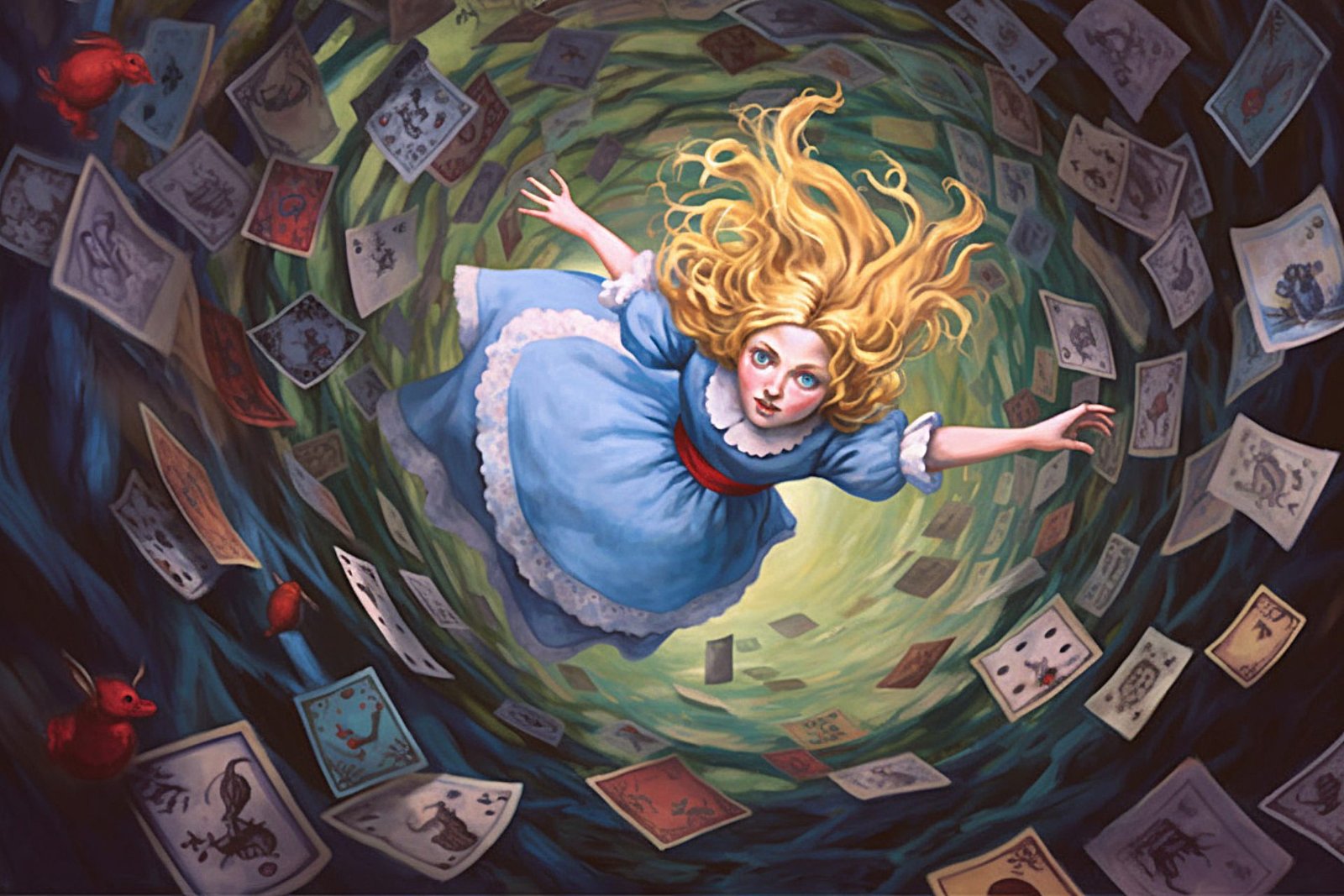
A bored young girl named Alice is by a riverbank when a White Rabbit runs by, fretting, “Oh dear! Oh dear! I shall be late!” and checking the watch from his waistcoat. Unsurprisingly, Alice pursues the rabbit down a rabbit-hole… and ends up floating down a deep tunnel to a strange place full of locked doors. There’s also a cake and a little bottle with labels instructing you to eat or drink them, which cause Alice to either shrink or grow exponentially.
As she continues pursuing the rabbit (who seems to think she’s someone named Mary Ann), Alice quickly discovers that Wonderland is a place where logic and reason have very, very little influence — talking animals in a Caucus-race, a hookah-smoking Caterpillar, even more bizarre growth potions, a grinning cat, the Duchess and her indestructible pig-baby, eternal tea-time with the March Hare and the Mad Hatter (plus the Dormouse), and finally the court of the Queen and King of Hearts.
And in the sequel, Alice steps through a mirror over the fireplace into a strange other world, where she encounters living chess pieces — including the Red Queen, who offers to make Alice a queen if she can make her way across the board in a chess match. As she makes her way across the chessboard, Alice encounters yet more strange people — the annoying yet philosophical twins Tweedledee and Tweedledum, the flaky White Queen, Humpty-Dumpty, and the clumsy White Knight.
“Alice in Wonderland” and “Through the Looking Glass” are two of those rare books that actually are more enjoyable and readable because they are pure nonsense, without more than a shred of plot or even proper narrative structure. The entire story is essentially Alice wandering from one wacky scenario to another, meeting more violently weird people with every stop and finding herself entangled in all sorts of surreal situations. It doesn’t really lead anywhere, or come from anywhere.
And yet, this works perfectly — it’s all about internally-logical nonsense, and a coherent plot or developed characters would get in the way of that. Never has such a perfect depiction of a weird dream been turned into fiction, especially since Alice regards everything that happens with a sort of perplexed detachment. Even though NOTHING in Wonderland makes sense (vanishing cats, sentient chess pieces, arguing playing-cards painting roses, the Hatter convinced that it is six o’clock all day every day, the Tweedles questioning her reality), she addresses everything with a sense of bemused internal logic (“I’ve had nothing yet, so I can’t take more”).
And Carroll festoons this wacky little tale with puns (“We called his Tortoise because he taught us”), odd snatches of mutilated poetry (the magnificently weird Jabberwocky poem) and tangled snarls of eccentric logic that only works if you’re technically insane (so… flamingoes are like mustard?). This keeps the plotless story as sparkling and swift-moving as a mountain stream laced with LSD, so the mind never has a chance to get bored by Alice simply wandering around, growing and shrinking, and engaged in a string of conversations with loopy people.
“Alice in Wonderland” and “Through the Looking Glass” are a mad, mad, mad, mad experience — and between Carroll’s sparkling dialogue and enchantingly surreal story, it’s also a lot of fun. Never a dull moment.
Middle Earth is on the verge of falling, and Sauron’s vast armies are about to swarm mankind’s last defenses. Only two things can save the world: a lost king returns to his throne, and a little hobbit makes it to Mount Doom.
So needless to say, there’s a lot of tension in “The Return of the King,” the final installment in J.R.R. Tolkien’s epic fantasy Lord of the Rings trilogy. Tolkien builds up the inevitable clash between good and evil in the form of a final apocalyptic war for Middle-Earth – and rather than cheaping out with “and then they all lived happily ever after,” twines in the bittersweet edge of a man who had seen war and evil.
Gandalf and Pippin ride to the city of Minas Tirith, which is about to be attacked by the force of Mordor – and to make things worse, the steward who rules Gondor is going nuts. Merry finds himself in the service to King Theoden of Rohan, where his determination to follow his lord into battle leads him into a terrifying confrontation. And Aragorn is seeking out allies to fight Sauron on a military scale, even if they can’t defeat him unless the Ring is destroyed. His search will take him to tribes of forest-dwellers, to Gondor — and even to summon an army of the dead.
In Mordor, the unconscious Frodo has been captured by Sauron’s orcs, and taken to the fortress of Cirith Ungol. Sam is desperate to free his friend, but knows that he can’t take on an army, and that Frodo would want him to finish the quest. Sam manages to free Frodo from captivity, but they must still brave more dangers before they can come to Mount Doom, the only place where the Ring can be destroyed. As they travel Sam sees Frodo slipping further and further into the Ring’s grasp. Will Frodo be able to destroy the Ring, or will Middle-Earth be lost?
“The Return of the King” is an impressive juggling act, with Tolkien keeping different subplots and character arcs constantly moving around and alongside each other. And as he did in “The Two Towers,” he further expands the world of Middle-Earth, both by introducing new civilizations and by expanding on the rich history that we get only a slight taste of (the undead army that serves Aragorn).
And in this story, we get some gloriously memorable scenes (Eowyn’s stand against the Witch-King, Sam charging into an orc citadel) intertwined with ones that show Tolkien’s love of the little people who occupy his world (Pippin making friends in Minas Tirith). His writing becomes a bit too exalted in places, especially after the war, but in other places it’s rich and compellingly beautiful.
“The Return of the King” is also the grimmest of the three books in this trilogy. Frodo and Sam are stuck in the vividly horrific Mordor, while the city of Minas Tirith is on the verge of completely crumbling. Tolkien does a phenomenal job of exploring the madness, despair, rage and sorrow that accompany a war, and the way it can affect even the idyllic Shire. And he doesn’t forget the slow period of healing that follows – for people, for civilizations, and even for nature.
And the ending has a feeling of finality; Tolkien shows that in a war like this, there is no true “happy ending.” Even if the good guys win, there will still be scarring, and death, and haunting memories of what once happened. And even if a person survives, he will never be the same.
Frodo Baggins is almost unrecognizable in this book – the bright, naive young hobbit has been worn down to a pale shadow of himself, increasingly consumed by the Ring until he threatens his best friend with a dagger. In contrast, Sam has come into his own, showing his own brand of quiet heroism and strength as he does his best to help Frodo get to Mount Doom, even though he’s increasingly sure that they won’t be coming back.
And the supporting characters are not neglected either, with the younger hobbits being exposed to the horrors of war, Aragorn breaking fully into his role as the future king of Gondor, and Legolas and Gimli continuing to be absolutely delightful. One particular standout is passionate war-maiden Eowyn, whose complicated battle with depression and ambition is handled with far more sensitivity than anyone would expect of a book from the 1950s.
It’s difficult, once the story has finished, to accept that one has to say goodbye to Middle-Earth and its enchanting inhabitants. But as Gandalf says, “I will not say: do not weep; for not all tears are an evil.”



 The Forest