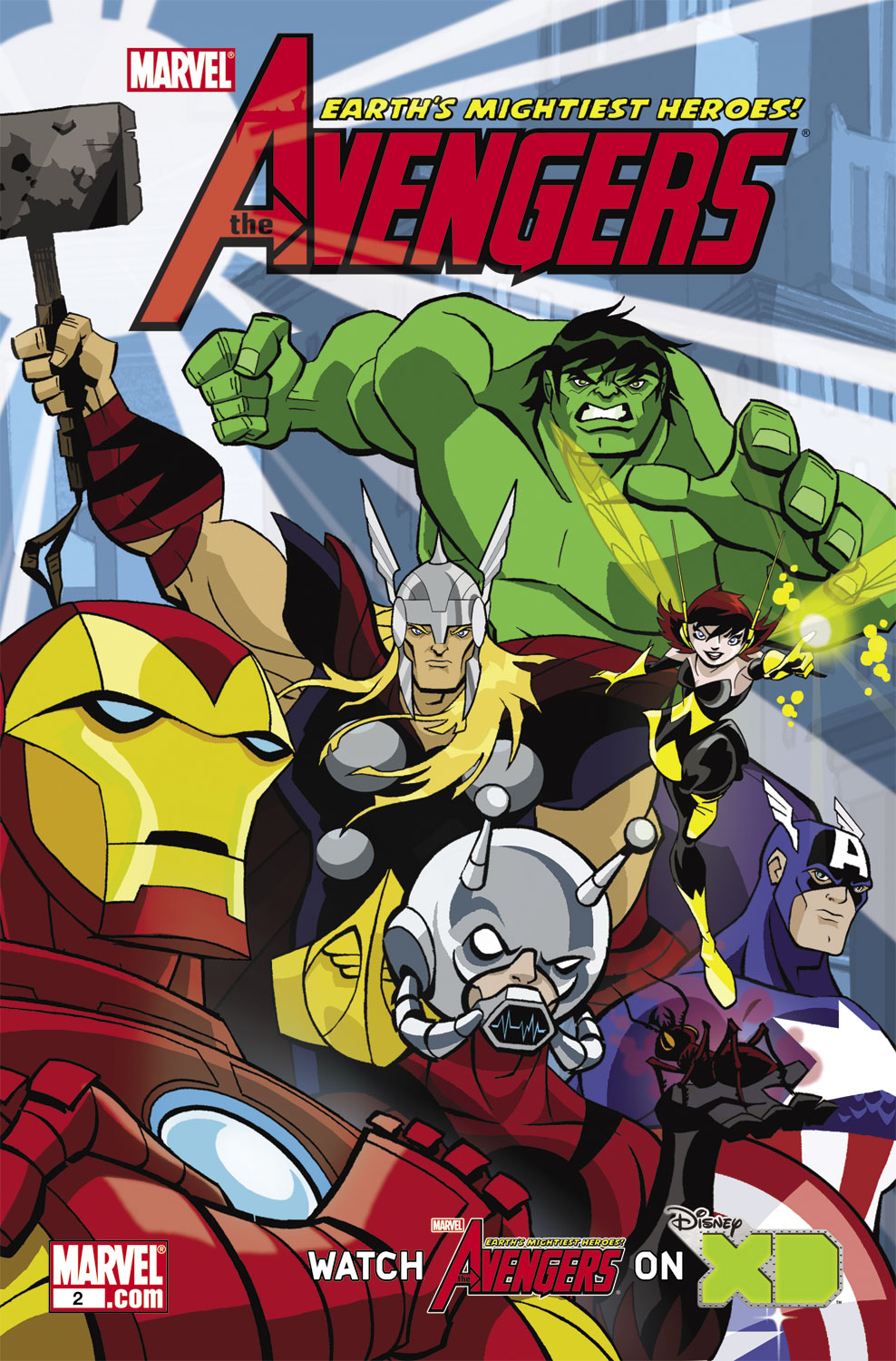
Recommendation: Avengers: Earth’s Mightiest Heroes

The Avengers film series is about as mainstream as you can get today – I could argue that Avengers: Endgame was one of the most anticipated movies of all time.

But back in 2010 the MCU was just getting started, and at that time, we got the best Avengers show – and possibly one of the best Marvel shows – to date: Avengers: Earth’s Mightiest Heroes. While it has some obvious influence from the recent Iron Man movies, this is mostly doing its own interpretation of Marvel’s comics, and it is glorious. It also has one of the most wonderful theme songs of all time. If you don’t believe me, google “avengers fight as one” and check out the music videos people have made.

But aside from the awesomeness of “Fight As One,” this show is amazing. Part of what makes it amazing is that… it isn’t strictly a kids’ show. It’s more a piece of superhero media that happens to be appropriate for children, but it’s serious and intricate enough that adults will probably enjoy it just as much.

The first half of the first season is pretty much about bringing the team together “as one.” You’ve got Tony already established as Iron Man, since the Iron Man movies had already put him in the public consciousness. But it gradually introduces us to The Hulk, Hawkeye, Ant-Man and the Wasp, Black Widow (who is a recurring ally/enemy rather than a full-on Avenger), Captain America, Thor, and sometimes Black Panther.

And for big Marvel buffs, it does indeed have characters that Marvel didn’t have the movie rights to in 2010, like the Fantastic 4, Wolverine, Spiderman, etc, as well as less prominent Marvel characters like Iron Fist and Power Man/Luke Cage, who are absolutely wonderful and deserved their own spinoff show. And it had the Guardians of the Galaxy before that group became big, as well as now-established characters like Vision and Miss Marvel (now known as Captain Marvel, and much more likable and relatable than in the live-action film).

Anyway, after a supervillain nearly destroys New York, Tony Stark decides to assemble the Avengers, a team that can recapture the 75 superpowered bad guys who have just escaped from SHIELD. So they all move into his urban mansion, and have some personal friction with each other. Just because they’re heroes doesn’t mean they all get along at first – the Hulk is grumpy and a little paranoid, Cap and Tony have differing ideas about technology and what’s important, Ant-Man despises Tony because he fights instead of rehabilitating criminals, and Hawkeye is a little pissed at SHIELD because he was framed.

But those rough edges, that friction, those personality quirks are what make the characters feel so likable and real. They’re not perfect, but they are likable, relatable and heroic. When they’re hanging out, or having conflicts, or making jokes, it really feels like they’re reluctant but fast friends.

The story arcs that follow include a lot of really fascinating conflicts, like a time-warping conflict with Kang the Conqueror, a gamma dome that mutates everyone inside it, invasion by the Kree, the Masters of Evil, the murderous android Ultron, a trip to Thor’s home realm of Asgard, etc. The second season has an overarching conflict with the Skrulls, who sow confusion and mistrust among Earth’s mightiest heroes and make things a lot more difficult for them, both amongst each other and towards the world.

Sadly, Earth’s Mightiest Heroes ran for only two seasons, when it was clearly laying out plotlines and groundwork for much more. Apparently Disney didn’t want a story with good writing, intelligence, all-ages appeal, great stylized animation and well-developed characters, so they gave us the bland, simplistic, messy and juvenile Avengers Assemble instead. Bleah.

So yeah, if you can find this series, definitely watch it. It’s packed with plot, excellent writing, and it’s as rewarding a watch for adults as for kids.
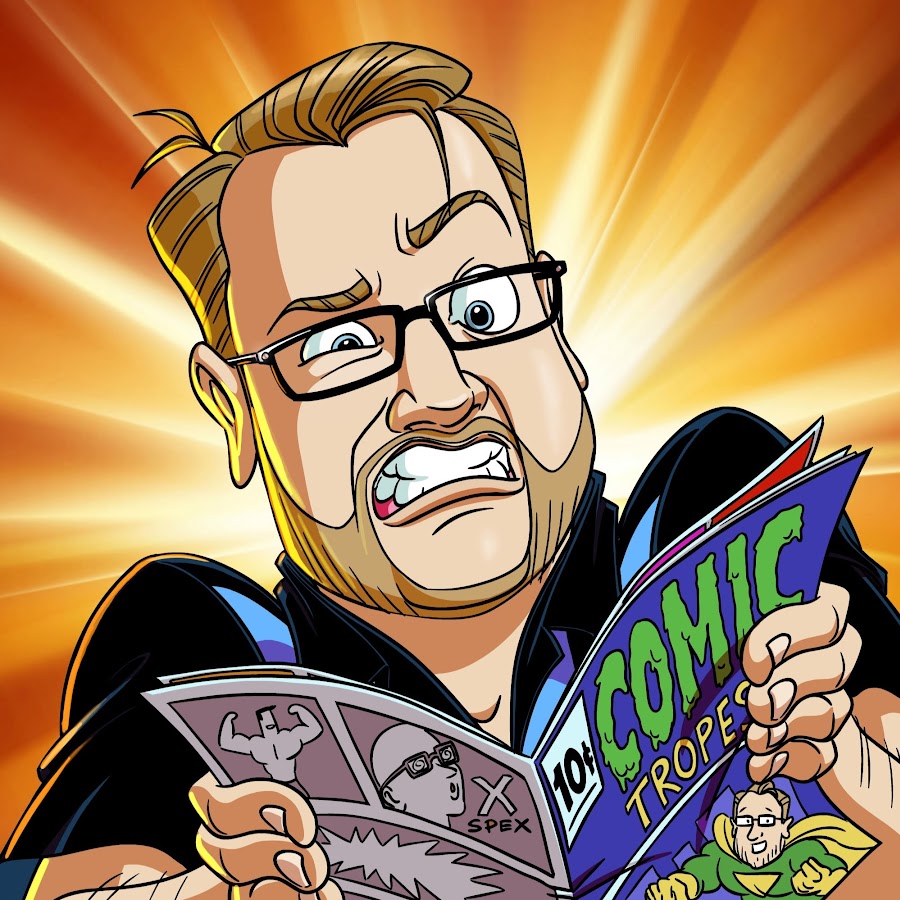
Youtube’s Comic Tropes

On Youtube, I’m subscribed to a few comic-book related channels (Linkara, obviously), and I recently stumbled across a guy called Comic Tropes, who does retrospectives, reviews, histories and trope analyses of various comic books. Not just DC and Marvel, although obviously he focuses mostly on those.

He’s got a lot of energy, and he does some fun little self-competitions like when he counts the tropes in a given creator’s comic book, and he drinks something weird whenever an individual trope comes up. In one video, for instance, he drinks different flavors of moonshine. And he’s very fair-minded, such as when he examined whether Rob Liefeld had improved over the years.

If you enjoy Linkara or ComicsDrake or other such reviewers, then please check out this guy, and preferably subscribe.

Review: Superman: Man of Tomorrow

Some movies about Superman are excellent. Some are… rather ungood. And “Superman: Man Of Tomorrow” is intensely, spectacularly, memorably…. okay.

It’s just okay. It’s hard to really find anything to love or hate about this animated origin story for everybody’s favorite blue-and-red Boy Scout — nothing about it is too bad or good, from the serviceable but unexciting animation to the pleasant but not particularly gripping characterizations. It dabbles with some deeper stuff, like Superman’s temptation to live a quieter and safer life, but ultimately it mostly focuses on explosive spectacle and a bit of horror.

Clark Kent has just come to Metropolis to work as an intern at the Daily Planet, where he discreetly uses his superpowers to just kind of fly around in a thrift-store disguise. But after he saves the city from a runaway spacecraft, budding journalist Lois Lane becomes fascinated by “the Super-Man” and is determined to corral him into an interview, on HER terms.

But then Star Labs is attacked by a yellow-toothed space-motorcycle-wearing thug named Lobo, who reveals he is here to nab Superman in order to secure a massive bounty on the last Kryptonian. Who put forth this bounty, and therefore knows that he exists? We never find out. It’s actually just kind of forgotten. Supes doesn’t even seem interested in knowing who wants him captured and/or killed.

This battle is a turning point for Superman in several ways: his costume is destroyed, a Martian appears out of nowhere to defend him, and an innocent janitor is accidentally consumed by purple alien goo. Before long, a new enemy is stalking through Metropolis, sucking the very life-force from everyone it comes across. To stop it, Superman will need to ally himself with a man who may just become his greatest enemy… and also Lobo.

“Superman: Man of Tomorrow” aims to tell the story of Clark Kent’s formation into Superman – how he got his costume, how he got his name, and how he made the conscious decision to be Earth’s protector. None of it is too deep or dramatic; don’t expect lots of introspection and contemplation here. The choice is simple, and we know more or less what he’s going to choose, but the question is HOW Supes is going to make his official debut. And it’s kind of cute to see him do things like tie a blanket around his shoulders to see how he’d look with a cape.

The story itself is a pretty straightforward one, confronting Superman with obstacles – he keeps encountering stronger and stronger foes, both physically and mentally. But it occasionally gives us quieter interludes with the Kent family, or the janitor’s family. Perhaps the biggest problem is that during the climactic conflict, Superman decides to introduce himself to the entire crowd watching it, rather than dealing with the horrifying potential-world-ending threat behind him.

At the same time, we see him getting to know Lois Lane, who’s exactly what you’d expect – she’s kind of arrogant and convinced she’s already the best, but it’s intriguing to see her interact with Clark, growing closer to him even as he grows in confidence. Clark also contrasts wildly against the amoral, crazed Lobo, who livens up the script with his antics (such as telling Lois stories that reduce her to screaming, “Stop! What’s WRONG with you?!”).

As for the animation, it’s a mixed bag. It looks very simple and kind of cheap at times (I was reminded of “Archer” during some scenes, and that show isn’t exactly known for its beautiful animation), but I suppose they were saving the money and skill for the fight scenes, which are sometimes pretty dynamic and fluid. It’s not bad exactly, but it’s not particularly good.

If you’re hoping for greatness, “Superman: Man of Tomorrow” will surely disappoint you with its profound okayness. It’s just okay. If watched for a just-okay everything, it will probably satisfy.

Review: Strange Planet

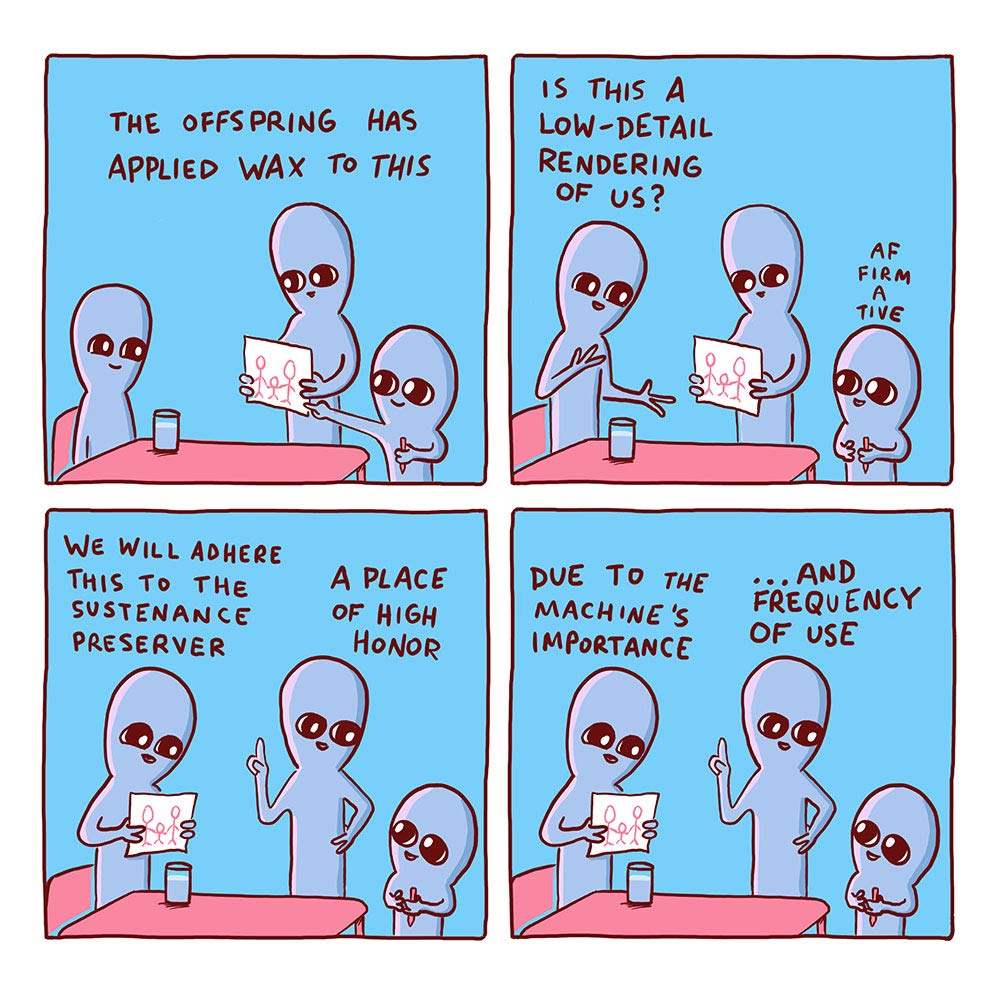
In Nathan W. Pyle’s little alien world, large-headed gray aliens with enormous eyes live their everyday lives, while explaining their actions in oddly formal, factual ways.

That’s it. That’s pretty much it.

It’s a simple formula, but one that is thoroughly endearing. “Strange Planet” is a collection of Pyle’s little four-panel comics about a “strange planet” occupied by these little gray aliens, whose lives are more or less identical to human lives, but who often explain themselves in ways that gently highlight the absurdity of things we take for granted.

These include surprise parties (“I believed the falsehoods you told me.” “Because trust!”), mosquitoes, babies, cats (“It’s vibrating”), coffee, birthday wishes (“Who wants to ingest this now that I have exhaled on it?”) smoke alarms, salt, TV news, giving flowers, makeup, wine, working out, assembling furniture, dogs, piercings (“I am considering a new hole in me”), pizza delivery, dental visits (“I’m here to scrape your mouth stones”), swimming pools, sports, and many other things.

Of course, it helps that the aliens have odd ways of phrasing things (“The group of orb-catchers that represent our region did not catch the orb tonight”). Also included: dougslice, rollmachine, personal star dimmers, seriousness cloth, sweet disks, plant liquid partially digested by insects and then stolen, the rollsuck, the hotdanger screamer, and many other charming little names.

They also have a knack for declaring their feelings in an oddly formal manner that reflects the most rational perspective on their actions, such as a sports fan declaring happily “I feel undeserved pride!” or a college graduate loudly declaring “My knowledge suffices” while other aliens announce “We smack our hands.” It’s this manner of phrasing things that calls attention to the oddness of some of our actions (wishing on falling stars) and makes them charmingly sardonic in nature.

The series’ charm also lies in Pyle’s simple art – the aliens are adorable with their little sexless gray bodies, bulbous heads and enormous eyes. Their surroundings are minimal, and their backgrounds often blank. They also all look alike, so you’re often not sure if most of the strips feature the same aliens or all-new ones every time.

Part of the charm of “Strange Planet” is that it isn’t that strange at all – it just calls attention to our own strangeness. And the chronicles of these cute little aliens are well-worth an hour or so of gentle smiles.

Review: Powers Volume 1: Who Killed Retro Girl?

Imagine a world where superheroes and supervillains actually exist – there are “powers” who use technology and superhuman abilities to save and/or endanger the world…

… and there are also cops who have to deal with all the mess.

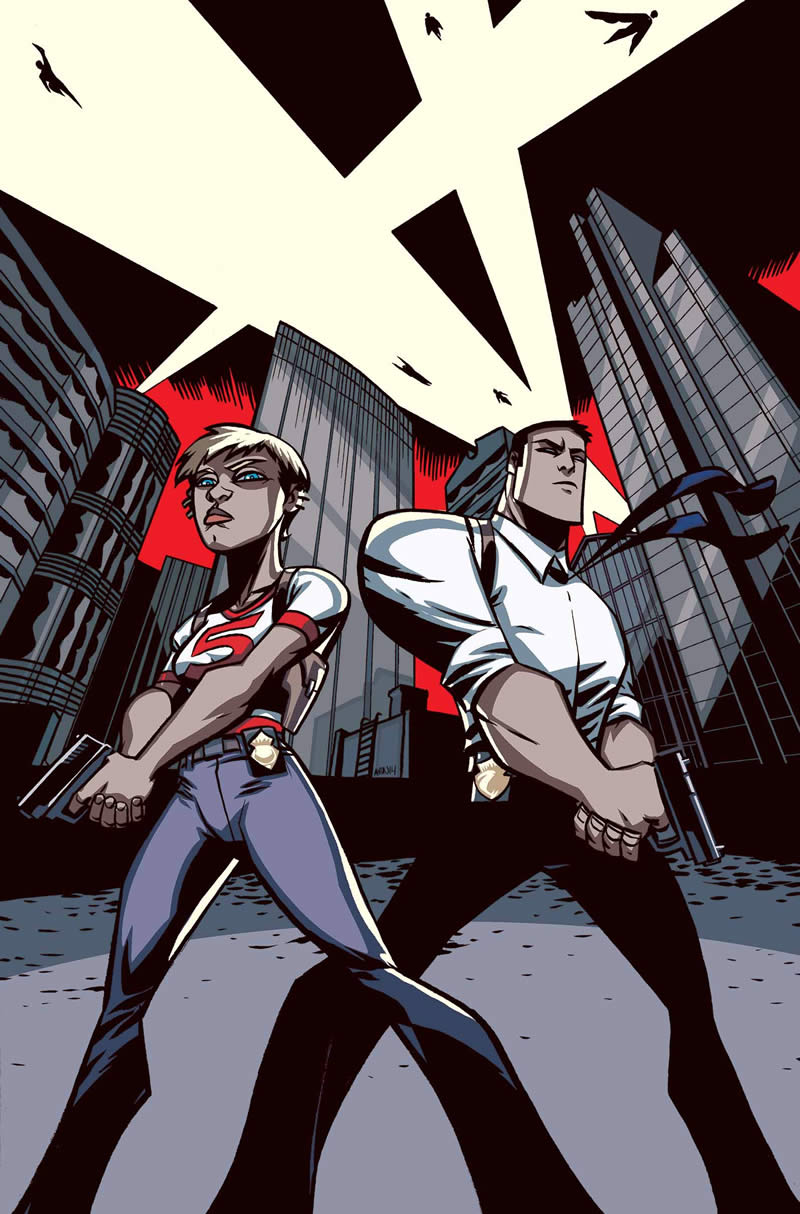
That should give you an idea of the world that “Powers Volume 1: Who Killed Retro Girl?” takes place in – this darkly clever comic book series is a police procedural about ordinary non-powered cops trying to solve violent crimes in a world where superhumans are everyday occurrences. Brian Michael Bendis spins up a genuinely suspenseful, gritty murder mystery with some twists and turns, which pairs up nicely with Michael Avon Oeming’s spare, angular artwork.

Christian Walker is called into a hostage situation, in which he saves a little girl named Calista from her mother’s deranged boyfriend. As if being saddled with a little girl wasn’t enough of a detriment to his day, he’s called into a homicide that rattles the city to its foundations. The famed and beloved superheroine known as Retro Girl has been stabbed in the throat… which is impressive, since she was nigh-invulnerable.

Oh, and Walker now has a new partner: Deena Pilgrim, a small but scrappy detective who has a penchant for crop-tops, and a deep-seated curiosity about Walker’s past.

As the city grieves and the news drags up every possible detail of her life, the two detectives begin investigating anyone who could have possibly wanted to kill Retro Girl. Supervillains, superheroes and local mafia bosses are all possible perps, but nothing that you could really hang your hat on. And as they try to unravel the seemingly impossible mystery, Deena begins to suspect that her new partner might be a power himself.

Police officers in superhero comics are usually pretty ineffectual characters, because they generally don’t have superpowers/superior tech and… well, many of the people committing crimes in superhero comics do. Superman could be an amazing police officer just by virtue of his Kryptonian abilities, but what can ordinary non-powered cops do when someone like Superman is murdered?

And Bendis crafts a pretty solid whodunnit: some clever clues strewn through the investigation, a lot of red herrings, and backstory for Retro Girl is conveyed through news reports that run at the bottom of the pages rather than interrupting the narrative. It’s a clever tactic, and it does keep the energy going. The entire story has a gritty, noir-ish atmosphere, peppered through with some dry comedy (the hypoglycemic coroner going off on a rant about space lizards and apes with laser guns).

But we’re also presented with a second mystery: what is actually up with Christian Walker? We see that he’s an exceptionally strong and rather skilled cop, quiet and rather reserved, but Deena quickly figures out that there’s more to him than meets the eye. And no, he’s not an Autobot. Deena herself is an excellent counterpoint to Christian’s introverted self – she’s sharp, fiery, outspoken and more than willing to beat up a whole room of bald mooks. Even her appearance is the opposite of his: light where he’s dark, small and slim where he is bulky and masculine.

Which brings me to the artwork. There’s something of a “Batman: The Animated Series” look to the character designs, especially the broad-shouldered, top-heavy, strong-jawed Christian. The style is fairly simple with thick lines, heavy shadows and geometric shapes, and Oeming often soaks whole scenes in specific colors – the red of Johnny Royalle’s club, the blue of the morgue, the purple of Triphammer’s home, and so on. It’s very striking, and keeps it from looking too murky.

Bendis and Oeming craft a powerful, striking opening story for their superhero-comic subversion, and “Powers Volume 1: Who Killed Retro Girl?” leaves you hungry for more adventures by Walker and Pilgrim. Gripping and intriguing.

Review: Superman/Batman: Public Enemies

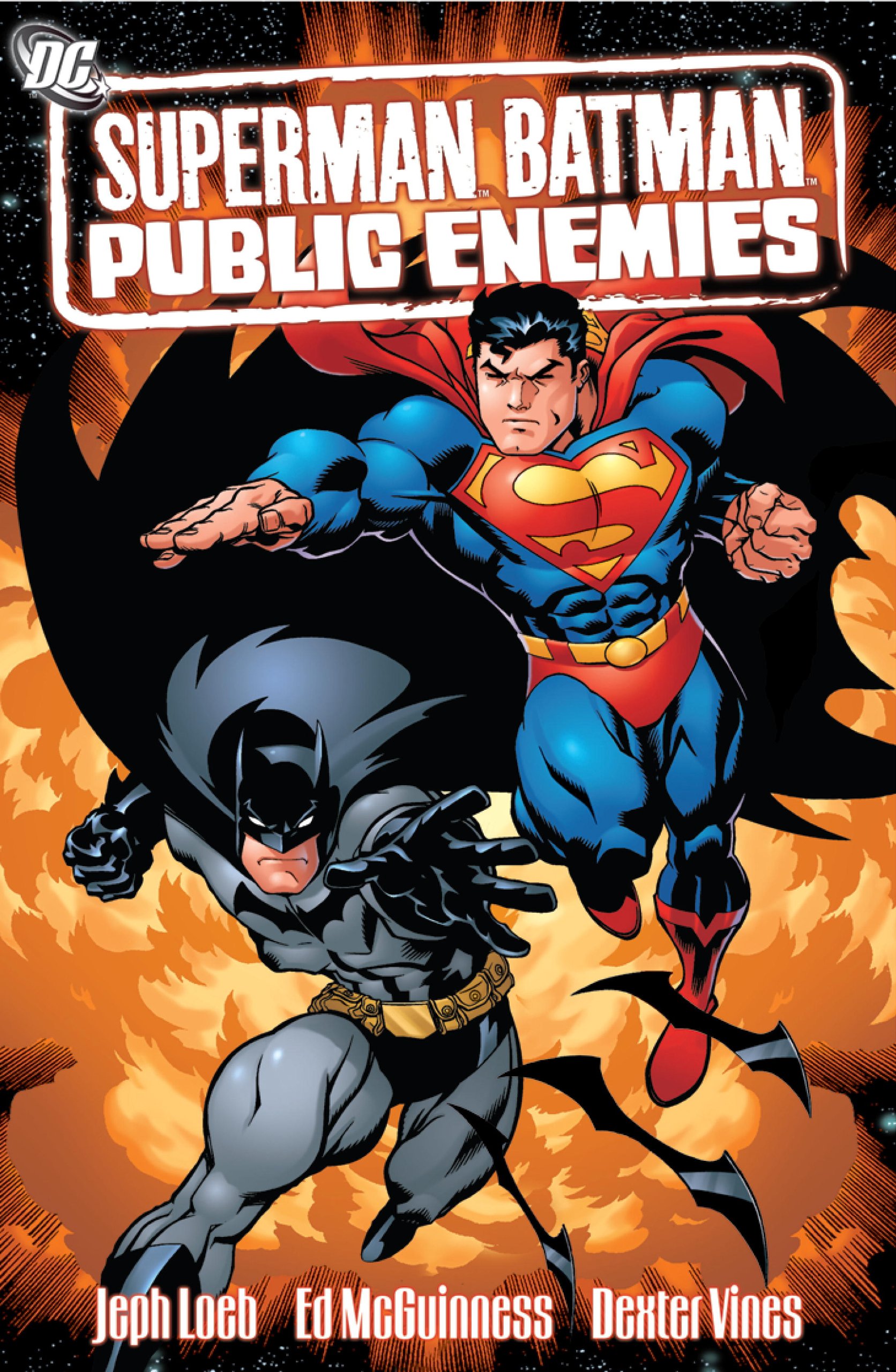
For the record, the title does not refer to Batman and Superman being enemies with each other, as in Batman v. Superman. No, this refers to the two most famous superheroes in the world being enemies of the public. Or more precisely, the U.S. government, which is not the same thing at all.

And that concept is enough to carry most of Superman/Batman: Public Enemies, with Superman and Batman going up against progressively more powerful enemies from both the hero and villain categories. But the real meat of the movie is the powerful friendship between two very different men, one an energetic and morally-powerful alien and one a dark brooding guy with problems expressing his feelings.

After the American economy collapses, Lex Luthor runs for president as a third-party candidate, and somehow manages to win despite his past as a supervillain. A third-party candidate winning? Now you know comic-book stories are science-fiction.

However, Superman bluntly refuses to believe that Luthor has reformed, and believes this is all some kind of elaborate scheme. And his suspicions are apparently proved correct when Luthor arranges a meeting… which turns out to be a trap so that his old enemy can be taken down by Metallo. Batman manages to rescue Superman from Metallo’s ongoing attack, but soon Superman finds that he’s been framed for Metallo’s murder.

Also, a meteorite made of kryptonite is about to smash into the Earth, and Luthor has appointed himself the Big Brain who can save us all from it. This will be important.

Claiming that the kryptonite meteorite has driven Superman insane, Luthor puts a bounty of one billion on his head – and now Superman and Batman are up against money-hungry attackers from both the villain and hero sides of the aisle. And their enemies are getting progressively more powerful as they approach Luthor, even as they try to come up with a solution to save the Earth from total destruction.

Speaking personally, I really enjoy the friendship between Batman and Superman, primarily because their relationship is a study in contrasts. Superman is open, emotional, bright and sunny, while Batman is taciturn, emotionally reserved, dark and more than a little weird. And yet they are both noble and deeply moral at their core, which is what makes them so compatible despite their differing outlooks and ways. That aspect of their friendship is what makes Public Enemies such a rewarding experience: seeing their bromance and how they uncomplainingly support and protect each other no matter what.

And while they do that, they’re also in a series of superpowered punch-’em-ups that pit them against a variety of enemies, ranging from the relatively obscure (Black Spider, Nightshade) to the famous (Captain Marvel, Hawkman). Some of these fights are pretty intricate and harrowing, such as Metallo shooting Superman with a sliver of kryptonite. And in between, we have some quieter moments such as Superman and Batman making their way through the sewers, having odd little discussions about the supervillains they’ve defeated over the years.

It also has a pretty excellent voice cast, with the trinity of Kevin Conroy, Tim Daly and Clancy Brown as Batman, Superman, and Lex Luthor. Conroy and Daly are typically excellent in their roles, and Brown plays both the oily, cruel Lex and the cuckoopants Lex with equal aplomb. C.C.H. Pounder is also excellent as Amanda Waller, who serves as a blunt-spoken counterbalance to Lex’s delusion and egotistical hubris. Allison Mack’s performance as Power Girl is rather flat, though.

And the animation is pretty clean and well-done. The only problem I have is that the superhero costumes are beyond skin-tight – the male characters have abs so perfectly-outlined that it looks like they’re all smuggling bags of oranges. As for Power Girl… let’s just say we know for a fact that she isn’t wearing a bra.

If you like the friendship between Batman and Superman, than Superman/Batman: Public Enemies is the movie for you. If you like cleanly animated, action-filled superhero adventures, then it works too.

Review: Teenage Mutant Ninja Turtles: Macro-Series

My Amazon review – click and vote if you like it.

When a comic book series runs for a hundred issues — plus a lot of accompanying miniseries, side-series and specials — you can expect there to be a number of plot threads that need to be tied up.

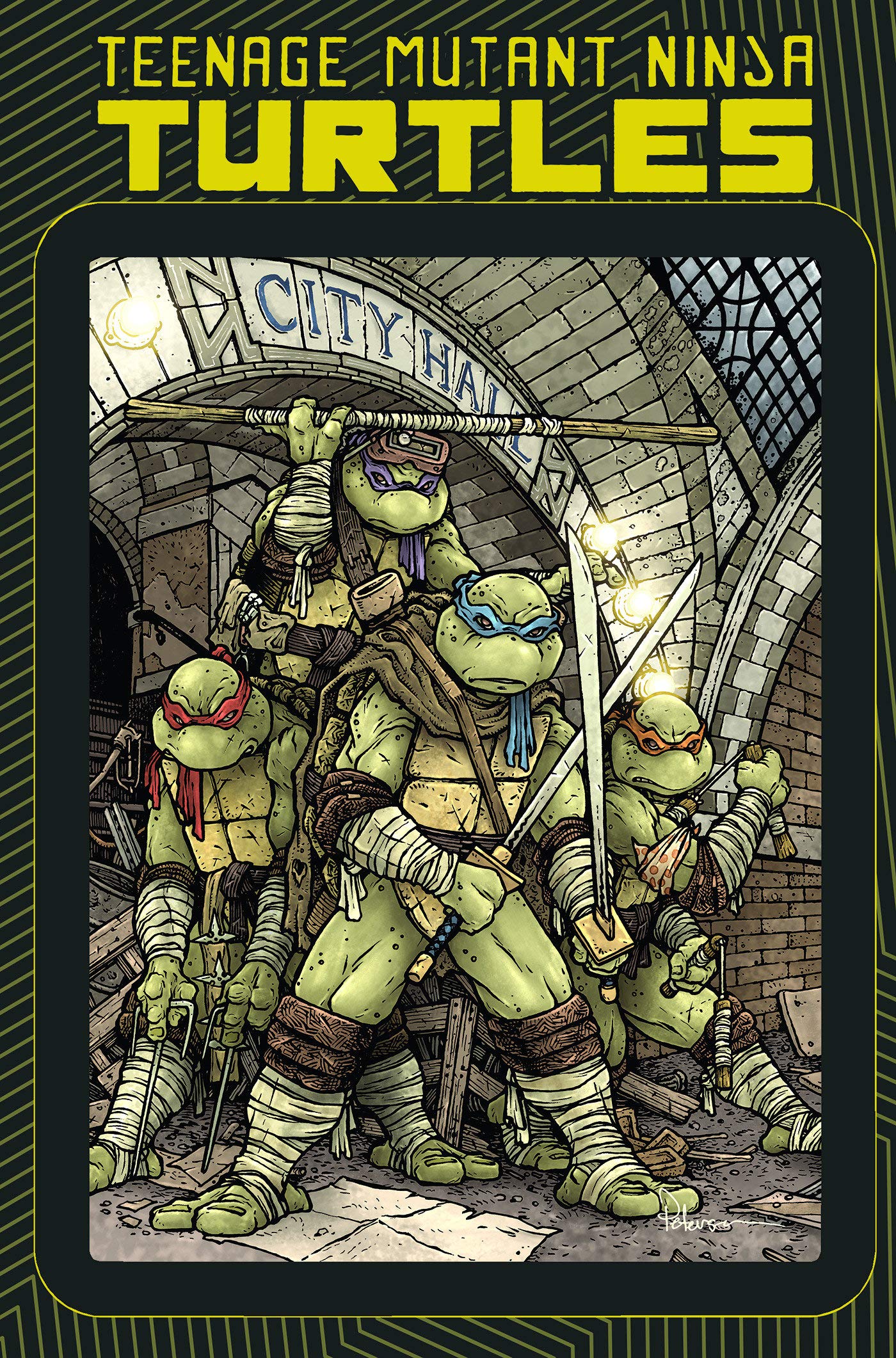
And some of those plot threads are wrapped up — or at least twisted in a new direction — in “Teenage Mutant Ninja Turtles: Macro-Series,” which provides individual adventures for each of the Teenage Mutant Ninja Turtles. And like the Turtles themselves, the stories provide plenty of variety — the artwork ranges from rough-hewn to exquisitely atmospheric, and the tales dip into everything from family drama to bloody angsty action.

In Donatello’s tale, the genius Turtle reconnects with his ex-friend Harold Lilja, over a new project. Donnie wants to create a device that can effectively predict the future, allowing him to keep his brothers and friends from suffering. But his work attracts the attention of someone far more dangerous than Harold: Metalhead, his robotic doppelgänger, who has his own reasons for seeing the project come to fruition. But can Donatello trust him?

In Michelangelo’s story, the Turtles have brought a number of orphaned children to the Foot Clan, hoping that Splinter will take them in. He agrees — on the condition that they are trained as the next generation of Foot ninja. While his brothers reluctantly agree, a horrified Michelangelo can’t accept this situation, and openly rebels against his father in order to save the children.

In Leonardo’s tale, the Turtles are spending some quiet time in the countryside at April’s family farm, trying to manage astral travel. A troubled Leo goes on a walk in the woods to be alone with his thoughts, only to run into an old enemy — Koya the hawk mutant, who still wants to kill him for crippling her wings. But his fight with Koya takes an unexpected turn, and the Turtle brothers encounter an old enemy who might become a valuable ally.

And finally, Raphael takes a solitary walk after some roughhousing with Casey, only to be captured by Agent Bishop and the Earth Protection Force. For any mutant unlucky enough to be caught, that’s a death sentence. In danger of being murdered and dissected, Raphael must harness all the rage and pain of two lifetimes to escape his enemies — as well as the grief he still feels over the loss of his very first friend.

“Teenage Mutant Ninja Turtles: Macro-Series” takes the opportunity to further some subplots in the series (Harold Lillja, Metalhead, Koya, Mikey’s strained relationship with the increasingly cruel Splinter) while also laying out groundwork for future storylines (Raphael’s torment at Bishop’s hands, forming a tenuous alliance with a former foe). Basically, anyone who follows the IDW comic books — and why wouldn’t you? — will see its many intertwined subplots leaping forward.

It also is a very emotionally charged collection. The Donatello issue is perhaps the weakest simply because it has less of that raw emotion that suffuses the others, though Donatello’s loneliness without normal friends is palpable. Raphael’s story is a raw ball of pain, blood and sorrow, including the wrenching sight of his hysterical, confused panic when he first mutated. Mikey’s story is taut with simmering anger and a fierce protectiveness. And Leo’s is more subdued, but it reflects both his troubled spirit and his deep love for his brothers.

It also has some very good art here. Brahm Revel’s rough-hewn, sketchy artwork takes some getting used to, but he does do a good job conveying emotions and Metalhead’s form. Michael Dialynas’s art has a lot of splashes of color and expressive faces, and Ben Bishop’s style is grounded, stocky and splattered with blood and broken glass. And Sophie Campbell’s art is absolutely divine — I particularly loved the montage of the Turtles spending time with one another at the farm, at peace and happy.

For those who are lucky enough to read the IDW Teenage Mutant Ninja Turtles series, “Teenage Mutant Ninja Turtles: Macro Series” is a must read, both for the stories and for the chance to catch up with our favorite anthropomorphic turtles.

Review: Teenage Mutant Ninja Turtles Volume 1: Change is Constant

In 2011, IDW Comics made a very exciting announcement: they would be publishing a brand new Teenage Mutant Ninja Turtles comic book series, completely separate from the series that had been published before.

And I have to say, Teenage Mutant Ninja Turtles Volume 1: Change is Constant is a promising launch for this new series. While the basic story of four ninjutsu-practicing anthropomorphic reptiles (tutored by a wise old rat) is there, Tom Waltz and Kevin Eastman (yes, the guy who co-created the Turtles) add some new elements to the franchise even as they remix some stuff from previous iterations.

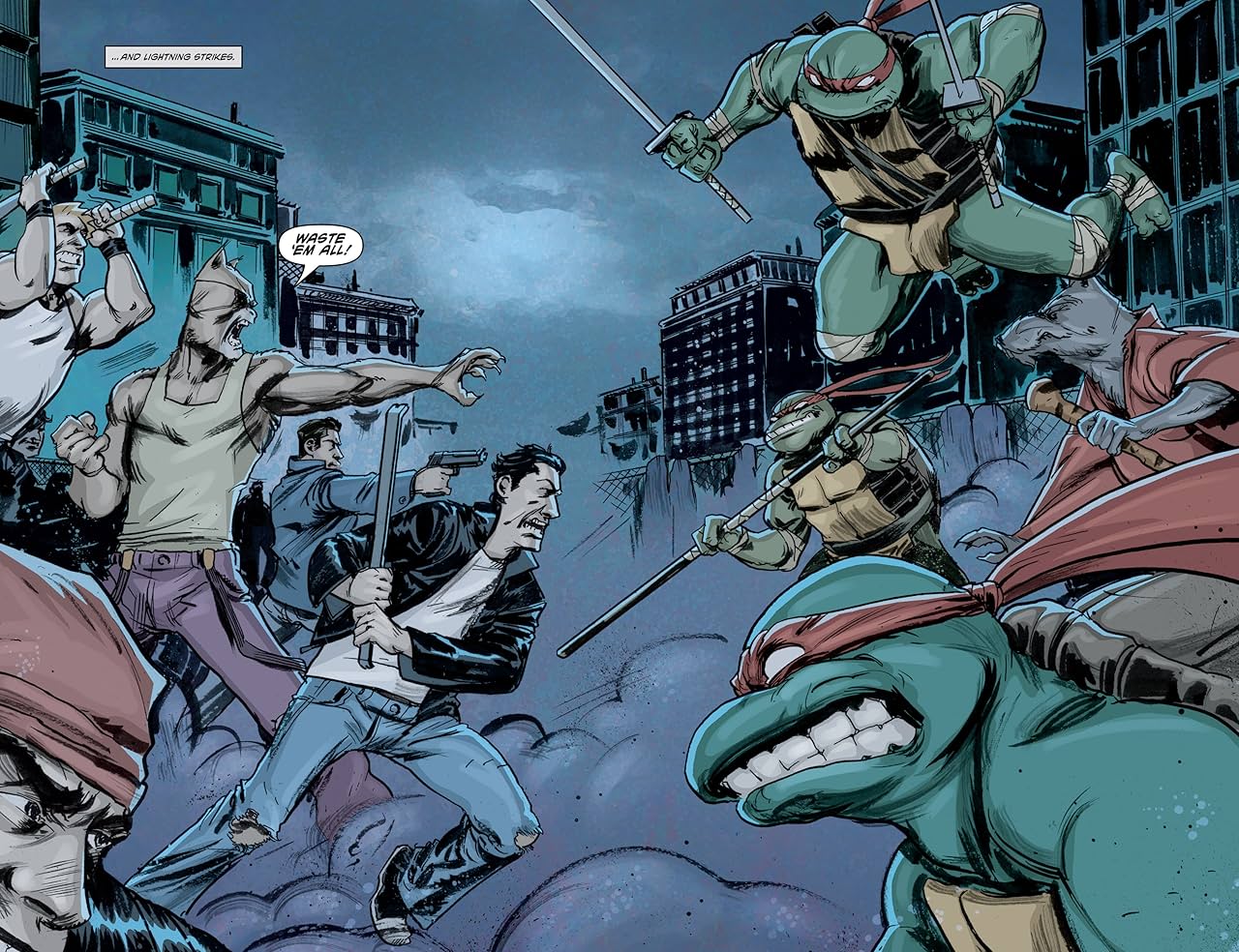
Every night, the Teenage Mutant Ninja Turtles – Leonardo, Donatello and Michelangelo – search for their missing brother Raphael, and fight off the street gangs of the mutant cat Old Hob with their father Splinter. However, the Turtles are beginning to lose heart, and Donatello is convinced that their father’s quest for Raphael is motivated by guilt at losing one of his sons, and that Raphael is probably dead.

He’s wrong, of course. Elsewhere in New York, Raphael wanders the streets as a shunned vagrant, unaware that his brothers even exist, and rooting through trash for basic sustenance. Then he stumbles across a man beating his teenage son Casey Jones, and rushes in to the rescue. He and Casey strike up an instant rapport, but their nightly excursion takes them into a dangerous confrontation with Old Hob’s gang.

And through flashbacks, we see how the Turtles came to be what they are – as adorable little lab experiments at Baxter Stockman’s genetics lab, and given their Renaissance names by an intern named April O’Neil. But something sinister is afoot at StockGen, and the four Turtles – plus Splinter, who is smarter than any ordinary rat – are swept up in a bizarre attack that transforms them forever. Shockingly, it involves glowing green goo.

As a start for a new Teenage Mutant Ninja Turtles comic book series, Change is Constant is a good pretty good launchpad. It throws the audience right into the action and quickly establishes where the central four characters are and what they’re doing – which is particularly important when one of the Turtles has been separated from his brothers for his entire mutant life and doesn’t even know about his family. Why yes, it is really wrenching to see poor Raphael wandering the streets alone, looking like he’s about to cry.

And it smoothly introduces new versions of classic characters (April O’Neil, Casey Jones, Baxter Stockman) as well as a handful of new ones, particularly the vicious mutant cat Old Hob. The story unfolds both in the present and the past, and by doing so, Waltz and Eastman weave in a number of moments that either make you go “Oh, so that explains it” (such as why Old Hob hates Splinter and the Turtles so much) or lays groundwork for future plot developments. The latter includes a rather mysterious line of Splinter’s about how he is the Turtles’ father and sensei “as before.” Stay tuned.

It also does a pretty good establishing the Turtles’ personalities, rather than just relying on readers’ familiarity. Leonardo is the dutiful, filial one who does sword practice in his spare time, Donatello is a pragmatist and has a rather antagonistic relationship with Leonardo because of it, Michelangelo is the easygoing and peacemaking one, and Raphael is the lonely brawler who lights up when he makes his first friend.

Dan Duncan provides some decent artwork here – the art style is rough but decent, and character designs are lanky and weedy and, in the case of the Turtles and Hob, pretty muscled. The only flaw is that… well, for some reason he makes the Turtles’ eyes completely white… when their masks are off. They look possessed.

But despite the eyes of the demon disciples, Teenage Mutant Ninja Turtles Volume 1: Change is Constant is a pretty solid start to an excellent comic book series, whether for newcomers or longtime fans who can spot all the references.

Enjoy this review? Please leave a vote on my review at https://www.amazon.com/gp/customer-reviews/R1ZQEH5PCP3ZE8?ref=pf_ov_at_pdctrvw_srp

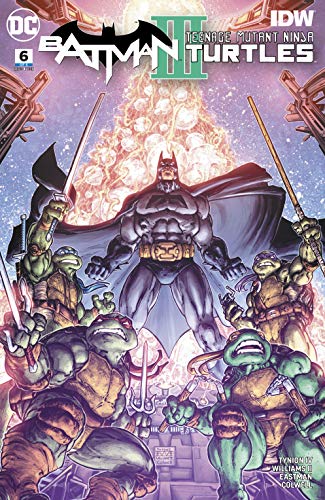
Review: Batman/Teenage Mutant Ninja Turtles III

In the first Batman/Teenage Mutant Ninja Turtles miniseries, the Turtles found themselves stranded in Batman’s universe, where they had to help Batman defeat Shredder. In the second miniseries, Batman had to pay a visit to the Turtles’ world to help them defeat Bane.

So where were they going when the third crossover came around? Why, a new universe made of the two worlds mashed together!

And this composite world does make Batman/Teenage Mutant Ninja Turtles III a little difficult to immerse yourself into at first, since your mind will probably be busy parsing through all the composite characters and figuring out who is what is who. But once you get used to Clayface being merged with Rocksteady and Killer Croc being merged with Bebop, it’s a rollicking mind-bending adventure that affectionately homages the pasts of both franchises.

Ever since the tragic death of his parents, Bruce Wayne has been raised by his butler/sensei/surrogate father Splinter, alongside his four mutant turtle brothers Leonardo, Donatello, Raphael and Michelangelo. The five of them battle against the Smile Clan, a ninja clan who are led by the brutal Laughing Man (an amalgam of Shredder and the Joker). But Bruce is haunted by strange dreams and feelings that something isn’t right – and his feelings are proven right when a Raphael from another universe appears.

But it’s not just any alternate version of Raphael – it’s the Raphael from the original Mirage comics, the prime universe from which all Turtle realities spring. And not only does he know that something is very wrong with this amalgamated reality, he knows why: the Turtles’ great enemy Krang is trying to rule both the Turtle and DC multiverses, by capturing both the Mirage Turtles and the original Batman.

The Turtles and Batman aren’t exactly pleased with the revelation that the shared life and experiences they all remember aren’t “real,” but they slowly come to realize that the Mirage Raphael is telling the truth. The only way for them to take down Krang, and separate their universes again, is for both Batman and the Turtles to find out who they really are – and reform the world into what it’s supposed to be.

If the first two Batman/Teenage Mutant Ninja Turtles adventures felt like explorations of each other’s universes, then the third feels like a celebration of both franchises. This came out in time for Batman’s 80th anniversary, and the Turtles’ 35th, and the love for both is strong – especially since it goes out of its way to highlight the “progenitor” Batman and Turtles (the latter of whom is even drawn by Kevin Eastman in black and white).

And it’s a fun ride – it has some wrenching pathos (the rediscovery of Alfred), some heartwarming moments (the Turtles reunion with April) and some funny lines thrown in to keep it from ever feeling too dark (“… I’ve finally found the great progenitors!” “That’s not a nice thing to call someone, dude!”). Above all, it has a sense of rising butt-kicking action as the Turtles and Batman dig up their true identities and start forcing the universe into the shape it’s meant to be, which requires some reorganization of the Smile Clan. With every triumph comes a little thrill.

Its biggest flaw is that it can be a little confusing at times – some characters are clearly amalgamations of characters from both the Bat and Turtle universes… and other seem like they are (the Turtles, the Laughing Man), but we later find out that their counterparts do actually exist in this world. Also, the Bat-Family kind of comes out of nowhere for the big climactic battle.

As always, Freddie Williams II’ art is awesome – he knows the right style to render both Batman and the Turtles in, giving them a complex, sculpted look that fits both universes. And the legendary Kevin Eastman contributes some pages as well, sketching in the progenitor Turtles and their world in a rough black-and-white style that harkens back to the Mirage comics, allowing those Turtles to stand out.

There’s a certain bittersweetness to Batman/Teenage Mutant Ninja Turtles III, since we’re probably not going to get another crossover for awhile – and if we do, probably not a sequel to this one. But it’s still a rollicking ride through both franchises, rendered with affection and respect. Cowabunga!