Review: Psycho

“Psycho” is one of those rare movies that needs no introduction, by a director who also needs no introduction.

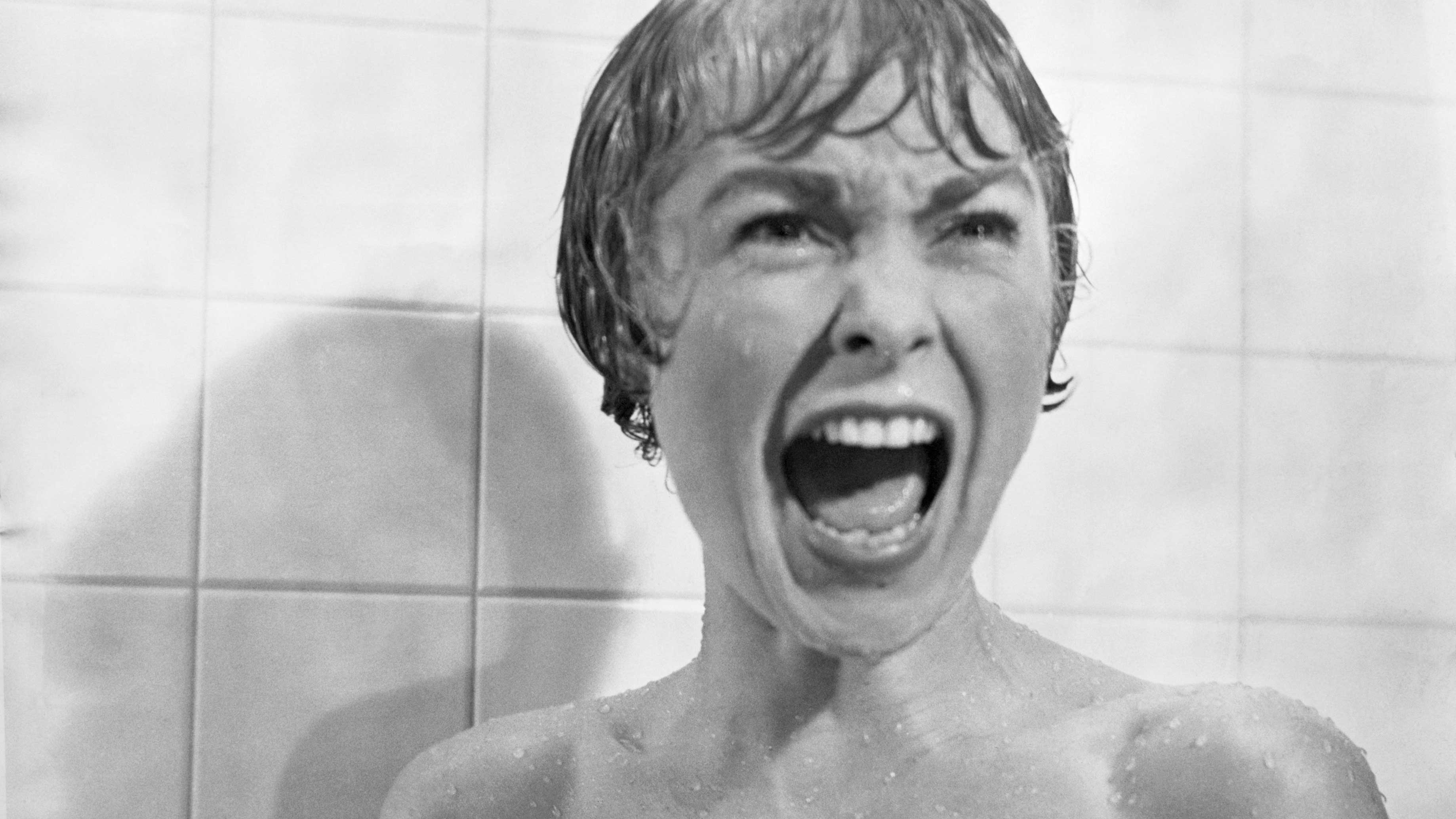
It’s one of the greatest horror movies of all time, and it deserves to be. Alfred Hitchcock’s magnum opus is a clean-cut, low-budget affair that lulls you with its slow, uneasy pace, only to shock you with bursts of bloody violence that practically make you jump out of your chair. And the acting — especially by Tony Perkins — is absolutely brilliant.

Secretary Marion Crane (Janet Leigh) is entrusted with $40,000, which she’s supposed to deposit in the bank for her employer. Instead, she steals the money for her impoverished boyfriend, Sam Loomis (John Gavin). She ends up staying overnight at a remote motel, where the only other people are the owner Norman Bates (Anthony Perkins) and his crazy invalid mother.

Then someone kills Marion in the shower. Believing his mother is responsible, a desperate Norman cleans up the crime scene and hides the body.

Meanwhile, Marion’s sister Lila (Vera Miles) is doing her best to find both her sister and the $40,000, hiring a private eye and trying to figure out where Marion went before her disappearance. Teaming up with Sam Loomis, she begins seeking out whoever saw her last — but neither of them are prepared for the true horror of Bates Motel.

The biggest problem with “Psycho” is probably that, like most legendary movies with a twist, the brilliant twist ending is so well known that its impact is lessened. Pretty much everybody knows what’s going to happen and what is going on, so it isn’t as shocking as it probably was back in 1960. It’s sort of like “I am your father” or “You blew it up!” — everybody knows the twist.

But that doesn’t mean that “Psycho” isn’t still freakishly scary and beautifully-made. Hitchcock’s direction is clean, smooth and elegant, painting the screen with light and shadow like a master painter. He fills every scene with a slow-building sense of unease, even if nothing bad is actually happening at the moment. It’s quiet, restrained…

… until suddenly a shadowy figure lunges out and starts stabbing somebody, while the screeching violins stab right along. The violence isn’t very graphic, but it’s incredibly shocking.

As Norman Bates, Tony Perkins gave one of the greatest performances you’ll ever see in a film — he comes across as shy and boyish, with an ineffable charm. He comes across as a harmless momma’s boy who’s probably never even talked to a girl before. But even from the start, there are hints that he can abruptly transform into something dark and twisted.

In fact, his is probably the only performance you’ll truly remember from the movie. Not that the other actors aren’t good — Miles and Leigh give brilliant low-key performances as a pair of desperate young women — but Perkins is just SO perfect and chilling that you can’t get over him.

“Psycho” doesn’t need a recommendation from anyone at this point — it’s one of those brilliant movies that has achieved a mythic status. Go see it. Now.

Review: The Thing

Imagine that you’re in a remote Antarctic outpost, locked in eternal icy winter, with little to do and only a few people to spend time with. Now imagine that a screaming, fleshy alien horror infiltrates your base, turning everyone it touches into extensions of itself – and if you don’t stop it, the entire planet will be destroyed.

That’s the premise behind “The Thing,” a haunting 1982 horror movie by masterful director John Carpenter. And this classic cult film is a prime example of science fiction at its most terrifying – it’s a slow-burning, claustrophobic film filled with psychological dread that periodically erupts into tentacular, flame-filled warfare. This is no jump-scare-filled schlock movie, but a finely-crafted nightmare.

A seemingly ordinary sled dog runs into an American station in the Antarctic, pursued by a crazed screaming Norwegian with a gun, who is quickly shot dead in self-defense. Helicopter pilot MacReady (Kurt Russell) and Dr. Copper (Richard Dysart) venture to the Norwegian base, and find that someone has burned it down. Everyone is dead and burned, frozen or both… and they find the remains of a horribly malformed, inhuman creature.

Well, they find out what happened when the Norwegian dog is kenneled with the other sled dogs: it starts absorbing them into one grotesque tentacled mass. Only fire kills it. The Americans soon realize that it’s an alien organism from a nearby crash site, which can perfectly mimic other organisms – so perfectly that no one can be sure who is really human, and who is part of The Thing. Even worse, it could assimilate all life on Earth in a relative short time, if it ever got out of the frozen wasteland of Antarctica.

So, unsurprisingly, there’s a lot of paranoia and suspicion among the Americans, especially after Dr. Blair (Wilford Brimley) sabotages their vehicles and destroys their communications equipment. Deprived of sleep and not knowing who to trust, MacReady and the others must discover who is a Thing before it’s too late.

John Carpenter produced a number of outstanding classic films like “Halloween,” “The Fog,” “They Live,” “Big Trouble in Little China,” “Escape From New York,” and so on. But “The Thing” may be Carpenter’s finest hour – it’s one of those carefully-cultivated, intricately intelligent movies that has pretty much no flaws. The acting, the writing, the atmosphere, and the feeling of all-consuming, gnawing paranoia right to the very final seconds of the film.

Carpenter’s direction here is mostly a slow-burn, building up a tripwire tension that permeates every scene… until, without warning, flesh starts stretching, tentacles whip out, and strange fluids pour out. The nightmarishness of the whole claustrophobic experience is only heightened by the way the movie makes you feel for the characters. You feel the horror of being surrounded by people who might not even be human, of being too afraid to sleep, of being surrounded by a wasteland of snow and burned remains.

And a lot of the movie’s effectiveness comes from its special effects. These are some of the most convincing practical effects ever captured on film – they’re fleshy, dripping with fluid, twisting and gnarling into something bloated and grotesque. And yet, for all the giant grainy teeth, oozing fluids and spider-legs, the most horrifying moments of The Thing’s presence are when it looks just a little too much like something ordinary and living, such as the giant screaming snarling dog-Thing. There’s almost a sense of cathartic relief when the humans fry one of the Things, just because something so profoundly wrong and horrifying is now dead.

The acting is also absolutely top-notch here, with Russell taking center stage as MacReady. The character isn’t really a hero – he’s just a guy who flies helicopters, who finds himself in the unenviable position of saving the world by whatever means necessary. He may be less educated than many of the other people in the outpost, but he’s undeniably intelligent, cunning and resourceful. But Russell is bolstered by some excellent supporting actors, including Brimley, Dysart, Keith David, and… well, pretty much everyone. The dog isn’t a bad actor either – its unnatural silence and calm is an early clue to what it truly is.

It may not have gotten the love it deserved when it was first released, but “The Thing” has proven over time that it is a true horror/sci-fi classic. Absolutely masterful.