Review: Malignant

“Malignant” is one of those movies that is… hard to judge. It’s hard to judge because the intent of it is not entirely clear, and so you’re left unsure whether the filmmaker responsible for it was successful in their ambitions.

Specifically, it’s hard to tell if it was meant to be funny or not.

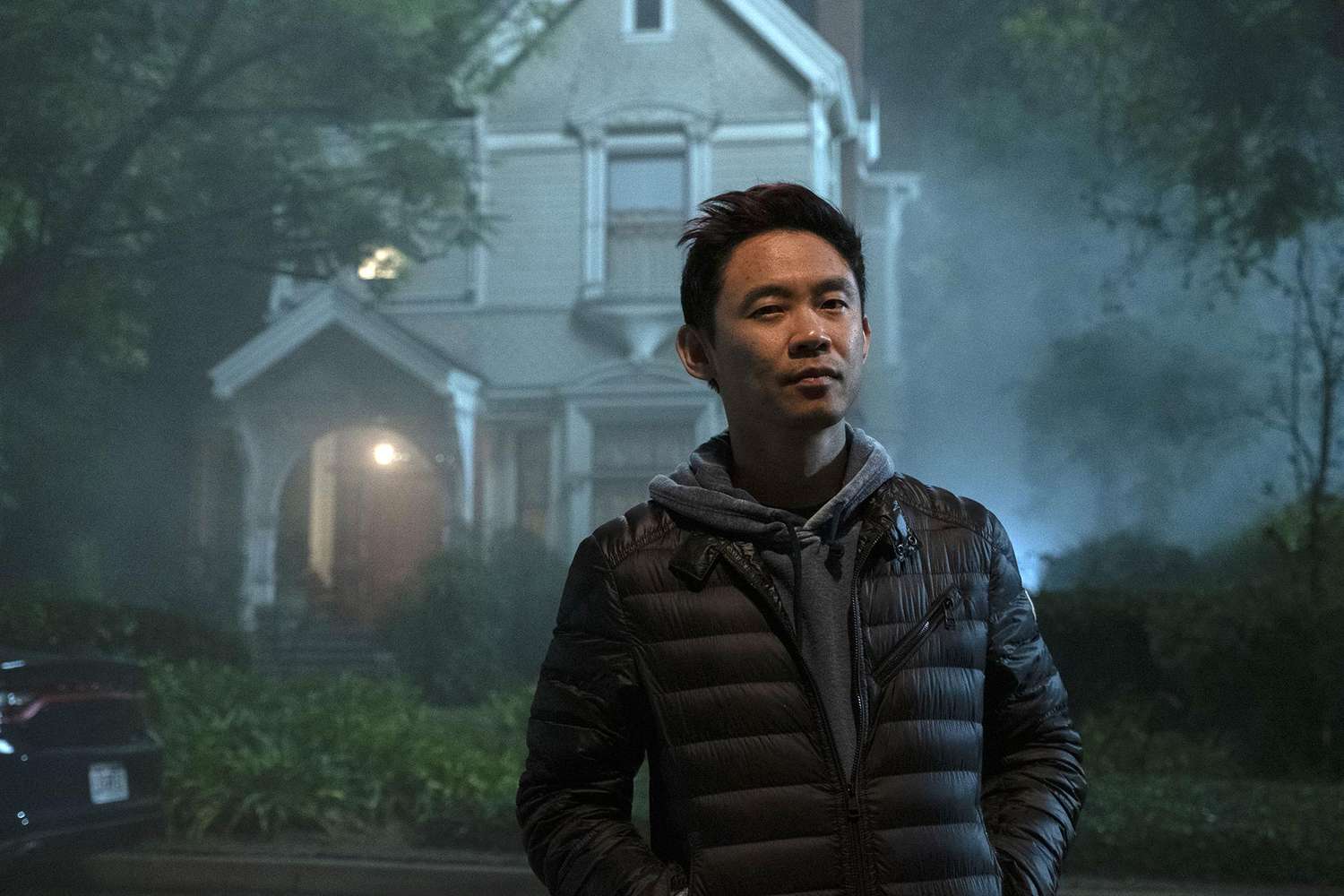
In the broadest sense, “Malignant” is a horror movie, by the current king of horror, James Wan. And for the first two acts, it serves as a perfectly serviceable buildup to some kind of horrifying revelation, with distinct overtones of the gothic and giallo. Then… the third act happens, and somehow the drama, the absurd action and the bizarreness of it all splatters across the screen like so much CGI blood. It’s absolutely gutsplitting.

When her abusive husband cracks her head against a wall, pregnant Madison Lake (Annabelle Wallis) locks herself in her bedroom. But she’s woken in the night by the murder of her husband – and an attack by a mysterious figure with long hair over his face, which leads to her losing her baby. Detectives Kekoa Shaw (George Young) and Regina Moss (Michole Briana White) investigate, but the only evidence to be found is bizarre and inexplicable, so they suspect Madison.

Upon returning to her home, Madison begins having visions of the killer hunting down and murdering other people – and it turns out that yes, her visions are coming true. The problem is, it’s all tied up in Madison’s mysterious childhood, before she was adopted by her parents… and she can’t remember that. To find out who “Gabriel” is, and how to stop him before he murders again, Madison will have to uncover a horrifying truth about herself.

I’m going to be blunt about this – “Malignant” is not a good movie. It has plot holes up the wazoo, a massive plot twist that can be easily figured out in the first ten minutes, and countless unanswered questions. For instance, why doesn’t Madison have a scar? How is Gabriel able to control electricity? Why does he wear a leather coat? Why does he have superhuman agility? All of these questions will not be answered, because the plot comes unraveled like a cheap sweater when you think about it for more than a few minutes!

But at the same time, there’s something strangely lovable about the movie. It has the innate drama and striking, haunting visual artistry seen in old giallo movies, right down to the copious gore, mingled with a kind of bad 1990s horror-movie aesthetic that just isn’t seen anymore. The opening sequence alone is a block of pure cheese, and it’s beautiful.

This gives the movie a rather inconsistent tone – during most of the police work and Madison’s daily life, we’re given a fairly realistic, subdued directorial style from Wan. Then Gabriel appears, and suddenly everything is crashing lightning, gothic castle-hospitals, and medical awards being used to brutally stab people to death. And of course, there’s the third act, where everything is dialed up to eleven – the sentimentality, the cheese, the bizarre plot twists.

This includes a scene that seems like it was made to be hilarious, but I honestly can’t tell if it was – a scene in which “Gabriel” carves his way through the police station, with superhuman acrobatics, snapped spines and rivers of gore… all performed backwards. James Wan, what exactly was your intent here?

Annabelle Wallis is merely passable as Madison – she’s okay when the role demands she be scared, and her crazy-eyes stare is pretty solid, but most other emotions just make her look like she has a stomachache. Maddie Hasson gives a pretty good performance as Madison’s younger sister, and Young has a striking presence as the police detective who looks beneath the veneer of the obvious to find out what is happening.

If nothing else, be glad that James Wan got the chance to make “Malignant” – an original horror movie that isn’t part of a glossy franchise, and which wears its niche influences like a badge of honor. It’s not a good movie, but it is an entertaining and memorable one.

Aquaman and the power of cliche

So I was watching the Cosmonaut Variety Hour, which is a great show by a very dryly clever man who reviews various geek media. I don’t always agree with his conclusions, but I do always enjoy watching him reach those conclusions, and it’s also fun when he joins forces with his friends to riff on things.

Go watch his show. It’s good. His reviews of the movies Ax ‘Em and Bright are especially good.

Anyway, a recent video he made was about the movie Aquaman, which I am rather fond of. It’s not high art, but it is a big shiny blockbuster with good direction, dazzling visuals, some silliness, some horror, fairly likable characters, and a plot that more or less makes sense. But Marcus (the guy who makes the show) has often held up Aquaman as a bad film, although in his latest video he kind of softens towards it and gives it a middling grade.

And one of Marcus’ main points is, quite simply, that Aquaman has a lot of cliches (although sometimes I think he means tropes, or derivative content). It has the whole King Arthur archetype of the true-king-with-the-magic-weapon-he-needs-to-ascend-the-throne, it has the relatives fighting for the throne thing, it has the Indiana Jones sequence in the Sahara and Italy where a strange mystical item paired up with a particular statue will show the exact spot… you get the idea.

And… strangely, I don’t really care.

And I think that is because it takes these tropes, cliches and archetypes, and does them pretty well… or at least, it does them better than other movies that try to do the same thing.

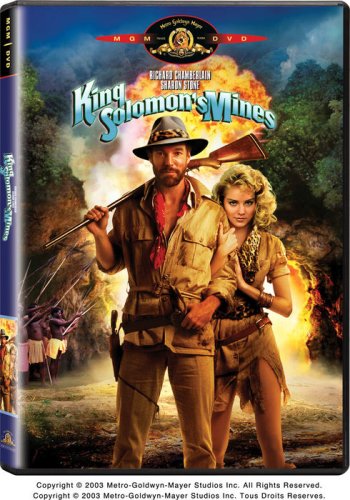
For instance, think back on movies that have ripped off the Indiana Jones films. Most of them… are very bad. Even the ones that are considered good are actually quite bad.

But I enjoyed the Indiana Jones portion of Aquaman, because it fit neatly into the movie as an organic part of the plot development, and it was the sort of wildly improbable thing you would find in those films.

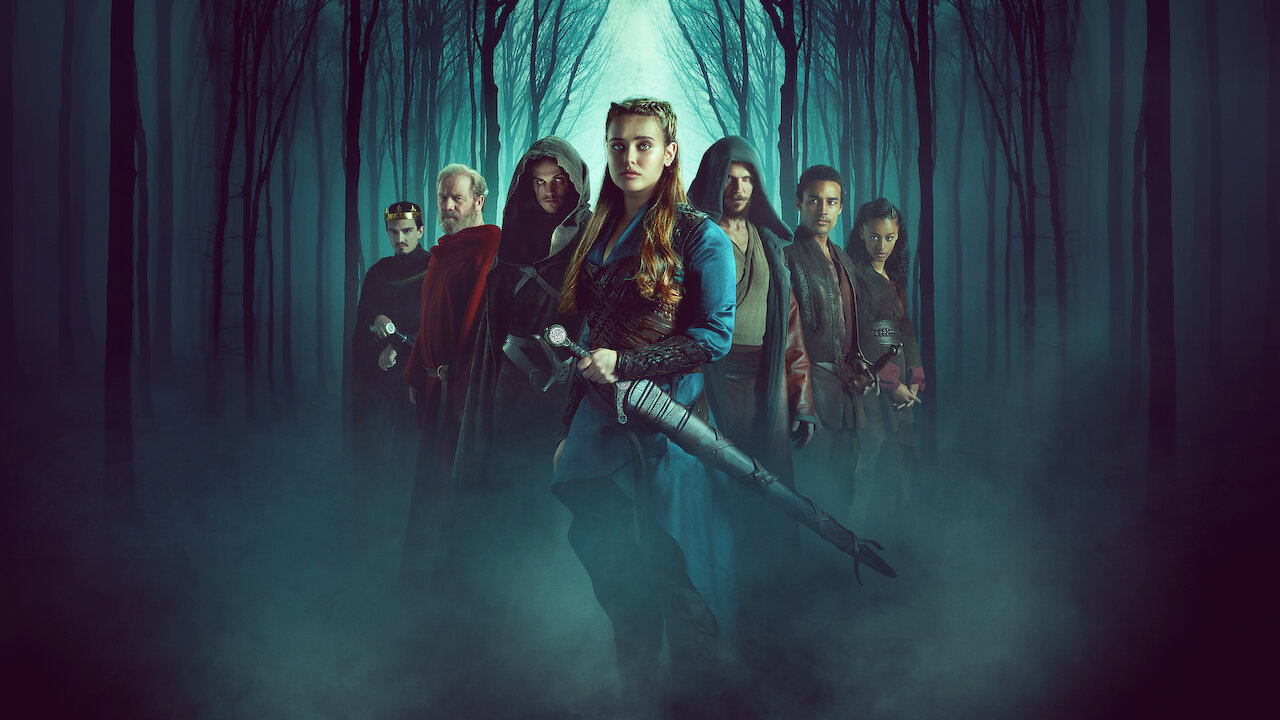
Or take the King Arthur angle. Do you know how many good King Arthur movies, miniseries or TV shows there have been in the last twenty years? Not very many! We have stuff like Transformers: The Last Knight, Mists of Avalon, Cursed, Camelot, King Arthur: Legend of the Sword… poor King Arthur hasn’t had a good time lately. I haven’t seen Merlin, but I’ve heard mixed things.

And in YA fiction, they’re trying to either turn him into a teenage girl or make him irrelevant because of a teenage girl (Cursed), because YA fiction. No, I am not reading those books, and you can’t make me. I tried to read Cursed, and it was… unpleasant.

But the Arthurian overtones and the trajectory of Arthur Curry’s growth into a king is… both familiar and satisfyingly different. Yes, it’s the familiar arc of an unknown True King acquiring a legendary weapon in order to become a powerful king, which has been around in European-influenced media for many centuries. But it’s also unique enough with stuff like the Karathen and the actual combat with the tridents — which grows naturally from another fight earlier in the story — that it doesn’t just feel like someone copy-and-pasted DC comics names into a legend.

Complete originality is virtually impossible in storytelling. Even Shakespeare made a lot of adaptations and remakes. Seriously, look into the history of many of his stories, and you’ll find that most of them were derived from existing tales, including other plays. Bring that up when someone moans about rebooting some movie franchise from thirty years ago and how nothing is original like in the good old days.

But the lesson here seems to be that if you can’t be original, then at least handle your cliches and tropes with skill and talent, and make them more entertaining than other films/books/TV shows/etc. that handle the same content.

That’s part of the appeal of My Hero Academia. It tackles a lot of things in comic books that are taken for granted, and examines them while fleshing them out. All Might is obviously a Superman-like character (different backstory, but quite similar to early Superman, including jumping instead of flying), which makes him a superhero cliche. He looks like a cliche, he sounds like a cliche, he acts like a cliche. But it’s because he’s a walking cliche that the story can subvert the cliche with his successor (a scrawny crybaby), examine him in greater detail and reveal different sides of him that you wouldn’t expect.

So I guess the lesson is… avoid cliches if you can, but if you need to use cliches, tropes and archetypes in your work, just make sure that you make it really entertaining, and add enough spice and twists to your characters and world that the audience will feel rewarded for going down a familiar road.