Review: Exhuma

Imagine if your ancestors had the power to curse you for… well, general discomfort after death.

That premise forms the bedrock for the South Korean horror movie “Exhuma,” in which a quartet of shamans, geomancers and morticians join forces to deal with vengeful ghosts. This is a movie that could never be remade in another country – not just because it relies on tension and dread rather than jump scares, but because the historical and cultural backdrop are so uniquely Korean.

Shaman Hwa-rim (Kim Go-eun) and her tatted apprentice Bong-gil (Lee Do-hyun) are summoned to Los Angeles to investigate a newborn baby who has been cursed by one of his ancestors. Hwa-rim makes arrangements with the family patriarch to exhume and cremate the child’s great-grandfather back in South Korea, with the help of her friends: feng-shui geomancer Kim Sang-deok (Choi Min-sik) and experienced mortician Yeong-geun (Yoo Hae-jin).

But the job turns out to be more complicated than expected. The grave is on a mountaintop near the North Korean border, surrounded by malign omens: foxes, an unmarked stone, rumors of graverobbing, and a snake with a human head. The only way the corpse can be exhumed is with a complex ritual that draws out and dissipates the malignant energies (involving knives, a drum and several dead pigs), so they can dig up and then cremate the unopened coffin. Sounds simple, right?

Not so simple, because some brain donor opens it, unleashing a vengeful spirit that decides he wants to kill his entire family – and our heroes have limited time to save the remaining kin from meeting gruesome ends. But it turns out that ironing out this family debacle is only the beginning of the horrors to come, as another coffin is found buried beneath the first – and dealing with this angry ghost will not be so easy.

“Exhuma” is the kind of movie that horror needs. No jump scares, even when something shocking and unexpected happens. This is a movie that slowly builds up a sense of pervasive, eerie dread, filling every shadowy corner until it suddenly flows with splattered blood and soaring fire. It’s also a uniquely Korean movie – without revealing some of the plot twists, the story relies heavily on both Korean history and Korean folklore, so it couldn’t really be told anywhere else.

Director/writer Jang Jae-hyun slowly layers mysteries and atmosphere (so many foxes!) on top of each other, then slowly peels away those layers like an onion. Some of the scenes in the second and third acts of the movie are deeply disturbing, especially when Bong-gil speaks for the angry ghosts. If the movie has a flaw, it’s that it feels a little weird that we go through the entire cycle of dealing with the cursed family… and then, suddenly, that plot Trojan-horses an entirely unrelated evil ghost for the third act. It’s kind of odd. Not bad, exactly, but disorienting.

The actors are all uniformly quite good: Kim Go-eun is cool and collected as an intelligent, businesslike shaman, which makes it all the more unnerving when the character is stricken with bone-chilling fear in the third act. Lee Do-hyun plays a secondary role to her throughout most of the movie, but gets to show his acting chops when Bong-gil gets possessed a few times. And Choi Min-sik and Yoo Hae-jin have delightful chemistry as a couple of old buddies who specialize in exhuming and reburying troublesome dead people, swinging between easy camaraderie to harrowing battles against the supernatural.

“Exhuma” has a slightly odd plot structure, but that doesn’t keep it from being a harrowing, suspenseful movie that slowly builds its way up to the blood’n’fire. Definitely worth watching for those who appreciate atmosphere in their horror.
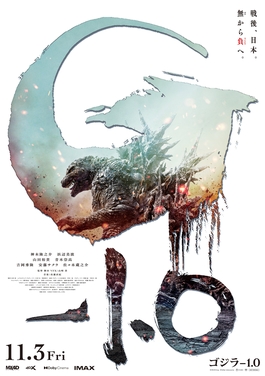
Review: Godzilla Minus One (2023)

Sometimes, a classic franchise needs to get back to its roots.

And after a highly unconventional outing in “Shin Godzilla,” Toho and director/writer Takashi Yamazaki, decided to do just that in “Godzilla Minus One.” This may be the best Godzilla movie ever made – an emotionally deep, historically-rich tale of disaster, loss, grief and guilt, which just happens to center around a giant nuclear reptile.

Kōichi Shikishima (Ryunosuke Kamiki), a young kamikaze pilot, stops at remote Odo Island with the claim that his engine is malfunctioning… but the truth is, he just doesn’t want to die. That night, a large hostile reptile nicknamed Godzilla comes ashore and kills all the engineers, and Shikishima believes it’s because he froze up instead of shooting the creature. More guilt, on top of his belief that he failed his country instead of dying for it.

After returning to Tokyo to find his parents dead, Shikishima finds himself living with a young homeless woman named Noriko (Minami Hamabe) and an orphaned baby, Akiko (Sae Nagatani). He gets a job as a minesweeper to support the three of them, though his guilt and feelings of worthlessness keep him from explicitly forming a family unit. And he’s still haunted by what happened on Odo Island, and vivid dreams of the men he didn’t save.

Then a vast, mutated creature ravages U.S. ships on its way to Japan – and Shikishima realizes that it’s none other than Godzilla. Not only is he vast and strong, but he regenerates from almost any injury, and he’s able to shoot a nuclear blast from his mouth that can vaporize a heavy cruiser. With only the slimmest chance of success and very few resources, the chances of destroying Godzilla are virtually nonexistent – but if Shikishima can overcome his demons, Japan’s people might have a chance.

It may be a controversial opinion, but I feel that “Godzilla Minus One” actually tops the original 1954 classic, which spawned the entire Japanese kaiju genre. That’s because it’s not merely an outstanding kaiju movie with a slow-simmering allegorical message about the horrors of nuclear war, much as the original was, but a deeply personal story about survivor’s guilt, PTSD, love for one’s people, and what a government owes to the people who serve it.

Director/writer Takashi Yamazaki weaves together all these threads without being heavy-handed or slowing down the story. The slower-paced, more personal parts are never boring because they’re so richly characterized (including the parts with real-life Japanese military ships and aircraft). And the parts with Godzilla are electrifying, like when he monches on a train or chases the minesweeper ship with a look of pure hate on his face. This is a Godzilla who wants the human race dead, not the lovable world-saver of many other Godzilla films.

Much of the movie rests on Kamiki’s shoulders, and he gives an absolutely stellar performance here – he embodies the painful guilt, the fear, the terror, the trauma, the longing for love and fatherhood that he can’t bring himself to embrace because he doesn’t think he’s worthy of happiness. The other characters are drawn with equally loving complexity, such as the sweet-natured Noriko played by Minabe, tormented engineer Tachibana, Shikishima’s lovable fellow minesweepers, and Sumiko, a neighbor who initially blames Shikishima for the deaths of her children but helps care for Akiko despite that.

And since “Godzilla Minus One” won an Oscar for best visual effects, it would be unfair not to praise them. The effects on a movie that cost a mere $10-12 million are absolutely superb – Godzilla has rarely looked this good, and the widespread destruction looks painfully realistic. Even without being compared to the kind of half-baked VFX that currently comes out of companies like Disney, this is a masterpiece.

“Godzilla Minus One” is a movie that is deeply, richly satisfying, both as a kaiju movie and as a human drama – a triumph for Toho and the Godzilla series, and an outstanding film overall.

Review: Detective Dee and the Four Heavenly Kings

For the record, “Detective Dee and the Four Heavenly Kings” is kind of a deceptive title. The Four Heavenly Kings have no actual part in the story, and their statues only play a passing role. It might as well be called “Detective Dee and the Umbrella Stand.”

But the title is the least of the problems that plague the third Detective Dee movie, once again directed by the legendary Tsui Hark. While the cast mostly produce good performances and there are some good ideas here, the actual plot is a rather confusing mess — the plot feels like it is only half-baked, both simplistic and overcomplicated, with awkwardly-woven subplots and a thuddingly clumsy final battle.

Following the events of the previous movie, Dee Renjie (Mark Chao) has been given directorship of the Department of Justice, as well as the powerful Dragon-Taming Mace. This angers the Empress (Carina Lau), who sees him as a threat to her power. So she enlists his friend Yuchi Zhenjin (Feng Shaofeng) to steal the mace from him, as well as a troupe of formidable illusionists, the jianghu.

But the jianghu’s (literally) poisonous tricks aren’t enough to thwart Dee, who is two steps ahead of the Empress. And as the Empress prepares to take over his department, Dee discovers that a sect of masked sorcerers are pulling her strings, scheming to take the Dragon-Taming Mace for themselves. As strange and impossible things happen — including Yuchi being framed for murder — Dee must unravel a plot that threatens the entire country.

I’m not sure exactly what is missing from “Detective Dee and the Four Heavenly Kings” that makes it unsuccessful. It’s directed by Tsui Hark, features the same core cast as the previous movie, and the special effects are still quite impressive. Furthermore, the ideas behind it — sorcerous tricks that can warp the mind, the Empress scheming to get the Mace — aren’t bad. But somehow, this movie just doesn’t quite gel together.

A lot of that comes from the fact that the plot doesn’t feel like it was entirely finished; it feels like it could have used a few more rewrites. The central plot is a pretty simple one, but the subplots are woven in awkwardly to make it appear overcomplicated. There are some elements like Dee’s mysterious illness that are just sort of dropped, but admittedly there are some stunning moments, such as when a golden dragon wall decoration comes to life and starts terrorizing the Imperial court.

And the final battle is clumsily handled. It feels like writer Chang Chia-lu just sort of didn’t know how to resolve the battle, so a character we’ve barely seen is suddenly the key to victory, and everything just sort of crashes into finishing without a proper denouement.

The saving grace is the cast, who are all quite good — Chao gives a smooth, deft performance as a Sherlockian genius who can see patterns that elude everyone around him, and Lin Gengxin is excellent as his best buddy Shatuo, who finds himself entangled with a jianghu assassin. Shaofeng has a lot of wide-eyed intensity as an officer who finds his loyalties divided, and Lau is quite good as the fiercely ambitious Empress.

After two very solid movies, “Detective Dee and the Four Heavenly Kings” is something of a stumble — a plot that doesn’t entirely come together, buoyed up by the solid cast. Hopefully any fourth installment will be a return to form.

Review: The Eternal (1998)

A mummy movie is possibly the easiest kind of horror movie to make — it comes to life and terrorizes the living. Simple, but effective.

And yet “The Eternal: Kiss of the Mummy” (aka “Trance”) has managed to screw that simple formula up. Despite the ever-interesting presence of Christopher Walken and some pretty cinematography, the story itself is a flaccid, flabby mess of plot holes and basic writing errors — including some of the least sympathetic characters I’ve ever seen in a movie.

Nora (Alison Elliott) and Jim (Jared Harris) are a pair of wealthy alcoholics in New York, who have decided to dry out on a visit to her grandmother in Ireland. Yes, they plan to dry out in the land of Guinness, because apparently it doesn’t count as booze. But when they arrive, Nora immediately blacks out and crashes the car.

And it keeps getting better — her grandmother has that highly selected senility you only see in movies, and her weird uncle Bill (Walken) only seems interested in the bog-preserved mummy of a druid witch who murder-suicided in the Iron Age. Of course, the mummy comes back to life… for no reason that’s ever explained… and she looks exactly like Nora. Now she apparently wants to steal Nora’s body… even though her own body seems to be working fine.

Director/writer Michael Almereyda seems to have only a vague idea of how proper storytelling works. Important characters appear without introduction two-thirds of the way through, logic is constantly violated (so Niamh doesn’t realize that a cigarette is ON FIRE, but she knows what whiskey is?), and the awkward climax ends up pretty much making no sense at all.

Worst of all: huge oozing lumps of exposition are constantly thrown at us like lumps of excrement… from people who couldn’t POSSIBLY know what they are talking about. How does Bill know the history of Niamh? Magic, apparently. How does Alice know all about her powers and intentions? Never explained. It becomes infuriating after awhile, especially when you realize that Alice is JUST there to exposit.

Almereyda tries to compensate by draping the movie in a dreamy atmosphere and Ireland’s peaty, raw beauty… but it’s not enough. The movie sludges by at a painfully slow pace, with lots of people wandering around and having the world’s slowest conversations, most of which are pretentious muckity-mystical drivel (“Every day; all the time. You wake up, open your eyes, take a breath, start over: that’s how it is”). And of course, Alice monologues over everything. EVERYTHING.

And rarely do you see a movie that is so padded, yet STILL manages to drag by at a snail’s pace. For instance, several characters fall down the stairs. There’s apparently no symbolic meaning to it — they just fall down the stairs because it eats up a few minutes of screen time and looks dramatic.

It also has a cast where you root for nobody, because nobody is likable. Christopher Walken comes the closest merely by being himself — weird, off-kilter, and utterly unconvincing as a lifelong resident of Ireland. But he sadly exits the movie after only a few scenes, and we’re left with… everyone else.

I kept waiting for a moment to come when we start to like and empathize with the lead characters — a pair of rich, irresponsible alcoholics — only to eventually realize that Almereyda intended for us to like them already. Elliott and Harris are mediocre and charmless here, especially since Elliott has to play the dual role of Nora and Niamh, which she does with slack-jawed dullness worthy of Kristen Stewart.

And the character of Alice is the most naked, blatant “exposition fairy” that I have ever seen in a film. I kept thinking that she was the love child that Nora claimed to have aborted, but it turns out that she is nobody special. Just a source of pseudo-mystical narration… and nothing else.

Watching “The Eternal: Kiss of the Mummy” is like being slowly dragged facedown through Ireland’s mud — it will leave you cold and miserable. And eventually, you’ll want a Guinness to dull the pain.

Review: Malignant

“Malignant” is one of those movies that is… hard to judge. It’s hard to judge because the intent of it is not entirely clear, and so you’re left unsure whether the filmmaker responsible for it was successful in their ambitions.

Specifically, it’s hard to tell if it was meant to be funny or not.

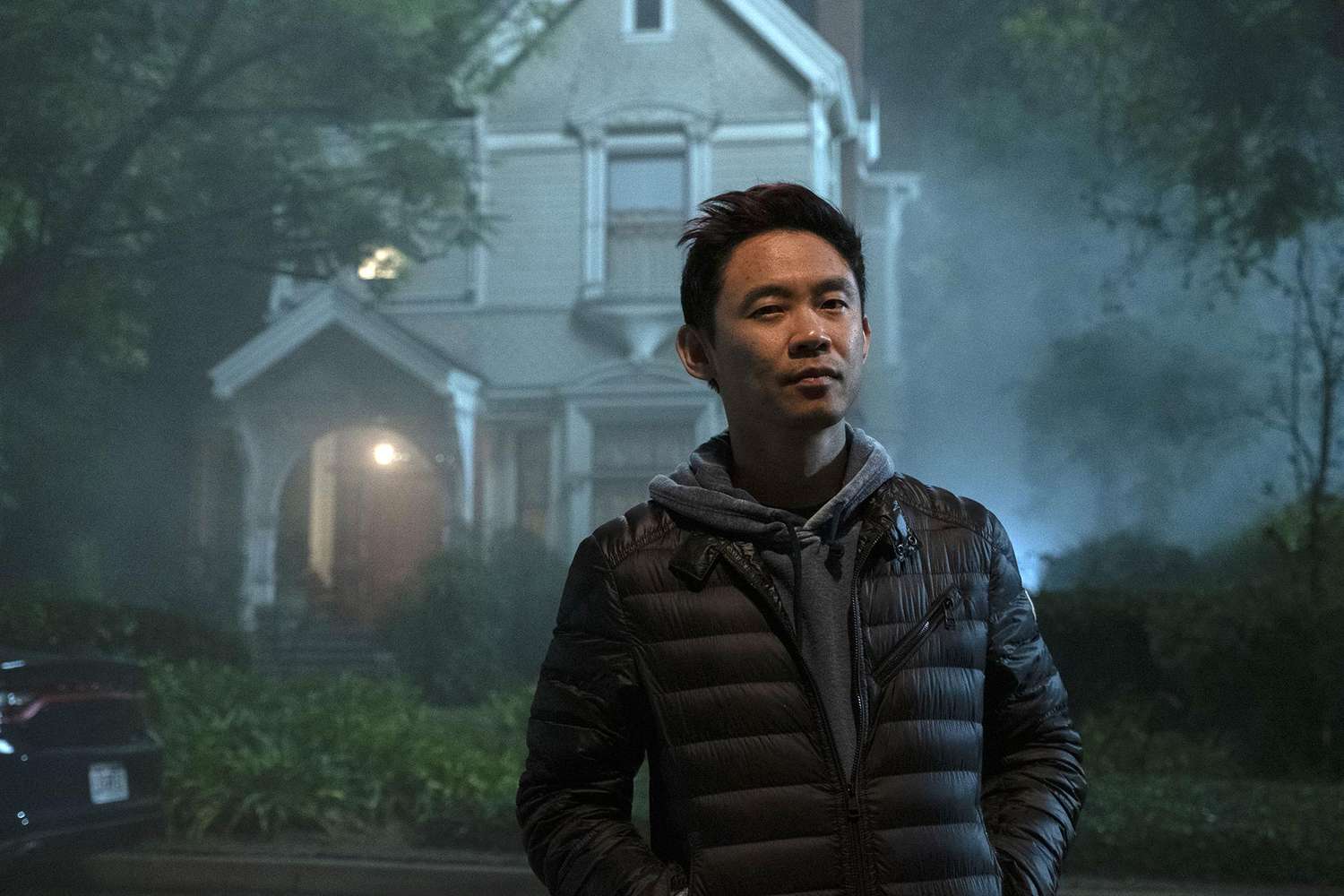
In the broadest sense, “Malignant” is a horror movie, by the current king of horror, James Wan. And for the first two acts, it serves as a perfectly serviceable buildup to some kind of horrifying revelation, with distinct overtones of the gothic and giallo. Then… the third act happens, and somehow the drama, the absurd action and the bizarreness of it all splatters across the screen like so much CGI blood. It’s absolutely gutsplitting.

When her abusive husband cracks her head against a wall, pregnant Madison Lake (Annabelle Wallis) locks herself in her bedroom. But she’s woken in the night by the murder of her husband – and an attack by a mysterious figure with long hair over his face, which leads to her losing her baby. Detectives Kekoa Shaw (George Young) and Regina Moss (Michole Briana White) investigate, but the only evidence to be found is bizarre and inexplicable, so they suspect Madison.

Upon returning to her home, Madison begins having visions of the killer hunting down and murdering other people – and it turns out that yes, her visions are coming true. The problem is, it’s all tied up in Madison’s mysterious childhood, before she was adopted by her parents… and she can’t remember that. To find out who “Gabriel” is, and how to stop him before he murders again, Madison will have to uncover a horrifying truth about herself.

I’m going to be blunt about this – “Malignant” is not a good movie. It has plot holes up the wazoo, a massive plot twist that can be easily figured out in the first ten minutes, and countless unanswered questions. For instance, why doesn’t Madison have a scar? How is Gabriel able to control electricity? Why does he wear a leather coat? Why does he have superhuman agility? All of these questions will not be answered, because the plot comes unraveled like a cheap sweater when you think about it for more than a few minutes!

But at the same time, there’s something strangely lovable about the movie. It has the innate drama and striking, haunting visual artistry seen in old giallo movies, right down to the copious gore, mingled with a kind of bad 1990s horror-movie aesthetic that just isn’t seen anymore. The opening sequence alone is a block of pure cheese, and it’s beautiful.

This gives the movie a rather inconsistent tone – during most of the police work and Madison’s daily life, we’re given a fairly realistic, subdued directorial style from Wan. Then Gabriel appears, and suddenly everything is crashing lightning, gothic castle-hospitals, and medical awards being used to brutally stab people to death. And of course, there’s the third act, where everything is dialed up to eleven – the sentimentality, the cheese, the bizarre plot twists.

This includes a scene that seems like it was made to be hilarious, but I honestly can’t tell if it was – a scene in which “Gabriel” carves his way through the police station, with superhuman acrobatics, snapped spines and rivers of gore… all performed backwards. James Wan, what exactly was your intent here?

Annabelle Wallis is merely passable as Madison – she’s okay when the role demands she be scared, and her crazy-eyes stare is pretty solid, but most other emotions just make her look like she has a stomachache. Maddie Hasson gives a pretty good performance as Madison’s younger sister, and Young has a striking presence as the police detective who looks beneath the veneer of the obvious to find out what is happening.

If nothing else, be glad that James Wan got the chance to make “Malignant” – an original horror movie that isn’t part of a glossy franchise, and which wears its niche influences like a badge of honor. It’s not a good movie, but it is an entertaining and memorable one.