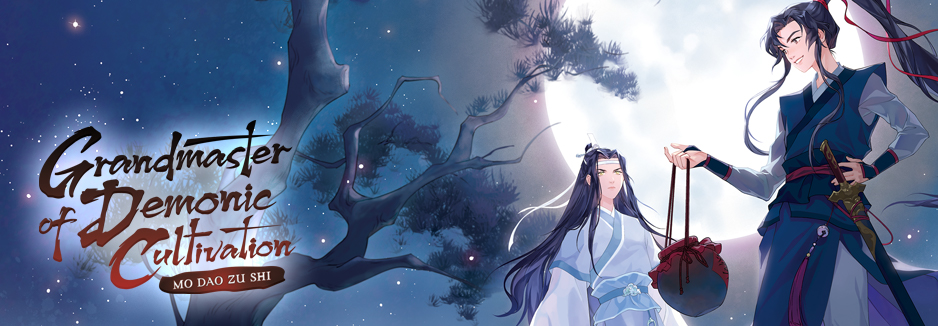
Recommendation: The Grandmaster Of Demonic Cultivation (Mo Dao Zu Shi)

Despite the general government disapproval of same-sex relationships, China does have some media focusing on such characters. Boys’ love content in China is known as “danmei,” and don’t ask me what that literally means because I know about ten words in Mandarin, and half of them are numbers.

And the most famous example of the breed is probably Mo Dao Zu Shi or The Grandmaster of Demonic Cultivation (alternate unofficial title: “The Founder of Diabolism). This webnovel has an animated adaptation, a live-action adaptation in the form of The Untamed, an audio drama, a stage play, a manhua, and a currently-ongoing manga in Japan. I can testify that all of them are very good (except the stage play, which I haven’t seen), although some of them are censored. The Untamed, for instance, is unable to openly depict the main characters as being romantically involved with one another, so the actors just gaze lovingly at each other a lot.

The story is about Wei Wuxian, who died thirteen years before the events of the series. He was basically considered a supervillain by his entire society, who used a necromantic form of cultivation to control the dead, including a sapient superzombie named Wen Ning. In the present, he’s brought back to life in the body of a mentally ill young man who wants Wei Wuxian to kill his relatives, and after some craziness and several deaths, Wei Wuxian ends up being captured by Lan Wangji, a very morally upright and noble cultivator that he knew in his old life, who seems weirdly determined to keep Wei Wuxian close to him at all times.

The two of them go on a road trip to find the dismembered body parts of a fierce corpse (zombie) that has been scattered across many different cities, which are also the key to finding out who the dead person was and how he died. Without spoiling too much, they get entangled in a conspiracy of political murder and really unpleasant secrets. And at the same time, Wei Wuxian starts discovering that he has romantic feelings for Lan Wangji, but after spending the better part of fifteen years being called a monster, he subconsciously doesn’t believe that they could possibly be returned. He’s a little clueless, because readers will probably have figured out some stuff about Lan Wangji that Wei Wuxian hasn’t.

I’m summing up a lot – there’s a decent-sized cast, some side-plots and a lot of flashbacks spanning several years and a whole war – but that is the basic description of the webnovel. The author, Mo Xiang Tong Xiu (known as MXTX), has written three webnovels and all of them have been really popular. MDZS is arguably the most plot-heavy of the three, and honestly, that is the way I like this sort of story: a heavy dose of plot, with the romance sort of wound through it.

The romance is very much an opposites-attract kind of story – Wei Wuxian is this sort of brilliant, erratic little gremlin who loves to cause trouble, and Lan Wangji is this almost superhumanly cool, elegant and silent figure that only loses his composure around Wei Wuxian. But at the core, they do have a lot in common, like wanting to protect innocent people and doing the right thing even if the world is against them. And the slow burn of them getting together is complicated by a series of misunderstandings, lost memories and the fact that Lan Wangji doesn’t really know how to express his emotions outwardly.

And yes, it’s a slow-burn – things only really coalesce in the climactic (literally, in some cases) part of the story, at which time the stories get much more sexual. Let’s just say that the fandom’s catchphrase “Every day means every day” is earned.

It also earns a lot of attention for the secondary characters, all of whom are pretty vivid… including the dead ones, both animate and not. There’s Wei Wuxian’s estranged martial brother Jiang Cheng, who’s crabby, violent and very emotionally stunted; Lan Xichen, Lan Wangji’s too-agreeable older brother; Wen Qing, a courageous and rather terse doctor that Wei Wuxian befriends; Xue Yang, a charming psychopath who traps the characters in a haunted city; Nie Huaisang, the dweeby ex-classmate Wei Wuxian runs into; and a bunch of lovably naive teenagers who tend to follow the main characters around wherever they go.

So if you’re looking for a romance with a lot of plot and misunderstandings (so many misunderstandings), this one might be something you’d like.

Review: Mansfield Park by Jane Austen

Even the best authors in the world sometimes put out something that… well, isn’t up to their usual standards. For Jane Austen, that book was “Mansfield Park” — her prose is typically excellent, and she weaves a memorable story about a poor young lady in the middle of a wealthy, dysfunctional family. But put bluntly, Fanny Price lacks the depth and complexity of Austen’s other heroines.

As a young girl, Fanny Price was sent from her poor family to live with her wealth relatives, the Bertrams, and was raised along with her four cousins Tom, Edmund, Maria and Julia. Despite being regarded only little better than a servant (especially by the fawning, cheap Mrs. Norris), Fanny is pretty happy — especially since Edmund is kind and supportive of her at all times. But then the charming, fashionable Crawford siblings arrive in the neighborhood, sparking off some love triangles (particularly between Maria and Henry Crawford, even though she’s already engaged).

And the whole thing becomes even more confused when Henry becomes intrigued by Fanny’s refusal to be charmed by him as the others are. But when she rejects his proposal, she ends up banished from her beloved Mansfield Park… right before a devastating scandal and a perilous illness strikes the Bertram family. Does Fanny still have a chance at love and the family she’s always been with?

The biggest problem with “Mansfield Park” is Fanny Price — even Austen’s own mother didn’t like her. She’s a very flat, virtuously dull heroine for this story; unlike Austen’s other heroines she doesn’t have much personality growth or a personal flaw to overcome. And despite being the protagonist, Fanny seems more like a spectator on the outskirts of the plot until the second half (when she has a small but pivotal part to play in the story).

Fortunately she’s the only real flaw in this book. Austen’s stately, vivid prose is full of deliciously witty moments (Aunt Norris “consoled herself for the loss of her husband by considering that she could do very well without him”), some tastefully-handled scandal, and a delicate house-of-romantic-cards that comes crashing down to ruin people’s lives (and improve others). And she inserts some pointed commentary on people who care more about society’s opinions than on morality.

And the other characters in the book are pretty fascinating as well — especially since Edmund, despite being a virtuous clergyman-in-training, is an intelligent and strong-willed man. The Bertrams are a rather dysfunctional family with a stern patriarch, a fluttery ethereal mother, a playboy heir and a couple of spoiled girls — Maria in particular develops a crush on Henry, but doesn’t bother to break off her engagement until it’s too late. And the Crawfords are all flash and sparkle: a pair of charming, shallow people who are essentially hollow.

“Mansfield Park” suffers from a rather insipid heroine, but the rest of the book is vintage Austen — lies, romance, scandal and a dance of manners and society.

Review: Northanger Abbey by Jane Austen

Gothic romances were all the rage in the late 1700s and early 1800s — sprawling, eerie melodramas full of sublimated sex and violence.

And rather than her usual straightforward comedies of manners, Jane Austen once wrote a mellow satire of the very mockable genre — think a parody of “Twilight” or “50 Shades of Grey” as written by one of the greats. “Northanger Abbey” is a clever and slightly tongue-in-cheek little novel about a girl who needs to learn the difference between fantasy and reality… and yes, there’s some love tangles and deceptions too.

Catherine Morland is an innocent young country girl with a love of gothic romances, and has lives an unremarkably life in a country parish. But then the wealthy Allens invite her to Bath during their vacation there, and of course she accepts — and through balls and old acquaintances, she becomes friends with two pairs of siblings. One is the Thorpes, the uncouth dandy John and his manipulative sister Isabella, and the more mysterious Tilneys, the charming Henry and sweet Eleanor.

When the Tilneys decide to leave Bath, Catherine is invited with them, to the vast stone manorhouse of Northanger Abbey — which is as gloomy, eerie and remote as her gothic-loving heart could wish for. What’s more, she believes that there are dangerous secrets in Northanger Abbey, related to the suspicious death of the late Mrs. Tilney. But Catherine has some lessons to learn about reality and fantasy: that everyday world is not nearly as melodramatic and twisted as her novels, and that it has its own dangers and deceptions.

Unlike all the other books Austen wrote, “Northanger Abbey” is a careful balance of two different styles — a parody of all the lurid excesses of classic gothic novels (she even lists a bunch of real-life gothic novels!), and it’s a subtle coming-of-age tale about a young girl who needs to figure out the difference between reality and fantasy. There’s big spooky manors, sinister noblemen, mysterious deaths… you do the math.

And Austen clearly had a lot of fun with this book, enhancing her usual formal style with a bit of satirical melodrama (“A thousand alarming presentiments of evil to her beloved Catherine from this terrific separation must oppress her heart with sadness”). And while the plot is sprinkled with sinister pseudo-gothic hints, Austen also takes the time to sketch out some romantic deceptions and tangles, as well as some deliciously arch dialogue (“I was not thinking of anything.” “That is artful and deep, to be sure…”).

The only part that falls short is the climactic encounter between Henry and Catherine… which is completely skimmed over, and related only in a distant vague style. “I leave it to my reader’s sagacity” is not a satisfying way to handle that sort of romantically-charged scene.

Austen also has fun with Catherine as the unlikely heroine of the piece, especially since she makes it clear that Catherine comes from a very mundane, undramatic background. She’s sweet, naive, wide-eyed and essentially good-hearted, but she has a lot to learn about reality (especially about the golddigging family that befriends her). And Henry is an oddity among Austen’s heroes, being a clever silver-tongued charmer with a heart of gold who likes to gently tease Catherine.

Quick, light and full of teasing humor, “Northanger Abbey” is an oddity in Jane Austen’s string of brilliant novels — but being a clever, well-plotted spoof doesn’t make it any less charming. A delight.

Review: Sense and Sensibility by Jane Austen

One of the Dashwood daughters is smart, down-to-earth and sensible. The other is wildly romantic and sensitive.

And in a Jane Austen novel, you can guess that there are going to be romantic problems aplenty for both of them — along with the usual entailment issues, love triangles, sexy bad boys and societal scandals. “Sense and Sensibility” is a quietly clever, romantic little novel that builds up to a dramatic peak on Marianne’s romantic troubles, while also quietly exploring Elinor’s struggles.

When Mr. Dashwood dies, his entire estate is entailed to his weak son John and snotty daughter-in-law Fanny. His widow and her three daughters are left with little money and no home. Over the next few weeks, the eldest daughter Elinor begins to fall for Fanny’s studious, quiet brother Edward… but being the down-to-earth one, she knows she hasn’t got a chance. Her impoverished family soon relocates to Devonshire, where a tiny cottage is being rented to them by one of Mrs. Dashwood’s relatives — and Marianne soon attracts the attention of two men. One is the quiet, much older Colonel Brandon, and the other is the dashing and romantic Willoughby.

But things begin to spiral out of control when Willoughby seems about to propose to Marianne… only to abruptly break off his relationship with her. And during a trip to London, both Elinor and Marianne discover devastating facts about the men they are in love with — both of them are engaged to other women. And after disaster strikes the Dashwood family, both the sisters will discover what real love is about…

At its heart, “Sense and Sensibility” is about two girls with completely opposite personalities, and the struggle to find love when you’re either too romantic or too reserved for your own good. As well as, you know, the often-explored themes in Austen’s novels — impoverished women’s search for love and marriage, entailment, mild scandal, and the perils of falling for a sexy bad boy who cares more for money than for true love… assuming he even knows what true love is.

Austen’s formal style takes on a somewhat more melancholy flavor in this book, with lots of powerful emotions and vivid splashes of prose (“The wind roared round the house, and the rain beat against the windows”); and she introduces a darker tone near the end. Still, there’s a slight humorous tinge to her writing, especially when she’s gently mocking Marianne and Mrs. Dashwood’s melodrama (“They gave themselves up wholly to their sorrow, seeking increase of wretchedness in every reflection that could afford it”).

And Marianne and Elinor make excellent dual heroines for this book — that still love and cherish each other, even though their polar opposite personalities frequently clash. What’s more, they each have to become more like the other before they can find happiness. There’s also a small but solid supporting cast — the hunting-obsessed Sir John, the charming Willoughby (who has some nasty stuff in his past), the emotional Mrs. Dashwood, and the gentle, quiet Colonel Brandon, who shows his love for Marianne in a thousand small ways.

“Sense and Sensibility” is an emotionally powerful, beautifully written tale about two very different sisters, and the rocky road to finding a lasting love. Not as striking as “Pride and Prejudice,” but still a deserving classic.

Review: Emma by Jane Austen

“Emma Woodhouse, handsome, clever, and rich, with a comfortable home and happy disposition” is a suitable heroine for Jane Austen’s lightest, frothiest novel. While “Emma” is not nearly as dramatic as Austen’s other works, it is an enchanting little comedy of manners in which a young woman with the best intentions meddles in others’ love lives… with only the faintest idea of how people (including herself) actually feel.

After matchmaking her governess Miss Taylor, Emma Woodhouse considers herself a natural at bringing people together. She soon becomes best buddies with Harriet, a sweet (if not very bright) young woman who is the “natural daughter of somebody.” Emma becomes determined to pair Harriet with someone deserving of her (even derailing a gentleman-farmer’s proposal), such as the smarmy, charming Mr. Elton. When Emma’s latest attempt falls apart, she finds that getting someone OUT of love is a lot harder than getting them INTO it.

At around the same time, two people that Emma has heard about her entire life have arrived — the charming Frank Churchill, and the reserved, remote Miss Jane Fairfax (along with rumors of a married man’s interest in her). Emma begins a flirtatious friendship with Frank, but for some reason is unable to get close to Miss Fairfax. As she navigates the secrets and rumors of other people’s romantic lives, she begins to realize who she has been in love with all along.

Out of all Jane Austen’s books, “Emma” is the frothiest and lightest — there aren’t any major scandals, lives ruined, reputations destroyed, financial crises or sinister schemes. There’s just a little intertwined circle of people living in a country village, and how one young woman tries to rearrange them in the manner that she genuinely thinks is best. Of course, in true comedy style everything goes completely wrong.

And despite the formal stuffiness of the time, Austen wrote the book in a languidly sunny style, threading it with a complex web of cleverly orchestrated rumors and romantic tangles. There’s some moments of seriousness (such as Emma’s rudeness to kind, silly Miss Bates), but it’s also laced with some entertaining dialogue (“Silly things do cease to be silly if they are done by sensible people in an impudent way”) and barbed humor (the ridiculous and obnoxious Mrs. Elton).

Modern readers tend to be unfairly squicked by the idea of Emma falling for a guy who’s known her literally all her life, but Austen makes the subtle relationship between Knightley and Emma one of affectionate bickering and beautiful romantic moments (“If I loved you less, I might be able to talk about it more. But you know what I am. You hear nothing but truth from me”).

Emma is a character who is likable despite her flaws — she’s young, bright, well-meaning and assured of her own knowledge of the human heart, but also naive and sometimes snobbish. She flits around like a clumsy butterfly, but is endearing even when she screws up. Mr. Knightley is her ideal counterpoint, being enjoyably blunt and sharp-witted at all times. And there’s a fairly colorful supporting cast — Emma’s neurotic but sweet dad, her kindly ex-governess, the charming Frank, the fluttery Miss Bates, and even the smarmy Mr. Elton and his bulldozing wife.

“Emma” is the most lightweight and openly comedic of all Jane Austen’s novels, with a likable (if clueless) heroine and a multilayered plot full of half-hidden feelings. A lesser delight.

Review: Persuasion by Jane Austen

In Jane Austen’s time, young women were taught that it was practically their duty to “marry well” — someone of at least equal social/financial standing.

But if a woman turned down a suitor for being poor, she ran the risk of losing the man she loved. That’s the problem for Anne Elliott, the heroine of Jane Austen’s final novel “Persuasion” — a delicate romance that takes place AFTER the romance, rejection and heartrending sorrow. There’s some slight roughness around the edges, but the story and the characters are simply brilliant.

Eight years ago, Anne Elliott was engaged to the handsome, intelligent and impoverished sailor Frederick Wentworth, but was persuaded to dump him by the family friend Lady Russell. Now she’s twenty-seven (ancient by the time’s standards), and her vain father Sir Walter is facing financial ruin. So he decides to relocate to Bath and rent out the vast family estate — and it turns out that the new tenant is Frederick’s brother-in-law. Of course, Anne still loves Frederick, but he doesn’t seem to feel the same, especially since he’s rumored to be interested in some younger, flirtier girls.

And Anne’s worries increase when she joins her family in Bath, where her father is attempting to live the lifestyle he feels he deserves (since he’s a baronet). His heir, William Elliott, recently reestablished contact with his relatives — and he seems very interested in Anne. But Anne suspects that he has ulterior motives… even if she doesn’t realize how Frederick truly feels about her.

It’s pretty obvious that Jane Austen wrote “Persuasion” late in her life — not only is Anne Elliott older than her other heroines, but she seems to have been more sympathetic to women who bowed to society’s “persuasions” rather than defying it and receiving the consequences both good and bad. This was the last book that Austen wrote before her untimely death, and it was only published posthumously.

As a result, the book can be a little rough and the story is rather simple. But Austen’s writing is still intense and powerfully vivid. Her prose is elegant and smooth, and her dialogue is full of hidden facets. The half-hidden love story of Anne and Frederick is among Austen’s most skillful writing (“I am half agony, half hope. Tell me not that I am too late, that such precious feelings are gone for ever”), and it’s virtually impossible not to be moved by it.

And Austen went out of her way to praise the self-made man, who got ahead through merit instead of birth (something that bugs Sir Walter). She also pokes holes in social climbers, vain aristocrats (“Few women could think more of their personal appearance than he did”), nasty family and false friends.

Anne herself is a very rare heroine, both then and now — she’s past her designated “marriage” years and would have been considered a lost cause. But she remains remains kind, thoughtful, quiet, intelligent, and as time goes on she starts to appreciate her own judgement instead of being “persuaded.” And Captain Wentworth is a vibrant portrayal of a strong man who worked his way to the top, but had to do so without the woman he loved.

Jane Austen’s last finished novel is a little rough in places, but the exquisite beauty of Frederick and Anne’s love story is simply staggering. Truly a masterpiece.

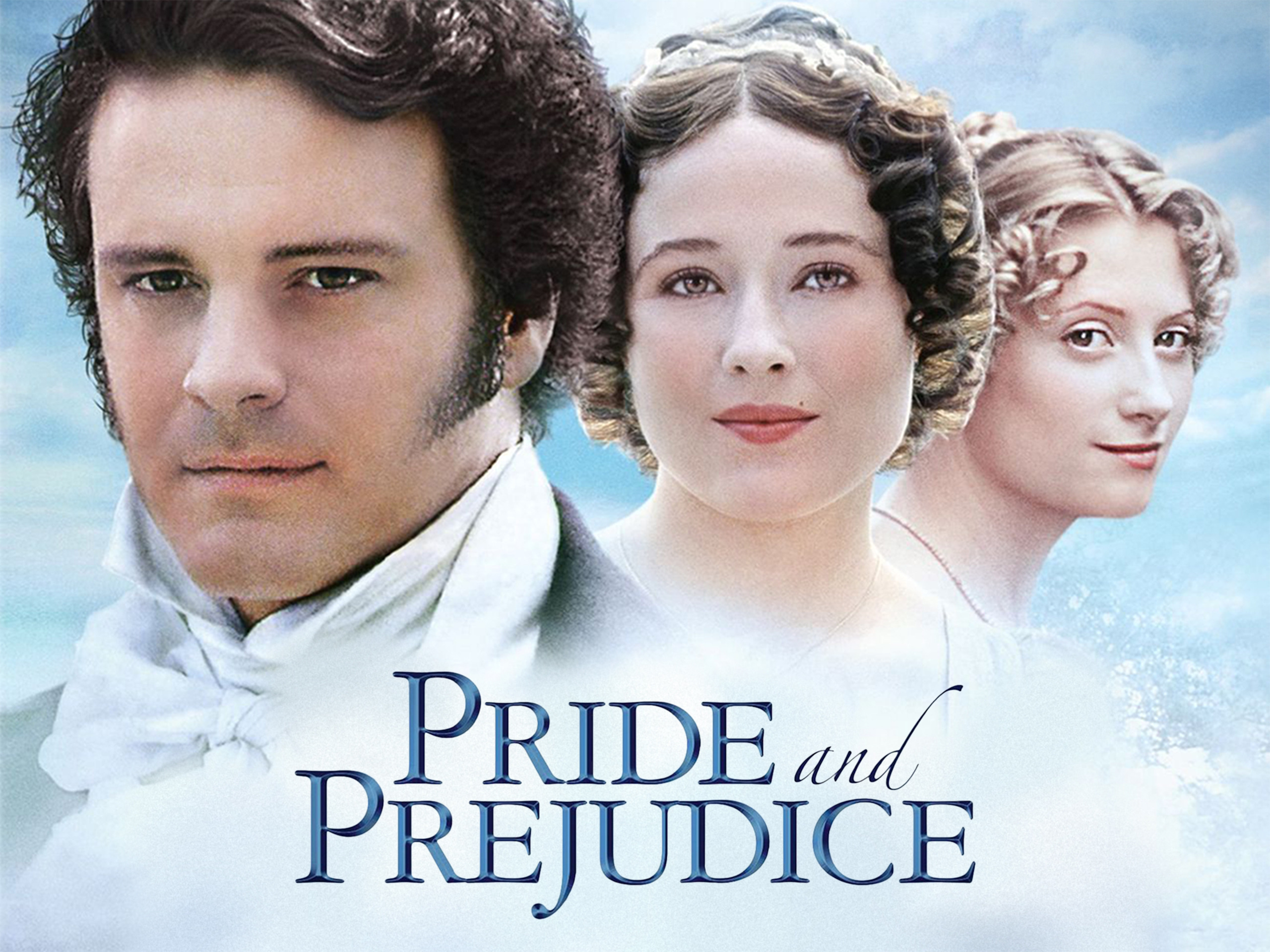
Review: Pride and Prejudice by Jane Austen

“Pride and Prejudice” is undoubtedly one of the most beloved classic novels in history — it’s had countless adaptations, sequels and homages lavished on it over the years.

And Jane Austen’s grand opus is still beloved for a good reason. While it’s rather stuffily written much of the time, it has a vibrant core of witty dialogue and strong characters that shine like lanterns in the night — and the best part of it is the interplay between the two strong-willed main characters, whose initial dislike of one another blossoms into love once they learn how to overcome his pride and her prejudice.

The Bennett family is in an uproar when wealthy Mr. Bingley moves into the neighborhood, and Mrs. Bennett is especially happy when he takes a liking to the eldest Bennett daughter Jane — since their estate is entailed and there is no Mr. Bennett Jr., a good marriage is considered essential for at least one of the girls. But her forthright, independent sister Lizzie immediately butts heads with wealthy, aloof Mr. Darcy, who scorns the rural village and seems haughty about everything.

A flurry of proposals, road trips and friendships happen over the course of the following months, with Lizzie fending off her slimy cousin Mr. Collins, and befriending the flirty, hunky Wickham, who claims to have been wronged by Darcy. Lizzie believes Wickham’s account — and she’s in for a shock when Darcy unexpectedly proposes, and reveals what Wickham won’t tell her about both of their past lives, and what Wickham did to offend Darcy.

And finally things take a scandalous turn when Lizzie’s idiotic younger sister Lydia elopes with Wickham, while staying with a friend in Brighton. The family is plunged into disgrace, which also wrecks any chances of a halfway decent marriage for the other daughters. The only one who can set things right is Darcy, who will do whatever he must to make amends to Lizzie — and unwittingly establish himself as the man she loves as well…

Reading “Pride and Prejudice” is a bit like watching someone embroider a piece of cloth with subtle, intricate designs. Lots of balls, dances, visits and drawing room banter between Lizzie and virtually everyone else, and interwoven with some rather opinions from Jane Austen about haughty aristocrats, marriages of security, entailment, and the whole idea of what an ideal woman has (intellect and strength).

The only real problem: Jane Austen writes very much in the style of her literary era — it’s rather formal and stuffy much of the time, and the narrative is kept distant from the characters. So, not for casual readers.

But despite that formality, Austen’s brilliance as a writer is evident — she slowly unfolds the plot one act at a time, with several intricate subplots that tie together and play off each other. She also wrote some unbelievably sharp-edged dialogue with plenty of witty banter between Lizzie and Darcy (“I could easily forgive his pride, if he had not mortified mine”). But Austen also weaves in startlingly romantic moments between them (“No one admitted to the privilege of hearing you, can think anything wanting”).

It’s hard to imagine a better fictional couple than Lizzie and Darcy, despite their rocky start (a major-league snub at a dance). Both are witty, smart, and a bit snotty in their own ways, with quick minds and even quicker tongues. Darcy is a selfish, rather haughty man man who gradually becomes warm and kind, while Lizzie is strong, independent, and Darcy’s equal in every way. And neither will marry for anything but true love.

It also has a solid supporting cast: the painfully practical Charlotte Lucas, slimy clerics, virtuous-looking rakes, sisters ranging from saintly to snobby, and the lovable Mr. Bingley and perpetually optimistic Jane. Lizzie’s family also adds plenty of color to the story, including the screechy and hilariously mercurial Mrs. Bennett and the barb-tongued Mr. Bennett (“Your mother will never see you again if you do not marry Mr. Collins, and I will never see you again if you do”).

Despite its mildly stuffy style, “Pride and Prejudice” is the ultimate Jane Austen novel — a powerful and romantic story about two people who grow and change because of love. An absolute must-read.

Review: Heaven Official’s Blessing Volume 7

The malevolent White No Face has returned, forced Xie Lian to relive the most horrifying experiences of his long life, and locked him inside the Kiln. Amazingly, that is nowhere near as bad as things are going to get for the good guys.

But one thing that can’t be denied is that the seventh volume of “Heaven Official’s Blessing” is the most insane and wild volume to date, with Mo Xiang Tong Xiu unleashing her fertile imagination in all sorts of grandiose, sometimes bizarre ways. At the same time, she reveals the series’ most shocking plot twist, and explores the horrifying backstory of just what White No Face is, what shaped him into the monster he has become, and why he’s so obsessed with Xie Lian.

Trapped in the Kiln, Xie Lian faces off against White No-Face – and ends up breaking free in an awesome, spectacular manner that I won’t spoil here. He’s reunited with Hua Cheng and his friends and tries to escape the erupting Mount Tonglu – but the tormented souls of the people of Wuyong escape the volcano, threatening a new plague of Human Face Disease on the world. Xie Lian, Hua Cheng and their allies – along with a few familiar faces from along the way – are all that stand between the human world and horrifying mayhem.

But that’s nothing compared to what happens when Xie Lian learns the terrifying truth of who White No-Face really is, and how and why the ghost has been stalking him for hundreds of years. Furthermore, his enemy has even more power than he ever suspected – enough to topple Heaven and overwhelm even the most powerful of gods. Xie Lian will need some help to even hope to defeat him and save humanity from a plague – not just from Hua Cheng, but from friends, enemies and total strangers.

It’s very difficult to praise “Heaven Official’s Blessing Volume 7” in specific terms, simply because it requires me to praise its colossal plot twist and the immense payoff of… well, the entire story so far. It’s hard to do that without giving away White No-Face’s secrets and identities, as well as the question of why he dedicated so much time and energy to tormenting Xie Lian, because MXTX did a masterful job of surprising audiences with the many answers to the questions raised over the course of her story. It’s exceptional, and it should be read blindly so you can be surprised.

That also applies to some of the massive, imaginative developments in this extended climax, worthy of a blockbuster movie scripted by a crazed genius. While a lot of it involves sneaking around, mass curbstomps and a very long exposition scene involving Xianle’s state preceptor, MXTX throws in some gloriously over-the-top, wildly imaginative scenes. Like the fiery city-mechan. Or a Statue-of-Liberty-sized divine statue flying into space, fueled by kisses and drawn by butterflies and lanterns. I am not making that up. It actually happens. It’s glorious.

At the same time, she spins up a web of lies, answers, complicated backstories, bloody action, a very sad seeming-death, and some bursts of slightly frenetic comedy (Quan Yizhen beating up Qi Rong with his own statue). Everything comes to a climactic boiling point as just about everything up until now – corpse-eating rats, ghost garments, fetus ghosts, volcanoes and magic evil-revealing swords – comes back into the story with a distinct purpose. Same with the characters, reintroducing everyone from Pei Ming’s crazed stalker to Xie Lian’s eccentric mentor.

With all this stuff going on, the romance could have easily been lost in the shuffle, but MXTX mixes in countless little tender moments between Hua Cheng and Xie Lian, made all the more endearing by Hua Cheng’s mischievous flirtations and Xie Lian’s giggling nervousness. It’s very cute, and MXTX stuffs a little fluff into every crevice in the story where it can fit, even if it’s just Hua Cheng sitting next to Xie Lian while he listens to exposition.

“Heaven Official’s Blessing Volume 7” hurtles towards the grand finale like a freight train – full of wildly apocalyptic action, charming romance and explanations for just about everything. And the ride ain’t over yet.

Review: The Age Of Innocence

It was a glittering, sumptuous time when hypocrisy was expected, discreet infidelity tolerated, and unconventionality ostracized.

That is the Gilded Age, and nobody knew its hypocrisies better than Edith Wharton. And while you wouldn’t expect Martin Scorsese to be able to pull off an elegant, delicate adaptation of her novel “The Age of Innocence,” this movie is a trip back in time to the stuffy upper crust of “old New York,” taking us through one respectable man’s hopeless love affair with a beautiful woman — and the life he isn’t brave enough to have.

Newland Archer (Daniel Day-Lewis) is the scion of a wealthy old New York family in the 1870s. He becomes engaged to pretty, naive May Welland (Winona Ryder), a very suitable match between two respected families. But as he tries to get their wedding date moved up, he becomes acquainted with May’s exotic cousin, Countess Ellen Olenska (Michelle Pfeiffer), who has dumped her cheating husband. That was pretty scandalous at the time.

At first the two are just friends, with Newland finding Ellen’s attitudes to be fresh and real. But after Newland marries May, the attraction to the mysterious Countess and her free, unconventional life becomes even stronger, as he starts to rebel against the conventions of his own existence. Will he become an outcast and go away with the beautiful countess, or will he stick with May and the safe, dull life that he has condemned in others?

It’s a bit of a head-trip to find out that the guy who did “Raging Bull” and “The Gangs of New York” was the one responsible for a subtle, bittersweet movie set in a gilded, upper-crust New York. But it shows his considerable skill that Scorsese was able to make “The Age of Innocence” so adeptly, sticking close to the original novel — we even have an omniscient narrator who quotes directly from Wharton’s book as she describes New York society.

He preserves Wharton’s portrayal of New York in the 1870s — opulent, cultured, pleasant, yet so tied up in tradition that few people in it are able to really open up and live. It’s a haze of ballrooms, gardens, engagements, and careful social rituals that absolutely MUST be followed, even if they have no meaning. And he depicts this with directorial skill that makes almost every shot look like an exquisite painting, framing the characters with flowers, art and cultivated backdrops.

And he delicately brings out the powerful half-hidden emotions that the story revolves around. One great example: a carriage ride where Newland slowly unbuttons Ellen’s glove and gently kisses her pale wrist — it’s sensual and erotic without being explicit.

Day-Lewis gives the awesome performance you would expect — his Newland is stiff and repressed, and nowhere near as awesomely unconventional as he thinks himself to be. Pfeiffer and Ryder round out a trinity of spot-on performances: Ryder plays a seemingly innocent, naive young woman who shows hints that she’s a lot smarter than Newland believes her to be, while Pfeiffer plays a sweet but sad noblewoman who craves love and kindness, and knows more of the world’s ways than Newland does.

“The Age of Innocence” is an exquisite painting of 19th-century New York’s upper crust — the hypocrisy, the beauty, and the sorrow. A truly sublime experience, and not a film to be missed.

Review: Midnight Sun

It’s no exaggeration to say that Edward Cullen is one of my least favorite male characters of all time. The only reason he does not sit atop the throne is… well, Christian Grey and Massimo Torricelli exist.

And after many years of refusing to do so, Stephenie Meyer has finally given the wangsty, unintimidating vampire his very own novel, “Midnight Sun,” which retells the entire story of her debut novel “Twilight” from Edward’s perspective. That sounds a lot more appealing than it is, once you realize that we then have to spend hundreds of pages in the head of a whiny, socially-inept misogynist who complains about everything.

In case you missed the media storm some years ago, Edward Cullen is a sparkly vampire who dwells in the town of Forks, Washington. He can read minds. He hates school, and he pretty much hates everyone around him, especially the women. But then once day the author’s self-insert, Bella Swan, stumbles into school and immediately entrances him with her delicious body odor. So he immediately wants to kill her, along with dozens of other innocent people. Swoon. Dream man.

And since Bella’s mind is unreadable, he begins obsessing over her, and decides that she is a selfless saint who is superior to all the common sheep. However, after he saves her from a freak car accident, Bella realizes that there’s something weird about him, which causes the Cullens to panic. But fear not! Stephenie Meyer will not mar her book with suspense, so Alice just blurts out that Bella is going to be her best friend and Edward’s soulmate, so everybody just calms down.

Of course, Edward can’t keep away from the universally irresistible girl who looks suspiciously like the author, and after creeping into her room for several weeks, he saves her from potential gang-rape and they start dating. Eventually the plot rears its ugly head, and some hostile vampires show up to kill Bella, which means Edward has to actually do something other than complain about how much other people suck and how tortured and evil he is.

Is “Midnight Sun” any good? Well, that depends on how you feel about the Twilight Saga as a whole. If you’re a fan of the previous books, you’ll probably love another fat tome of PG-rated vampire romance, in which all the characters talk like middle-aged women. If you find the books to be torture, then this book will probably make you want to set fire to an orphanage filled with puppies.

Sadly, Stephenie Meyer’s writing has not improved in quality over the last fifteen years — she still writes flowery, breathless, rambling prose that endlessly covers stuff that isn’t very interesting. And, of course, she talks endlessly about Bella’s “soft perfection” and how all men want her, and all women want Edward despite his complete lack of basic social skills. Furthermore, it’s incredibly melodramatic in a way that invokes more laughter than thrills, such as Edward rolling around on the floor of a hospital chapel.

“Midnight Sun” also completely destroys Edward’s entire image as a brooding Byronic jerk — it’s hard to see him as a smooth, elegant predator when he spends the entire book throwing tantrums and complaining about everything. He’s whiny, selfish, melodramatic, boring, has contempt for everyone around him… and oh, he’s also a raging misogynist who hates any woman who isn’t a soft-spoken doormat. What’s more, the combination of his homicidal impulses (which are very sexualized) and his complete lack of any normal social skills… well, it makes him seem like a guy who would have been a school shooter if he hadn’t become a vampire instead.

He also reinforces that Meyer does not know how to write male characters – his internal thoughts sound more like a middle-aged woman than a teen boy of any era (“I love you too much, for your good or mine“). Of course, the actual teen conversations are pretty heinous in general, such as a “lolz he’s such a nerd” conversation about Comic-Con that reeks of “How do you do, fellow kids?” Just… don’t talk about geeky stuff, Meyer.

If you have enjoyed Meyer’s other books, you’ll probably enjoy this one too. But if you didn’t, Meyer has not improved — “Midnight Sun” is every bit as bad as the books that precede it, with the added benefit of Edward’s melodramatic foulness.