Uncle Roger, Jamie Oliver and Changing Recipes

I’ve been watching a lot of Nigel Ng’s Uncle Roger videos lately. If you aren’t familiar with these, Uncle Roger is Ng’s comedy character, a divorced middle-aged Asian man who critiques videos (mostly about cooking various Asian dishes, but sometimes other stuff like dating reality shows), complains about his cheating ex-wife, makes odd sex jokes, rhapsodizes about MSG and complains about British chefs doing strange things to Asian food.

And I recommend you watch his videos. He’s very funny, very witty, and provides a lot of insight into the proper preparation of different dishes which Americans/Brits may not be entirely familiar with, like Thai curries.

And one thing he also did was introduce me to Jamie Oliver’s cooking. Now, I was previously aware that Jamie Oliver existed. But because I don’t cook much (and most of what I make is taco meat, frozen pizza or salads) and he doesn’t have a primetime reality show where he yells at chefs a lot, I didn’t know anything about the man’s cooking abilities. It turns out that… he’s not very good. Not very good at all.

For one thing, he makes food oppressively healthy. I understand he’s a health nut and on a personal mission to make everybody eat the way he thinks we should, but he cooks “healthy” food the way a person who hates health food would imagine it to be. He tries to make things vegetarian sometimes, and tries to cram vegetables where they aren’t wanted or needed. Jamie, listen – if you want to eat vegetables in a dish that doesn’t have vegetables in it… just eat a salad on the side. No need to inflict a “dense ball” of spinach on anybody.

And he seems to be on a one-man crusade against flavor, which both British cooking and healthy cooking are notorious for lacking. He uses low-salt/low-fat ingredients, makes spicy dishes as bland as possible, and seems to try to use water instead of stocks or oils sometimes.

And what flavor there is… is wrong. He often makes massive changes to the core recipes, leaving out important elements and adding random new ones for inadequate reasons, like “it’s a red curry, so I will put in red bell peppers to make it red” or “it’s an Asian food, so I need to put soy sauce and bok choy in it.” He adds ingredients to dishes that don’t work with the other flavors on it, without regard for how it’s actually going to taste – like when he made Thai green curry and half of it was mushrooms. Or when he made a Pad Thai and the sauce was made out of mashed-up silken tofu (WUT?), soy sauce and sweet chili sauce. I don’t know about anyone else, but I don’t like the idea of soy sauce and sweet chili sauce mixed together and… nobody cooks tofu that way!

I’m honestly not sure why he does this, aside from trying to make things healthier. Especially since some of his errors are just…. being wrong, like when he used the wrong noodles for ramen.

But some of these are just… changing things. Is he really so filled with hubris that he thinks he’s improving on these recipes by changing so many things about them? Because it leaves a bad taste in my mouth when a chef’s attitude is, “Hey, these are beloved and well-regarded dishes from other cultures, but they’re not good enough to be faithfully reproduced. I have to FIX them to make them acceptable!” It feels gross and condescending. Kind of like ranch-sauce pizza, which is also an abomination.

When you make alterations to a recipe, you need to actually stop and think about whether it NEEDS to be altered. From all across the world, very few classic recipes need to be “fixed” or updated, because they are often the result of decades, centuries or even millennia of development and experimentation, and flavors that work harmoniously with other flavors from the same region.

That’s not to say that food shouldn’t evolve or adopt new things. Organic growth is amazing, like how Indian cuisine has integrated tomatoes and potatoes, and married them to other uniquely Indian flavors. In fact, potatoes have been embraced worldwide, in many cultures which had no contact with them until fewer than five hundred years ago. But that was about embracing something new and finding new and culturally unique ways to cook it as a part of the existing cuisine, not trying to avoid the established and beloved flavors and foods that already existed.

Anyway, that was my unhinged rant on the subject, and maybe I’m being too harsh, but the man annoys me.

Random facts about me

  • I love rodents. Most rodents, in general, but the smarter or friendlier ones obviously take precedence. Rats are my favorite, but their lives are too short.
  • I have a deep fondness for Ikea, based in my childhood visits there.
  • Hate-watching/hate-reading is a fond pastime for me. Unlike most people, I freely admit that I love screeching about how abysmally bad something is.
  • Least favorite book of all time (not including books that were written specifically to promote hate): Battlefield Earth, which in my review I compared to swimming in a sea of sewage.
  • I have no life.
  • Among my favorite movies: Alien, The Age of Innocence, Psycho. Not necessarily because of the content itself, but because they are filmed and directed so flawlessly that I basically don’t have to pay attention to what might be done wrong.
  • I admit that I was a Snyder Cut disbeliever before it was announced that it actually existed, but I am now a full supporter.
  • I hate fish. In every way. I dislike fish because they barely seem like living things to me – they’re like evolutionary leftovers with barely a brain. And I don’t like eating them. The only exception is tuna, which I can tolerate – all other fish are viscerally disgusting to me, both in taste and texture.
  • My favorite food is probably pizza, meat toppings.
  • I am afraid of the ocean. Both because most of it is lightless, endless cold depths, and because it contains creatures ranging from the nightmarish to the grotesque. I love being near the ocean, but I don’t like wading more than a few feet into it. Very contradictory.
  • I love cheese. I wish there was an inexpensive way for me to sample various cheeses aside from the ones you find prepackaged at the grocery store.
  • I watch way too much Youtube.
  • I’m a contrarian. Pompously tell me I should be on your side because your ideology is right, and I immediately want to point out how you’re the worst and nobody should support you. Tell me I’m bad if I don’t do X or Y, and I’ll immediately want to not do it just to spite you.
  • I suffer from depression. No, not the “I has the sads because society” kind that every basic person on social media claims to have, the serious mental illness that warps my perceptions, my emotions, and plunges me into nihilistic hatred of humanity and life itself unless I take several medications. I also have fairly severe anxiety with paranoid features.
  • I don’t believe people should have heroes or role models… at least, not living ones. Living ones will inevitably let you down by revealing themselves to be terrible people who have used systems like politics or Hollywood to conceal their misdeeds. Only admire dead people whose bad stuff has been thoroughly parsed and examined.
  • Favorite color: green, preferably a darker forest green.
  • I like bread. I sadly don’t get the opportunity to eat much of it, but I love different types and flavors.
  • I have never had a dog or cat.
  • I can’t choose a least favorite movie, because there is such a variety of bad movies with different degrees of ineptitude, bad quality and enjoyability that I can’t pinpoint a single one.
  • Favorite authors in terms of overall consistent quality: J.R.R. Tolkien, Garth Nix, Susan Cooper, Maggie Stiefvater. I may be forgetting some…
  • I don’t know how to dance.
  • I am terminally single.
  • I like science fiction, but many science fiction authors don’t like me.
  • Favorite podcast: Welcome to Night Vale. The randomness, weirdness and unexplained qualities are something that strike a chord with me.

Maybe I’ll make a sequel blog post if other factoids about my uninteresting self pop up in my head. Anyway, ciao!

Aquaman and the power of cliche

So I was watching the Cosmonaut Variety Hour, which is a great show by a very dryly clever man who reviews various geek media. I don’t always agree with his conclusions, but I do always enjoy watching him reach those conclusions, and it’s also fun when he joins forces with his friends to riff on things.

Go watch his show. It’s good. His reviews of the movies Ax ‘Em and Bright are especially good.

Anyway, a recent video he made was about the movie Aquaman, which I am rather fond of. It’s not high art, but it is a big shiny blockbuster with good direction, dazzling visuals, some silliness, some horror, fairly likable characters, and a plot that more or less makes sense. But Marcus (the guy who makes the show) has often held up Aquaman as a bad film, although in his latest video he kind of softens towards it and gives it a middling grade.

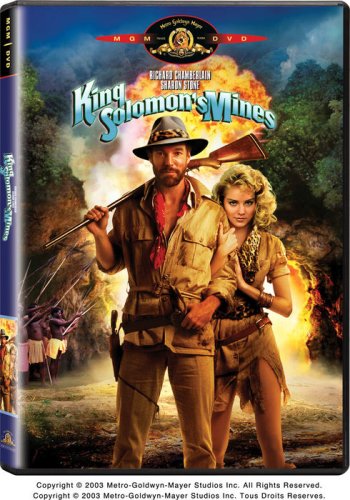
And one of Marcus’ main points is, quite simply, that Aquaman has a lot of cliches (although sometimes I think he means tropes, or derivative content). It has the whole King Arthur archetype of the true-king-with-the-magic-weapon-he-needs-to-ascend-the-throne, it has the relatives fighting for the throne thing, it has the Indiana Jones sequence in the Sahara and Italy where a strange mystical item paired up with a particular statue will show the exact spot… you get the idea.

And… strangely, I don’t really care.

And I think that is because it takes these tropes, cliches and archetypes, and does them pretty well… or at least, it does them better than other movies that try to do the same thing.

For instance, think back on movies that have ripped off the Indiana Jones films. Most of them… are very bad. Even the ones that are considered good are actually quite bad.

But I enjoyed the Indiana Jones portion of Aquaman, because it fit neatly into the movie as an organic part of the plot development, and it was the sort of wildly improbable thing you would find in those films.

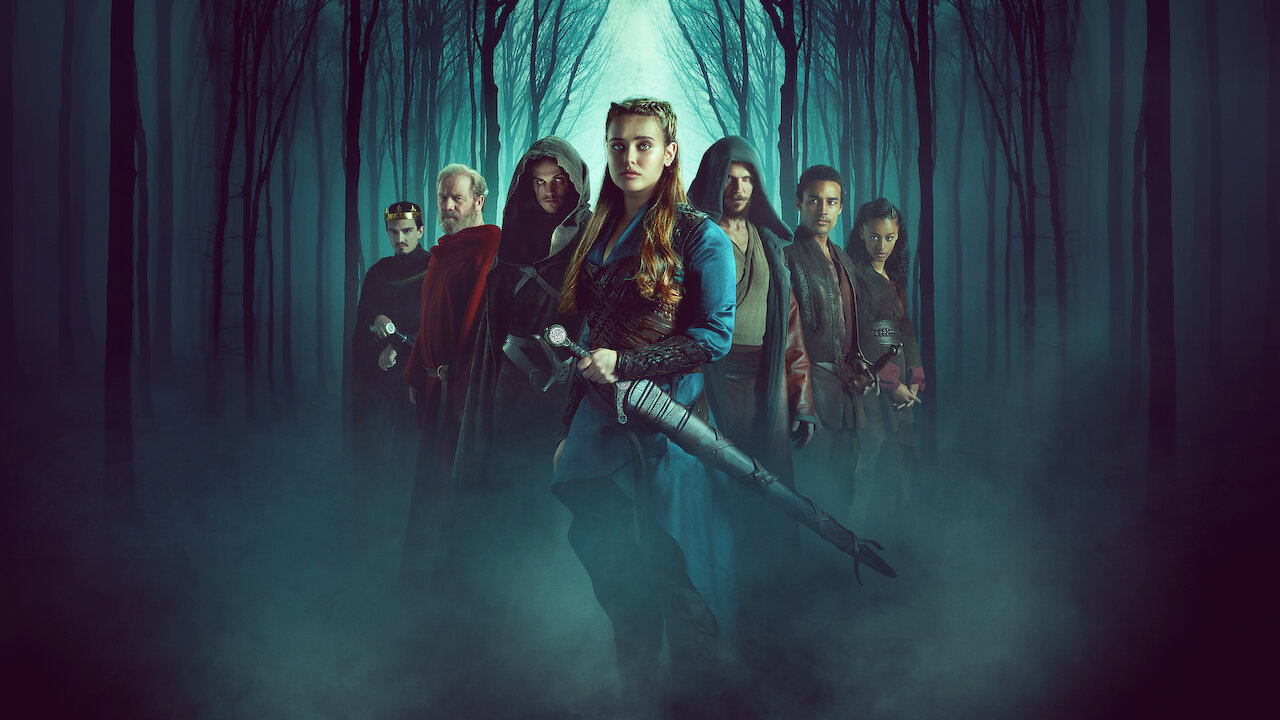
Or take the King Arthur angle. Do you know how many good King Arthur movies, miniseries or TV shows there have been in the last twenty years? Not very many! We have stuff like Transformers: The Last Knight, Mists of Avalon, Cursed, Camelot, King Arthur: Legend of the Sword… poor King Arthur hasn’t had a good time lately. I haven’t seen Merlin, but I’ve heard mixed things.

And in YA fiction, they’re trying to either turn him into a teenage girl or make him irrelevant because of a teenage girl (Cursed), because YA fiction. No, I am not reading those books, and you can’t make me. I tried to read Cursed, and it was… unpleasant.

But the Arthurian overtones and the trajectory of Arthur Curry’s growth into a king is… both familiar and satisfyingly different. Yes, it’s the familiar arc of an unknown True King acquiring a legendary weapon in order to become a powerful king, which has been around in European-influenced media for many centuries. But it’s also unique enough with stuff like the Karathen and the actual combat with the tridents — which grows naturally from another fight earlier in the story — that it doesn’t just feel like someone copy-and-pasted DC comics names into a legend.

Complete originality is virtually impossible in storytelling. Even Shakespeare made a lot of adaptations and remakes. Seriously, look into the history of many of his stories, and you’ll find that most of them were derived from existing tales, including other plays. Bring that up when someone moans about rebooting some movie franchise from thirty years ago and how nothing is original like in the good old days.

But the lesson here seems to be that if you can’t be original, then at least handle your cliches and tropes with skill and talent, and make them more entertaining than other films/books/TV shows/etc. that handle the same content.

That’s part of the appeal of My Hero Academia. It tackles a lot of things in comic books that are taken for granted, and examines them while fleshing them out. All Might is obviously a Superman-like character (different backstory, but quite similar to early Superman, including jumping instead of flying), which makes him a superhero cliche. He looks like a cliche, he sounds like a cliche, he acts like a cliche. But it’s because he’s a walking cliche that the story can subvert the cliche with his successor (a scrawny crybaby), examine him in greater detail and reveal different sides of him that you wouldn’t expect.

So I guess the lesson is… avoid cliches if you can, but if you need to use cliches, tropes and archetypes in your work, just make sure that you make it really entertaining, and add enough spice and twists to your characters and world that the audience will feel rewarded for going down a familiar road.