Review: The Blackout: Invasion Earth

More than anything else, “The Blackout: Invasion Earth” reminds me of the TV show “Lost.” If Damon Lindelof were Russian, this might be the sort of movie he would produce.

And that’s because “The Blackout: Invasion Earth” has a truly fascinating sci-fi premise as a beginning, and for a while it seems like it’s chugging along pretty effectively – there’s military action, strange occurrences, and eventually some aliens. But the more answers that are revealed, the less satisfying they become, and the more hamfisted, clumsy and needlessly nihilistic the writing becomes.

The first half of the movie is a fascinating setup, with almost limitless potential. A complete blackout suddenly strikes most of the Earth’s surface, except for a circular region in Eastern Europe (including Moscow). The rest of the planet, thereafter dubbed the Quarantine Zone? Dark, incommunicado, and effectively uninhabited. Where did everyone go? Why is all technology down outside the “circle of life”? Why did all the bears attack the Russian army? And what blasted a giant tunnel through several urban skyscrapers, seemingly from space?

So far, so good. Egor Baranov crafts a genuinely suspenseful, semi-apocalyptic atmosphere, while introducing a variety of characters who find themselves on the front lines of the Quarantine Zone – an embittered man who has found purpose in the crisis, a compassionate journalist, a soldier and the medical doctor he hooked up with, and a general who is just trying to figure out what to do.

But… then we start getting answers, and they aren’t very good.

It seems that a small number of people have developed psychic powers. We don’t see most of them – just one guy, who is seeing visions of strange people who tell him that he’s needed to save the world. Soon the humans learn that all this insanity and change is part of a chilling alien invasion that has already begun, and which threatens our species with extinction if they don’t find a way to stop it.

“The Blackout: Invasion Earth” is a perfect demonstration that, when you build up a mass of mysteries and fascinating possibilities, you have to really stick the landing. But the more answers this film produces, the less satisfying they become – and a lot of the cool moments, such as the blasted skyscrapers and the bear attack, really don’t make a lot of sense when you find out what’s really going on. It’s like the story was written around these cool little moments, rather than the cool moments being the product of a well-thought-out story. See above comparison to “Lost.”

And without revealing too much about the ending, it’s ultimately a bleak, rather nihilistic depiction of humanity in general. Only in the last two minutes does anything even remotely positive happen, and it feels slapped on. Not to mention abrupt – the movie simply thuds to a stop, all problems unresolved.

Admittedly some of the problems – the uneven pacing, the thin characterization, the thin romance that leads nowhere – might be because this was originally conceived as a television series. But being a series wouldn’t have helped the flimsiness of the alien invasion plan, which shows the need for a few more script revisions. Honestly, the entire movie would have been better off without the aliens claiming they built the pyramids and started all religion.

As for the actors, they’re… meh. Just meh. Most of them do serviceable but not very good jobs, although Ksenia Kutepova is almost painfully out of her league whenever she tries to act serious. The only really memorable performance is Artyom Tkachenko as “Id,” an alien who claims he’s here to help humanity – given the structure of the aliens’ faces, Tkachenko is reduced to mainly acting with his eyebrows and eyes, and he gives a pretty decent performance.

“The Blackout: Invasion Earth” began with such promise and such memorable concepts… and then fell flat on its face with poor answers and a cast of rather uninteresting characters. Give this one a miss.

Review: The Thing

Imagine that you’re in a remote Antarctic outpost, locked in eternal icy winter, with little to do and only a few people to spend time with. Now imagine that a screaming, fleshy alien horror infiltrates your base, turning everyone it touches into extensions of itself – and if you don’t stop it, the entire planet will be destroyed.

That’s the premise behind “The Thing,” a haunting 1982 horror movie by masterful director John Carpenter. And this classic cult film is a prime example of science fiction at its most terrifying – it’s a slow-burning, claustrophobic film filled with psychological dread that periodically erupts into tentacular, flame-filled warfare. This is no jump-scare-filled schlock movie, but a finely-crafted nightmare.

A seemingly ordinary sled dog runs into an American station in the Antarctic, pursued by a crazed screaming Norwegian with a gun, who is quickly shot dead in self-defense. Helicopter pilot MacReady (Kurt Russell) and Dr. Copper (Richard Dysart) venture to the Norwegian base, and find that someone has burned it down. Everyone is dead and burned, frozen or both… and they find the remains of a horribly malformed, inhuman creature.

Well, they find out what happened when the Norwegian dog is kenneled with the other sled dogs: it starts absorbing them into one grotesque tentacled mass. Only fire kills it. The Americans soon realize that it’s an alien organism from a nearby crash site, which can perfectly mimic other organisms – so perfectly that no one can be sure who is really human, and who is part of The Thing. Even worse, it could assimilate all life on Earth in a relative short time, if it ever got out of the frozen wasteland of Antarctica.

So, unsurprisingly, there’s a lot of paranoia and suspicion among the Americans, especially after Dr. Blair (Wilford Brimley) sabotages their vehicles and destroys their communications equipment. Deprived of sleep and not knowing who to trust, MacReady and the others must discover who is a Thing before it’s too late.

John Carpenter produced a number of outstanding classic films like “Halloween,” “The Fog,” “They Live,” “Big Trouble in Little China,” “Escape From New York,” and so on. But “The Thing” may be Carpenter’s finest hour – it’s one of those carefully-cultivated, intricately intelligent movies that has pretty much no flaws. The acting, the writing, the atmosphere, and the feeling of all-consuming, gnawing paranoia right to the very final seconds of the film.

Carpenter’s direction here is mostly a slow-burn, building up a tripwire tension that permeates every scene… until, without warning, flesh starts stretching, tentacles whip out, and strange fluids pour out. The nightmarishness of the whole claustrophobic experience is only heightened by the way the movie makes you feel for the characters. You feel the horror of being surrounded by people who might not even be human, of being too afraid to sleep, of being surrounded by a wasteland of snow and burned remains.

And a lot of the movie’s effectiveness comes from its special effects. These are some of the most convincing practical effects ever captured on film – they’re fleshy, dripping with fluid, twisting and gnarling into something bloated and grotesque. And yet, for all the giant grainy teeth, oozing fluids and spider-legs, the most horrifying moments of The Thing’s presence are when it looks just a little too much like something ordinary and living, such as the giant screaming snarling dog-Thing. There’s almost a sense of cathartic relief when the humans fry one of the Things, just because something so profoundly wrong and horrifying is now dead.

The acting is also absolutely top-notch here, with Russell taking center stage as MacReady. The character isn’t really a hero – he’s just a guy who flies helicopters, who finds himself in the unenviable position of saving the world by whatever means necessary. He may be less educated than many of the other people in the outpost, but he’s undeniably intelligent, cunning and resourceful. But Russell is bolstered by some excellent supporting actors, including Brimley, Dysart, Keith David, and… well, pretty much everyone. The dog isn’t a bad actor either – its unnatural silence and calm is an early clue to what it truly is.

It may not have gotten the love it deserved when it was first released, but “The Thing” has proven over time that it is a true horror/sci-fi classic. Absolutely masterful.

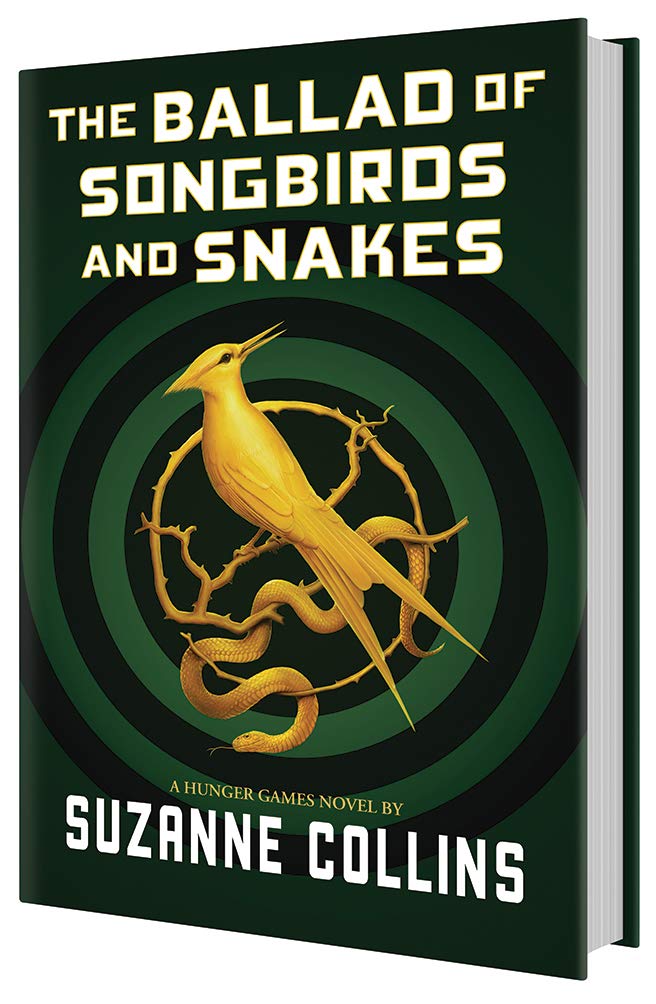
Review: The Ballad of Songbirds and Snakes

In the time of Katniss Everdeen, Coriolanus Snow is the tyrannical president of Panem, a cruel man who uses the Hunger Games as a weapon against any who would rebel. But once, long ago, he was just a aristocratic teenage boy in the Capitol, raised in the shadow of a terrifying rebellion that gave birth to the Hunger Games.

The Ballad of Songbirds and Snakes is a look back at the early days of Panem’s dystopian tyranny, and a glimpse of how Snow turned into the president he would later become. This tale is a very different one from Suzanne Collins’ other Hunger Games tales, whether it’s the third-person narrative, the cold and ambitious protagonist, or the general feeling of hopelessness and ruin that you know is not really going to get any better.

Born to the purple but raised in poverty, Coriolanus Snow is the only hope his grandmother and cousin Tigris have for any kind of comfort and dignity. He has to acquire a university prize and brilliant career in the upper echelons of the Capitol’s society, without ever betraying that he and his family are surviving on boiled cabbage and old outgrown clothes. If not, the Snow family will descend into… well, being ordinary poor people in the Districts, and Snow can’t bear the thought.

But then he’s dealt a blow. When various young mentors are assigned to the Hunger Games tributes, he’s given the girl tribute from District 12: Lucy Gray Baird, a strange girl with a luscious singing voice and plenty of stage presence. Though he thinks she’s crazy at first, Snow is determined to make the best of his assignment, and he even begins to believe that Lucy Gray’s charm and charisma can somehow help him.

The days before the Tenth Hunger Games are cruel to both the mentors and the tributes – there are bombings, venomous snakes, torture, and the psychopathic Dr. Gaul. But Snow’s efforts to save Lucy Gray from death in the arena, based on both his growing feelings and his desperation for success, will push them both to terrible extremes – revealing to Snow who he truly is, and what he’ll do to save himself.

In The Hunger Games, Suzanne Collins depicted District 12 as a painfully impoverished place where starvation was only a missed meal away. And in The Ballad of Songbirds and Snakes, she depicts a different kind of poverty in the Capitol – it’s a relatively luxurious place full of wealth and parties, but there’s a rotten layer to this crumbling society, a sense of dark decay that underlies Snow’s world. And she reminds us constantly that the Capitol is still scarred by the war between Panem and the rebels, which got so bad that wealthy people cannibalized their servants in the streets.

Collins also switches up her writing here – rather than the first-person perspective of the Hunger Games trilogy, she relates Snow’s teenage adventures in the third person. Her prose is tense and taut, with moments of horror (the deaths of some of the tributes) or chilling sadness (“Tell her… that we are all so sorry she has to die”) spattered across it. The plot does grow less intense after the Hunger Games, when it seems like Snow has had to embrace a new life, but then takes a sharp twist into tragedy.

And though he’s the protagonist, Coriolanus Snow is never quite a likable person. We know where he’s coming from and what drives him, but he’s still a very chilly, proud, selfish person motivated by a belief that he is genuinely and inherently better than everyone else. When he’s around Lucy Gray, Collins slips in some actual human emotion, which builds up gradually throughout the book… but Collins never lets us forget for long that he’s not a good person, as seen when he talks about killing the mockingjays.

And he’s backed by characters who aren’t necessarily what they seem. While there’s the compassionate and slightly melodramatic Sejanus as a counterpoint to Snow’s more amoral approach, Lucy Gray is an elusive, mercurial presence that is hard to nail down. And Dr. Gaul is genuinely scary, a mad scientist who apparently does mad science entirely because she can.

There’s a deep sadness at the heart of The Ballad of Songbirds and Snakes – a knowledge that this is a story that can’t have a happy ending, and can’t have a hero. But it is a fine dystopian tale, giving greater depth to the history of Panem.

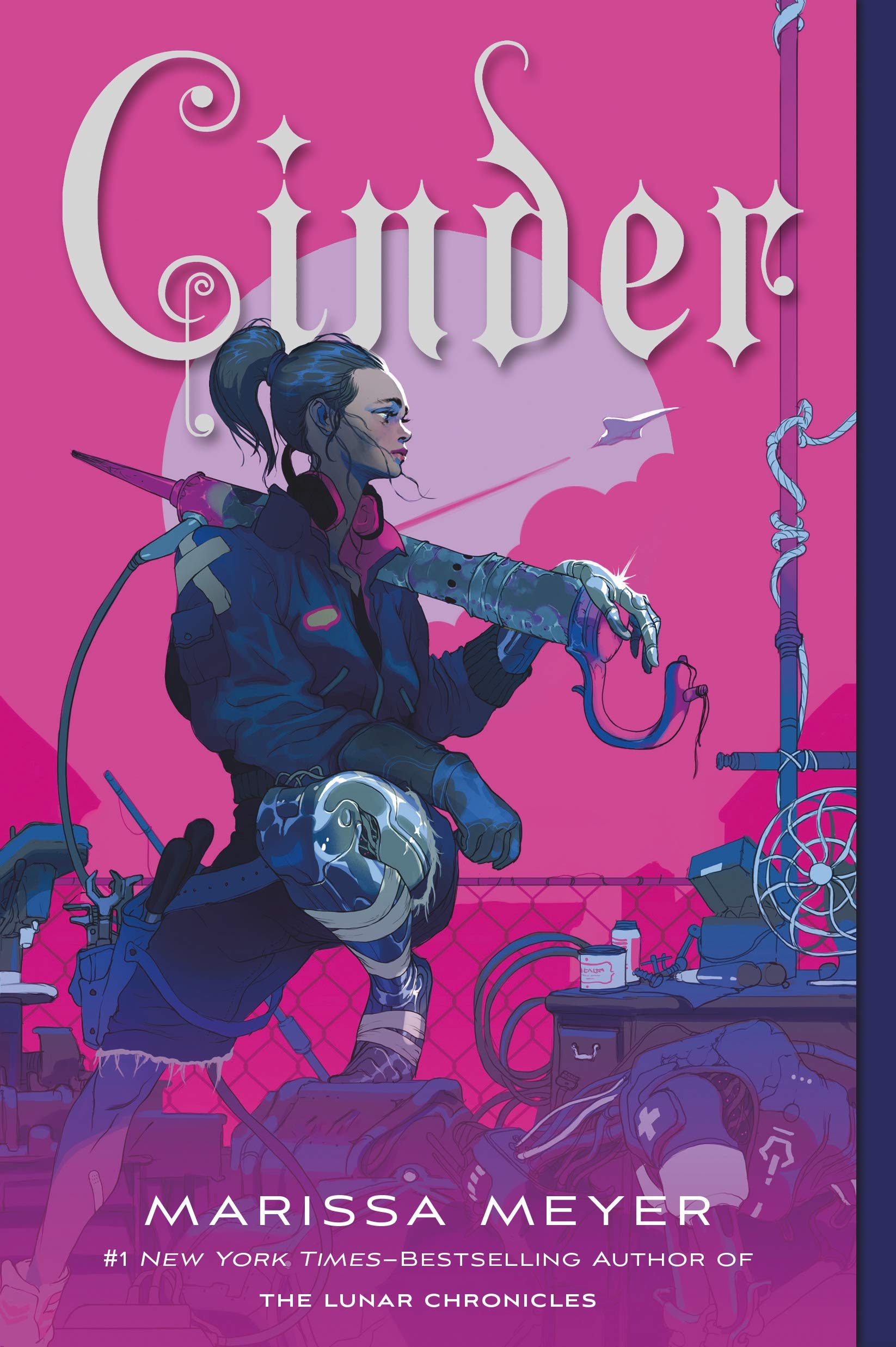
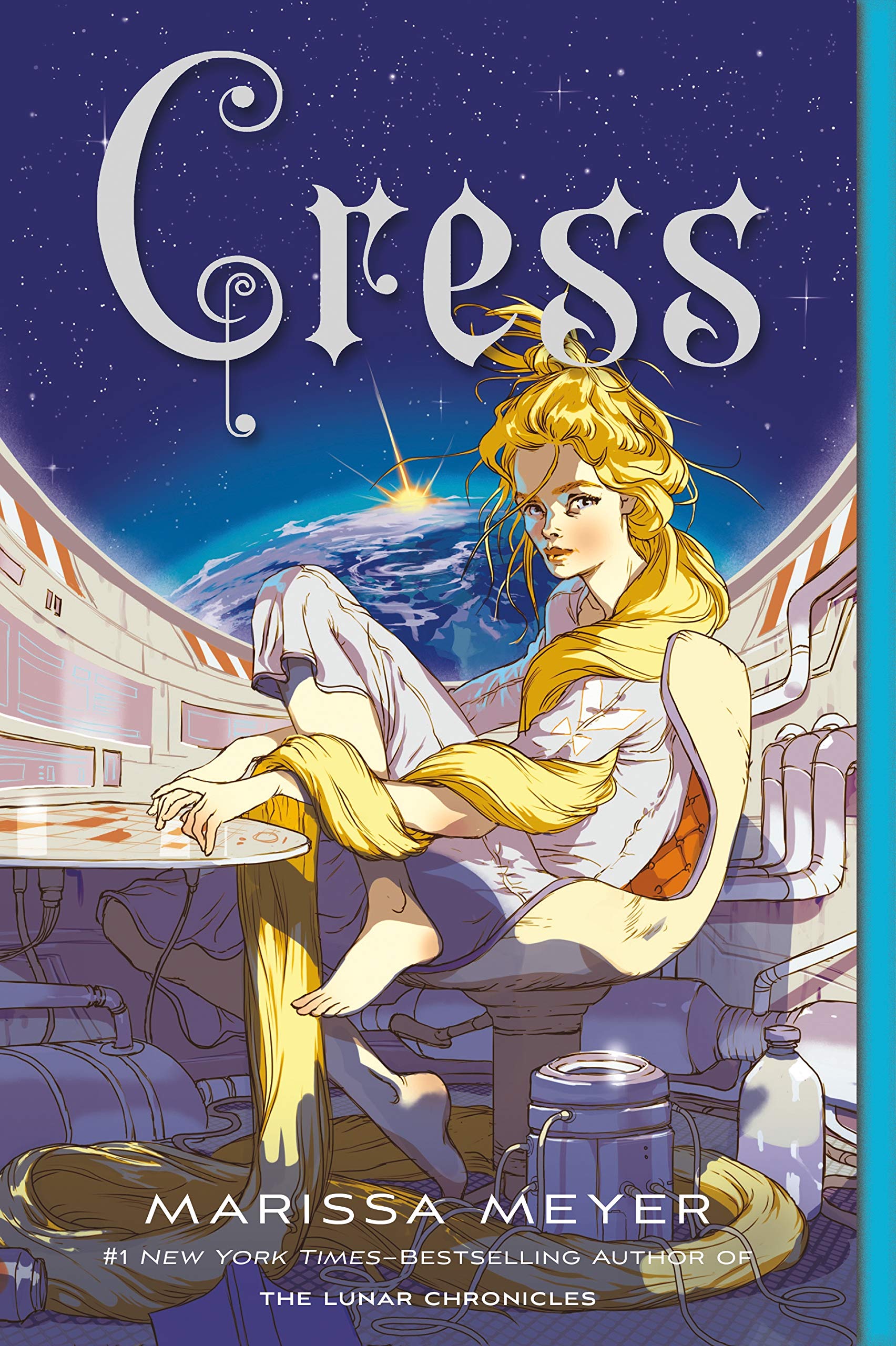
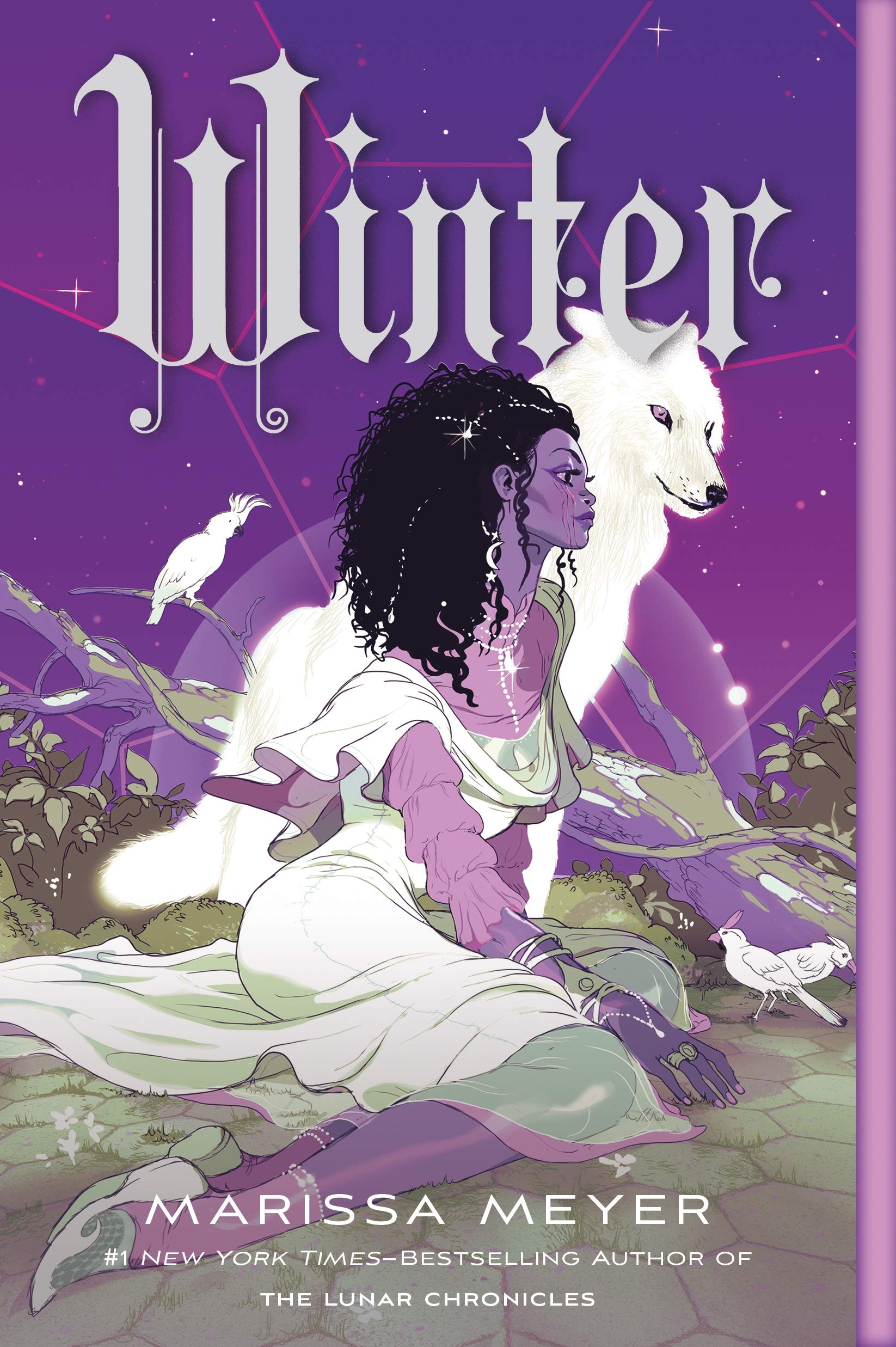
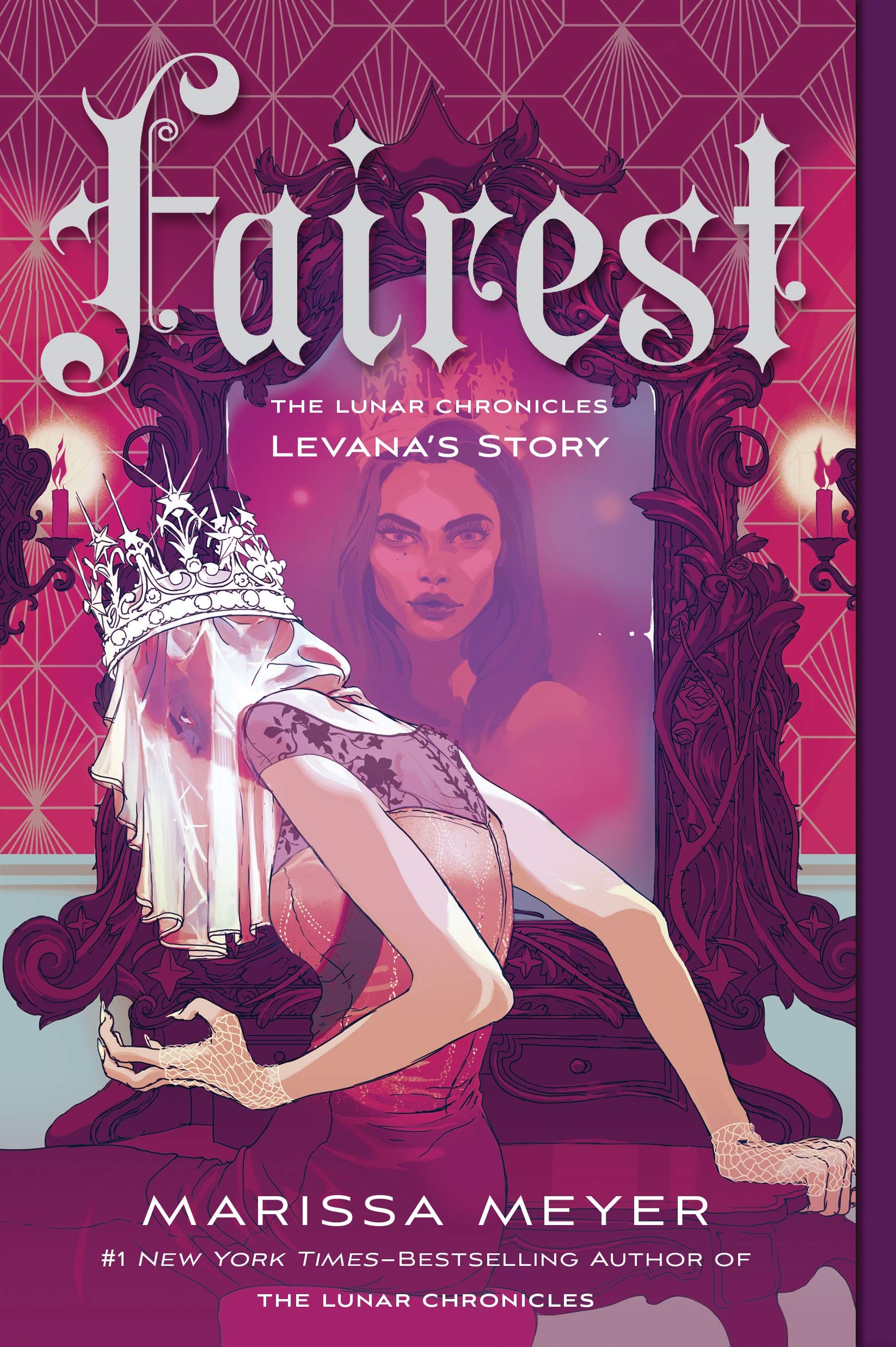
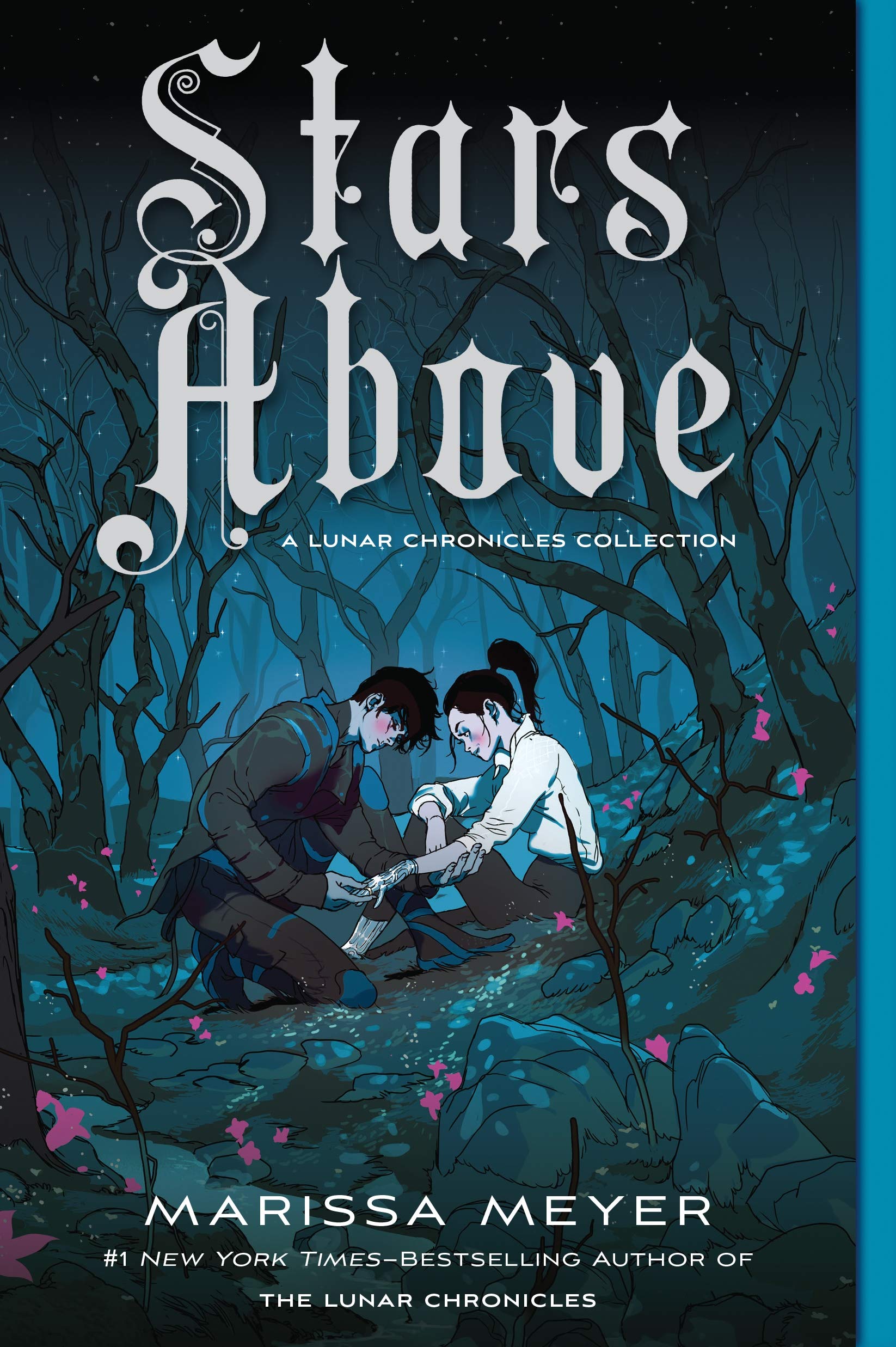
The Lunar Chronicles: overview and new covers

I absolutely love the overall work of Marissa Meyer. No, not the ex-president of Yahoo!, but the author of assorted sci-fi and fantasy books, most notably the Lunar Chronicles series. I’ve read all her books to date, and I’ve enjoyed them all except for the Alice in Wonderland prequel Heartless. Please let it be noted that I am not saying Heartless is bad, because it’s not. It’s objectively quite good. I just didn’t enjoy it because it’s a very bleak, rather depressing book. If you enjoy that sort of book, by all means, descend upon it like a swarm of locusts and gobble it up.

And like most of her readers, I was first introduced to Marissa Meyer through the Lunar Chronicles’ first volume, Cinder, which is a retelling of the Cinderella fairy tale with an Asian sci-fi twist, with interstellar politics and a plague. I won’t go into too many details about the overall plot, which stretches over four books, a prequel, a collection of short stories, and a sequel two-part graphic novel. But suffice to say that each of the main books focuses on a fairy tale that is reimagined in a sci-fi setting – Red Riding Hood, Snow White, Rapunzel – which is folded into Meyer’s universe of the oppressive Lunar civilization, a plague, futuristic unified versions of Africa, Asia and Europe, and so on.

So if you enjoy science fiction, or if you enjoy fairy tales… or both… this is a good young-adult series. It also has some pretty healthy romances in it, while still including some superficial bad-boy/Prince Charming archetypes.

The original covers were fairly pretty, but I absolutely love the new covers that they’re rereleasing the books with. As in, I might buy the books again so I can possess these beautiful covers.

Also, read the Renegades trilogy. It’s also very good. Maybe I’ll babble about that later.

Review: Aurora Burning (The Aurora Cycle 2)

When we last checked in on them, the misfit Aurora Legion Squad 312 was on the run, knowing the horrifying truth – the gestalt organism known as the Ra’haam is about to consume the galaxy, and Aurora might be the only way of stopping it. Also, they lost one of their number to the Ra’haam, meaning that that person is effectively dead. And they’ve been framed for mass murder.

So yes, it is technically possible for things to get worse, but it would take careful consideration and a lot of effort. Well, guess what: in Aurora Burning, the second book of the Aurora Cycle, things manage to get worse. Authors Amie Kaufman and Jay Kristoff keep things humming along with plenty of crackling action and the occasional twist and turn, but the romantic subplot just doesn’t click with me.

Squad 312 are barely surviving – they’re being hunted by just about everybody for the massive bounty on their heads, and Auri accidentally destroys the Longbow with her newfound powers. So they have no vehicle, very little money, and they’re being empathically tracked by Kal’s vicious sister Saedii. But then they receive a coded message that leads to a secret cache of mystery packages, and a secret ship. An incredibly ugly, rust-encrusted run-down ship, but that’s better than nothing.

But this ship is pretty baffling, because it was somehow perfectly set up for the team’s specific needs… eight years before. And somehow they knew Cat was not going to be on the team. And all the packages have odd items whose functions aren’t immediately apparent. Oh, the mystery deepens.

However, their first effort – getting back to the ship where Auri slept for two hundred years – brings them into the hands of the Syldrathi Unbroken, and then into a conflict with the Ra’haam-led Terran forces. With an all-out war brewing, the squad finds themselves divided like never before, with new and shocking secrets coming out on every side. Worst of all, the only hope for the galaxy is in very, very wrong hands.

The first two-thirds of Aurora Burning feels like a fairly standard middle novel, further exploring Kaufman and Kristoff’s universe, but the third part feels like a massive buildup to the climactic third volume. The Ra’haam and the GIA are still important threats, but this time the conflict with the Syldrathi Unbroken takes center stage for most of the plot, only to tie back into the Ra’haam plot near the end. There are some genuinely surprising twists thrown into the mix – some all the more surprising because the entire novel is told in alternating first-person perspective – which upend how you have seen the characters you thought you knew, and explanations for things that were previously unknown.

My biggest problem with the novel is much the same one I had with Aurora Rising: the romantic relationship between Auri and Kal just doesn’t click with me. It’s clearly meant to be the emotional core of the story, but it felt artificial compared to the other personal relationships that the crew exhibits, and it will probably rub readers the wrong way if they’re not into compelled insta-love.

But it does expand on the characters we thought we knew – Kal, Zila, Scar and Tyler – giving us new information that explains how they became who they are, and then develops them further. One will learn how to feel things, one will be trapped with an enemy he’ll start to understand, and one will lose what he loves most. Fin doesn’t really have any earthshattering revelations, but he is a thoroughly likable little guy – he struggles mightily with his disability, uncomplaining and determined to keep his squad safe, while sometimes ogling a few of his squadmates.

As I mentioned before, Kaufman and Kristoff tell the story in alternating perspectives, and they do a pretty good job reflecting the different personalities – the sexy, irreverent Scar, serious and dutiful Tyler, emotionally repressed Zila, and the quirky bisexual Fin. There’s a considerable amount of comedy woven into the first half of the novel (Scar leading Kal around on a leash), but things grow grimmer as the squad is dragged into the midst of a brewing war, and Aurora becomes enmeshed in the aeons-old battle against the Ra’haam.

One warning, though: it has a cliffhanger. A big cliffhanger. You have been warned.

Aurora Burning feels like a slow-burn middle-novel in this trilogy, but it also has some riveting twists and powerful character development. And yes, it will leave you craving whatever comes next.