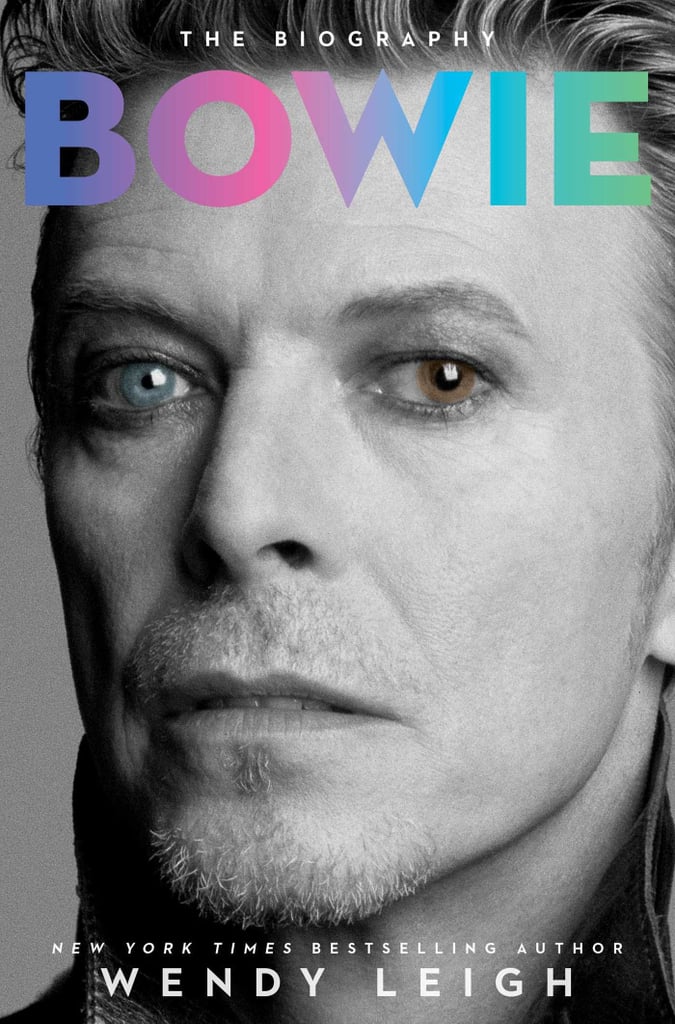
Review: Bowie: The Biography by Wendy Leigh

David Bowie’s sexuality was an integral part of his musical career — his gender-bending, elegantly androgynous appearance and his declarations of bisexuality.

It also seems to be the only part of his career that Wendy Leigh is actually interested in, because that is the unifying theme of the rather pretentiously-named “Bowie: The Biography.” While most of Bowie’s career is examined, Leigh merely skims over the parts of it that didn’t revolve around him having sex, who he was having sex with, how they were having sex, and preferably as many details as possible (like drag queens banging on the door).

Technically Wendy Leigh gives a pretty decent account of Bowie’s life, both on and off stage — his early life with a feisty and unconventional mother, his early music career and struggles to make it big, his involvement in the cultural attitudes that swept England at the time, his relationships with other musicians, his two marriages and fatherhood, and how he settled down from a wild rock god to an immortal, eternally-cool one.

But she seems oddly preoccupied by his sex life, which she establishes early in the book when she talks about how he asked, in a most gentlemanly way, for a sexy young woman to accompany him for a quickie in the bathroom. From there, Leigh almost fixates on who/what/when/where/why/how Bowie had sex — his bisexuality, his swinging lifestyle with his ex-wife Angela, the orgies held at their houses, his shocking pronouncements about his sexual identity, his various onstage personae… and of course, every single person he ever slept with, as far as I can tell.

In fact, she almost seems to lose interest when Bowie divorced Angie, and eventually settled into a life of monogamous contentment with Iman instead. While technically referring to this as another stage in his amorphous sexual life, Leigh seems to grow bored with Bowie after that — the final chapter of the book covers a good fifteen years of his life, but skims by everything in it quickly, as if she were just desperate to finish now that the salacious stuff is past.

In other words, this might as well have been called “Bowie: The Sexual Biography.” And as such, it’s kind of tiresome — like receiving a thin slice of meat smothered in cotton candy. You end up wanting more substance, but keep receiving nutritional fluff. While details of Bowie’s sex life are part and parcel of any biography of the man’s life, they’re so prevalent and so excessive in this book that you end up wishing she would focus on any other part of his life.

It even seeps into how Leigh addresses other people in Bowie’s life, such as her coverage of his ex-wife Angela, which is quite detailed but ultimately about her jealousy and all the kinky things she and Bowie did. But it’s not only what she includes (I didn’t need to repeatedly hear about hookups with random ladies in the bathroom) but what she leaves out; the detail wouldn’t be as out of place if she had given the same treatment to his career. However, it often feels like the career is treated as window-dressing rather than the central show.

Leigh’s writing is fairly decent, and she digs up some interesting factoids about David’s career and how it went (such as how he was financially cheated by a crooked “manager,” or how he responded to the 9/11 disaster where his wife and child were near the Towers), and it honestly left me wishing that she had done more in-depth reporting on what Bowie’s life was like in its entirety.It’s not as if there’s a dearth of information on things he did other than sex, since others have easily managed it and will likely do so again.

In brief, “Bowie: The Biography” is a flufftastic experience for those who want a frisson of pop star salaciousness — for those interested in the fuller details of Bowie’s life, give it a pass.
Review: Alice’s Adventures in Wonderland & Through the Looking-Glass by Lewis Carroll

Wonderland. The Cheshire Cat. Down the rabbit hole. Mad as a hatter. Curiouser and curiouser. Tweedledum and Tweedledee. OFF WITH THEIR HEADS!

Even if you have never read “Alice in Wonderland” or its equally oddball sequel “Through the Looking Glass,” some part of its charmingly nonsensical stories has probably slipped into your head over the years. Lewis Carroll’s classic fantasy stories are dreamlike adventures that breezily eschews plot, character development and any kind of logic… and between his cleverly nonsensical writing (“I daresay it’s a French mouse, come over with William the Conqueror”) and surrealist adventures, it is absolutely perfect that way. How many books can say that?

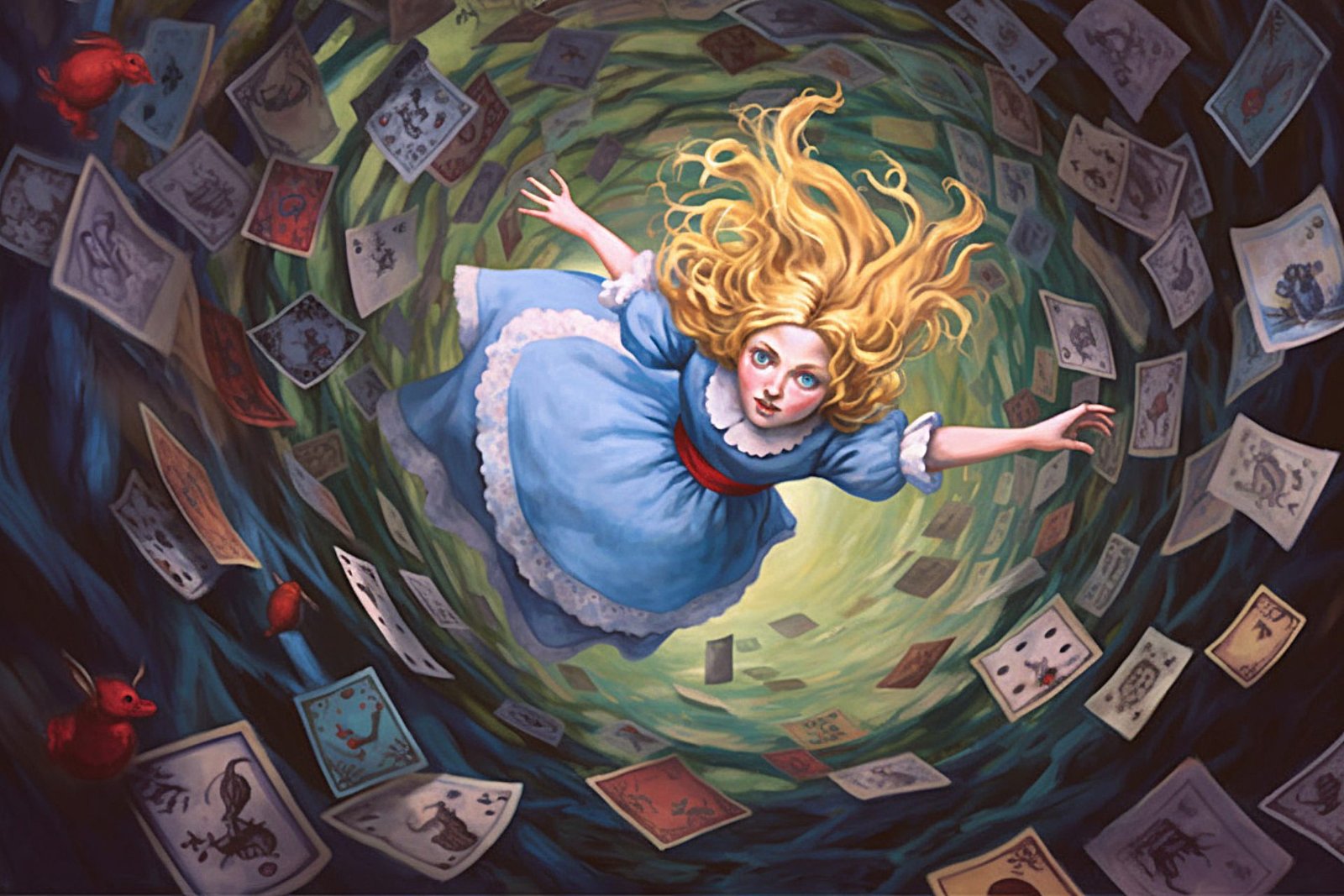
A bored young girl named Alice is by a riverbank when a White Rabbit runs by, fretting, “Oh dear! Oh dear! I shall be late!” and checking the watch from his waistcoat. Unsurprisingly, Alice pursues the rabbit down a rabbit-hole… and ends up floating down a deep tunnel to a strange place full of locked doors. There’s also a cake and a little bottle with labels instructing you to eat or drink them, which cause Alice to either shrink or grow exponentially.

As she continues pursuing the rabbit (who seems to think she’s someone named Mary Ann), Alice quickly discovers that Wonderland is a place where logic and reason have very, very little influence — talking animals in a Caucus-race, a hookah-smoking Caterpillar, even more bizarre growth potions, a grinning cat, the Duchess and her indestructible pig-baby, eternal tea-time with the March Hare and the Mad Hatter (plus the Dormouse), and finally the court of the Queen and King of Hearts.

And in the sequel, Alice steps through a mirror over the fireplace into a strange other world, where she encounters living chess pieces — including the Red Queen, who offers to make Alice a queen if she can make her way across the board in a chess match. As she makes her way across the chessboard, Alice encounters yet more strange people — the annoying yet philosophical twins Tweedledee and Tweedledum, the flaky White Queen, Humpty-Dumpty, and the clumsy White Knight.

“Alice in Wonderland” and “Through the Looking Glass” are two of those rare books that actually are more enjoyable and readable because they are pure nonsense, without more than a shred of plot or even proper narrative structure. The entire story is essentially Alice wandering from one wacky scenario to another, meeting more violently weird people with every stop and finding herself entangled in all sorts of surreal situations. It doesn’t really lead anywhere, or come from anywhere.

And yet, this works perfectly — it’s all about internally-logical nonsense, and a coherent plot or developed characters would get in the way of that. Never has such a perfect depiction of a weird dream been turned into fiction, especially since Alice regards everything that happens with a sort of perplexed detachment. Even though NOTHING in Wonderland makes sense (vanishing cats, sentient chess pieces, arguing playing-cards painting roses, the Hatter convinced that it is six o’clock all day every day, the Tweedles questioning her reality), she addresses everything with a sense of bemused internal logic (“I’ve had nothing yet, so I can’t take more”).

And Carroll festoons this wacky little tale with puns (“We called his Tortoise because he taught us”), odd snatches of mutilated poetry (the magnificently weird Jabberwocky poem) and tangled snarls of eccentric logic that only works if you’re technically insane (so… flamingoes are like mustard?). This keeps the plotless story as sparkling and swift-moving as a mountain stream laced with LSD, so the mind never has a chance to get bored by Alice simply wandering around, growing and shrinking, and engaged in a string of conversations with loopy people.

“Alice in Wonderland” and “Through the Looking Glass” are a mad, mad, mad, mad experience — and between Carroll’s sparkling dialogue and enchantingly surreal story, it’s also a lot of fun. Never a dull moment.

Review: The Return of the King by J.R.R. Tolkien

Middle Earth is on the verge of falling, and Sauron’s vast armies are about to swarm mankind’s last defenses. Only two things can save the world: a lost king returns to his throne, and a little hobbit makes it to Mount Doom.

So needless to say, there’s a lot of tension in “The Return of the King,” the final installment in J.R.R. Tolkien’s epic fantasy Lord of the Rings trilogy. Tolkien builds up the inevitable clash between good and evil in the form of a final apocalyptic war for Middle-Earth – and rather than cheaping out with “and then they all lived happily ever after,” twines in the bittersweet edge of a man who had seen war and evil.

Gandalf and Pippin ride to the city of Minas Tirith, which is about to be attacked by the force of Mordor – and to make things worse, the steward who rules Gondor is going nuts. Merry finds himself in the service to King Theoden of Rohan, where his determination to follow his lord into battle leads him into a terrifying confrontation. And Aragorn is seeking out allies to fight Sauron on a military scale, even if they can’t defeat him unless the Ring is destroyed. His search will take him to tribes of forest-dwellers, to Gondor — and even to summon an army of the dead.

In Mordor, the unconscious Frodo has been captured by Sauron’s orcs, and taken to the fortress of Cirith Ungol. Sam is desperate to free his friend, but knows that he can’t take on an army, and that Frodo would want him to finish the quest. Sam manages to free Frodo from captivity, but they must still brave more dangers before they can come to Mount Doom, the only place where the Ring can be destroyed. As they travel Sam sees Frodo slipping further and further into the Ring’s grasp. Will Frodo be able to destroy the Ring, or will Middle-Earth be lost?

“The Return of the King” is an impressive juggling act, with Tolkien keeping different subplots and character arcs constantly moving around and alongside each other. And as he did in “The Two Towers,” he further expands the world of Middle-Earth, both by introducing new civilizations and by expanding on the rich history that we get only a slight taste of (the undead army that serves Aragorn).

And in this story, we get some gloriously memorable scenes (Eowyn’s stand against the Witch-King, Sam charging into an orc citadel) intertwined with ones that show Tolkien’s love of the little people who occupy his world (Pippin making friends in Minas Tirith). His writing becomes a bit too exalted in places, especially after the war, but in other places it’s rich and compellingly beautiful.

“The Return of the King” is also the grimmest of the three books in this trilogy. Frodo and Sam are stuck in the vividly horrific Mordor, while the city of Minas Tirith is on the verge of completely crumbling. Tolkien does a phenomenal job of exploring the madness, despair, rage and sorrow that accompany a war, and the way it can affect even the idyllic Shire. And he doesn’t forget the slow period of healing that follows – for people, for civilizations, and even for nature.

And the ending has a feeling of finality; Tolkien shows that in a war like this, there is no true “happy ending.” Even if the good guys win, there will still be scarring, and death, and haunting memories of what once happened. And even if a person survives, he will never be the same.

Frodo Baggins is almost unrecognizable in this book – the bright, naive young hobbit has been worn down to a pale shadow of himself, increasingly consumed by the Ring until he threatens his best friend with a dagger. In contrast, Sam has come into his own, showing his own brand of quiet heroism and strength as he does his best to help Frodo get to Mount Doom, even though he’s increasingly sure that they won’t be coming back.

And the supporting characters are not neglected either, with the younger hobbits being exposed to the horrors of war, Aragorn breaking fully into his role as the future king of Gondor, and Legolas and Gimli continuing to be absolutely delightful. One particular standout is passionate war-maiden Eowyn, whose complicated battle with depression and ambition is handled with far more sensitivity than anyone would expect of a book from the 1950s.

It’s difficult, once the story has finished, to accept that one has to say goodbye to Middle-Earth and its enchanting inhabitants. But as Gandalf says, “I will not say: do not weep; for not all tears are an evil.”

Review: The Two Towers by J.R.R. Tolkien

The ending of “The Fellowship of the Ring” left our heroes teetering on the edge of disaster, and the titular fellowship fractured into pieces.

And the narrative itself reflects this in “The Two Towers,” the second volume of J.R.R. Tolkien’s Lord of the Rings trilogy. The story splits into two or three subplots that follow different people from the fellowship, even as new characters and locations are introduced, and the plot focus widens to show the effects of Sauron and Saruman’s tyranny on all of Middle-Earth.

Aragorn, Gimli and Legolas discover that Merry and Pippin have been abducted by orcs, rather than killed, and they set off in pursuit to rescue the two hapless hobbits. But their travels bring them to the land of Rohan, a country ravaged by orc attacks and ruled by a king under an evil spell… and also brings them back in contact with a dear friend whom they had thought was lost forever. Before they can help the hobbits, they’ll need to save Rohan from Saruman’s malevolence.

Merry and Pippin? Well, they have to use all their wits – and quite a bit of luck – to escape the orcs, and find themselves with a strange collection of tree-like allies who might be willing to help them out. If they can get themselves moving, that is.

Meanwhile, Frodo and Sam head into the evil land of Mordor, being shadowed by the last person they wanted to see – Gollum, the former bearer of the Ring. Frodo manages to turn Gollum into their personal guide to Mordor, despite Sam’s belief that the mentally unstable addict might not be trustworthy. The Ring is weighing more heavily than ever on Frodo, and is starting to reassert its old sway on Gollum.

One of the most noticeable changes in this book is the shift of focus. “Fellowship” was Frodo-centric, since the narration revolved around him, as did all the events and thoughts. But with the breaking of the Fellowship, the narration falls into three categories: Frodo and Sam; Merry and Pippin; Aragorn, Legolas and Gimli. This triple style allows individuals to shine more brightly, when they are called on to do more than hike with Frodo.

Tolkien also expands our view of Middle Earth, bringing us into the Anglo-Saxon-like kingdom of Rohan and the Sauron-ravaged land of Gondor, and showing us the effects of Sauron’s war. The effects on ordinary humans, on the environment, and on the countries unlucky enough to attract the attention of Dark Lords and evil wizards. And we finally get to Mordor, a toxic wasteland crawling with enemies, Nazgul and giant many-legged nightmares.

Needless to say, the story is a lot darker than the first book, especially as it explores the corrosive effect the Ring has on people’s souls. Characters die or are seriously wounded, and one disturbing scene has Pippin’s mind entrapped and tortured by Sauron. But Tolkien weaves in some levity from time to time, such as Gandalf joking when he hears Saruman throttling Grima Wormtongue, or when Sam debates with Gollum about whether they should cook the rabbits.

And the characters are fleshed out in more detail here, particularly Frodo Baggins. His strength and spirit are still there, but he becomes sadder and more introspective as the Ring begins to take hold of his mind and heart. At the same time, we also glimpse the kind of king that Aragorn is capable of being, if he can only get to his throne. Tolkien also introduces an array of new characters to the cast, such as the noble king Theoden and his lonely, desperately-unhappy niece Eowyn.

But where Tolkien really outdid himself is Gollum. Gollum returns, in a substantially different state. Oh, he’s still addled and addicted to the Ring, but he displays a dual love/loathing for the Ring, a weird affection for Frodo (who, from his point of view, is probably the only person who has been kind to him), and displays a Ring-induced dissociative identity disorder. Very rarely can bad guys elicit the sort of loathing and pity from the reader that Gollum does.

One noticeable aspect of this book is friendship. When the Fellowship sets out from Rivendell, virtually everyone is a stranger, with the exception of the hobbits. However, in this book we get our view of how much Sam loves Frodo and wants to help him. Sam is fully aware of how much Frodo needs emotional support, and he’s quite willing to be a pillar of strength for his friend. We see Gimli and Legolas’s affection for Merry and Pippin; and Legolas’s willingness to kill Eomer if Eomer hurts Gimli shows how far this Elf and Dwarf have come.

The middle volume of the Lord of the Rings trilogy is complex and well-plotted, expanding Tolkien’s fictional world in every direction. And like the first book, “The Two Towers” will leave you desperately grasping for the next book.

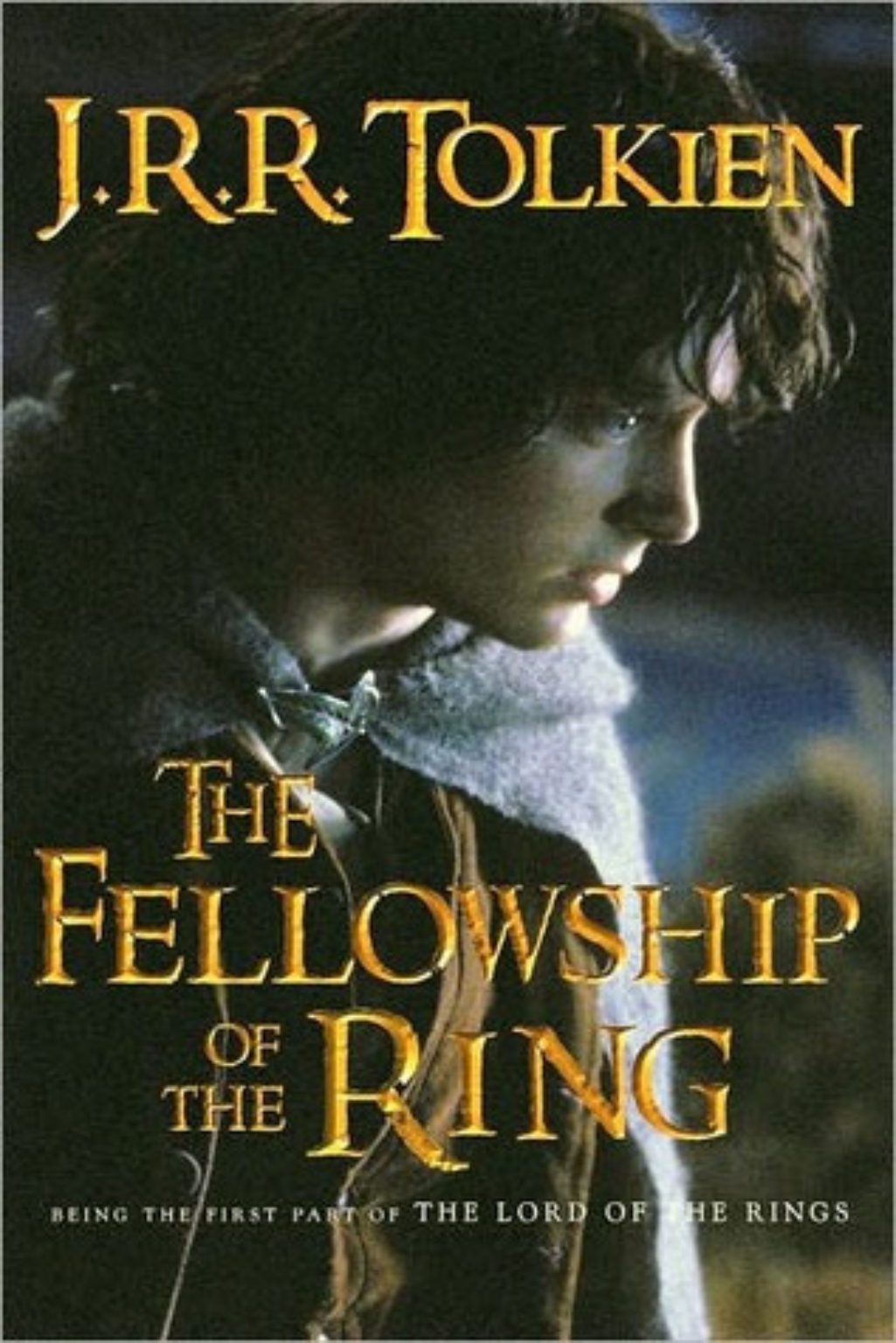
Review: The Fellowship of the Ring by J.R.R. Tolkien

There are books that are popular, books that are well-regarded… and then there are books that reshape the very fabric of literature.

J.R.R. Tolkien’s classic “Lord of the Rings” trilogy is in the third category. And while “The Fellowship of the Ring” starts off with the homey pastoral quirkiness from “The Hobbit,” it doesn’t take long for Tolkien to charge into a gripping, sometimes chilling adventure story about the nature of evil and the strength of a little hobbit to defeat it.

We open some sixty years after the events of “The Hobbit” – Bilbo Baggins is older, not much wiser, substantially wealthier, and quite eccentric (one not-so-affectionate nickname is “Mad Baggins”). He has also adopted his bright young cousin Frodo, who was orphaned at a young age and had led a rather fractured life since then. On his 111th birthday, Bilbo suddenly vanishes, leaving behind all his possessions to Frodo — including the golden ring that allows its wearer to become invisible.

Seventeen years later, Gandalf the wizard shows up again on Frodo’s doorstep, and informs the young hobbit that his ring is in fact the One Ring of the Dark Lord Sauron. It inevitably corrupts those who have it, and most of Sauron’s power is invested in it. Trying to deflect danger from the Shire, Frodo leaves with his best friend Sam and his loyal cousins Merry and Pippin. But Frodo has only the slightest idea of the hideous and dangerous journey ahead of him, that will take him across Middle-Earth to the evil land of Mordor.

Many fantasy cliches were spawned from this book, although obviously they weren’t cliches when Tolkien used them. Orcs, elves, dwarves, halflings, sprawling medieval kingdoms, dethroned kings, gray-bearded wizards and evil Dark Lords. But no one will feel that these are stale; on the contrary, they feel fresh and unused, because that is what they were when the book was first penned.

Narrative-wise, this book begins on much the same note as “The Hobbit”: it’s lighter and more cheerful, since it opens in the Shire. But darker undertones begin to crop up in the very first chapter, when Bilbo begins clutching at the Ring and speaking in a Gollum-like manner. The pace is pretty slow and gradual until the hobbits reach Bree, at which point it becomes darker, faster and harsher in tone and pace. The matter in it also becomes more mature, particularly in the chilling scenes after Frodo is stabbed by a Nazgul.

One of the things that Tolkien did exceptionally well is atmosphere. With a minimum of words, he conveys the menace of the Black Riders, the beauty of the Elves, the decay of the ancient kingdom of Moria, the mystery of such characters as Aragorn. In some areas, he deliberately didn’t elaborate on the such things as the Balrog, leaving the visualization up to the readers. Another strong point is a sense of epic proportions. Too often a fantasy writer TRIES to write an epic, at the expense of individual character development. Tolkien managed to balance both of them, by focusing on the individuals in the center of epic struggles.

Frodo himself is the quintessential “little guy” hero, one of the last people whom you’d expect to be on a mission to save the world. He’s prone to moods of either cheerfulness or sadness, a little immature and bored at the beginning, but incredibly brave and stout-hearted when the pressure is put on him. He has no astounding destiny or special powers to help him. He’s simply an ordinary person.

We also have Gandalf, who is fleshed out from the pleasantly crabby wizard of “Hobbit” — we see more of his hidden sides and powers here. And Frodo is surrounded by a well-rounded cast of characters, including his loyal gardener Sam and his charmingly sneaky cousins, as well as a rich fellowship of ethereal Elves, mysterious men and doughty dwarves.

Tolkien spins a spellbinding tale, rich in lore and heavy with atmosphere, and the biggest problem with “The Fellowship of the Ring” is that it ends, leaving you scrabbling for “The Two Towers.” A must-read for fantasy buffs.

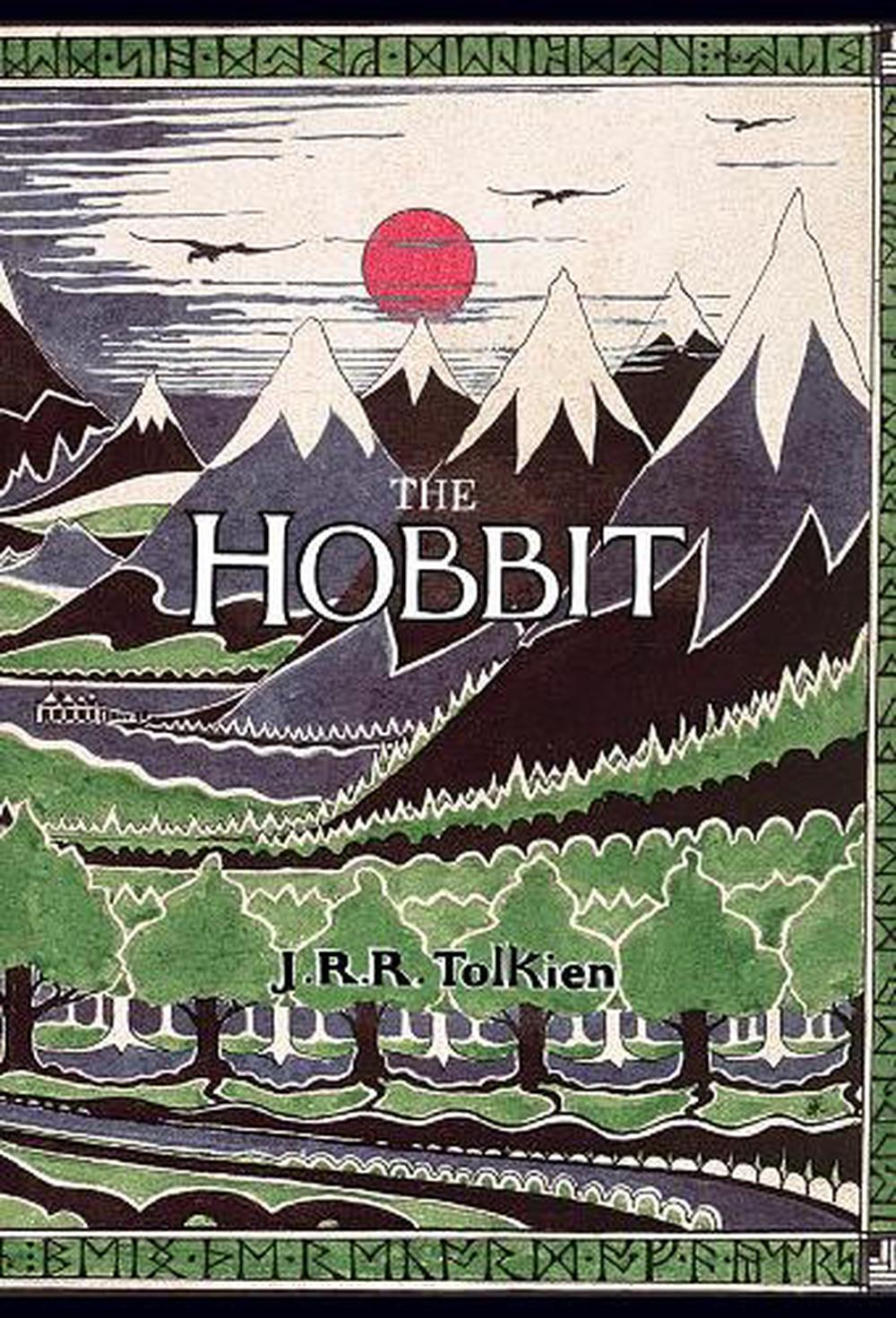
Review: The Hobbit by J.R.R. Tolkien

“In a hole in the ground, there lived a hobbit.” J.R.R. Tolkien first scribbled down the opening line of this book on an extra sheet of paper.

And years before “Lord of the Rings” was seen by anyone outside Tolkien’s circle, Middle Earth was first introduced to readers. “The Hobbit” is simpler and less epic than the trilogy that followed it, but Tolkien’s brilliant writing, magical world and pleasantly stodgy hero bring a special life to this early fantasy classic. And with the first “Hobbit” movie coming out in a few months, it deserves revisiting.

Bilbo Baggins lives a pleasantly stodgy and dull life, in a luxurious hobbit hole under a hill (“it was a hobbit hole, and that means comfort”). He’s the picture of dull respectability. But his life is turned upside-down by the arrival of the wizard Gandalf and thirteen dwarves, led by the exiled king-in-waiting Thorin Oakenshield. They want to reclaim the Lonely Mountain (and a lot of treasure) from the dragon Smaug. Why do they want Bilbo? Because Gandalf has told them that he’d make a good burglar, even though Bilbo has never burgled in his life.

So before Bilbo is entirely sure what is going on, he is being swept off on a very unrespectable — and dangerous — adventure. The quirky little band ends up battling goblins and spiders, nearly getting eaten, and imprisoned by Elves, while Bilbo finds himself in possession of a magic Ring from the treacherous Gollum. But even with a magic Ring, can he defeat a monstrous dragon and win a war against multiple enemies?

Tolkien had been crafting his mythos of Elves, Dwarves, Wizards and ancient Men for years before he ever came up with Bilbo’s quest. But it’s fortunately that he did, because while “The Hobbit” is overshadowed by the epic sweep of “Lord of the Rings” and the “Silmarillion,” it’s still an entertaining story that lays the groundwork for his more famous works — especially the magical Ring that Bilbo finds in Gollum’s cavern.

Tolkien’s writing is swift, light and full of songs and poetry-laden descriptions, such as interludes in the shimmering, ethereal Rivendell and the cold, terrible Lonely Mountain. The pace in this is much faster than in most of his other works — not surprising, when you consider it was originally a bedtime story for his children.

Most of the book’s action is about Bilbo trying to keep himself and the dwarves from getting eaten, torn apart, or rotting in elf dungeons, but with some quiet interludes like a night at Beorn’s mountain home. And the last chapters hint at the epic majesty that Tolkien was capable of, as well as the idea that even little people — like a mild-mannered hobbit or a bird — can change the world.

This book also first came up with hobbits — the peaceful fuzzy-footed countryfolk — in the form of Bilbo Baggins. He’s a likable little guy, if the last person you’d ever expect to be a hero — initially he seems weak and kind of boring, but his hidden strengths and wits come up to the surface when he needs to. By the end, he’s almost a different person.

The dwarves are more comical, and the elves more whimsical in this book, but the supporting characters are still impressive — the crotchety, mysterious wizard Gandalf, the dignified, flawed Dwarf king Thorin Oakenshield, and a Guardsman who becomes a king. Even minor characters like Beorn, Elrond and the menacing Smaug are given plenty of dimension.

“The Hobbit” started as a fluke, grew into a bedtime story, and became one of the best fantasy stories in literary history — a charming adventure in the time that never was. Brilliant.

Review: Mansfield Park by Jane Austen

Even the best authors in the world sometimes put out something that… well, isn’t up to their usual standards. For Jane Austen, that book was “Mansfield Park” — her prose is typically excellent, and she weaves a memorable story about a poor young lady in the middle of a wealthy, dysfunctional family. But put bluntly, Fanny Price lacks the depth and complexity of Austen’s other heroines.

As a young girl, Fanny Price was sent from her poor family to live with her wealth relatives, the Bertrams, and was raised along with her four cousins Tom, Edmund, Maria and Julia. Despite being regarded only little better than a servant (especially by the fawning, cheap Mrs. Norris), Fanny is pretty happy — especially since Edmund is kind and supportive of her at all times. But then the charming, fashionable Crawford siblings arrive in the neighborhood, sparking off some love triangles (particularly between Maria and Henry Crawford, even though she’s already engaged).

And the whole thing becomes even more confused when Henry becomes intrigued by Fanny’s refusal to be charmed by him as the others are. But when she rejects his proposal, she ends up banished from her beloved Mansfield Park… right before a devastating scandal and a perilous illness strikes the Bertram family. Does Fanny still have a chance at love and the family she’s always been with?

The biggest problem with “Mansfield Park” is Fanny Price — even Austen’s own mother didn’t like her. She’s a very flat, virtuously dull heroine for this story; unlike Austen’s other heroines she doesn’t have much personality growth or a personal flaw to overcome. And despite being the protagonist, Fanny seems more like a spectator on the outskirts of the plot until the second half (when she has a small but pivotal part to play in the story).

Fortunately she’s the only real flaw in this book. Austen’s stately, vivid prose is full of deliciously witty moments (Aunt Norris “consoled herself for the loss of her husband by considering that she could do very well without him”), some tastefully-handled scandal, and a delicate house-of-romantic-cards that comes crashing down to ruin people’s lives (and improve others). And she inserts some pointed commentary on people who care more about society’s opinions than on morality.

And the other characters in the book are pretty fascinating as well — especially since Edmund, despite being a virtuous clergyman-in-training, is an intelligent and strong-willed man. The Bertrams are a rather dysfunctional family with a stern patriarch, a fluttery ethereal mother, a playboy heir and a couple of spoiled girls — Maria in particular develops a crush on Henry, but doesn’t bother to break off her engagement until it’s too late. And the Crawfords are all flash and sparkle: a pair of charming, shallow people who are essentially hollow.

“Mansfield Park” suffers from a rather insipid heroine, but the rest of the book is vintage Austen — lies, romance, scandal and a dance of manners and society.

Review: Northanger Abbey by Jane Austen

Gothic romances were all the rage in the late 1700s and early 1800s — sprawling, eerie melodramas full of sublimated sex and violence.

And rather than her usual straightforward comedies of manners, Jane Austen once wrote a mellow satire of the very mockable genre — think a parody of “Twilight” or “50 Shades of Grey” as written by one of the greats. “Northanger Abbey” is a clever and slightly tongue-in-cheek little novel about a girl who needs to learn the difference between fantasy and reality… and yes, there’s some love tangles and deceptions too.

Catherine Morland is an innocent young country girl with a love of gothic romances, and has lives an unremarkably life in a country parish. But then the wealthy Allens invite her to Bath during their vacation there, and of course she accepts — and through balls and old acquaintances, she becomes friends with two pairs of siblings. One is the Thorpes, the uncouth dandy John and his manipulative sister Isabella, and the more mysterious Tilneys, the charming Henry and sweet Eleanor.

When the Tilneys decide to leave Bath, Catherine is invited with them, to the vast stone manorhouse of Northanger Abbey — which is as gloomy, eerie and remote as her gothic-loving heart could wish for. What’s more, she believes that there are dangerous secrets in Northanger Abbey, related to the suspicious death of the late Mrs. Tilney. But Catherine has some lessons to learn about reality and fantasy: that everyday world is not nearly as melodramatic and twisted as her novels, and that it has its own dangers and deceptions.

Unlike all the other books Austen wrote, “Northanger Abbey” is a careful balance of two different styles — a parody of all the lurid excesses of classic gothic novels (she even lists a bunch of real-life gothic novels!), and it’s a subtle coming-of-age tale about a young girl who needs to figure out the difference between reality and fantasy. There’s big spooky manors, sinister noblemen, mysterious deaths… you do the math.

And Austen clearly had a lot of fun with this book, enhancing her usual formal style with a bit of satirical melodrama (“A thousand alarming presentiments of evil to her beloved Catherine from this terrific separation must oppress her heart with sadness”). And while the plot is sprinkled with sinister pseudo-gothic hints, Austen also takes the time to sketch out some romantic deceptions and tangles, as well as some deliciously arch dialogue (“I was not thinking of anything.” “That is artful and deep, to be sure…”).

The only part that falls short is the climactic encounter between Henry and Catherine… which is completely skimmed over, and related only in a distant vague style. “I leave it to my reader’s sagacity” is not a satisfying way to handle that sort of romantically-charged scene.

Austen also has fun with Catherine as the unlikely heroine of the piece, especially since she makes it clear that Catherine comes from a very mundane, undramatic background. She’s sweet, naive, wide-eyed and essentially good-hearted, but she has a lot to learn about reality (especially about the golddigging family that befriends her). And Henry is an oddity among Austen’s heroes, being a clever silver-tongued charmer with a heart of gold who likes to gently tease Catherine.

Quick, light and full of teasing humor, “Northanger Abbey” is an oddity in Jane Austen’s string of brilliant novels — but being a clever, well-plotted spoof doesn’t make it any less charming. A delight.

Review: Sense and Sensibility by Jane Austen

One of the Dashwood daughters is smart, down-to-earth and sensible. The other is wildly romantic and sensitive.

And in a Jane Austen novel, you can guess that there are going to be romantic problems aplenty for both of them — along with the usual entailment issues, love triangles, sexy bad boys and societal scandals. “Sense and Sensibility” is a quietly clever, romantic little novel that builds up to a dramatic peak on Marianne’s romantic troubles, while also quietly exploring Elinor’s struggles.

When Mr. Dashwood dies, his entire estate is entailed to his weak son John and snotty daughter-in-law Fanny. His widow and her three daughters are left with little money and no home. Over the next few weeks, the eldest daughter Elinor begins to fall for Fanny’s studious, quiet brother Edward… but being the down-to-earth one, she knows she hasn’t got a chance. Her impoverished family soon relocates to Devonshire, where a tiny cottage is being rented to them by one of Mrs. Dashwood’s relatives — and Marianne soon attracts the attention of two men. One is the quiet, much older Colonel Brandon, and the other is the dashing and romantic Willoughby.

But things begin to spiral out of control when Willoughby seems about to propose to Marianne… only to abruptly break off his relationship with her. And during a trip to London, both Elinor and Marianne discover devastating facts about the men they are in love with — both of them are engaged to other women. And after disaster strikes the Dashwood family, both the sisters will discover what real love is about…

At its heart, “Sense and Sensibility” is about two girls with completely opposite personalities, and the struggle to find love when you’re either too romantic or too reserved for your own good. As well as, you know, the often-explored themes in Austen’s novels — impoverished women’s search for love and marriage, entailment, mild scandal, and the perils of falling for a sexy bad boy who cares more for money than for true love… assuming he even knows what true love is.

Austen’s formal style takes on a somewhat more melancholy flavor in this book, with lots of powerful emotions and vivid splashes of prose (“The wind roared round the house, and the rain beat against the windows”); and she introduces a darker tone near the end. Still, there’s a slight humorous tinge to her writing, especially when she’s gently mocking Marianne and Mrs. Dashwood’s melodrama (“They gave themselves up wholly to their sorrow, seeking increase of wretchedness in every reflection that could afford it”).

And Marianne and Elinor make excellent dual heroines for this book — that still love and cherish each other, even though their polar opposite personalities frequently clash. What’s more, they each have to become more like the other before they can find happiness. There’s also a small but solid supporting cast — the hunting-obsessed Sir John, the charming Willoughby (who has some nasty stuff in his past), the emotional Mrs. Dashwood, and the gentle, quiet Colonel Brandon, who shows his love for Marianne in a thousand small ways.

“Sense and Sensibility” is an emotionally powerful, beautifully written tale about two very different sisters, and the rocky road to finding a lasting love. Not as striking as “Pride and Prejudice,” but still a deserving classic.

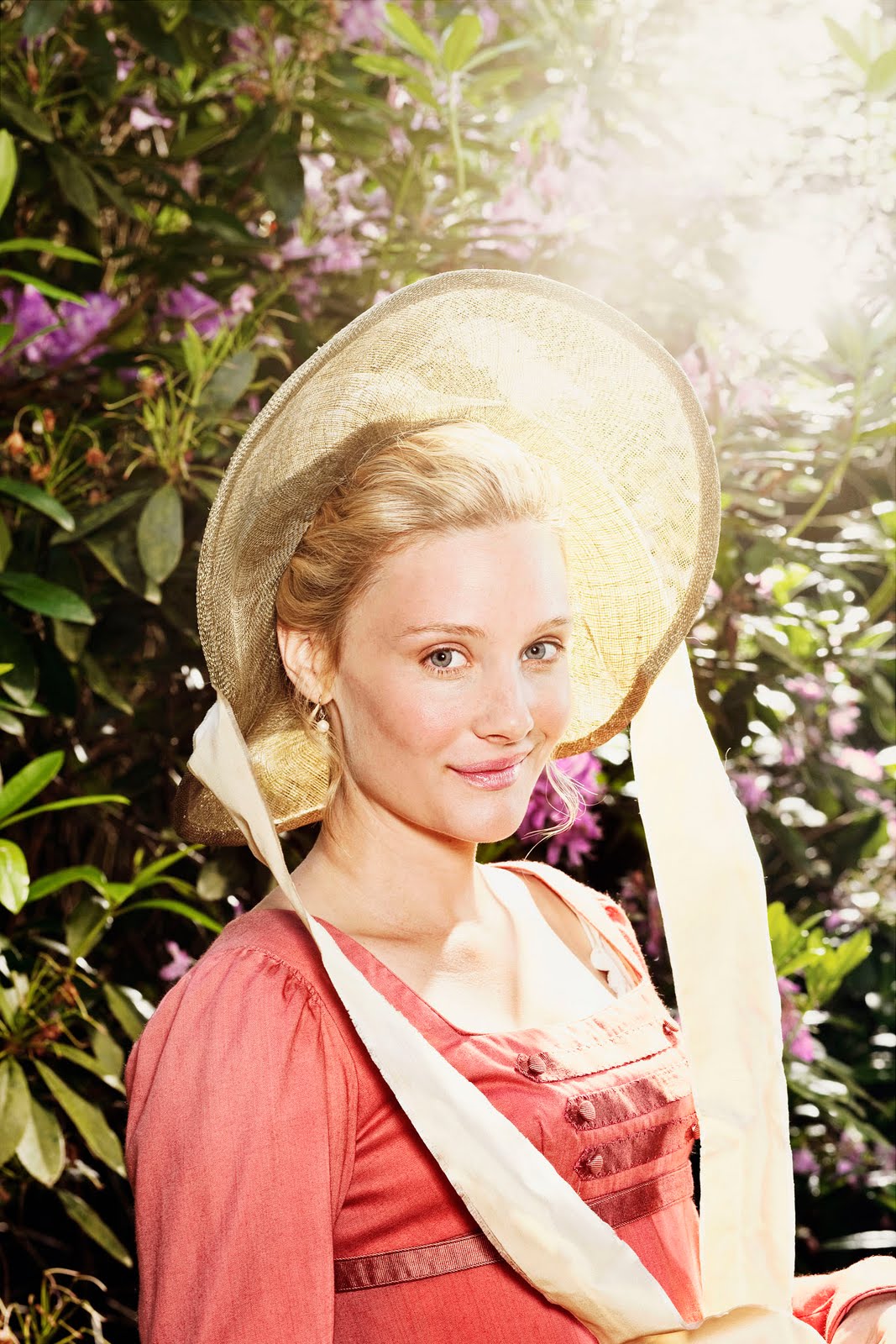
Review: Emma by Jane Austen

“Emma Woodhouse, handsome, clever, and rich, with a comfortable home and happy disposition” is a suitable heroine for Jane Austen’s lightest, frothiest novel. While “Emma” is not nearly as dramatic as Austen’s other works, it is an enchanting little comedy of manners in which a young woman with the best intentions meddles in others’ love lives… with only the faintest idea of how people (including herself) actually feel.

After matchmaking her governess Miss Taylor, Emma Woodhouse considers herself a natural at bringing people together. She soon becomes best buddies with Harriet, a sweet (if not very bright) young woman who is the “natural daughter of somebody.” Emma becomes determined to pair Harriet with someone deserving of her (even derailing a gentleman-farmer’s proposal), such as the smarmy, charming Mr. Elton. When Emma’s latest attempt falls apart, she finds that getting someone OUT of love is a lot harder than getting them INTO it.

At around the same time, two people that Emma has heard about her entire life have arrived — the charming Frank Churchill, and the reserved, remote Miss Jane Fairfax (along with rumors of a married man’s interest in her). Emma begins a flirtatious friendship with Frank, but for some reason is unable to get close to Miss Fairfax. As she navigates the secrets and rumors of other people’s romantic lives, she begins to realize who she has been in love with all along.

Out of all Jane Austen’s books, “Emma” is the frothiest and lightest — there aren’t any major scandals, lives ruined, reputations destroyed, financial crises or sinister schemes. There’s just a little intertwined circle of people living in a country village, and how one young woman tries to rearrange them in the manner that she genuinely thinks is best. Of course, in true comedy style everything goes completely wrong.

And despite the formal stuffiness of the time, Austen wrote the book in a languidly sunny style, threading it with a complex web of cleverly orchestrated rumors and romantic tangles. There’s some moments of seriousness (such as Emma’s rudeness to kind, silly Miss Bates), but it’s also laced with some entertaining dialogue (“Silly things do cease to be silly if they are done by sensible people in an impudent way”) and barbed humor (the ridiculous and obnoxious Mrs. Elton).

Modern readers tend to be unfairly squicked by the idea of Emma falling for a guy who’s known her literally all her life, but Austen makes the subtle relationship between Knightley and Emma one of affectionate bickering and beautiful romantic moments (“If I loved you less, I might be able to talk about it more. But you know what I am. You hear nothing but truth from me”).

Emma is a character who is likable despite her flaws — she’s young, bright, well-meaning and assured of her own knowledge of the human heart, but also naive and sometimes snobbish. She flits around like a clumsy butterfly, but is endearing even when she screws up. Mr. Knightley is her ideal counterpoint, being enjoyably blunt and sharp-witted at all times. And there’s a fairly colorful supporting cast — Emma’s neurotic but sweet dad, her kindly ex-governess, the charming Frank, the fluttery Miss Bates, and even the smarmy Mr. Elton and his bulldozing wife.

“Emma” is the most lightweight and openly comedic of all Jane Austen’s novels, with a likable (if clueless) heroine and a multilayered plot full of half-hidden feelings. A lesser delight.