Review: Solo Leveling Volume 1 (manhwa)

In the world of “Solo Leveling,” inter-dimensional gates regularly open up to “dungeons” crawling with strange and dangerous creatures. The only ones who can kill the creatures are hunters, who have awakened powers that let them take down the big bosses.

And out of all those hunters… Jin-woo is the weakest.

Needless to say, there’s plenty of room for improvement for the protagonist of the manhwa adaptation of Chugong’s “Solo Leveling.” The first volume mostly devotes itself to introducing us to the world of hunters and the hideous events that lead to Jin-woo’s chances to improve himself, with a terrifying and bloody series of challenges at the center of the story. The artwork is half the reason to see this – dark, gloomy and beautifully detailed.

As mentioned before, Sung Jin-woo is the weakest of the lowest-ranked hunters, able to tag along on only the least threatening missions – and even then, he gets badly hurt. But he has no choice, because he needs the money for his family. When the party he’s with finds a rare double dungeon, Jin-woo is determined to explore the vast, eerie stone chamber filled with statues, in the hopes that he can scrounge up a little money.

But then the statues come to life and start killing the party members, including a vast “god” statue that has a very specific list of demands. Unfortunately, those commandments are difficult to decipher, and more and more hunters lose their nerve – leading to them being vaporized or squashed into red smears. To survive this nightmarish scenario, Jin-woo will need more than his wits. He’ll need a System, and he’ll start grinding like a pro if he ever wants to get stronger.

The first volume of “Solo Leveling” is dominated by the adventure in the double dungeon, and the entire eerie, bloody adventure is explored in great detail. It’s genuinely nerve-wracking to watch the hunters dwindle as the adventure goes on – especially as some of them turn on each other, lose limbs or panic and try to escape on foot. The fact that it’s overseen by a creepy, sadistic stone “god” with a toothy grin makes the whole thing even more eerie.

And the story is brought to life by the artwork of Jang Sung-rak (aka Dubu), who used color exceptionally, painting the god’s chamber in stark, ghostly, cold blues and the regular world in warm, sunlit tones. The artwork is also very detailed and expressive, lingering on the characters’ faces to show their terror, tension, eagerness and apprehension, and even brief bursts of action (like the murder centipedes in the desert) are wonderfully dynamic.

We also have a good introduction to Jin-woo, who seems like a vividly realistic character – he’s courageous, unselfish and quick-thinking (he unravels all three commandments without help), but still petrified of dying and acutely aware of his almost comical weakness. But after the System accepts him as a player, we see him starting to branch out into becoming stronger, whether it’s racing laps around the hospital or venturing alone into a new dungeon.

The first volume of “Solo Leveling”‘s manhwa adaptation is a nail-biting experience that flies by quickly, before introducing you to the central conceit of the series – and it promises to get more interesting as Jin-woo levels up.

Review: The Office: Complete Christmas Collection

“The Office” is, in my opinion, one of the greatest comedy TV shows of all time. Especially since it didn’t have a laugh track, since I hate those.

And like any long-running comedy series, “The Office” had a fair number of Christmas episodes, each one with its signature mixture of cringe, wit, charm and hilarity. “The Office: Complete Christmas Collection” compiles all seven Christmas episodes together, bringing together everything from alcoholic interventions to special teapots, from romantic blowups to an attack by Christmas geese. Overall, it’s far more admirable than impish.

Each episode features a Christmas party in the titular office, usually with something that spins out of control that the manager makes dramatically worse. That might be a Secret Santa turned into a Yankee Swap (over a $400 iPod), an alcoholic fire that leads to an attempt at forced rehab, Phyllis (Phyllis Smith) as a female Santa Claus, a disastrous trip to Benihana’s, a “classy” Christmas for Michael Scott’s (Steve Carell) love interest, and a Schrute-style Christmas complete with the grimy gift-bringer Belsnickel.

And while all this is going on, there are other little side stories: Erin (Ellie Kemper) being attacked by Christmas birds, Dwight (Rainn Wilson) selling unicorn dolls, Phyllis blackmailing Angela (Angela Kinsey), dueling Christmas parties, Jim (John Krasinski) and Dwight dedicatedly fighting with both snowballs and pranks (including Henrietta the porcupine), the potential loss of everybody’s jobs, learning about “Die Hard,” and Darryl (Craig Robinson) getting into the Glühwein while in a bad mood. Cue the Trans-Siberian Orchestra and rock out for Christmas.

And for the most part, the stories are delightful to watch. I feel that the Benihana episode is rather weak (and contains a rather unpleasant gag about Asians), but the rest of the time, the antics of our favorite office workers are fun to watch, whether they’re festive or Grinchtastic. The antics are wonderfully and bizarrely memorable (Dwight bringing in a dead goose) and the dialogue is fun (according to Michael, Jesus Christ “can heal leopards”), but there is some real emotional resonance to them as well (Michael’s jealousy over Holly’s relationship, Jim wanting to give Pam a special teapot).

The biggest problem with this collection? Simply put, it’s that “The Office” has many overarching storylines, and sometimes those storylines are incorporated into the Christmas episodes, but not shown in total. So if you haven’t seen the preceding episodes, and you watch the Christmas episodes only, you might be a little confused why Erin is demanding murder, or Phyllis is blackmailing Angela, or where Michael went after the seventh season, or what Jim is going to Philadelphia for.

“The Office: Complete Christmas Collection” is a fun little collection of wild, weird and wonderful Christmas episodes, full of cringe comedy, oven mitts and unicorn dolls.

Review: Guillermo del Toro’s Pinocchio

The year 2022 was a weird one. For some reason, there were three different Pinocchio movies released to the public: one so bad it was unintentionally funny (the Russian one), one so bad it was just painfully bad (the Disney one) and one that was… sublime.

The last one – the one that people actually wanted to see – was the Oscar-winning stop-motion adaptation by the magnificent Guillermo del Toro, which reimagines the tale during the rise of Italian fascism. Despite the grimness of that setting, it’s the “Pinocchio” that you would expect from del Toro – darkly exquisite, whimsical in an disarmingly alien way, and bittersweet in nature.

During World War I, talented woodcarver Geppetto loses his beloved son Carlo to a bomb. After many years of loneliness and grief, he drunkenly chops down the tree that grew over Carlo’s grave, and carves it into a wooden puppet that looks like a young boy. Then a blue, winged forest spirit decides to grant life to the puppet, and enlists Sebastian, the memoir-writing cricket living in his chest cavity, to guide and help the wooden boy.

But navigating life is difficult for Pinocchio, since Geppetto isn’t sure what to do with a spontaneous and overly-inquisitive child that causes trouble wherever he goes. The wooden boy becomes a circus performer to earn money for his father, and soon discovers that he is immortal – every time he dies, he comes back from the afterlife, albeit a little later each time. This attracts the attention of the Podestà, who wants him trained as a soldier for the ongoing war with the Allied Forces. But Pinocchio’s only goal is to protect his father.

Guillermo del Toro’s quest to make this film stretches over more than a decade, and unlike Disney’s crassly soulless remake of their own classic property, it overflows with heart, passion and bittersweet beauty. It’s also a story that rings deeply with Guillermo del Toro’s unique style and sensibilities, from the reframing of the narrative against the rise of Italian fascism (Pinocchio personally offends Benito Mussolini) to the mixture of darkness and whimsy (the eccentric designs of Death and the Sprite, who have extra eyes, horns, snake body parts and other such parts).

The darkness/whimsy is due to del Toro and Patrick McHale (responsible for the enchanting “Over The Garden Wall”), weaving together themes of paternal love, mortality, freedom, grief and self-sacrifice. But it also has lighthearted scenes like a newborn Pinocchio wheeling around causing chaos in Geppetto’s home. The entire story is rendered in absolutely beautiful stop-motion, which still manages to have a luminous quality that swings between the ethereal and the grounded.

Gregory Mann is absolutely charming as the titular character, capable of depicting Pinocchio throughout his entire journey. There’s also a superb cast including Ewan McGregor as the erudite insect; David Bradley as Geppetto, who learns to love his new (possibly reincarnated) son; Tilda Swinton as the ancient spirits of death and life; Ron Perlman as the cruel fascist official who wants Pinocchio to be a child soldier; and a number of other like Christoph Waltz, Cate Blanchett, Finn Wolfhard, and so on.

Guillermo del Toro’s “Pinocchio” is not only a charming, timeless stop-motion tale, it is also a heartwarming example of when passion and art triumph. Bittersweet, whimsical and enchanting.

Review: Five Nights At Freddy’s (2023)

Even if you’re not a gamer, you’ve probably heard of “Five Nights At Freddy’s.” Scott Cawthon’s hit video game franchise is about employees (and occasionally children) being pursued by anthropomorphic ghost-robot animals. Also, serial killers.

And it’s not surprising that the “Five Nights At Freddy’s” movie shines the brightest when it dives into mascot horror and the lore of the franchise. It’s substantially weaker when it focuses on the human characters’s familial conflicts and internal turmoil, which means that it rebounds solidly in the final act when the various loosely-wound plot threads are finally tied together. Still, did we need custody drama?

Michael (Josh Hutcherson) is a young mall security guard obsessed with the abduction of his little brother when he was a child. But then he loses his job, and faces the possibility of losing custody of his little sister Abby (Piper Rubio) to his vicious aunt. So he takes the only new career path available: a night security guard at the arcade/pizza restaurant known as Freddy Fazbear’s, where he’s mostly there to guard the animatronics. He also encounters Vanessa (Elizabeth Lail), a friendly cop who seems to be very well-informed about the place.

But he soon realizes that the animatronics are actually “alive,” possessed by the spirits of children murdered many years ago – and they seem to have a special bond with Abby. Unbeknownst to him, they also kill people who break in. As he tries to enlist their help to find out who abducted and murdered his little brother, Michael soon discovers that the animatronics are far more dangerous than he ever expected – and they aren’t alone.

“Five Nights At Freddy’s” is easily at its best when it sticks to being “Five Nights At Freddy’s.” The most gripping and engaging parts of the story are when the animatronics are prowling around chewing people’s faces off or biting them in half. It’s not too bloody or graphic, considering this is a Blumhouse movie (it’s actually rather tame for a horror movie) but it does capture some sense of dread and creepiness, especially in the unnaturalness of the animatronics’ movements.

Unfortunately, you also have to wade through a lot of Michael’s personal problems to reach the “Five Nights”-ness, and… they’re not terribly interesting. Obviously some kind of personal stuff is required for the security guard, but the movie needed fewer custody fights and more spooky nighttime conflicts with the killer animatronics. We also didn’t need a scene where the animatronics build a giant blanket fort with Abby, which was just… awkward.

Fortunately, things improve drastically when the third act rolls around, when the animatronics go back to being homicidal, and the backstory behind their deaths is finally explored. There’s a real sense of dread at the thought of dead children brainwashed into amnesiac killers who don’t even remember what they are, so that you both pity them and want to run away from them at top speed. As for the mastermind of the whole scenario, his arrival gives the story an extra jolt of fizzing energy, and I honestly couldn’t get enough of his villainy.

While Hutcherson’s character spends too much time on non-“Freddy” stuff, he gives a very good performance as a young man who has been fundamentally damaged by loss and guilt. Mary Stuart Masterson and Elizabeth Lail also give solid if uncomplicated performances, and Piper Rubio’s performance is pretty good, even though her character seems like she was written to be several years younger than the actress. Matthew Lillard has little screen time, but he absolutely dominates the screen and has just the right amount of scenery chewing. Chef’s kiss.

“Five Nights At Freddy’s” is weaker when it tries to incorporate more original elements, but is at its best when it sticks to what “Five Nights At Freddy’s” is all about. For those who enjoy tales of killer animatronics and serial killers, it’s a mixed bag but one still worth seeing.

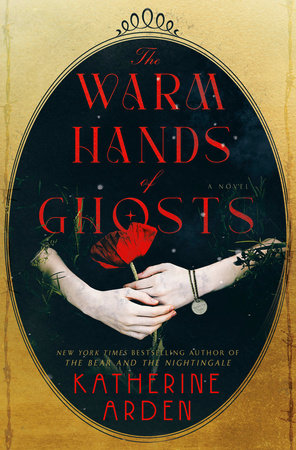
Review: The Warm Hands of Ghosts

Disclaimer: I received a copy of this book from NetGalley in exchange for an honest review.

Nowhere seems more appropriate for a story about the lost and forsaken than a story set in one of the World Wars, whether it’s a fantasy or straight historical fiction. And the search for one of those lost, forsaken souls sparks off the events of “The Warm Hands Of Ghosts,” Katherine Arden’s historical fantasy about a woman’s search for her brother, and that brother’s fall from grace. It’s not a comfortable or complicated book, but it does have a certain dark, dismal charm.

It’s 1918, World War I is raging, and nurse Laura Iven has little other than her work to occupy her – her parents died in freak accidents, she suffered some nasty injuries in her field work at the front, and her brother Freddy has just been declared missing, presumed dead. Then a seance tells her that Freddie is still alive – and though she doesn’t entirely believe it, she decides to go back to the front with her new friends Pim Shaw and Mary Burton to find out what happened to him.

Soon after arriving, the women take shelter in a strange, dreamlike hotel, where a man named Faland plays the fiddle and tantalizes people with a magic mirror. While Laura searches for some sign of her brother, she is told stories about the Fiddler and the sinister spell he weaves over the people who find him – and she begins to wonder if Freddie’s fate might somehow be connected to this man.

Alternating chapters also show what happened to Freddie the year before – how he was left for dead in an overturned pillbox, with a German soldier named Hans Winter. The two men bond as they try to find a way back to one of their armies, and Freddie goes to extreme lengths to make sure his new friend will survive. But these lengths also put him in the hands of Faland, and a Faustian pact that will steal away what is most precious to him.

“The Warm Hands of Ghosts” is a book that is easier to appreciate than to actually enjoy – it’s a beautifully-written, beautifully-sculpted tale about the horrors of war, the price people will pay to escape them, and the bonds between people facing those horrors. But at the same time, Katherine Arden’s tale has stretches that aren’t exactly gripping, especially in Laura’s part of the story, and while the grey bleakness of the war is well-explored, she doesn’t really fully address the implications or theological aspects of the story that she brings up.

Furthermore, the alternating chapters from Laura and Freddie’s perspectives do start to sap some of the tension, especially when Faland’s true nature reveals itself – you kind of want the story to just stick to Freddie and explore the horror of his situation. Instead, every time something important happens in one of the parallel narratives, it’s cut off and we switch to the other one.

The characters also are a mixed bag – Laura is a character that it’s easier to admire than to like, being a rather cold and prickly woman. It’s entirely understandable, and well-displayed, how she became that way, but it’s hard to warm up to her. Supporting characters like the enchantingly feminine Pim or the bluntly practical American doctor Jones end up feeling more like characters you want to follow. And Freddie is a more raw and dynamic character, since his journey is more horrifying and gripping, as is his relationship with enemy soldier Winter.

“The Warm Hands of Ghosts” is a striking, well-written and well-researched tale of war, loss and the sinister forces that underlie human horrors. However, it needed more fleshing-out of some aspects of the plot, and a heroine who feels less cold and armored.

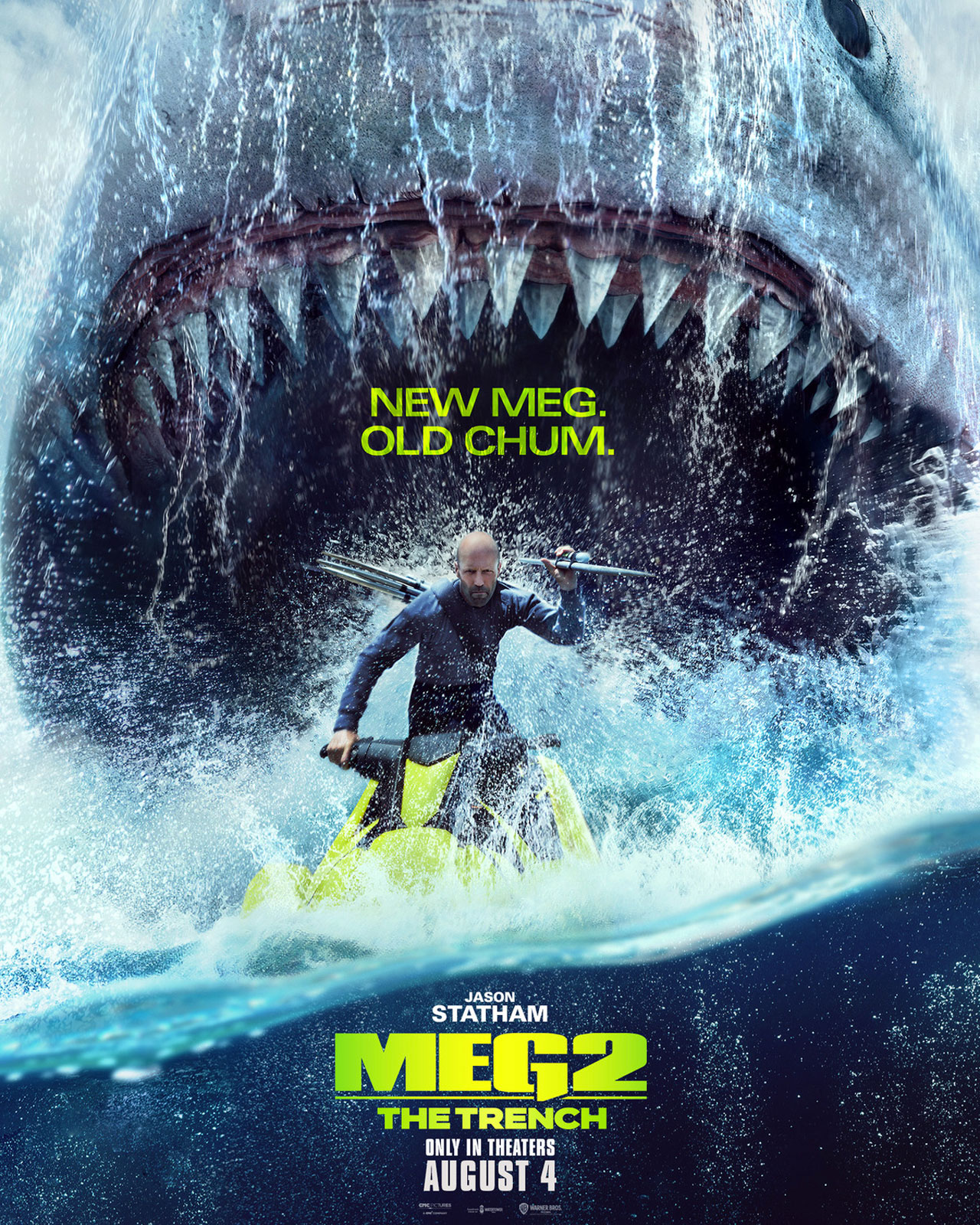
Review: The Meg 2: The Trench

Do you want to become stupider? You probably don’t, but I have an excellent method for lowering your IQ, should you want to do so. It would involve watching “The Meg 2: The Trench.”

Obviously the original film wasn’t exactly cerebral cinema meant to make you think about… anything. It was a fun dumb movie about a giant prehistoric shark causing mass mayhem and carnage. But “The Meg 2: The Trench” is almost criminally stupid – stupid enough to shatter your suspension of disbelief – and it lacks any kind of self-awareness about how stupid it truly is.

The story begins with a prehistoric glimpse of various animals eating each other, climaxing with a megalodon swimming into perhaps ten feet of water to gobble down a T-rex, and then popping right back into the ocean. That was pretty much when I knew the movie was going to be bad.

Fast forward to present day: Jonas Taylor (Jason Statham) has inexplicably become a James-Bondian eco-vigilante who singlehandedly beats up dozens of criminal waste-dumpers. How and why he started doing this when he was a rescue diver in the first movie, I don’t know. His love interest from the previous movie has also died – presumably Li Bingbing didn’t want to reappear – which means Jonas is raising his precociously annoying maybe-stepdaughter Meiying (Sophia Cai), and hanging out with his maybe-brother-in-law Jiuming Zhang (Wu Jing). Oh, and Jiuming has a captive megalodon that he’s clicker-training. Not kidding.

But a dive into the trench goes horribly awry, leaving Jonas, Jiuming, Meiying and a handful of characters we don’t really care about at the bottom of the sea. But escaping back to the surface won’t keep them safe for long – not only do they have the minions of a poorly-written evil billionaire attacking them, they also have been followed to the surface by more megalodons, a giant octopus, and these air-breathing lizard creatures that apparently have not evolved at all in all those millions of years. And of course, all of them want to eat the partying tourists who happen to be nearby.

Hollywood sequels usually follow a certain pattern – they have to be bigger, more bombastic… and much dumber than the first. “The Meg 2: The Trench” follows this pattern from the very beginning, and never manages to even briefly transcend its witlessness – it’s crammed with explosions, bloodless violence, suspension-of-disbelief-snapping action stunts (Jonas is able to prop the body weight of a Meg over his head with a piece of metal) and random bursts of Marvel-style comedy.

Yes, the first “Meg” movie was a big dumb action movie too, but it had a certain measure of restraint. Here, there’s no restraint – there are so many movie monsters that you can’t keep track of them all, and some of them – like the giant octopus – don’t actually add anything to the story except more bloated CGI ‘splosions. Why are the lizards living at the bottom of the ocean, and why have they not evolved into sea creatures in millions of years? Because the writers are huffing paint.

It’s also one of those movies where the characters are all idiots whenever they’re not required by the plot to be smart. The villain’s dastardly plans would be easily uncovered by a nine-year-old by a magnifying glass, but she literally exists just long enough to get the creatures to occupied territory, at which point she’s dragged off and eaten. Meiying is a mass of idiotic decisions from beginning to end. And while Jiuming is depicted as smart and knowledgeable, he is shown to have zero common sense. Think floating around in a meg enclosure with nothing but a clicker and optimistic thoughts to protect himself.

Jason Statham isn’t a great actor at the best of times, but he is clearly operating on autopilot here, looking vaguely uncomfortable in almost every scene. Wu Jing gives a pretty decent performance as Jiuming, and he’s obviously trying much harder than Statham. Most of the other actors have nothing to really chew on, like Sienna Guillory’s evil billionaire or Sergio Peris-Mencheta’s mercenary Montes, who is fueled by vengeance against Jonas for some past conflict that we didn’t see. Melissanthi Mahut has the closest thing to a fleshed-out supporting character, and has some good moments where her characters reacts to loss and/or blackmail.

“The Meg 2: The Trench” seems to be aiming to be brainless fun, but it shoots so far beyond “brainless” that it ends up not being fun at all – just insultingly witless, chaotic and full of blithering idiots.

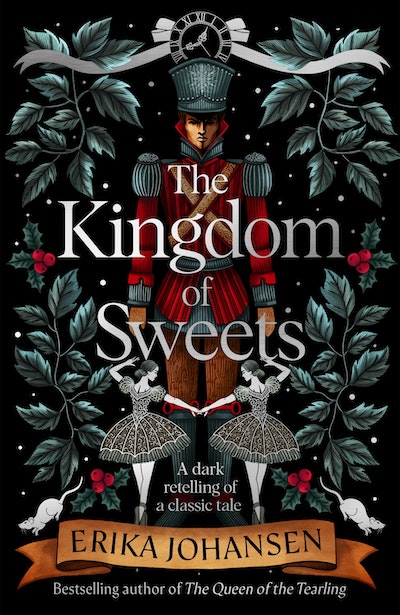
Review: The Kingdom of Sweets by Erika Johansen

“The Kingdom of Sweets” is a lot like its protagonist: difficult to love.

In fact, the standalone novel based very loosely on E. T. A. Hoffmann’s short story/Pyotr Ilyich Tchaikovsky’s ballet is genuinely hard to read for the first two-thirds of its length. This dark fantasy tinged with horror is expertly put together and cleverly weaves together fantasy with Russian history, but is also graced with characters who are uniformly unlikable.

As newborns, Clara and Natasha were blessed/cursed by the sorcerer Drosselmeyer – Clara was declared “light” and Natasha “dark.” And they grew up accordingly: Clara was beautiful and beloved by everyone, while Natasha was unattractive and ignored, taking her solace in a world of books. Then, at the Christmas party that marks their seventeenth birthday, it’s announced that newly-pregnant Clara is marrying the wealthy boy that Natasha is infatuated with – and both girls are given strange living toys by Drosselmeyer.

Soon Clara is whisked away into a magical Kingdom of Sweets, and Natasha follows her doggedly. But she soon senses that there is something profoundly wrong about this strange sugar-coated dimension, which is ruled over by the Sugarplum Fairy.

And as a bitter, jealous Natasha discovers the depths of her sister’s betrayal, she is offered a Faustian bargain by the Fairy – if she helps the Fairy destroy Drosselmeyer, the Fairy will let her kill Clara and take her appearance and her life. But the life that Clara seizes for herself isn’t as sweet as she hoped it would be – and as the years go by, she discovers that she can’t escape the sins of her own actions. Her only hope is to uncover the ancient magic that Drosselmeyer coveted, which may be her only escape.

Let’s be upfront about this: for the first two-thirds of “Tbe Kingdom of Sweets,” there are absolutely no likable characters. At all. Everybody without exception is a terrible person of one stripe or another, whether they’re a cold unfeeling parent, a murderous sorcerer, sadistic socialites or a shallow selfish sister. This includes Natasha herself, who is a bitter, hate-consumed person who has a heavy dose of Not Like Other Girls Syndrome, and deludes herself into thinking she is smarter and more insightful than everybody else. She would fit in well on social media.

As a result, I had to struggle to get through the first two-thirds of the book, despite Erika Johansen’s skillful writing and some well-written interlacing of Hoffman’s tale with actual Russian history from the turn of the 20th century. It just wasn’t enjoyable to be in Natasha’s head because I was so repulsed by the character, especially since the narrative doesn’t really hint at future growth, and I couldn’t really bring myself to care much about whatever ironic punishment she suffered as a result of her own actions.

However, things started to turn around when Clara reenters the story; the story becomes more streamlined and organic, and Natasha is forced to face the evil that has been brewing inside her for so long. It makes that last third of the book more poignant, more gripping, and more suspenseful as Natasha has to find a way to, if not undo what she’s done, then at least try to make amends while defeating the Fairy. It becomes more a story about redemption and forgiveness, which softens Natasha’s harsh, prickly worldview and how she looks at others, such as the priest.

But to get to that solid final third, you have to slog through the first two-thirds, which are simply not enjoyable to read. If you don’t mind that, then “The Kingdom of Sweets” is a solid dark’n’twisted version of the Nutcracker story.

Review: Heaven Official’s Blessing Volume 7

The malevolent White No Face has returned, forced Xie Lian to relive the most horrifying experiences of his long life, and locked him inside the Kiln. Amazingly, that is nowhere near as bad as things are going to get for the good guys.

But one thing that can’t be denied is that the seventh volume of “Heaven Official’s Blessing” is the most insane and wild volume to date, with Mo Xiang Tong Xiu unleashing her fertile imagination in all sorts of grandiose, sometimes bizarre ways. At the same time, she reveals the series’ most shocking plot twist, and explores the horrifying backstory of just what White No Face is, what shaped him into the monster he has become, and why he’s so obsessed with Xie Lian.

Trapped in the Kiln, Xie Lian faces off against White No-Face – and ends up breaking free in an awesome, spectacular manner that I won’t spoil here. He’s reunited with Hua Cheng and his friends and tries to escape the erupting Mount Tonglu – but the tormented souls of the people of Wuyong escape the volcano, threatening a new plague of Human Face Disease on the world. Xie Lian, Hua Cheng and their allies – along with a few familiar faces from along the way – are all that stand between the human world and horrifying mayhem.

But that’s nothing compared to what happens when Xie Lian learns the terrifying truth of who White No-Face really is, and how and why the ghost has been stalking him for hundreds of years. Furthermore, his enemy has even more power than he ever suspected – enough to topple Heaven and overwhelm even the most powerful of gods. Xie Lian will need some help to even hope to defeat him and save humanity from a plague – not just from Hua Cheng, but from friends, enemies and total strangers.

It’s very difficult to praise “Heaven Official’s Blessing Volume 7” in specific terms, simply because it requires me to praise its colossal plot twist and the immense payoff of… well, the entire story so far. It’s hard to do that without giving away White No-Face’s secrets and identities, as well as the question of why he dedicated so much time and energy to tormenting Xie Lian, because MXTX did a masterful job of surprising audiences with the many answers to the questions raised over the course of her story. It’s exceptional, and it should be read blindly so you can be surprised.

That also applies to some of the massive, imaginative developments in this extended climax, worthy of a blockbuster movie scripted by a crazed genius. While a lot of it involves sneaking around, mass curbstomps and a very long exposition scene involving Xianle’s state preceptor, MXTX throws in some gloriously over-the-top, wildly imaginative scenes. Like the fiery city-mechan. Or a Statue-of-Liberty-sized divine statue flying into space, fueled by kisses and drawn by butterflies and lanterns. I am not making that up. It actually happens. It’s glorious.

At the same time, she spins up a web of lies, answers, complicated backstories, bloody action, a very sad seeming-death, and some bursts of slightly frenetic comedy (Quan Yizhen beating up Qi Rong with his own statue). Everything comes to a climactic boiling point as just about everything up until now – corpse-eating rats, ghost garments, fetus ghosts, volcanoes and magic evil-revealing swords – comes back into the story with a distinct purpose. Same with the characters, reintroducing everyone from Pei Ming’s crazed stalker to Xie Lian’s eccentric mentor.

With all this stuff going on, the romance could have easily been lost in the shuffle, but MXTX mixes in countless little tender moments between Hua Cheng and Xie Lian, made all the more endearing by Hua Cheng’s mischievous flirtations and Xie Lian’s giggling nervousness. It’s very cute, and MXTX stuffs a little fluff into every crevice in the story where it can fit, even if it’s just Hua Cheng sitting next to Xie Lian while he listens to exposition.

“Heaven Official’s Blessing Volume 7” hurtles towards the grand finale like a freight train – full of wildly apocalyptic action, charming romance and explanations for just about everything. And the ride ain’t over yet.

Review: Tasting History

When the world went on lockdown due to Covid, former Disney employee Max Miller decided to start his own cooking show on Youtube. Specifically, he decided to focus his efforts on historical recipes from all across the world, from Babylonian stew to pecan pie, making modern recreations and trying them to see how they fit the modern palate.

Which is where we got the cookbook, “Tasting History,” which is a fun read not only for food enthusiasts, but also for history enthusiasts. Miller includes various recipes – many from his show – that highlight the variety, richness and sometimes weirdness of cooking through the ages, from Grecian blood soup to Genghis Khan’s little meat cakes, from the elegantly-named “Farts of Portingale” to Aztec tamales. And with every recipe, you get a history lesson.

Miller divides the book into various geographic regions: the ancient world in Europe and the Middle East (including Babylonians stews, cheesecake called “placenta,” asafoetida chicken and an Egyptian bread made of tiger nuts), the British Isles (parmesan ice cream and everlasting syllabub), Continental Europe (a vampire-repelling Transylvanian beef dish, a rich papal torte, and a pre-tomato lasagna), the Near and Far East (Chinese yuanxiao, Korean fried pork, Indian rice pudding) and the New World (Aztec chocolate, vinegar candy and egg nog).

I should note that while many of the recipes are covered on Miller’s Youtube channel, some of these are recipes he has not previously addressed, such as Vitellian piglet or Korean Gajeyuk. But each one has been modernized into current-day measurements, and Miller tries to be as forgiving with the more exotic ingredients as he can without sacrificing the integrity of the dish, offering substitutions for things like hyssop. And yes, some of the recipes have odd ingredients that may need some extra work to obtain, like spikenard, tequesquite, garum, spelt, jujubes, gold leaf and pork blood.

And every recipe comes with an intriguing little historical lesson that goes into the time period where the dish originated, was first recorded in, or was somehow involved in something historically interesting and unique. For instance, Chinese niangao (glutinous rice cakes) come with a fascinating story about a very intelligent man named Wu Zixu, who did something… unexpected with niangao. I won’t spoil what he did, but it’s very memorable.

One of the best aspects of “Tasting History” – both the show and the cookbook – is the powerful feeling of connection to ancient history and the people who once ate this food. Recommended for history enthusiasts who want to learn something new and/or people who love the idea of making new and fascinating dishes.

And serve it forth!

Review: Jungle Juice Volume 1

Disclaimer: I received an advance copy of this book from Netgalley in exchange for an honest review.

Suchan Jang seems to have the perfect college life – he’s popular, lots of friends, straight-A grades, and girls adore him. The only problem is that he’s a human-insect hybrid.

And that’s the premise behind “Jungle Juice Volume 1,” the opening salvo of Hyeong Eun’s Webtoon manhwa about people with insect body parts, complete with a kind of insectoid Hogwarts. Fortunately, JUDER’s artwork won’t trigger discomfort in people who hate bugs – like me – and the first volume is somewhat reminiscent of a slightly offbeat shonen manga. Expect lots of bug-people fighting, some bloody deaths, and plenty of scholastic mayhem… sometimes involving chainsaws.

Suchan Jang was a perfectly ordinary boy… until he used a can of Jungle Juice (a pesticide spray) to kill a dragonfly. The next morning, he awoke with a full-sized pair of dragonfly wings on his back. Despite his popularity, he has to keep his abnormality a secret from other people, and he’s pretty successful… until a mantis-man attacks during a movie date, and Suchan has to publicly expose his wings in order to save his girlfriend.

Needless to say, everyone now treats him as a freak, including the girl he likes. Devastated, he tries to kill himself – only for Huijin Park, a girl with antennae, to usher him to a place where he can fit in. NEST is a college town for people who are also insect-human hybrids, and Suchan’s only chance of finally returning to normal is if he graduates at the top of his class. It sounds simple enough, right? As if life at a fictional school for strange/special people has ever been that easy.

The chaos starts on registration day, when Suchan immediately discovers that signing up for classes is very competitive… and physical. At this college, survival of the fittest is key. Even if he can manage to get into the college, his scholastic path won’t be the easy one he hoped for – especially since the mantis-man is roaming on campus, along with an insectile femme fatale who has nothing but bad intentions towards NEST and everyone in it.

“Jungle Juice Volume 1” is a pretty solid opening to a shonen-style manhwa series – we have the relatable male lead who finds himself with special abilities (including a signature power he only learns about later), and ends up at a special, action-packed school with other people with similar abilities. Except since various characters have different insect hybridizations, they have different abilities – stingers, immense jumping, explosions, and Suchan’s agility, flight and ability to foresee attacks.

So while the school-for-special-people is in full effect here, Hyeong Eun keeps things fresh by introducing different insect-people and abilities, including one whose abilities are still a mystery. But the story is set in. a dark, brutal environment, and there’s no telling who might get eaten by a cannibalistic mantis-man or chased by Jun Ju, a giant muscular grandpa with a chainsaw. The author doesn’t shy away from the survival-of-the-fittest aspects of life at NEST, but at the same time, doesn’t depict it as a bad thing to be compassionate towards others.

Suchan is a little bland, but fairly relatable – his misery over being socially ostracized has left him desperate to become fully human again, but he also is beginning to learn about the benefits of being a dragonfly man. Huijin Park is a kind, stalwart girl who seems earmarked to be the love interest, and Hyeseong Cha is introduced as a kind of friendly rival character to Suchan – rough around the edges and blunt to a fault, but an overall goodhearted guy, it seems.

JUDER’s artwork is a little rough around the edges, but very striking – it glows with light and vivid colors without becoming too overwhelming, or losing the simplicity of the manhwa artwork style. Furthermore, their artwork seem to be improving as the first volume goes on. The biggest problem is that the action scenes are often hard to follow; it’s not very easy to see exactly what is going on if people are really beating the stuffin’ out of each other.

“Jungle Juice Volume 1” is a solid first volume to a promising series – and with a powerful antagonist and a cliffhanger, there’s sure to be more intriguing developments to come. Even if you hate bugs, this is worth a read.