Review: Sandman Volume 5: A Game of You

Do you remember Barbie? Not the doll, but the creepily perky blonde from “The Doll’s House” who had a matching husband named Ken. Well, she’s the protagonist of the fifth “Sandman” collection, which is accurately titled “A Game of You” — a haunting, fairy-tale exploration into a young woman’s dreaming imagination, and the friends who are trying to save her.

Having split from Ken, Barbie has since moved to New York and is living in a small apartment building with a lesbian couple named Hazel and Foxglove, a kindly transwoman named Wanda, a creepy guy, and a prim mystery woman named Thessaly. She also hasn’t dreamed in two years.

But then she has a run-in with an imaginary creature from her childhood, who gives her the magical jewel called the Porpentine with his dying breath. And that night, she goes back into a fantasy world from her childhood — a place of talking animals, haunted forests, and a mysterious enemy called the Cuckoo.

But as Barbie (aka Princess Barbara) sets out to defeat the Cuckoo, Thessaly wakes Foxglove, Hazel and Wanda, and reveals that Barbie is in desperate need of their help — and uses her magic to open a gateway to the realm of dreams. But they may not be in time to save Barbie from the machinations of the Cuckoo — or New York from the destructive magic being stirred.

In most authors’ works, supporting characters are just window dressing for the main characters. In Neil Gaiman’s works, every character has their own unique backstory and purpose in the plot — Barbie was just one of the minor background characters in a previous story, but in “A Game of You” we discover her dreams, her past, her fears, and her own connection to the Dream King.

And in turn, the other characters are given well-developed backstories, problems and personalities — the no-nonsense Thessaly, hinted to be an ancient witch or something; Hazel, who is afraid of what her pregnancy might mean for her relationship, and the sensitive, loyal Wanda who will never let Barbie down. Even the crazy dog-hating lady has a REASON to be here, and a history of her own.

Gaiman’s storytelling here mingles an enchanted high fantasy world (reminiscent of Narnia) with a darker, more gruesome story. I mean, there’s a skinned face with eyes and tongue NAILED TO THE WALL, having a casual conversation with Wanda. Ew. And even if things are worked out by the end, not everything turns out all right — there are tragic losses, changes, and Barbie has left behind a part of her life.

And where is Morpheus in all this? He only appears in a few scenes, but his involvement is truly vital to the story. And no, I won’t say how.

“Sandman Volume 5: A Game of You” will probably leave you with a little smile, but a tear in your eye. A magnificently powerful, haunting story.

Review: The Sandman Volume 4: Season of Mists

Morpheus of the Endless has had many trials throughout the ages… but none quite as strange as the one he must face in “The Sandman, Volume Four: Season of Mists.” The fourth collection of Neil Gaiman’s classic Sandman series centers on sudden changes in the world of Hell, and the terrifying choice that the Lord of Dreams must make — who does it go to?

After a disastrous meeting with the other Endless, Morpheus goes to Hell to set free his onetime lover, Nada. But when he gets there, he finds that Lucifer is tired of being the lord of Hell, and is shutting the whole place down — and he gives ownership of it to Morpheus. In the meantime, the souls of the damned are roaming Earth, and the anguished demons have nowhere to go.

Morpheus isn’t interested in ruling Hell, so soon various powers appear to claim Hell — Norse, Japanese and Egyptian gods, a trio of powerful demons, Order, Chaos, a Faerie diplomat, and a pair of angels are sent to watch the proceedings. Threats, bribes and tricks ensue, leaving Morpheus with a seemingly-impossible choice to make.

Just a warning: This comic book, despite its brilliant storytelling, left me with a sort of squirmy feeling, because it bases itself on Christian theology that many people actually believe in (heaven, hell, Satan, angels, God, etc). But it isn’t in line with those beliefs, so some parts of it come across as… uncomfortable.

However, you should always keep in mind that it is merely fiction. “Season of Mists” is epic in scope — it encompasses different worlds, dimensions and lands in a seeemingly endless, wondrously terrifying universe. Gaiman is absolutely brilliant at conjuring the exquisite and the grotesque, the eerie and the strange — and he manages all of those here.

And the art really helps here — the bleak, raw wastes of Hell, the snowflake beauty of the angels, the visceral grotesqueness of the demons (one is a lumpen creature with a melting eyeless head and toothy mouths for nipples), and the twilit, mildly unnerving realm of Dreaming.

As for Morpheus himself, this story is a surprisingly personal one. He’s given a realm he doesn’t want, but doesn’t seem to have any good way of ridding himself of it (at least, not at first). And the Lord of Dream has to face up to his own misdeeds — namely, he FINALLY figures out that he was horrible to Nada, and that his punishment of her was cruel. The way their story is wrapped up is painful, but still very touching.

“The Sandman Volume Four: Season of Mists” made me uncomfortable with some of its handling of Christian theology, but there is no denying that it is a richly-imagined, powerful story by a master storyteller.

Review: Teenage Mutant Ninja Turtles: 20/20

For its 20th anniversary, IDW Comics is doing something a little unusual – they are creating one-off issues of some of their series, set twenty years after or before the main series.

And since the Teenage Mutant Ninja Turtles are chronologically only a few years old, their comic issue therefore has to be twenty years later. This brings us to “Teenage Mutant Ninja Turtles: IDW 20/20,” a future tale that takes place in a war-torn 2039, and shows how the Turtles have changed – or not changed – in the next two decades, though fans of other characters may be left disappointed.

So what are the Turtles of the future like? Well, Raph seems more level-headed and less angry, and is still accompanied by his faithful pet dinosaur Pepperoni. Leonardo is more distant and mystical than in times past, and has acquired both a brown cloak and the ability to astrally teleport. Michelangelo has become more mature and tactical in his thinking, which is a good thing since he is now the team’s leader. And Donatello… he hasn’t really changed much, except that he now has armored shoulder pads.

The second Utrom civil war is raging across Europe, and the imprisoned Donnie sends his brothers news of a backup Technodrome. So the three set out (in their flying van) to Florence, deep in the heart of enemy territory, to stop the enemy Utroms before they can terraform first Europe, and then the world. They’re surrounded by foes on every side, and even Donnie’s unexpected return may not be enough to turn the tide – but the Turtles will triumph no matter what.

Fans of other characters in “Teenage Mutant Ninja Turtles” – Splinter, April, Casey, Alopex, Old Hob, Angel, Harold Lillja and the rest – may be a bit disappointed in “Teenage Mutant Ninja Turtles: IDW 20/20,” since the only supporting character whose future is revealed is Sally Pride. No, the focus in this comic is on the Turtles themselves – how they’ve changed, how they haven’t changed, and the brotherly bond that holds them together despite everything.

The story itself is a brief, pivotal slice of a much more epic tale, stretching across countries and encompassing entire wars and armies, and involving a large amount of action. Most of it involves the Turtles facing up against an onslaught of pink blobs in armored walkers, and the occasional explosion or blast of a dinosaur-mounted laser cannon. And while the situation remains grim and combative right through to the end, the story reminds us that no matter what, the Turtle brothers will always triumph where it counts.

Leo is the one that has changed the most in this future scenario – he’s more withdrawn, more quiet and distant from his brothers, which has clearly saddened all of them. But his connection to his brothers proves to be stronger than the pressure he has felt, and we see him break out of his shell (so to speak). Mikey is the other big change, having taken up the mantle of leader, which tempers his happy, optimistic personality with the stresses and fears of the job. Donnie and Raph haven’t changed nearly as much – the former is still an enthusiastic, nerdy peacemaker, and the latter is still passionate and driven in a fight.

It doesn’t give too much away about the future of the Turtles’ allies, but “Teenage Mutant Ninja Turtles: IDW 20/20” is an ultimately uplifting ode to what four reptilian brothers can do when they put their minds to it. Namely, saving the world.

Fifty Authors I Will Not Read

I think most people have authors they won’t read, even if other people love their books. I have quite a few. Some are authors I tried in the past and have no desire to revisit, and some are authors I refuse to read on principle.

So for instance…

  1. Philip Pullman
  2. Mercedes Lackey
  3. John Norman
  4. James Joyce
  5. E.L. James
  6. Dan Brown
  7. Victor Hugo
  8. William Faulkner
  9. Ayn Rand
  10. Bernard Cornwell
  11. Richard Dawkins
  12. Tim LaHaye/Jerry Jenkins
  13. Jean M. Auel
  14. Margaret Mitchell
  15. Nicholas Sparks
  16. Marion Zimmer Bradley
  17. Candace Bushnell
  18. Friedrich Nietzsche
  19. Blanka Lipinska
  20. Peter David
  21. Clive Barker
  22. Diana Gabaldon
  23. Anne McCaffrey
  24. Junji Ito
  25. Alice Oseman
  26. Warren Ellis
  27. Barbara Kingsolver
  28. R.F. Kuang
  29. Ernest Cline
  30. Chuck Palahniuk
  31. John Steinbeck
  32. Ernest Hemingway
  33. Anne Bishop
  34. Dan Simmons
  35. Isabel Allende
  36. Scarlett St. Clair
  37. Herman Melville
  38. Michael Moorcock
  39. J. D. Robb
  40. Chuck Wendig
  41. Joe Haldeman
  42. Glen Cook
  43. Franz Kafka
  44. Brian Herbert
  45. Jodi Picoult
  46. R. A. Salvatore
  47. Kevin J. Anderson
  48. James Patterson
  49. John Updike
  50. John Ringo

I think I’ve got a pretty diverse listing of books I refuse to read – science fiction, fantasy, classic fiction, modern fiction, mystery, romance, comics, etc. The one thing they have in common is that I have zero desire to read them, even ironically or to explore/review how bad they are (which is why L. Ron Hubbard is conspicuously absent from the list, even though he wrote the worst book I have ever seen in my life – and I have seen some crappy books).

There are also pretty diverse reasons why I refuse to read these books. A lot of these authors bore or annoy me, for instance. Kevin J. Anderson, for instance, is like eating a diet of only white bread to me – it’s boring, it’s unmemorable, and I immediately start craving something with flavor and meatiness. Another is Herman Melville, whose magnum opus is about six thousand pages of whaling minutiae. Or James Joyce, because… James Joyce. Or R. A. Salvatore, who has been writing basically the same pap for decades.

Another large category is authors who are bigots. Typically, bigots against me and people like me. I don’t try to force anyone to boycott artists who disagree with them, like many do. But I reserve the right to criticize, to call out and to make it clear that these people are bigots. For instance, Philip Pullman, who wrote an entire fantasy trilogy about how much he hates Christianity. He’s not getting my money, because he’s a bigot filled with hate, and anyone who claims to be against hate better also be against him.

There’s a lot of bigots on that list. Some very big names. Nobody is too famous to call out.

A much smaller category would be ones that I have political or religious disagreement with. I am willing to listen to people of various political or religious persuasions, although I am obviously not going to entertain and agree with all viewpoints. Only idiots do that. But someone like Ayn Rand simply doesn’t make any sense in the real world, and promotes a hideous way of thinking mixed with childish self-worship, which we already have too much of in the world. And guys like John Ringo and John Norman are just… blech. Their attitudes towards women are hideous.

I also don’t think that authors should necessarily be expected to be any better than any other person; having skeletons in their closet, addictions or bad stuff in their past is not a reason to avoid someone’s work. However, I am not going to read books by Marion Zimmer Bradley – not just because she was a pedophile, but because her work is so suffused in her spiritual corruption that it is literally painful for me to read, and it was painful long before I learned what she was.

This is kind of tied into the bigot and political/religious thing, but some of these authors are simply awful people, and it’s unpleasant to put your mind in their playground.

The smallest listing of all – only two people, actually – is people I don’t want to read because they do their job too well. That is the only reason Junji Ito is on it, so… if you’re a fan of his, you can unclench. Being listed on here is actually a compliment.

I’ll probably come up with more authors I refuse to read in the future, but for now, fifty is plenty.

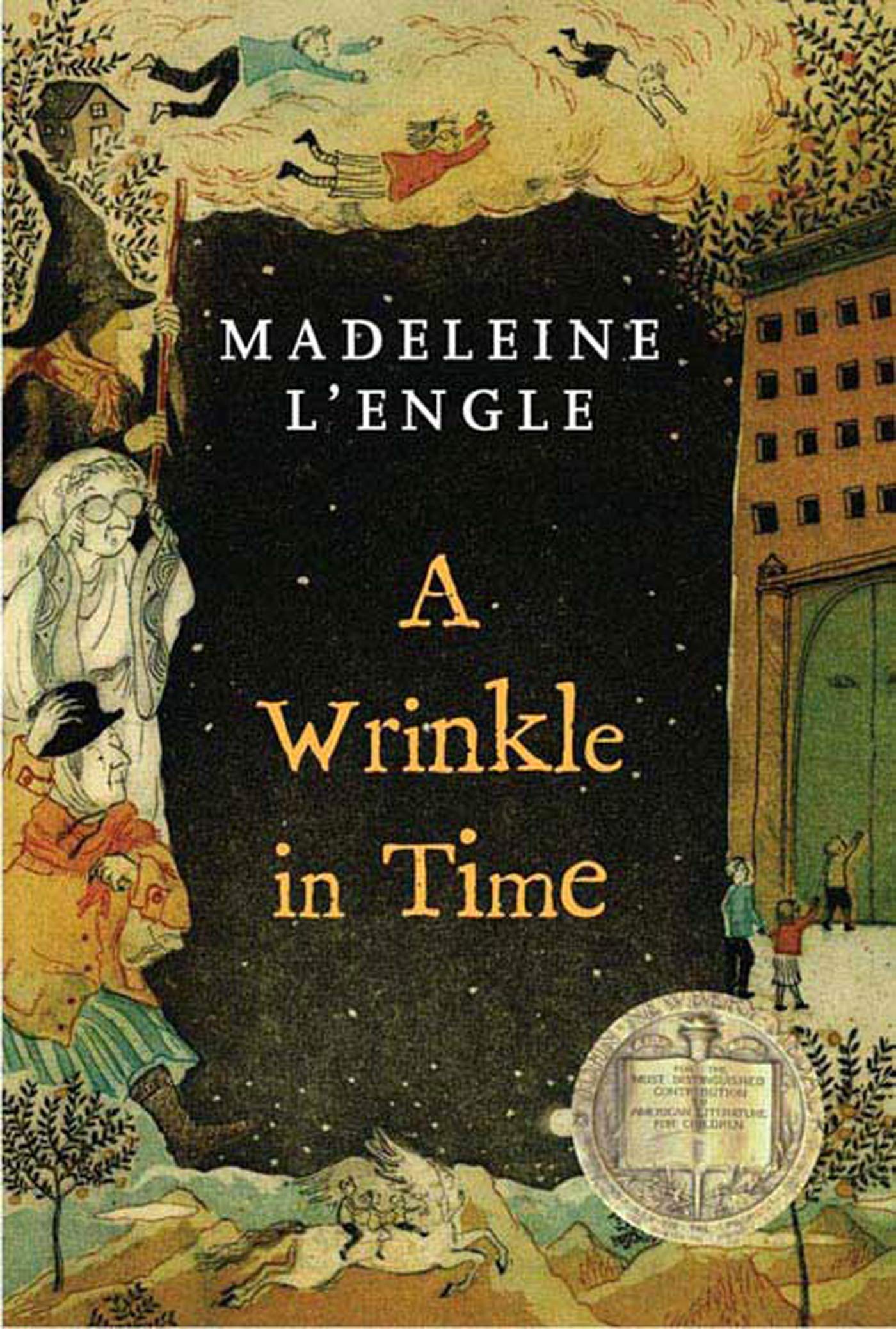
Review: A Wrinkle In Time by Madeleine L’Engle

When a strange old lady turns up at your house and tells you random facts about five-dimensional space, you should probably call the police.

Fortunately, that does not happen in “A Wrinkle In Time,” where reality can twist and bend, and strange worlds are just a tesseract away. Madeleine L’Engle’s classic sci-fantasy is many things — a coming-of-age tale, a rescue quest, a clash between good and evil — spun with rich, luminous prose and eerie alien worlds.

On a stormy night, the strange Mrs. Whatsit takes shelter in the Murray household, and informs Mrs. Murray that “there is such a thing as a tesseract.” Teenage Meg Murray suspects that that the tesseract has something to do with her father’s mysterious disappearance. So she, her little brother Charles Wallace and her classmate Calvin go off to get more answers from Mrs. Whatsit and her pals, Mrs. Who and Mrs. Which.

The three old woman soon whisk the kids off on a journey through time and space, to worlds and creatures that are utterly alien to them. But it turns out that Mr. Murray has not merely become lost on an alien world — he has been ensnared by an evil intelligence that threatens them all. To save her family — not to mention the entire universe — Meg will have to face the most horrifying threat of all.

“A Wrinkle in Time” is a book that defies easy classification — it isn’t typical fantasy or sci-fi, it’s a CHILDREN’S novel that integrates physics and philosophy into the story, and it’s rife with religious symbolism. L’Engle also had a truly sublime writing style — she wrote in a rich, almost sensual style with lots of little details that make you feel like you are actually THERE.

And L’Engle had the rare talent for making you feel like the universe is a vast, strange place filled with wonders and terrors, which are physically bizarre but spiritually familiar to us. This is a story where you can be instantly swept from our planet to a dark world filled with four-armed eyeless yetis, or a grey planet of perfect order, and somehow it feels wholly real.

And while the characters sound like stereotypes — the weird old ladies, the plain girl, the child genius, the popular boy — they really aren’t. Meg seems kind of whiny and wangsty at first, but once the kids get swept up in their quest she gets to show her inner strength at last. Charles Wallace doesn’t bug me as most child geniuses do, and Calvin serves as the “normal” one who serves as a source of strength. And the Mrs. W’s are absolutely delightful — eccentric, kindly and utterly mysterious.

“A Wrinkle in Time” is one of those rare books that can change the way you see the universe — and it’s a friggin’ good read too. A richly imagined, exquisitely written story.

Review: Theft of Swords by Michael J. Sullivan

Royce the thief and Hadrian the swordsman are known as Ririya — for the right price, and given enough time, they can steal pretty much anything.

They are also the last people you would expect to be suddenly in the middle of a massive political and religious war, but that is what happens in “Theft of Swords,” the first of Michael J. Sullivan’s Riyria Revelations omnibi, which compiles the first two books of his epic fantasy series. Rather than overstuffed mythology or dark-and-gritty realism, Sullivan crafts a tale with most of the fantasy tropes which somehow manages to feel fresh, fun and complicated.

In “The Crown Conspiracy, a foppish noble hires Royce and Hadrian to steal a legendary dueling sword… but when they get to the place where it’s hidden, they don’t find a sword. They find the king’s corpse instead. In a matter of minutes, the two find themselves framed for the king’s murder, and the enraged Prince Alric orders them gruesomely executed the very next day. Fortunately for the pair, Princess Arista knows that someone else killed her father, and she fears that soon the same person will assassinate her brother.

So she is willing to free them, with the stipulation that they kidnap Alric for his own safety, and take him to someone named Esrahaddon. Given the choice between death and babysitting a bratty new king, Royce and Hadrian decide to drag the king on a road trip, but they quickly discover that they are being hunted. And they also learn that this conspiracy to seize the crown has a lot more elements than a simple assassination…

In “Avempartha,” Royce and Hadrian are approached by Thrace, a young girl from the village of Dahlgren, which is being ravaged by an unseen monster. They end up coming with her, because she was sent by a “Mr Haddon,” aka the long-imprisoned wizard Esrahaddon. When the thieves arrive in Dahlgren, they find a broken community haunted by the deaths of loved ones, and constantly threatened by nightly attacks.

Even better, Esrahaddon reveals that the monster is an unkillable magical weapon. The only way to destroy it is a magic sword INSIDE the tower. Which is on a cliff. Surrounded by a very deep river. With no way in. But more complications arise when the Novron Church sends representatives to oversee a strange contest — the person who successfully slays the Gilarabrywn will be considered the Heir of Novron.

Most high fantasy these days falls into two basic categories:
– Derivative of Tolkien, where the author chokes the story on excessive worldbuilding that the story doesn’t actually need.
– Derivative of Martin, where the author bogs down the story on grim, dark grittiness until it’s no longer entertaining.

And what makes “Theft of Swords” so charming is that it isn’t like either of these. Sullivan embraces a lot of fantasy tropes and cliches (elves, dwarves, wizards, Europeanish medievalish culture), but the story he spins out of them is oddly refreshing. He weaves out a genuinely epic story, based on centuries of fictional history and complex international politics, but the story itself stays a pretty intimate affair. And he imbues it with a sense of history, as Esrahaddon laments that a land that once thrived on culture, technology and magic has fallen into stolid ignorance and primitivism. It gives the feeling of a once-great civilization that has decayed, and its history is mostly forgotten.

It’s also pretty fun to read — Sullivan’s prose is nimble and quick-moving, with lots of clever dialogue (“It’s my first day.” “And already I am trapped in a timeless prison. I shudder to think what might have happened if you had a whole week”), wild battles (especially against the Gilarabrywn), schemes from religious and political figures, and the brewing sense that a wider war involving the elves is about to bloom. And despite the seriousness of the situation, he weaves in some quirky humor (a dramatic heroic confrontation between a knight and the Gilarabrywn… ends with the knight getting anticlimactically flattened).

Hadrian and Royce have a touch of Fafhrd and the Gray Mouser about them, but these are very distinct characters on their own — one a dark, mysterious thief with a rather cruel outlook and a murky past, and the other a soft-hearted mercenary who totes around three swords and has an ancient fighting style. They’re confident, smart and spend their free time hanging out with the beautiful local madam (whom Royce clearly carries a torch for), a rough bartender, and an assortment of rogues and weirdos.

And the supporting characters are equally interesting — Alric starts out as a bratty prince, but slowly matures into a good king as he realizes what must be done to save his country. The timid monk Myron provides plenty of comic relief (“They are even prettier than horses”) but also a poignancy and innocence, and there’s also the mysterious handless wizard Esrahaddon and the strong-willed, magic-using princess Arista.

“Theft of Swords” is a solid, thoroughly enjoyable pair of high fantasy novels, which manage to tell entertaining adventure yarns even as they set the stage for a much bigger, more epic conflict. One of the most entertaining, fresh and cleverly-written fantasy series in years.

Review: Alfred Hitchcock and the Making of Psycho by Stephen Rebello

The screaming blonde in the shower, the creepy hotel, the guy who keeps his mummified mom in the old family home… everybody knows about “Psycho,” if only by cultural osmosis.

But probably not as many people know about the history of the classic Alfred Hitchcock movie, and just how tough it was to bring it to the screen. Cue Stephen Rebello’s “Alfred Hitchcock and the Making of Psycho,” which compellingly sketches out every single step of “Psycho” — from the bizarre serial killer who inspired the book to the mysterious PR campaign.

It begins with Ed Gein, a serial killer who inspired Richard Bloch’s pulpy horror novel “Psycho.” It was an unlikely choice for the great Alfred Hitchcock to adapt — a small, gritty weird story with a shocking twist ending and two graphic stabbings. But it did appeal to his “fiendish” sense of humor, and gave the great filmmaker a chance to make what he wanted — something fresh and “young,” something in the “Les Diaboliques” mold.

He then proceeded to make a movie that went against all the “rules” — he ignored Paramount’s horror and disgust, he hired a relatively inexperienced screenwriter, he used the crew from his hit TV show, and he cast the film’s biggest star as the woman who is brutally stabbed after only forty minutes.

Rebello goes through the production step-by-step, following every aspect of the casting, the props, the camera techniques, the infamous shower scene (the blood is actually chocolate syrup), the performances, the costumes — just about every single aspect of the moviemaking process. And from there he follows the story of “Psycho” into the movie theatres, where Hitchcock’s film disgusted critics, shocked audiences, and ended up becoming his magnum opus.

I usually find highly “technical” books about moviemaking to be dull — I’ve never made a movie, nor have I been on a movie set, so the behind-the-scenes descriptions of camera angles and lighting are simply something I can’t visualize. Maybe it would be different if I were able to go onto a movie set and see these things personally, but currently they are as impenetrable to me as the inner workings of a space probe.

But Rebello managed to make this interesting. In fact, he managed to make every step of the process fascinating — which probably wasn’t hurt by an entire chapter devoted to a grotesque serial killer, Ed Gein. His writing style is detailed and rich in details, letting you envision virtually everything he has to say.

He also mines a LOT of interviews for information about the shoot, and not just the actors either. There are countless delightful anecdotes about making “Psycho,” such as the way they tried to film the falling-down-the-stairs scene. Or Joseph Stefano talking about how, as he and Hitchcock were plotting out the shower scene, they were interrupted by the director’s wife Alma — and promptly started screaming. Some of this stuff is hilarious.

It also gives a fascinating portrait of Hitchcock — an accomplished artist who loved twisted, weird stories, with a wickedly mischievous sense of humor and a lot of eccentricities. Rebello doesn’t delve too deep into Hitchcock’s psychology (which is always a dangerous road for any nonfiction writer), but he lets the various anecdotes about the Master of Suspense form a portrait on their own.

But while he gives a lot of attention to Hitchcock’s personality, style and artistic contributions, he also makes it clear that the movie was the masterwork of many different people — from actress Janet Leigh (who spent days seminaked in the shower) to the dude who butchered a bunch of melons to get the right “stab sound.” Credit for the work is spread around liberally.

“Alfred Hitchcock and the Making of Psycho” is a fascinating, full-bodied look at the inner workings of a humble little movie… which just happened to be one of Hitchcock’s greatest films ever. A must-read for any enthusiast for the medium of film, “Psycho” and/or Hitchcock.

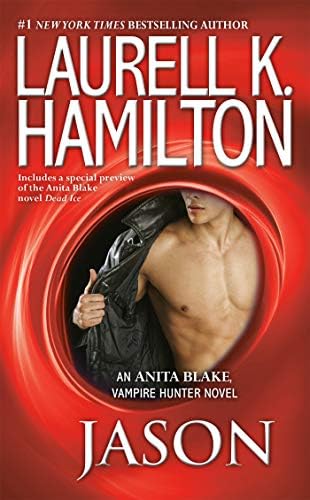
Review: Jason by Laurell K. Hamilton

Some time ago, author Laurell K. Hamilton came out as polyamorous and bisexual. This information is for all the people out there who don’t read the highlights of her life… lucky jerks.

Normally I wouldn’t comment on the personal life of an author in a review of one of their books, but that almost impossible to do that when it comes to Hamilton’s second Anita Blake side-novel, “Jason.” This novel is effectively part of Hamilton’s ongoing fictionalization of her real life. Unfortunately, that means it’s full of “kinky” and “edgy” sex as imagined by a sheltered evangelical Christian grandmother who only vaguely knows what BDSM is.

Jason has a problem — he’s in an open relationship with his lesbian-leaning bisexual girlfriend JJ, but she’s not fulfilling his BDSM wants. She is totally okay with him having someone else do that for him, because she isn’t into that. Yeah, the “problem” in this book isn’t really a problem, but for some reason we’re supposed to think it is. The real issue that is a single person in the vast far-reaching web of Anita’s lovers’ lovers is NOT into BDSM orgies. God forbid!

And of course, since JJ is bisexual, she needs to have both male and female lovers. Because we need one of the most harmful stereotypes of bisexuals, presented casually as a fact.

Jason wants Anita to educate JJ on how sex in the Anita Blake series works, which is that everyone must like the sex that Anita likes. So Anita is going to have sex with JJ, among other people, while also forcing her lover Jade to do things that terrify her, then blaming her when she doesn’t like them. Effectively, Anita now has a white girlfriend, so she doesn’t want the Asian one anymore.

Here’s the problem with “Jason,” as well as most of Hamilton’s recent books — nobody is allowed to be anything but what she is. According to her, you are an awful person if you are monogamous, monosexual (in practice or in sexuality), don’t like painful sex, aren’t okay with “sharing” or don’t want to participate in orgies. God forbid she accept that different people express their sexuality in different ways.

It also takes place in a parallel universe where all people ever think or talk about is sex. Seriously. One character laments that she doesn’t like taking showers because “you can never take a shower without a man thinking you want sex.” Maybe on Hamilton’s home planet that is true.

And anyone hoping for vampire hunting in this “Anita Blake, Vampire Hunter” novel will be bitterly disappointed. The characters spend the book either:
A) Having sex
B) Talking about sex

Both of these are absolute torture, especially to anyone who doesn’t like Hamilton’s very specific fetishes (such as having her private parts “worried” as if by an angry terrier) or her tendency to talk about sexual body parts with the passion and eroticism of a half-asleep octogenarian schoolmarm. And it’s full of cringeworthy things that she thinks are cool — for instance, after some group sex, Nathaniel and Jason fist-bump like a pair of frat boys.

And you could play bingo with the tired, overworked Anita Blake tropes on display — casual misogyny, biphobia, hatred of blondes, random rage, bashing Richard, Nathaniel being creepy, Anita whining about her dead mom/ex-fiance/looks/anything imperfect like Jason not drinking his coffee, and pages and pages of descriptions of clothes and hair.

But the most hideous part of the book is how the character of Jade is treated — since Jade is wildly androphobic and won’t “get over it” for Anita’s convenience, Anita decides to FORCE Jade to have sexual contact with males. She does this, sobbing and terrified. So we learn that Anita wants a girlfriend to emphasize how she’s “edgy” (in the pop music “I kissed a girl and I liked it” sense), but doesn’t want to be bothered by actually caring about an abuse survivor. If ONE therapy session doesn’t “fix” her then she clearly isn’t willing to be fixed.

Needless to say, Anita now comes across as more evil than your average Bond villain — all she needs is a shark tank for people who have displeased her. Anyone not “therapied” into a happy polyamorous Stepford wife is tormented, and she now demands that people sit in order of how much she likes them. Most hilariously, she has to be massaged into sexual bliss to avoid blowing up during a conference. She’s like a mad monarch, but less impressive.

“Jason” manages to be disgusting, unintentionally hilarious AND grotesquely boring — an impressive feat for any paranormal romance, especially one that doesn’t even have a plot. Dodge this silver bullet.

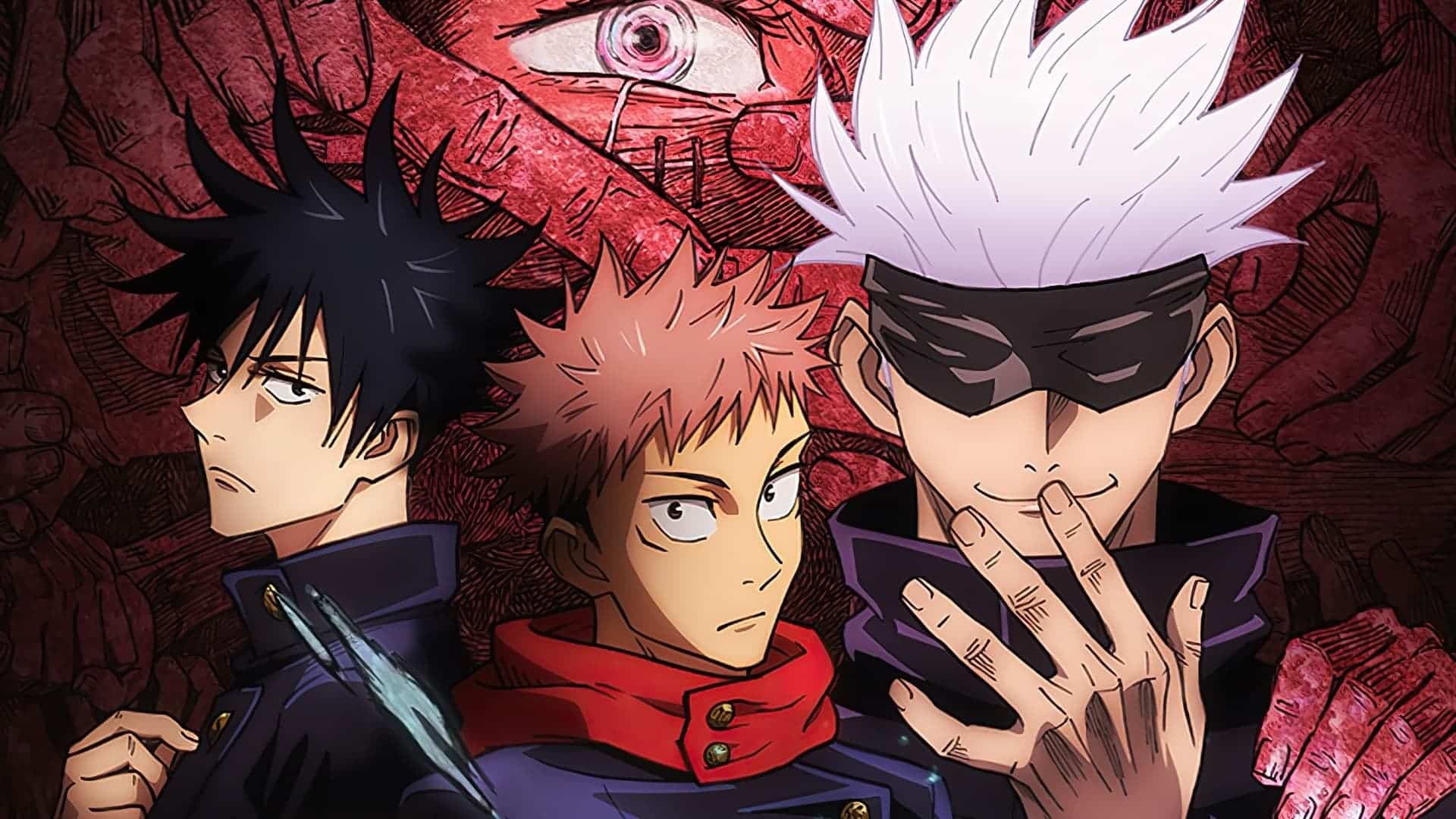
Review: Jujutsu Kaisen Volume 1: Ryomen Sukuna

There are a lot of ways that shonen manga heroes get their powers or abilities… but I don’t think anyone before Yuji Itadori gained them by swallowing a decayed finger.

But it definitely allows “Jujutsu Kaisen Volume 1: Ryomen Sukuna” to stand apart from the pack. Gege Akutami’s breakout fantasy/horror manga series doesn’t stray too far from shonen tropes here, but it does distinguish itself with some nimble humor, a likable protagonist, an intriguing villain, and a promising supernatural world of curses to explore.

Supernatural occurrences in our world are caused by curses (which look like weird, very imaginative monsters) manifested by cursed energy. The most powerful of these was the malevolent Ryomen Sukuna, whose twenty fingers are capable of causing all kinds of chaos. The only ones who can destroy these curses are jujutsu sorcerers, who use their own cursed energy to exorcise harmful curses.

Which brings us to Yuji Itadori. When his friends accidentally unwrap one of Sukuna’s fingers, they’re attacked by powerful curses that first-year jujutsu sorcerer Megumi is unable to deal with. To save his friends, Yuji swallows the finger. Not his brightest moment. But surprisingly, he turns out to be one of the rare people who can control Sukuna, rather than being killed or possessed.

So the eccentric Gojo manages to get a deal for Yuji: the jujutsu sorcerers will allow him to live until he consumes all twenty fingers, which will allow them to kill Sukuna once and for all. Yuji transfers to the Tokyo Prefectural Jujutsu High School, where he’s in the same class as Megumi and the pushy Nobara. But none of them are prepared for just how nasty things are about to get.

“Jujutsu Kaisen Volume 1” has various familiar tropes of an urban-fantasy shonen series – you have the secret magical organization that fights evil stuff, various monsters needing to be slain, an eccentric but powerful teacher, a tough but big-hearted teenage hero and his complementary friends, and so on. None of this is bad, mind – it’s more important for a story to be good than to be wholly original, and Gege Akutami’s opening chapters are pretty solid work.

Of course, the introductory chapters are a little rough, but still very effective, and Akutami has a knack for tugging the heartstrings, comedy (the punching stuffed animals) and bloody fight scenes. He has a real talent for generating creatures that are grotesque and unnerving, such as the grinning fish-man or the stretched-face creature asking about receipts. Whenever a curse appears, even a weak one, there’s a sense of grinding dread that can only be dispelled by its exorcism.

The art is similar to the writing – it’s a little rough, but effective. Akutami’s style is lanky and angular, with lots of detail and greater realism given to his fight scenes and monsters. The guy has talent, and it should be rewarding to see how his art evolves over the course of the series.

Yuji Itadori is a pretty classic shonen hero – he’s a teenage boy who isn’t the brightest, but is ridiculously strong and has a will of iron. He’s also given a personal goal (to make sure people have good deaths), but isn’t unchallenged in his goals: one of his fights has him freaking out and lamenting that he doesn’t want to die, which is painfully relatable. The rest of the main cast is also pretty solid – Megumi is reserved and uptight, but has a more compassionate side; Nobara is brash and capable; Gojo is the weird and cheerful mentor figure.

For those who have enjoyed series like “Bleach” or “Kekkaishi,” “Jujutsu Kaisen Volume 1: Ryomen Sukuna” is a solid beginning to the hit series, leaving you hungry for the next volume.

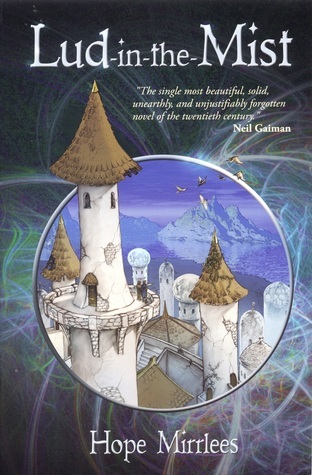
Review: Lud-in-the-Mist by Hope Mirrlees

Even though many have tried, only a few fantasy books have the qualities that come naturally to “Lud-In-The-Mist” – a quirky sense of humor, a complicated and timeless plot, and a sense of the ethereally magical that makes you feel like you’re walking on the thin edge between the real and the mystical.

And while not as influential as works by the titans of the fantasy genre, Hope Mirrlees’ classic novel is nevertheless a haunting and engaging read – it’s as if “The Hobbit” had been written by Lord Dunsany, edited by Neil Gaiman and given a few extra flourishes by Peter S. Beagle. It’s a sweet pastoral story that slowly blossoms out into a very unique story — there’s a little murder mystery, an amusing village of hobbity people, and a quicksilver dream of beautiful fairyland and otherworldly danger.

Fairy is forbidden in the town of Lud — not just fairy creatures and their exquisite fruit, but mentions of them, the dead who walk with them, and the Duke Aubrey who left with them. But all his life, the steadfastly dull Mayor Nathaniel Chanticleer has a lingering longing/fear for a strangely magical musical note. Despite all this, life remains boring and rather pleasant — until Chanticleer’s son Ranulph begins acting strangely, claiming that he’s eaten fairy fruit.

After Chanticleer sends his son off to a farm for a vacation, the teenage girls at Miss Primrose’s Crabapple Academy suddenly seem to go pleasantly insane, and then race off into the hills. Life seems to seep out of the old town, and Nathaniel must connect the present crises to a past conspiracy, all of which hinges on Fairyland, fairy fruit, and the sinister doctor Endymion Leer. The journey to discover the truth will take him out of the everyday world — and change him forever.

“Lud-in-the-Mist” is not one of those stories where the fairies and elves feel like humans with pointy ears, and their magic can be easily understood. Mirrlees conjures a dreamlike atmosphere and faraway lands that are only glimpsed in passing – there’s the underlying feeling that there’s a frightening, exquisite world that is barely separated from ours.

Some parts of “Lud-in-the-Mist” are pleasantly familiar, even if you don’t live in pastoral British regions of the early twentieth century. Little charming towns full of staid, prosperous people who try to avoid the dark, wild things that dwell outside their borders, and definitely The strange and exquisite is always just out of sight, and Mirrlees’ writing is capable of bringing that to life.

She also is capable of spinning up a very solid plot to match the fantastical atmosphere – she intertwines a fantasy and a murder mystery seamlessly into one another, and then winds Chanticleer’s personal journey into it. Her writing style also evolves over the course of the story; during the first parts of the book, her style is pleasantly cozy, mellow and reminiscent of the era in which she wrote it. But as the story blossoms into a tangle of crises and mysteries, Mirrlees’ writing becomes more lush, exquisite and haunting.

It also has a hero who doesn’t fit the usual mold of a high fantasy lead character. Chanticleer is very reminiscent of Bilbo Baggins – who was first written several years later – being a pleasant, boring, stodgy middle-aged man. But we learn that he has a brave, eccentric interior that gradually transforms him from respectability to something more attuned to the fairy world. And the other inhabitants of Lud are similarly engaging and just a little bit quirky — fairy-struck teenagers, snippy old ladies, the haughty farmer’s wife, the quietly malevolent Endymion Leer, and the happily mad people.

While it doesn’t have the fame that many subsequent fantasy novels still enjoy, Hope Mirrlees’ “Lud-in-the-Mist” is a thing of beauty – funny, exquisite and boundlessly clever. Most of all, it will leave you feeling like you just ate fairy fruit.