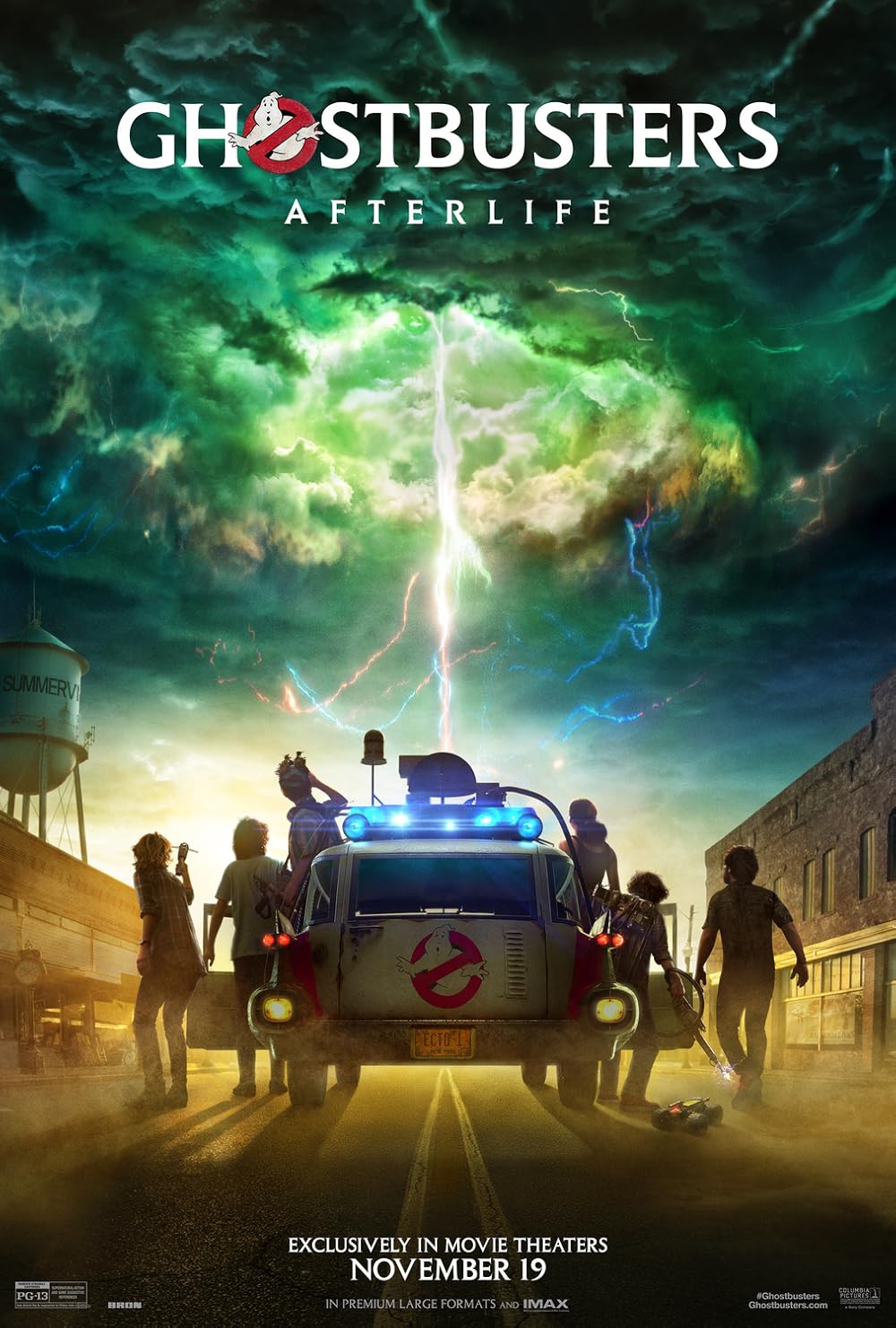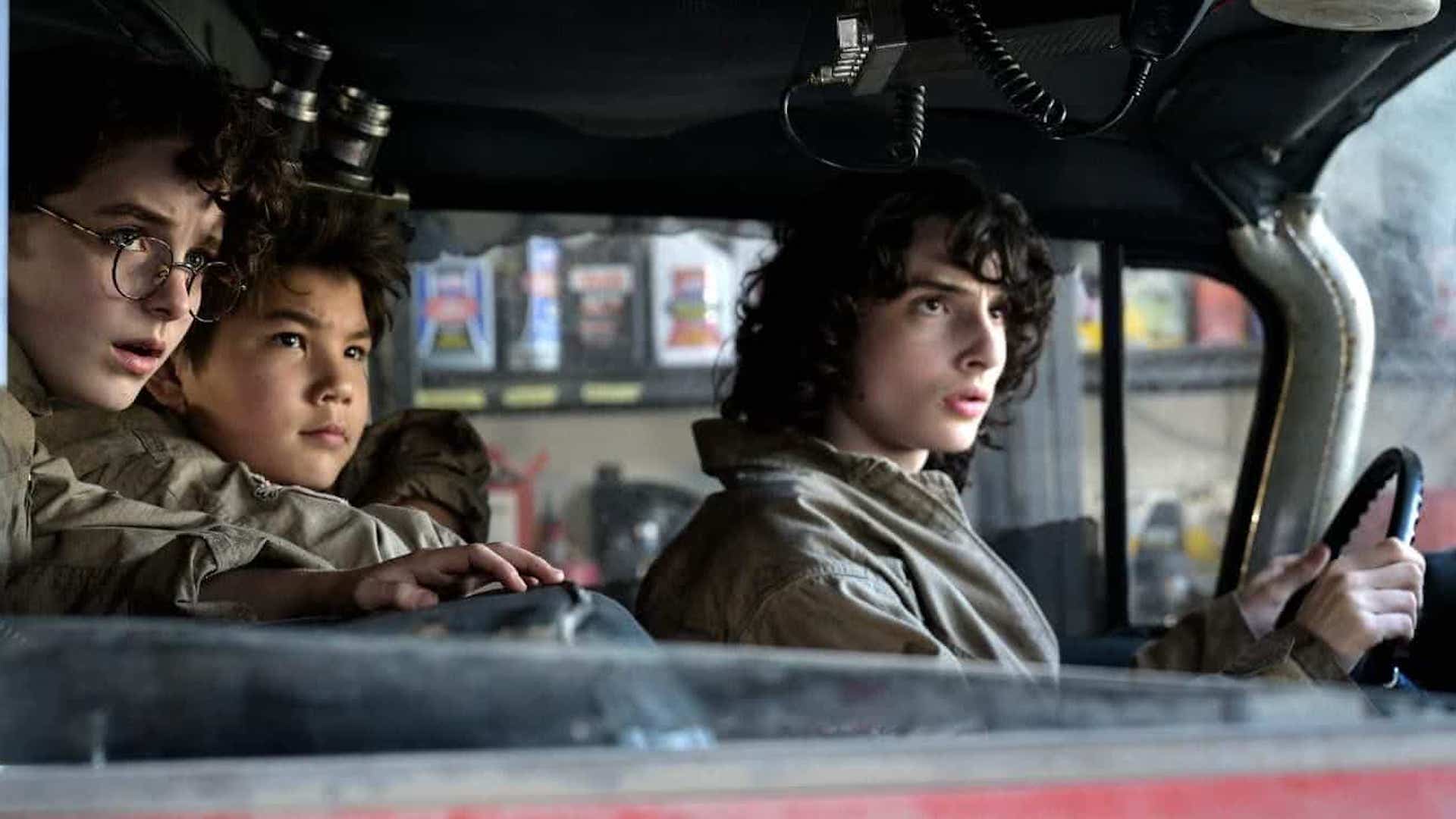
What Ghostbusters: Afterlife brings to the table that the 2016 reboot didn’t

The Ghostbusters franchise is getting something that few do: a reboot of an unsuccessful reboot.

Usually when a franchise has a dud reboot, the attitude from the suits is either that the IP is poisonous and nobody wants to see it, or that they just need to wait awhile before making another bad reboot. They most definitely don’t listen to fans, who are considered the bane of entertainment companies – creators and companies will not only give the fans stuff they hate, but will insult them for not liking it.

But after the 2016 Ghostbusters reboot embarrassingly failed to bring in audiences – partly on the back of an obnoxious “if you don’t like this, you’re sexist” campaign – something unusual happened. Sony actually listened. They announced a new sequel to the original Ghostbusters movie, directed by the son of the original movie’s director, with the three surviving Ghostbusters returning (and Sigourney Weaver and Annie Potts).

What immediately made people happy was that… this is the kind of movie that fans had been screaming for for years – the classic Ghostbusters passing the torch to a new generation, and suitable respect being paid to the original.

And despite some retreading of familiar territory (demon dogs and Staypuft marshmallow men), respect and passing the torch is what the trailers are all about. We see familiar sights such as Ecto-1 and the PK-meter, and there’s a thrill to seeing them resurrected in a modern movie. There are even brief glimpses of a collection of spores, molds and fungus, showing that even throwaway gags from the original movie are being taken into consideration here.

They even found a way to make Egon Spengler central to the story, even though Harold Ramis sadly died some years ago. While Egon has passed on in the Ghostbusters universe, his work and legacy are clearly very important to the story, and his family members are central to the action. It feels like he’s still playing a part in the story.

And despite Leslie Jones’ howling about how the new Ghostbusters would all be men, it looks like it will be an even split between boys and girls. The kid most prominently displayed in the trailers is a young girl who looks like a female clone of Egon, and seems to act like one as well. This is pretty pleasant – there was a nasty undercurrent of “go feminism, down with stupid men!” to the 2016 reboot that extended to both the marketing and the script, so it’s nice to see some actual equality and the inclusion of female characters without the exclusion of males.

It even has greater racial diversity, since it looks like there will be an Asian kid in the mix as well as a black one, which also means they aren’t just making new versions of the same characters.

It also has something the 2016 version didn’t really have much of – innovation. That movie provided some proton-pack variations of weapons, but none of them felt like anything but supernatural pistols. But the trailers for this movie show the kids doing some new stuff – specifically a chase scene in the Ecto-1 where Phoebe pops out of the side on a seat, allowing her to fire a proton pack while the vehicle is moving. At the same time, there’s a trap with newly-installed remote-controlled wheels that allows it to move independently.

That’s fresh! That’s new! The 2016 movie tried to dazzle us with giant slabs of incomprehensible technobabble about the tech from the original movie, which drained all the life from the already-bad dialogue and just highlighted how inferior it was as a film. This new movie shows us the innovations being made to existing technology, and it feels natural and organic.

Then again, Ghostbusters 2016 didn’t bring a lot to the table, except a “villain is an incel” plot twist that nobody liked. It’s one of those reboots that really highlights how good the original one was. Okay, the original Ghostbusters wasn’t high art or anything, but it was tightly-plotted, clever, witty and creative. The reboot was a disaster, a mess of bad improv, a flabby incoherent script, stupid lowbrow jokes, sexism and a quartet of howling hammy harpies at its center.

Two words: Melissa McCarthy.

It also lacked scares. Though the original Ghostbusters was and is regarded as a comedy, it’s actually pretty much a horror movie with some genuinely impressive, suspenseful scenes devoid of laughs. Ghostbusters 2016 not only is not scary, but it doesn’t realize that a funny movie doesn’t have to be funny ALL THE TIME and can take itself seriously.

In short, the original was a serious movie that just happens to have a lot of comedic dialogue.

It’s hard to tell just from the trailer what the tone of the new movie will be; it seems a bit more somber, which admittedly is more a typical supernatural-movie/TV atmosphere in the 21st century. It will have some humor in it from what I’ve seen, mostly of the dry Venkman variety. I do like that it seems to be taking the whole storyline seriously as a supernatural thriller rather than just going “yuk yuk, the villain is an incel nerd troll! Let’s shoot him in the crotch! LOL! Fart jokes, dancing and screaming!”

So overall, I’d say that from what we know of Ghostbusters: Afterlife, it sounds much more promising than the 2016 movie… although that admittedly wasn’t saying much, since that movie was a stillbirth of a project. At the very least, this reboot seems like it has its heart in the right place, in terms of respecting the original and the fans, and yet trying something new and different.

And I’ll be showing my support financially for Afterlife, in order to support those who treat their fans and franchises right.

The Two Documentaries about JT Leroy

I’m kind of fascinated by scandals, and hoaxes, and the like. And one that has drawn me in in recent years is a scandal from perhaps fifteen years ago, when author JT Leroy was outed as being an incredibly elaborate literary hoax.

As a general explanation, JT Leroy was a famous writer of edgy semi-autobiographical fiction, who became extremely famous and beloved by a lot of people. His unique quality was that he was a former child prostitute who had been a drug addict, who had been homeless, who was gay and genderfluid and HIV-positive. He was this sort of fragile, ethereal artist who produced romanticized tales of his past, being sexually abused by men and emotionally and physically abused by his beautiful mother Sarah. Celebrities loved him, he was a bestseller, he was rich and famous, a movie was made from one of his books.

And then it came out – he didn’t actually exist.

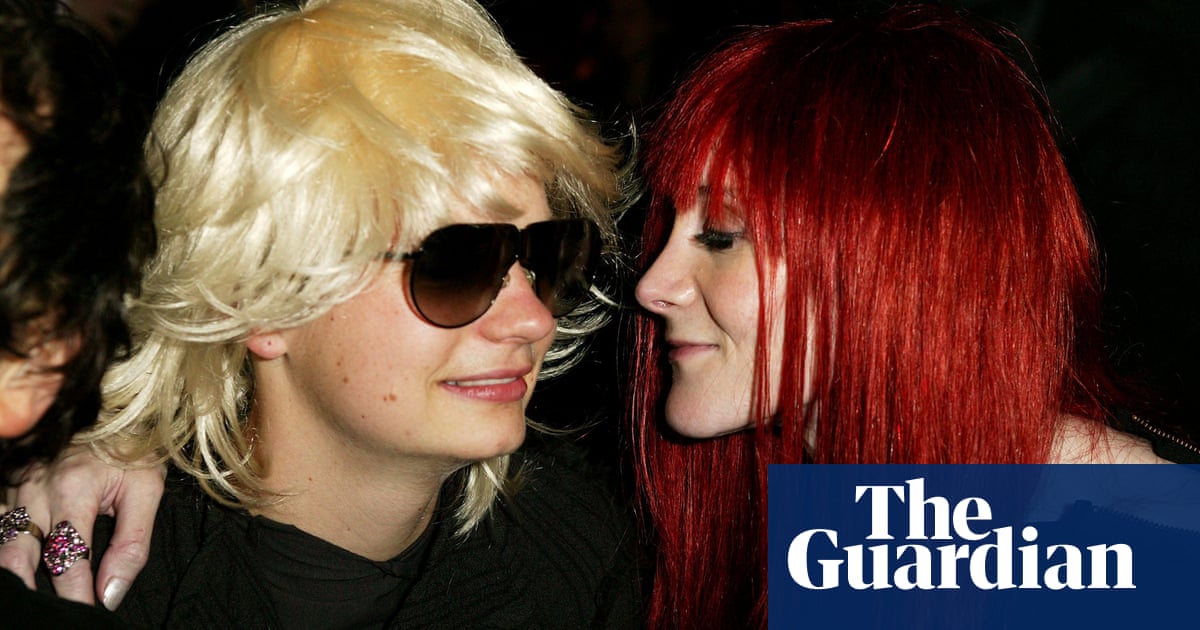
He was a fictionalized persona created by his supposed foster mother (who also faked her own identity by pretending to be a British woman named Emily), Laura Albert, who had a weird habit of calling help lines and pretending to be a boy. The physical presence of JT Leroy was Albert’s boyfriend’s sister Savannah Knoop, who dressed up in androgynous clothes and a bad wig and pretended to be the person in question (Savannah also wrote a memoir about it some years ago, which I recommend).

This is explored a lot more in the documentaries Author: The JT LeRoy Story and The Cult of JT Leroy, both of which I watched recently. These documentaries actually complement each other perfectly, because they tell both sides of the whole hoax. Author is almost exclusively told from the perspective of the hoaxer, Laura Albert, as she tells the whole thing from her perspective and her life story and so on. Cult focuses more on the people who were taken in by it, how they feel and see it. And I don’t mean the customers buying the books – I mean people who thought they knew and had deep, close relationships with JT Leroy.

Author has a big bias. Normally I don’t disbelieve people with stories of abuse, both sexual and physical, and so on. But it becomes very obvious in this documentary that Laura Albert fetishizes child molestation and abuse. She romanticizes it. She wrote literally nothing else in her JT Leroy phase, and it was revealed to be all made up. I don’t feel comfortable believing anything she says about her past that cannot be confirmed by a reliable third-party source.

Remember, this is a woman who literally lied for a living, for a decade. She tries to claim that no, it wasn’t a lie or a hoax, it was “real” and JT Leroy was real to her – but we all know it wasn’t. You literally cannot believe a person like this; you should be skeptical of the things they claim, especially if they try to get your sympathy or argue that their sins and crimes are not that bad.

Always remember: if someone has a motive to lie to you about something, you should question every word that comes from their mouth.

In a way, Cult almost feels like a response to Author. This movie eventually centers on Laura Albert from the perspective of people who met her, including her ex-boyfriend Geoff, who confirmed the hoax after they separated. It’s a lot less flattering – a lot of people in it, including Albert’s psychiatrist, offer their viewpoints on her behavior, and it ranges from “mentally ill” to “she’s just a trained con artist.”

It also deals with the repercussions of the hoax and the lies. Author downplays the actual effects of Albert’s lies, presenting it as not being that bad, or even not being “real” lies at all.

But Cult bluntly presents the effects that those lies had on the many people who admired and followed him. Not the celebrities who latched onto the trendy it-kid of the literary world, but the authors, agents, doctors and fans who spent years conversing with him over the phone and emails, crafting seemingly-deep and emotionally-intimate relationships with him, and sometimes even coaching him through mental crises and suicidal periods. They formed online groups and communities, had readings of his work, and bonded over their love of him.

And it was all a lie – all those people were earnestly devoting their love and energy and time to someone who… wasn’t real. It was just some lady with a fetish for pretending to be a damaged, sexually-abused boy.

It wasn’t just the people who actually “knew” JT Leroy who were hurt. One scene in Cult features LGBTQ teenagers living in a shelter in San Francisco, and many of them are homeless, many have drug addictions, many prostitute themselves, and many have sexually transmitted diseases. I can utterly understand why these people were angry when JT Leroy was revealed as a fake – because their lives are hard and painful and sometimes very short.

And yet this woman used their suffering and their experiences as an “edgy” backstory for her fictional alter ego. It trivializes the reality of what they experience, and that is a terrible thing to do to anyone who is suffering.

For the record, I’m not saying an author can’t represent things they haven’t experienced in their fiction, because I don’t believe anyone should be forced to “stay in their lane” when it comes to writing. Write whatever characters with whatever backstory – do it sensitively and with respect if the experiences are something that others have had, but don’t let people tell you “it’s not your story to tell.”

But that isn’t what Laura Albert did. She basically played pretend with these serious issues, and presented this as reality – and that was a lot of what JT Leroy was. It made him stand out, it made people empathize with him, and it made up his fiction.

I know I’ve spent most of this blog post ranting about Albert and her lies, and how she hurt other people, but I really do recommend watching both Author and Cult. Watch them in that order – get Laura Albert’s side of the story, then flip around the narrative and listen to the thoughts, feelings and experiences of the people she hurt.

It’s a fascinating story, and I really wish someone would write an in-depth, all-the-nuts-and-bolts, every-possible-perspective chronicle of the entire ten-year saga. If you enjoy reading about stranger-than-fiction escapades, it might be fun.

Subverting Expectations and “Mob Psycho 100”

People don’t talk as much about it now, but for a few years it felt like aspiring critics (and some actual bad critics) were wibbling on constantly about stuff “subverting expectations,” which they treated as if it were the Holy Grail of storytelling. The actual quality of the storytelling in question was rarely actually examined – all they cared about was that the showrunners and directors didn’t give audiences what they wanted or expected.

Thankfully, the end of Game of Thrones seems to have killed the popularity of this trend, as I haven’t heard much about it for awhile. I will admit that I still hear it pop up occasionally when a failed intellectual sings the praises of The Last Jedi.

And yes, I’m going to go there – I’m going to say that The Last Jedi sucks. It is not subverting the audience’s expectations to create whole subplots and characters in a movie that ultimately achieve nothing and lead to nothing. That is just wasting the audience’s time, and the fact that people expected competent storytelling – and were disappointed – doesn’t make it genius when that expectation is subverted.

Simply put, people like the Game of Thrones showrunners and Rian Johnson are the sort of people who like to break things for the sake of breaking them, because that is what subversion for its own sake is. That doesn’t lead to good storytelling.

But… subverting expectations is not always horrendously bad. It can be done well – it just usually isn’t.

That brings me to Mob Psycho 100.

In case you haven’t seen it, Mob Psycho 100 is an anime series centering on Mob, a young boy with apocalyptically strong psychic powers that are unleashed when his repressed emotions reach 100%. Despite his powers, Mob’s personal life is filled with very relatable concerns – he wants to be popular, he wants to win the affection of his first love, he wants to improve himself physically, and he works a part-time job with a con-artist pretending to be psychic.

So how does this show subvert your expectations? Well, that happens in the second episode, which is about a Telepathy Club at Mob’s school attempting to enlist him so that they won’t be abolished and lose their meeting room. If they don’t enlist another member – and Mob is their only potential candidate – the room will be given over to the Body Improvement Club, a gathering of musclebound jocks.

Anyone familiar with anime – or high-school settings in general – would probably expect the episode to end with Mob joining the good-hearted oddballs in the Telepathy Club, saving the day and protecting the club from the intrusive, probably bullying jocks. But… it doesn’t.

Throughout the episode, we see that the Telepathy Club is less a bunch of open-minded oddballs being picked on by the establishment, and more a bunch of slackers who hang out and eat junk food. At the end of the episode, he joins the Body Improvement Club instead, and it’s revealed that rather than arrogant bullies intruding on the club, the Body Improvement Club is actually made up of very nice, good-hearted guys who happily welcome a new member to their club.

Part of the reason that this works is that the episode doesn’t waste your time, as The Last Jedi does. It’s lean and well-written, with every scene ultimately serving a purpose in the narrative. Furthermore, when you get to the end, you can look back on everything that happened before, and realize, “Oh yeah, that makes sense now.”

But another way in which it succeeds in subverting your expectations is because those expectations are based on tropes and cliches, not in subverting the story progression up to that point. At no point does Mob Psycho 100‘s second episode try to overturn what has been previously established, as The Last Jedi and Game of Thrones did. So it doesn’t need to twist characters or waste build-up – all it needs to do is tell a familiar story from a different angle.

Here’s an example – take the Chekov’s Gun. In the first act, we focus on an antique rifle on a mantlepiece, and mention that it is the only weapon that can kill vampires. In a Rian Johnson movie, the third act would have someone irreparably break it, and toss it out like so much garbage. A waste of your time, and bad storytelling.

So the lesson is… avoid most media that “subverts your expectations,” and focus instead on stuff like Mob Psycho 100. Embrace media that wants to tell a good story first and foremost, and has expectation subversion as a natural and organic part of the process rather than an attempt to flip a table into the audience’s faces.

So… watch Mob Psycho 100. It’s really good.

Women and “The Thing From Another World”

The Thing From Another World is usually dismissed as the “original” version of John Carpenter’s The Thing, and considered to be an inferior adaptation of the original short story. After all, 1950s special effects were simply not up to the task of making a shapeshifting monster, and the direction of most 1950s movies cannot measure up to one of the greatest horror/sci-fi movies of all time.

But despite the carrot monster, I do think this is a good movie seen on its own merits. Not because the story is particularly interesting or unique as 1950s sci-fi goes, but because of the way its characters are presented.

Specifically, the female characters.

The 1950s weren’t the best time for female characters in movies. Not saying they were all bad, because the existence of this movie clearly shows that they weren’t. But there were some extremely misogynistic attitudes in many movies that went unchallenged. These weren’t even hateful in many cases – some of them were just people who couldn’t break out of their mindsets, like in Forbidden Planet or It: The Terror From Beyond Space.

So it’s worth noting that The Thing From Another World has a pretty egalitarian approach to its characters, and treats the women with an impressive level of respect. The most basic level is just the fact that they’re there at this scientific/military outpost, holding important positions. And at no point do they fetch coffee for the menfolk, on the assumption that men will turn to sea foam if they make their own food.

But that isn’t enough to really earn my respect. It’s more that the women and men interact casually as equals – the men don’t treat the women with the casual condescension often found in old movies. In fact, they banter and pal around with the female lead in the same way they would with a male character, including when she teases her male romantic partner.

Speaking of which, the romantic subplot is also refreshing. Rather than a macho hero sweeping a woman off her feet, the two have a cute backstory that involved him falling asleep during a date, and being kind of embarrassed by it, especially since she thinks it’s so funny. It feels much more organic and realistic, and less like a personal fantasy.

Furthermore, the women don’t end up as damsels. Despite the DVD cover, there are no screaming women in peril here… or at least, no more peril than the men are in. There is a woman threatened by the monster at one point, where she is forced to hide behind a flaming mattress, but she isn’t screaming and she actually chose to take this perilous position rather than being transparently corralled into it by the screenwriter so the men can save her.

So while The Thing From Another World isn’t a standout as old sci-fi goes, it does have some qualities that bring it above the herd. It can’t measure up to The Thing, but it’s still worth seeing.

Truly Great Acting – Christopher Lee

Here’s how to tell when you’re watching truly great acting.

Way back in ancient times, when The Lord of the Rings movies were in theaters, I went to see Fellowship of the Ring thirteen times. Thirteen. I saw it in the company of many different people, from screaming four-year-olds afraid of the Nazgul to my elderly grandmother, whose immersion was ruined by the presence of tomatoes.

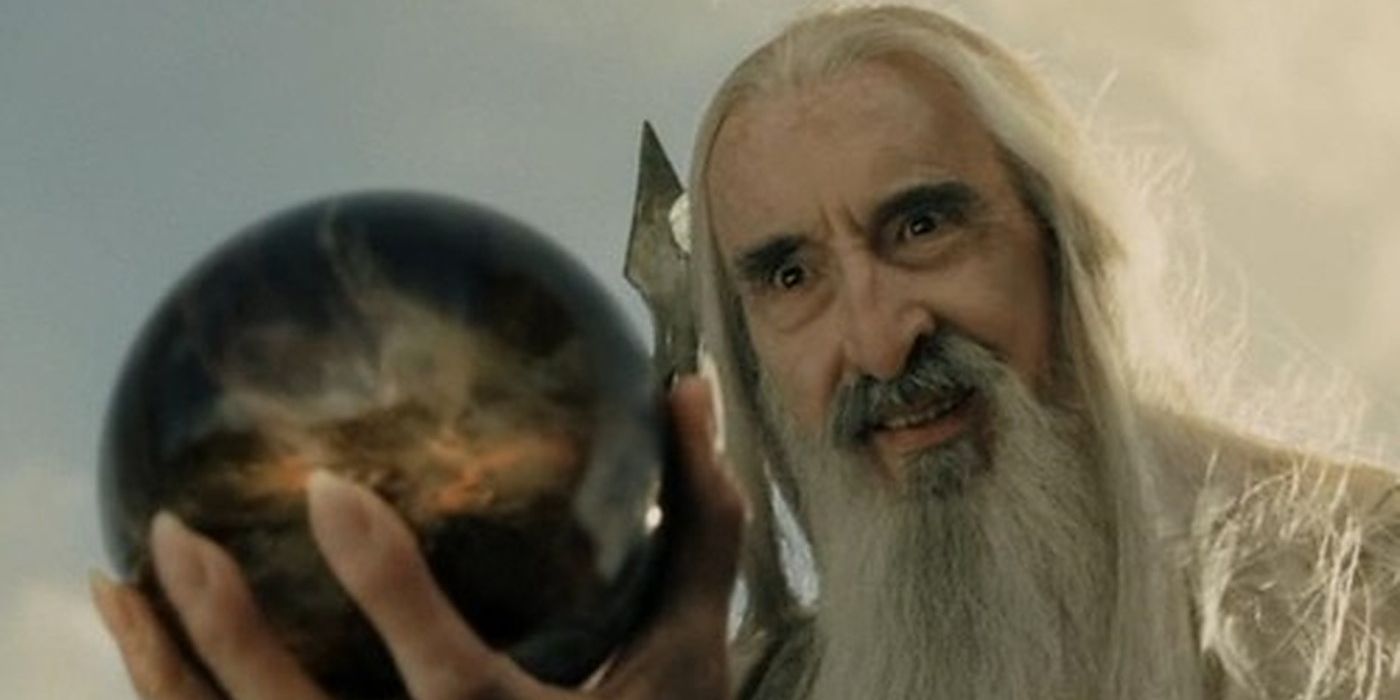
Honestly, I think that that movie trilogy is probably the finest display of its actors’ talents; I’ve never seen a better performance from any of them. And one of the best displays of this came from the late, great Christopher Lee. I feel a bit sorry for him because apparently in his earlier days, he dreamed of playing Aragorn or Gandalf… and I’ll admit, in his youth he would have made an excellent Aragorn. Tall, kingly, imposing, et cetera.

But make no mistake – nobody else could have played Saruman as well as he did.

And I know this because not only did he look like Saruman, but he had the compelling, persuasive voice that the character is supposed to have.

This was evident from the audience at one of these screenings of the first movie, when he’s revealing his master plan to Gandalf. Some of the people in the audience started getting glassy-eyed and looking like they were thinking, “Yeah, that makes sense…” until the film snapped them out of it by reminding us that yes, he is evil and he’s in league with Sauron. He consistently had that effect on people, and it was amazing.

RIP, Mr. Lee.

The aliens of “Battleship”

The movie Battleship is bad. Very bad.

I could write a book on all the ways this movie is terrible, starting with the fact that it is essentially a Michael Bay movie without Michael Bay. Everything you hate about a Michael Bay movie is here – the destruction porn, the fetishization of the American military, the hot women that exist to be hot, the obnoxious lead character, the ludicrously dumb plot… it can go on forever.

I will be fair, however, and note that it is better than a Bay film in several ways. There is no racism on display, not much terrible comic relief, the obnoxious lead character is actually acknowledged as being an idiot and a perennial screwup, Rihanna is realistically de-glammed, and real military personnel are shown genuine respect rather than being treated as square-jawed macho dolls for Bay to make pew-pew noises with.

But in the many ways that this movie is bad, one thing really stuck out at me: the aliens.

Yes, instead of making some kind of period wartime story about depth charges or missiles, they decided to make it a science fiction story about a bizarre alien invasion. Again, I could write a sequence of essays about the many ways this is mishandled, but today I’m going to address the fact that the aliens are really bad.

A lot of this comes down to the design. If you’re going to have your aliens show up in scary-looking all-concealing armor and masks that hide them from sight, one of two things has to happen.

One, they have to remain armored and masked so that they seem more menacing.

Two, they have to be really well-designed. If you pull off that mask, people have to gasp in horror at what they are seeing, and marvel at just how alien and freaky the creature underneath looks.

Battleship… does neither.

The sad thing is that the alien armor is sufficiently menacing-looking that the aliens could have worked if they had just kept it on, maybe with some subtle glimpses of something weird peeking through the visor. The problem is, partway through the story, the Navy captures one of the aliens and pulls off its helmet.

And it looks… pretty bad. By “pretty bad,” I mean it’s wildly unimaginative – they basically took the overall look of a human, stuck some keratin spines on the chin, gave them catlike eyes, and tweaked the details just enough that they don’t look technically human. It’s a design that you’d expect to see in a subpar episode of Star Trek.

I don’t know about anyone else, but the sheer lack of imagination in their design really killed any sense of menace they had for me. All I could think was a sarcastic, “Oh no, the Earth is being invaded by goat people.” Even when we saw them striding around in their intimidating armor, I couldn’t stop seeing those terribly-designed goat people. There’s nothing about them that activates instincts of fear and revulsion.

And remember, this was a tentpole blockbuster. It had a budget of well over $200 million (which seems like way too much for a movie that doesn’t have a well-proven franchise or director behind it). I do not for a second believe that it didn’t have the money to spare to make something really bizarre and creative! I’m not talking about John Carpenter’s “Thing,” but throw on some nonhuman skin textures or a bunch of extra eyes or tentacles or something.

On criticisms of Detective Pikachu (extensive spoilers)

I’ve seen some criticisms of how the movie Detective Pikachu handles its disabled lead villain. Simply put, some people don’t like the use of the trope of a disabled person going to great lengths to be “normal,” as people interpret that as meaning implies that their life is worth less or is unbearable because of their disability.

On the one hand, I can understand not wanting your life to be seen as “less” because of a disability, and wanting people to realize that you can be happy and fulfilled despite the limitations it puts on you.

But this criticism rubs me the wrong way for two reasons. Spoilers below.

First, I am not going to police how disabled people feel about their disability. Demanding that all disabled people be happy and content with their disability – or even want it – is far worse than implying that they might be unhappy with their limitations. It seems to feed into the idea that being disabled is an “identity” – I’ve seen people talk about the “disabled community” – rather than a simple problem that your body has, and thus nothing negative can be said about it, and you have to be proud and happy.

And before you challenge me on this, I am facing a disability in a few years’ time. I will not accept anyone telling me that I shouldn’t be angry about this, or that I shouldn’t want to be “normal.” You don’t get to dictate how I feel and what I want, and how I feel is not wrong or incorrect. Got it?

The second problem is that… no, being disabled isn’t the villain’s motivation for wanting to merge people with Pokemon. It was his original motivation, several years ago, in that he was looking for a cure for a debilitating disease that put him in a wheelchair. But by the time of Detective Pokemon, his plans have evolved drastically – they don’t really have anything to do with his disease anymore. I don’t think he even mentions it in the present.

That’s because his plans for merging people with Pokemon include merging every human with a Pokemon, not just himself. He believes that Pokemon are superior to humans, and that he would be elevating humans by giving them Pokemon bodies. So not just disabled humans, but all humans are considered by him to not be good enough. That his his motivation, not escaping his disability.

In fact, he seems to be the only one who doesn’t benefit from his plan, because his method of “merging” with Mewtwo just involves controlling him with a mechanical headset. They don’t merge physically, meaning that he is still confined to his wheelchair in the long-run, even if he can temporarily transfer his mind to Mewtwo.

This is what happens when you do a surface-level critique of something based on tropes you think are “problematic,” without actually examining the plot and characters for what they actually are. I would understand having an issue if the villain’s motive was “I want to escape my disability by merging with a Pokemon,” but that isn’t his motivation, and pretending that it is is just disingenuous.

Random facts about me

  • I love rodents. Most rodents, in general, but the smarter or friendlier ones obviously take precedence. Rats are my favorite, but their lives are too short.
  • I have a deep fondness for Ikea, based in my childhood visits there.
  • Hate-watching/hate-reading is a fond pastime for me. Unlike most people, I freely admit that I love screeching about how abysmally bad something is.
  • Least favorite book of all time (not including books that were written specifically to promote hate): Battlefield Earth, which in my review I compared to swimming in a sea of sewage.
  • I have no life.
  • Among my favorite movies: Alien, The Age of Innocence, Psycho. Not necessarily because of the content itself, but because they are filmed and directed so flawlessly that I basically don’t have to pay attention to what might be done wrong.
  • I admit that I was a Snyder Cut disbeliever before it was announced that it actually existed, but I am now a full supporter.
  • I hate fish. In every way. I dislike fish because they barely seem like living things to me – they’re like evolutionary leftovers with barely a brain. And I don’t like eating them. The only exception is tuna, which I can tolerate – all other fish are viscerally disgusting to me, both in taste and texture.
  • My favorite food is probably pizza, meat toppings.
  • I am afraid of the ocean. Both because most of it is lightless, endless cold depths, and because it contains creatures ranging from the nightmarish to the grotesque. I love being near the ocean, but I don’t like wading more than a few feet into it. Very contradictory.
  • I love cheese. I wish there was an inexpensive way for me to sample various cheeses aside from the ones you find prepackaged at the grocery store.
  • I watch way too much Youtube.
  • I’m a contrarian. Pompously tell me I should be on your side because your ideology is right, and I immediately want to point out how you’re the worst and nobody should support you. Tell me I’m bad if I don’t do X or Y, and I’ll immediately want to not do it just to spite you.
  • I suffer from depression. No, not the “I has the sads because society” kind that every basic person on social media claims to have, the serious mental illness that warps my perceptions, my emotions, and plunges me into nihilistic hatred of humanity and life itself unless I take several medications. I also have fairly severe anxiety with paranoid features.
  • I don’t believe people should have heroes or role models… at least, not living ones. Living ones will inevitably let you down by revealing themselves to be terrible people who have used systems like politics or Hollywood to conceal their misdeeds. Only admire dead people whose bad stuff has been thoroughly parsed and examined.
  • Favorite color: green, preferably a darker forest green.
  • I like bread. I sadly don’t get the opportunity to eat much of it, but I love different types and flavors.
  • I have never had a dog or cat.
  • I can’t choose a least favorite movie, because there is such a variety of bad movies with different degrees of ineptitude, bad quality and enjoyability that I can’t pinpoint a single one.
  • Favorite authors in terms of overall consistent quality: J.R.R. Tolkien, Garth Nix, Susan Cooper, Maggie Stiefvater. I may be forgetting some…
  • I don’t know how to dance.
  • I am terminally single.
  • I like science fiction, but many science fiction authors don’t like me.
  • Favorite podcast: Welcome to Night Vale. The randomness, weirdness and unexplained qualities are something that strike a chord with me.

Maybe I’ll make a sequel blog post if other factoids about my uninteresting self pop up in my head. Anyway, ciao!

The Mummy 2017 and Sexism

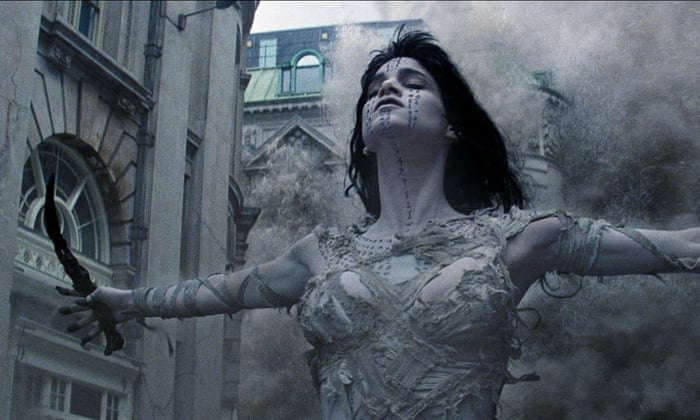
One of the many changes made to Mummy lore in the Tom Cruise movie The Mummy is that it focused on a female mummy rather than the traditional male ones. Despite Twitter’s beliefs that all gender/race flips are greeted with sexist racist fanboy hatred, the viewing public did not have a problem with gender-flipping the mummy, especially since she was played by the wonderful Sofia Boutella, who gives the character a real sense of wiry, acrobatic physicality.

Unfortunately, the movie sucked for myriad reasons. Among the reasons: the crushing lack of research, the lack of Egypt, Tom Cruise’s midlife crisis, the need to shoehorn a S.H.I.E.L.D.-like organization into the story, the script full of holes, the blatant ripping off of An American Werewolf In London, and so forth. It’s not a good movie, and I didn’t enjoy it.

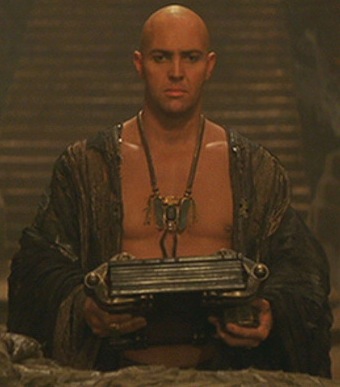
But the thing that really stuck out to me is that despite deciding to make the mummy female… the movie is actually rather sexist towards her. This is best highlighted when you compare the 2017 mummy, Ahmanet, to her male counterpart in the 1999 movie, Imhotep. And two things really stuck out at me.

One, Ahmanet is weak. I don’t mean she’s weakly characterized – although she is – but that she’s not very powerful for an undead mummy powered by divine sponsorship. About midway through the movie, she’s captured by the troops of Prodigium (the monster-hunting equivalent of S.H.I.E.L.D.). Do they use magical tools and amulets? Do they somehow neutralize the power of Set, rendering her helpless? Do they use centuries of research and knowledge and technology and the supernatural to overwhelm this godlike figure’s godlike powers?

Nope. They use ropes and hooks to catch her, then chain her up with a mercury drip. It isn’t even hard for them.

If that doesn’t sound weak, stop for a moment and remember Imhotep from the 1999 movie. Imhotep was powerful. Ridiculously so. He had his weaknesses (like kitties), but it’s hard to imagine him being completely incapacitated by some guys with ropes. Yet the female mummy is weak and gets taken down almost effortlessly.

And you may be thinking, “Well, it’s to show how amazing Prodigium is! They’re so capable and strong that they can stop a god-powered mummy!”

But no, that isn’t the case. Because that is the second time that Ahmanet is taken down by mere mortal schlubs – the first time was in ancient Egypt right after she murdered her family, and she was newly juiced-up with Set’s power. Not only were the people who caught her ordinary people, but they didn’t have technology, centuries of organized study and gathered magical power. They were just people. Not only did they catch her, but they successfully mummified her alive (which is not possible, incidentally) and transported her to another country before properly imprisoning her in a neutralizing element. That is, for a mummy, quite weak.

For the record, Imhotep also was caught and buried alive by ordinary humans… but that was before he had most of his powers. So it made sense that the Medjai could catch him!

The other part of Ahmanet that struck me as sexist is her ultimate goal. Her initial goal seems to be to rule Egypt, because she apparently was raised with the belief that she would be the queen regnant when her father died, but then his wife had a baby boy so she was knocked out of the succession. For the record, pharoahs had many wives, so the chances of a pharoah having only two children in twenty years is… very unlikely. That’s a more medieval-European trope.

Anyway, she was so upset about not becoming queen that she summoned the god Set, and he gave her… skin text and four pupils, and a knife. So she wandered off and killed her entire family, baby included, and then decides to bring Set into a mortal man’s body because she’s in love with him. When she revives in the present, her motive does not change – she wants Set to incarnate in Tom Cruise’s body.

Now, let’s again compare her to Imhotep.

Imhotep also had romantic love as the centerpiece of his quest. He was the secret lover of the pharoah’s mistress (why not a lesser wife or concubine? Again, very medieval-European!), until she committed suicide so that the Medjai wouldn’t capture Imhotep. So his goal was to bring her back to life. He was captured and sealed away under a magic spell, and when he is revived as a mummy, his ultimate goal is also unchanged – once he has his body restored, he wants to bring his lover’s soul back in Rachel Weisz’s body.

Similar motives, similar goals, similar story progression, yes?

Well, no. Like I mentioned before, Ahmanet’s goal is to revive an evil god, so he can rule the world. She wants to be his queen, not a queen regnant. She even explicitly says this, and she acts like a lovesick fangirl for most of the story.

Imhotep, on the other hand, never gives the impression that he’s going to be subservient to any person, and at no point do you imagine that his lover is going to be the one sitting up on the throne while he’s just the arm candy.

I don’t know much about the production of this movie, but I will say that this motivation feels a little like it was shoved in there. It may be bad writing giving the character inconsistent or poorly-explained motives… or it may be the obviously-insecure-about-his-age Tom Cruise insisting that all women in the movie must be dazzled by his toothy charm. I don’t know.

But either way, the handling of the female mummy was not good, and they should have simply followed this rule: if it isn’t something you can see Imhotep doing, leave it out.

Zack Snyder’s Justice League: Part 2 (Spoilers)

I’ve finished the entire film now, seen it multiple times, and formulated quite a few thoughts about it. Among them:

Thankfully, the random Russian family is absent from this cut of the movie, being one of Whedon’s many baffling creative choices – I mean, why give Cyborg a whole character arc when you can just show random nameless people that we don’t care about? In this cut, the Russian town is completely deserted, which seems like a more likely choice for Steppenwolf’s secret headquarters… and, somehow, makes the whole event seem much more sinister. It’s a mission of death, brewing and blooming in a place that is, effectively, dead.

Jeremy Irons as Alfred Pennyworth is, by the way, a delight. The fact that he’s more prominently featured in the Snyder Cut is another point in its favor.

A pretty effective horror scene in which a hapless janitor finds a parademon lurking in the lab… very good at establishing mood and the sinisterness of the parademons. I honestly never felt that in the Josstice League cut.

The firing of the message arrow was longer and more ritualized here, giving more of a feeling that the Amazons are using magic, and very ancient means. It’s also specified that the arrow is an arrow of the goddess Artemis. Overall, it has a slight “lighting the beacons of Gondor” feeling.

It also leads into an excellent scene of Diana investigating the temple where the arrow landed, which – again – increases the feeling of atmosphere and menace considerably. In the Josstice League cut, she just saw it on TV and immediately knew what it meant. Here she knows its significance, but we see her uncovering what it means through non-verbal means and an Indiana Jones-style infiltration of an ancient secret chamber. Compared to the hamfisted dialogue of the Whedon cut, it’s refreshing to have a director assume his audience is smart enough to decipher what’s going on.

Ryan Choi is in this. If you don’t know who Ryan Choi is, he is the second person to assume the mantle of the Atom, a size-changing superhero. Basically, our dear Zack Snyder was laying groundwork for a future movie if the character went over well. But like most non-white characters, he was eliminated from the theatrical cut, which is a shame, because he has some good energy and works well opposite Silas Stone.

Something about Joe Morton apparently just says “genius scientist.” I have seen him in several roles, and the three most prominent ones – this one included – all cast him as a genius scientist.

He’s also our entry-way to Victor Stone, aka Cyborg, whom we first meet being emo in a hidden apartment. This was… about all the character development Cyborg had in the Josstice League cut – he was just emo and wooden for the whole movie, and then he just sort of decided not to be at the climax. It was truly abysmal, and I actively disliked the character of Cyborg because he was so poorly-written.

Turns out that was all Whedon’s fault. Again. Thanks, Whedon. Thanks so much.

Ah, slo-mo. It wouldn’t be a Zack Snyder movie without slo-mo.

A new scene also introduces us to Vulko, Aquaman’s mentor figure, who is rocking the Elrond hair here. He’s appeared in the Aquaman movie so his appearance is not a huge surprise, but it would have been a fun way to segue into Momoa’s own movie.

One contribution Snyder has made that I’m not really a fan of is the air bubbles that Atlanteans generate whenever they want to talk, and their apparent inability to communicate verbally without them. If they’re able to breathe water, they should be able to talk underwater. Especially since sound does travel underwater – Snyder could have had some fun with it by coming up with watery distortion.

I do, however, love the way that Steppenwolf communicates with DeSaad in this movie, in which a giant slab of stone in the middle of a nuclear power plant (no, I don’t know why it’s there) turns into a molten representation of whoever he’s talking to. It’s a very cool-looking visual representation of communication, more so than just talking through a portal or something like that.

The Snyder Cut also does something that Whedon’s never did: makes Steppenwolf a three-dimensional villain. One of the things I (and everyone else) hated about Steppenwolf was how thin and cliched he was – we’re simply informed that he conquers because… that’s what he likes to do. That’s his whole motive. Nothing deeper or more identifiable than that.

But in Snyder’s cut, you almost feel sorry for Steppenwolf. His motivation here is that he somehow betrayed Darkseid once in the distant past, and now he has to conquer worlds to be allowed to return home. It’s a simple motive – he wants to go home – but it’s one that we can understand and sympathize with, even if he’s still obviously evil.

Diana also gives a more elongated version of the “age of heroes” retelling, with some notable differences. For one thing, it’s worth noting that Whedon trimmed out the African and Asian warriors fighting for the kingdoms of men. More attention is paid to the Green Lantern who dies during the fight. We also see more of the Motherboxes and how they work, which makes them feel more like they aren’t just MacGuffins.

But the biggest difference is that it isn’t Steppenwolf who gets his butt kicked by Earth’s defenders – it’s Darkseid himself, albeit before he started wearing a shirt and calling himself Darkseid. He also is forced to retreat because Ares critically injures him, to the point where he’s bleeding all over the place. We also get an idea of how hard it is to hurt Darkseid – even in his youthful, less powerful days, it takes two or three Greek gods to take him down.

It’s interesting that despite the rather bleak depiction of Batman in Batman V. Superman, It’s Snyder’s cut that has Batman being more optimistic about humanity and the possibility of heroes coming together, whereas Whedon’s is all whiny gloom.