Elio Vs. KPop Demon Hunters – What’s In A Name?

So right now, two animated original stories have recently been released. One is Elio, a Pixar movie about a kid who gets abducted by aliens and… well, the plot doesn’t seem to have much more than that. The other is K-Pop Demon Hunters, which… is about K-pop stars who are also secretly demon hunters.

Now, I cannot speak to the quality of these two movies, since I haven’t seen either in full, except to say that the reception I’ve seen to Elio has been very mixed. Some people think it’s great, some people think it sucks. K-Pop Demon Hunters seems to have gotten overall a much more positive reaction despite a very silly premise, and as far as I can tell, that’s due to two things. One, it’s a well-written movie, from the clips I’ve seen. Two, it’s a genuine movie made out of someone’s culture and passions, not a soulless corporate product.

But I think one big contributor to the downfall of Elio and the rise of K-Pop Demon Hunters is the titles.

KPDH has a title that tells you, upfront and openly, what it’s about. It’s a movie about K-pop and demon-hunting. The premise is silly, like I said, but it doesn’t care how silly it sounds. You will probably know right out of the gate if this is a movie you are interested in. Furthermore, the title is eye-catching. It’s bold, it’s brash, it’s unapologetically different from every other title out there – and that makes it both memorable and attractive. It makes you want to know more.

On the other hand… what does “Elio” tell you?

Honestly, to me it sounds like the name of an indie dramedy about an older man (I keep imagining Tom Hanks) whose wife died and he’s been depressed ever since, but then he adopts a stray dog and it teaches him how to live again or something sappy like that. That dramedy would ultimately be trying to get an Oscar, but everybody would have forgotten about it by the time Oscar season rolls around.

That is what the title Elio says to me. It doesn’t say “wacky children’s space adventures with slug aliens.” It doesn’t say ANYTHING about the movie it’s attached to, or what to expect, or WHY you should see the movie. It’s just… a name. The movie could just as easily be called “Wally” or “Sean” or “Jake” or “Mike.” It tells you nothing except that it has a character named “Elio” in it, and that’s… not enough to really attract attention and interest.

And yes, I know that there are some very successful movies that are just the characters’ names – John Wick comes to mind. But there are also ones that definitely weren’t done any favors by their titles, like Salt.

I’m not saying that Pixar has to go full out K-pop Demon Hunters in their titles. But they really need to stop with the really bland, nondescript titles that are either names (like this and Luca), or they show a minimum of effort (like Soul). Their movies have been struggling for the past few years, for varying reasons, but the titles certainly don’t help.

Oh, and ditch the current art style too. The bean-mouth thing is tired.

Recommendation: Godzilla Singular Point

I didn’t really expect a series about Godzilla to go into detail about the nature of time.

In fact, the series has a distinct lack of Godzilla about 90% of the time, which my brother found to be its biggest flaw – if you’re going into it to watch kaiju punching each other in the face, you will be sorely disappointed. There are kaiju, sure – there are a bunch of pterodactyl-like Rodans, there’s an Anguillas, there are some sea monsters and giant monster-spiders and so on. But they are more like unstoppable forces of nature whose origins and nature are a mystery, and who scare the pants off us feeble humans.

About 90% of the time, the story is divided between dealing with various non-Godzilla kaiju, and examining nonlinear timestreams, such as receiving information from the future, and particles that can’t be detected, and artificial intelligence. It’s a very intellectual series with Godzilla as the primal draw and the ultimate culmination of everything it’s building towards, so if you just want Godzilla in particular punching monsters you are not going to enjoy it. There’s a lot of talking.

Also red dust. Sooooooo much red dust. It makes sense in context.

The rest of the 90% is divided pretty evenly between trying to unravel the mysteries of time and trying to stop kaiju in creative ways. Especially since there are different people with different motives, and different knowledge, sometimes working together and sometimes kind of undermining one another. The story mostly revolves around a small group of oddballs – a nerdy girl majoring in imaginary creatures (now THERE’S a complete sink for your student loans), a crazy old man building a giant robot to save the world (because Japan), and a young man who seems to have a real knack for figuring out the kaiju and programming artificial intelligence.

It also takes notes from Shin Godzilla by having Godzilla evolve through different forms over the course of the series. In fact, sometimes you can only tell it’s him because of that classic Godzilla musical sting. His final form has a mouth that could eat an entire meatball sub in one bite.

Also: my brother noted that the female lead reminded him of Velma from Scooby-Doo… and I kinda see it. Nerdy, clumsy, chin-length hair and glasses, into weird esoteric stuff… she’s like Velma turned into a cute anime girl, only her interest is insects who are their own grandpa instead of the occult.

I’d say that its biggest flaw, aside from a lack of Godzilla, is that it probably takes a few viewings to understand the theories behind it. The concepts and theories are a bit dense at times, and it sometimes treats viewers as if they are already aware of the science, or the explanations sort of dart by so fast that you might not notice.

If you like thinking-style anime like Steins;Gate and a hefty dose of kaiju chaos, then Godzilla Singular Point is something you might enjoy. Even if you don’t know if you might like those things, it’s worth checking out simply because it is such an unusual beast.

Review: The Boy And The Heron

Hayao Miyazaki is one of those artists that needs no introduction, a brilliant storyteller whose characters and richly-developed stories include tales of flying pigs and walking castles, forest gods and floating cities, preschooler mermaids and fantastical bathhouses. So even when nobody really knew what the plot was, “The Boy And The Heron” was already an alluring prospect.

And while perhaps not his most accessible film, it’s nevertheless a gripping piece of work – half semi-autobiographical tale of a young Japanese boy during World War II, half fantasy story about a strange fantastical world of long-forgotten family secrets. It often feels like Miyazaki is musing on the exquisite yet flawed process of creating a fantasy world, the unique minds that nurture them, and the creativity that future generations should have.

During World War II, a young boy named Mahito Maki (Luca Padovan) loses his beloved mother in a terrible hospital fire. A year or so later, his father Shoichi (Christian Bale) marries his late wife’s sister Natsuko (Gemma Chan). Mahito isn’t pleased by this – including the fact that his aunt/stepmother is pregnant – and he definitely isn’t happy to be moving to her remote country estate. His schoolmates are hostile, and the only company in the house is the bickering elderly servants.

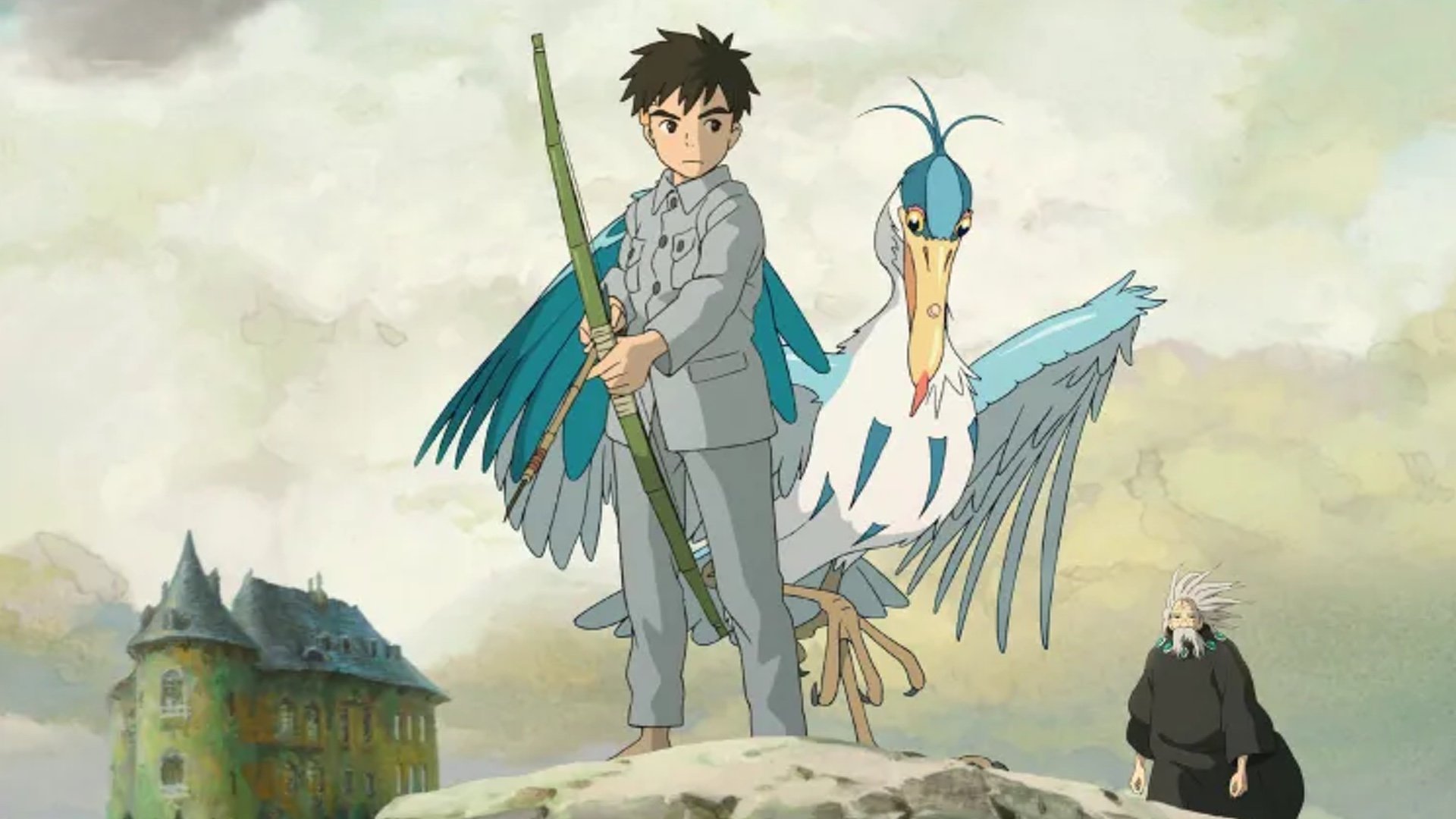
But he soon finds himself fascinated by a strange grey heron living in a pond nearby, and a strange stone tower that everyone warns him away from. When Natsuko wanders off and disappears, Mahito is drawn into the tower by the heron (actually a little man in a magic suit), who lures him with the promise of finding his mother again.

Instead, he finds himself in a strange fantasy world dominated by oceans and stone monuments, of blobby little spirits and a pyrokinetic girl named Lady Himi, who fends off hordes of talking pelicans. With the heron-man as his companion, he finds that his stepmother has fallen into the clutches of a civilization of talking, meat-eating parakeets – and to help her, he may have to take on responsibility for the entire world.

“The Boy And The Heron” is not Hayao Miyazaki’s most accessible film in many ways. It’s one of those films that may be a little confusing on your first viewing, but which increases in richness with subsequent watchings. It’s also one of those stories that lends itself to multiple symbolic interpretations, the most obvious – in my view, anyway – being that the existence of the other world is symbolic of a creative mind constructing its own universe in the process of storytelling, its flaws, and the need for younger creatives to take up the mantle.

And those mysteries and schemes are coiled around a hauntingly melancholy fantasy story – the world Mahito encounters is oddly empty despite its beauty and strangeness, like a vast cathedral with no people in it. It has an edge of wrongness and danger that always makes you feel like the hero is balancing on a knife’s edge, even from things that seem like they should be ridiculous (the man-eating parakeets are surprisingly unnerving). But even in that, Miyazaki works in some fun moments as well, such as Shoichi thinking Mahito has turned into a parakeet, or when Mahito has to deal with the heron-man.

And because this is Hayao Miyazaki, the entire story is lusciously animated – this is 2-D animation at its peak, distinctively Studio Ghibli in style, and detailed to the point where you can practically feel the frogs, the mossy stones, the feathers, the creaking wood. Miyazaki crafts visuals that are hauntingly beautiful and dreamlike, allowing Mahito to drift through strange, sometimes ethereal landscapes populated by strange creatures.

Mahito is a slightly weak spot in an otherwise lovely movie, simply because he’s much less expressive than many of Miyazaki’s other heroes. We know that he desperately misses his mother and isn’t happy about his father’s marriage, but it’s hard to tell what his exact emotions are much of the time, or how they will naturally lead to actions like constructing a bow-and-arrow. Fortunately he opens up more once he travels into the other world, especially when interacting with the exuberant Lady Himi (whose true identity is pretty easy to guess), the tomboyish Kiriko, or the heron-man (whose weird, slightly sinister and sometimes pathetic personality is a good contrast to Mahito’s more restrained one).

The English voice acting is uniformly good in this film, with actors such as Christian Bale, Dave Bautista, Gemma Chan, Mark Hamill and Willem Dafoe all giving excellent performances. Special shout-out to Robert Pattinson, who immediately earns his voice-acting cred by giving an excellent performance in a creaky, slightly sinister voice that sounds completely unlike his usual voice – watching the movie, you completely forget who’s performing the role, and just lose yourself in the voice-acting.

“The Boy And The Heron” has a few rough spots, but it’s still a strikingly lovely, symbolically-rich fantasy adventure that leaves you feeling melancholy yet hopeful. May Miyazaki give us more worlds to explore.

Review: Guillermo del Toro’s Pinocchio

The year 2022 was a weird one. For some reason, there were three different Pinocchio movies released to the public: one so bad it was unintentionally funny (the Russian one), one so bad it was just painfully bad (the Disney one) and one that was… sublime.

The last one – the one that people actually wanted to see – was the Oscar-winning stop-motion adaptation by the magnificent Guillermo del Toro, which reimagines the tale during the rise of Italian fascism. Despite the grimness of that setting, it’s the “Pinocchio” that you would expect from del Toro – darkly exquisite, whimsical in an disarmingly alien way, and bittersweet in nature.

During World War I, talented woodcarver Geppetto loses his beloved son Carlo to a bomb. After many years of loneliness and grief, he drunkenly chops down the tree that grew over Carlo’s grave, and carves it into a wooden puppet that looks like a young boy. Then a blue, winged forest spirit decides to grant life to the puppet, and enlists Sebastian, the memoir-writing cricket living in his chest cavity, to guide and help the wooden boy.

But navigating life is difficult for Pinocchio, since Geppetto isn’t sure what to do with a spontaneous and overly-inquisitive child that causes trouble wherever he goes. The wooden boy becomes a circus performer to earn money for his father, and soon discovers that he is immortal – every time he dies, he comes back from the afterlife, albeit a little later each time. This attracts the attention of the Podestà, who wants him trained as a soldier for the ongoing war with the Allied Forces. But Pinocchio’s only goal is to protect his father.

Guillermo del Toro’s quest to make this film stretches over more than a decade, and unlike Disney’s crassly soulless remake of their own classic property, it overflows with heart, passion and bittersweet beauty. It’s also a story that rings deeply with Guillermo del Toro’s unique style and sensibilities, from the reframing of the narrative against the rise of Italian fascism (Pinocchio personally offends Benito Mussolini) to the mixture of darkness and whimsy (the eccentric designs of Death and the Sprite, who have extra eyes, horns, snake body parts and other such parts).

The darkness/whimsy is due to del Toro and Patrick McHale (responsible for the enchanting “Over The Garden Wall”), weaving together themes of paternal love, mortality, freedom, grief and self-sacrifice. But it also has lighthearted scenes like a newborn Pinocchio wheeling around causing chaos in Geppetto’s home. The entire story is rendered in absolutely beautiful stop-motion, which still manages to have a luminous quality that swings between the ethereal and the grounded.

Gregory Mann is absolutely charming as the titular character, capable of depicting Pinocchio throughout his entire journey. There’s also a superb cast including Ewan McGregor as the erudite insect; David Bradley as Geppetto, who learns to love his new (possibly reincarnated) son; Tilda Swinton as the ancient spirits of death and life; Ron Perlman as the cruel fascist official who wants Pinocchio to be a child soldier; and a number of other like Christoph Waltz, Cate Blanchett, Finn Wolfhard, and so on.

Guillermo del Toro’s “Pinocchio” is not only a charming, timeless stop-motion tale, it is also a heartwarming example of when passion and art triumph. Bittersweet, whimsical and enchanting.

Review: Spider-Man: Into the Spider-Verse

Imagine not only becoming a superhero, but finding that there are other superheroes just like you — same powers, same gimmick — from other dimensions.

Such is the situation of Miles Morales, a boy who unexpectedly finds himself not only with the same powers as Spiderman, but the responsibility to be a world-saving hero. “Spiderman: Into the Spider-Verse” is an energetic, colorful tale that effortlessly juggles an ever-expanding cast of Spider-individuals and suitably sinister villains, without getting tangled up in its own plot or mythology.

Miles Morales was an ordinary kid from Brooklyn — albeit one going to a ritzy private school — until a subterranean excursion with his uncle caused him to be bitten by a glowing spider. The next morning, he finds that not only has he become more muscular and agile, but his hands are sticking to anything he touches. Since, in story, there are comic-books about real-life superheroes, he recognizes his powers as being those of Spiderman.

And when he retraces his steps, Miles encounters none other than Spiderman himself, battling the Green Goblin and the Kingpin to stop a collider from accessing parallel universes. Spiderman, recognizing Miles’ abilities as being similar to his own, entrusts him with the key to stopping the collider… before he is unexpectedly killed.

And as the world mourns the loss of Spiderman (now known to be Peter Parker), Miles encounters another Peter Parker from another universe — an older Parker, more jaded and emotionally stunted, with a small gut. The fate of the entire world may lie on Miles’ shoulders as he tries to convince Parker to help him destroy the collider — but their dangerous quest will reveal that Parker wasn’t the only Spider-individual to be pulled into Miles’ world.

“Spiderman: Into the Spider-Verse” is a love letter to all things Spiderman — and especially to the different incarnations of the character, not all of whom are Peter Parker. Or male. Or human. In fact, the film unfolds by introducing more and more Spider-individuals to help Miles on his quest, reminding us that in every universe, Spiderman (or Spiderwoman) is an everyman hero who never gives up.

The movie certainly isn’t hurt by the presence of Phil Lord and Christopher Miller, the former of whom also cowrote the script. It swings swiftly from plot point to plot point, switching to flashbacks and explanatory interludes that keep the story from being bogged down with too much dialogue (such as the backstory of the Kingpin, or the fast-moving backstory of Other-Universe-Peter-Parker). It whips by swiftly and smoothly like a rhythmic gymnast’s ribbon, curling and twisting in all the right places with additional villains and unexpected revelations.

The animation takes a little getting used to, though. It’s good with expressions and big, expansive action scenes (including a wild webslinging chase through a forest), but some of the movements are a little herky-jerky, like some of the less fluid stop-motion animation. Still, the exaggeration and quirky visual cues harken back to the comic book roots of the characters, and everything is colorful, dynamic and fast-moving.

It doesn’t hurt that Miles Morales is a pretty likable kid — a boy who stumbled into a familiar set of powers, and has no idea how to go about being Spiderman, even as he struggles with the woes of school and “real life.” His relationship with the extradimensional Peter Parker is also quite nice — Peter is reluctant to mentor a brand-new Spiderman, but the two gradually warm up and learn from each other as they struggle to save the world.

In the shadow of the more blockbustery tales of Spiderman, “Spiderman: Into the Spider-Verse” stands apart as a dynamically-animated celebration of everything Spidery. A delight.

Review: Injustice

Imagine what would happen if Superman went bad. Not a mustache-twirling villain, but a frighteningly powerful fascist who demands loyalty and obedience from…. well, everyone. Sort of like a Twitter warrior with godlike powers.

Hence we get “Injustice,” an animated movie loosely based on the hit video game and the long-running comic-book series that served as its prequel. Sadly, it’s a bare-bones, rather shapeless kind of film, and it’s kind of shallow both in plot and theme – the moral issues raised by the source material are boiled down to “taking away people’s freedoms and rights is bad.” The voice acting is lackluster and the need to fulfill a three-act structure leads to a very rushed and somewhat anticlimactic ending.

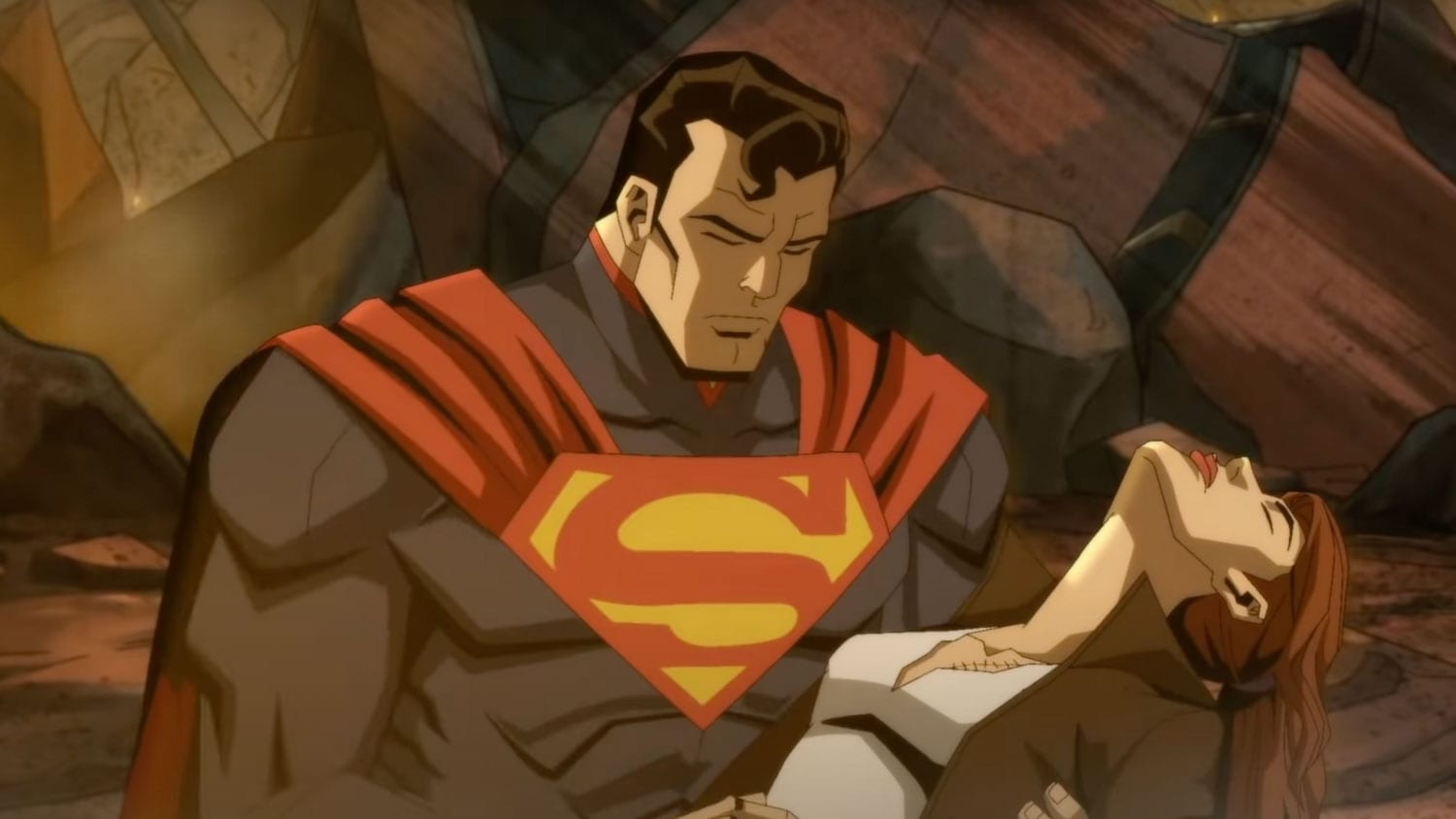
The Joker decides to give Superman the “one bad day” treatment – he kidnaps the pregnant Lois, attaches the trigger of a nuclear bomb to her heart, and tricks Clark into killing her. The bomb goes off, destroying all of Metropolis. Enraged and grief-stricken, Superman murders the Joker in front of Batman. Then, with the support of Wonder Woman, decides that he is going to bring peace and order to the world…. whether the world likes it or not.

Only a few heroes, antiheroes and Harley Quinn dare to oppose Superman’s new regime, with Batman as their leader. But as their resources and numbers dwindle – including a loss that forever fractures Batman’s family – Superman makes a Faustian alliance with a villain who promises to help him achieve his dream of peace, and descends further into murder and tyranny as he kills those who offend him. The only hope that this Earth has is for Batman to free Mr. Terrific, and find someone who can stop Superman.

It was always going to be a challenge to reduce a long-running, years-spanning comic series and a full-length video game into a movie that isn’t even ninety minutes long. That’s a lot of character development, subplots, battles and important events that need to be trimmed away. So needless to say, the story is very bare-bones and loses a lot of its narrative oomph – as well as the expansive cast of characters one would expect of the Justice League. I’m still not entirely sure why Harley Quinn is involved except as comic relief.

The story also seems to not have much depth – the main message of “police states and fascism are bad” is a good one, but it isn’t presented with much complexity or nuance. The movie also suffers from having to neatly wrap up everything in a bow after a third-act battle… which it utterly fails at. Lots of plot threads are left hanging when it slams into the credits, only seconds after the whole superpowered-tyrant-controlling-the-world issue is resolved in a very, very anticlimactic way. And whenever a hero is killed – which happens frequently – there’s barely time to register it. Most of the many deaths just don’t matter, and some characters just walk right out to never be seen again (such as Aquaman and Shazam).

It also inherits some original sins from the source materials, and despite many changes, it makes no attempt to explain them. For instance, Wonder Woman is strangely hostile to Batman and all-too-eager to turn Superman into a super-tyrant, apparently being too stupid to see how all this could escalate. Why is she so different from the usual Wonder Woman we know and love? No idea. She just is.

The animation is…. okay. Not the best I’ve seen, but not offensively bad. The voice acting is resolutely mediocre, through – most of the actors range from okay-but-not-very-good (Anson Mount, Justice Hartley, Gillian Jacobs, a strangely stiff Janet Varney) to this-is-just-really-bad (Faran Tahir, Kevin Pollak’s Joker). Derek Phillips is admittedly quite good as Nightwing, and Oliver Hudson is pretty fun as Plastic Man.

The one good aspect of “Injustice” is that it reminded me that I’ve been meaning to watch “Superman Vs. The Elite,” an animated movie that delves into the morals of superheroes and what happens when they throw aside laws. Consider that a recommendation, and give it a watch instead of this halfhearted, fatally-flawed adaptation.

Recommendation: Ghost Hunt

Like many people, I like anime. I’m not one of those people into super-obscure or niche stuff, but I enjoy anime like My Hero Academia, Bleach, Inuyasha, Fruits Basket, Fairy Tail, etc. I used to be into Naruto and Dragonball, until I realized that both of them were ass-numbingly long and I didn’t really like the characters very much.

And one of the lesser-known anime I love is Ghost Hunt, a series that adds a more professional, sometimes more factual aspect to the usual supernatural shenanigans of Japanese urban fantasy. It gets a little silly towards the end (one of the final episodes has a Catholic priest PUNCHING GHOSTS), but it’s an overall enjoyable series that mingles urban fantasy, horror, and a hint of romance.

It follows a young girl named Mai, who accidentally runs into a supernatural detective agency who are investigating a supposedly-haunted building at the school she attends. She accidentally wrecks some of their equipment and injures the assistant, so she ends up working for the paranormal investigator Kazuya Shibuya, whom she nicknames “Naru” because she thinks he’s a narcissist. There are also three other exorcists called in: the not-very-monkly Buddhist monk Hosho, the rarely-successful Shinto shrine maiden Ayako, and the perpetually mellow Catholic priest John Brown. Oh, and there’s a TV medium named Masako, who’s condescending and nasty and can’t take a hint that a man is disinterested in her, and Naru’s assistant Lin, who’s kind of weird and distant from Mai.

As a group, they investigate a number of paranormal cases, including a haunted doll and a child being terrorized, the seemingly-haunted school, a strict school where a girl threatened to curse people, a school game with potentially deadly consequences, a labyrinthine house, and a family being haunted by ancient spirits. There are also some slightly lighter stories, one of them about a child’s spirit possessing Mai, and a ghost that splashes water on couples. The last one is more funny than spooky.

Be forewarned: this series is in fact quite horrific at times, ranging from merely being uncomfortably eerie to having bloody ghosts emerging from walls in a cursed mansion. It’s also a slow-burner for most of its run, with long stretches of talking about equipment, psychic phenomena (and sometimes the fakery of it), psychology, Japanese folk magic, and so on. It’s not boring – there are strange occurrences fairly frequently, and the banter between the characters keeps the energy moving – but it’s not a big splashy anime. It takes its time, as it is a mystery show of sorts.

Recommendation: Avengers: Earth’s Mightiest Heroes

The Avengers film series is about as mainstream as you can get today – I could argue that Avengers: Endgame was one of the most anticipated movies of all time.

But back in 2010 the MCU was just getting started, and at that time, we got the best Avengers show – and possibly one of the best Marvel shows – to date: Avengers: Earth’s Mightiest Heroes. While it has some obvious influence from the recent Iron Man movies, this is mostly doing its own interpretation of Marvel’s comics, and it is glorious. It also has one of the most wonderful theme songs of all time. If you don’t believe me, google “avengers fight as one” and check out the music videos people have made.

But aside from the awesomeness of “Fight As One,” this show is amazing. Part of what makes it amazing is that… it isn’t strictly a kids’ show. It’s more a piece of superhero media that happens to be appropriate for children, but it’s serious and intricate enough that adults will probably enjoy it just as much.

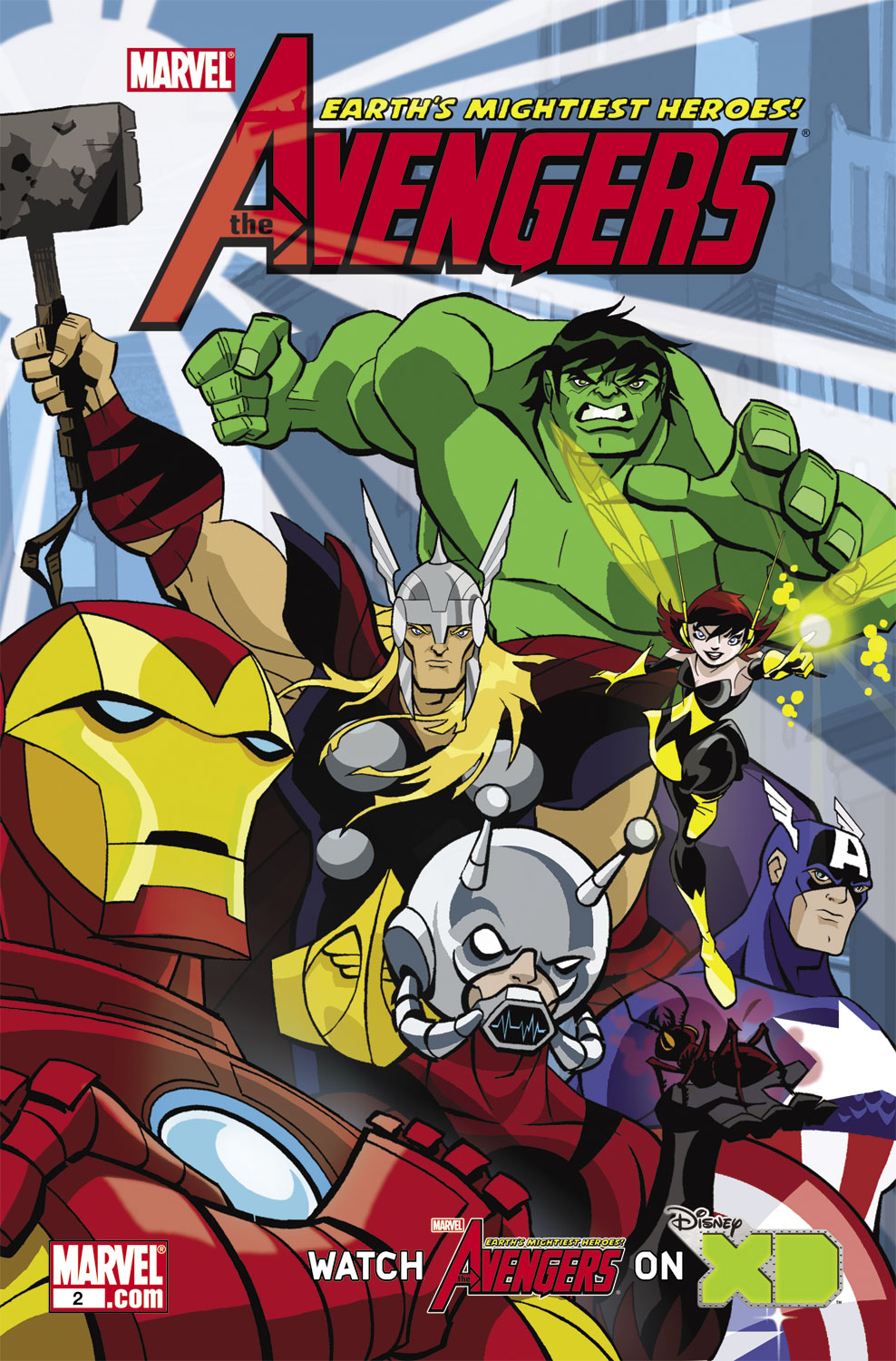
The first half of the first season is pretty much about bringing the team together “as one.” You’ve got Tony already established as Iron Man, since the Iron Man movies had already put him in the public consciousness. But it gradually introduces us to The Hulk, Hawkeye, Ant-Man and the Wasp, Black Widow (who is a recurring ally/enemy rather than a full-on Avenger), Captain America, Thor, and sometimes Black Panther.

And for big Marvel buffs, it does indeed have characters that Marvel didn’t have the movie rights to in 2010, like the Fantastic 4, Wolverine, Spiderman, etc, as well as less prominent Marvel characters like Iron Fist and Power Man/Luke Cage, who are absolutely wonderful and deserved their own spinoff show. And it had the Guardians of the Galaxy before that group became big, as well as now-established characters like Vision and Miss Marvel (now known as Captain Marvel, and much more likable and relatable than in the live-action film).

Anyway, after a supervillain nearly destroys New York, Tony Stark decides to assemble the Avengers, a team that can recapture the 75 superpowered bad guys who have just escaped from SHIELD. So they all move into his urban mansion, and have some personal friction with each other. Just because they’re heroes doesn’t mean they all get along at first – the Hulk is grumpy and a little paranoid, Cap and Tony have differing ideas about technology and what’s important, Ant-Man despises Tony because he fights instead of rehabilitating criminals, and Hawkeye is a little pissed at SHIELD because he was framed.

But those rough edges, that friction, those personality quirks are what make the characters feel so likable and real. They’re not perfect, but they are likable, relatable and heroic. When they’re hanging out, or having conflicts, or making jokes, it really feels like they’re reluctant but fast friends.

The story arcs that follow include a lot of really fascinating conflicts, like a time-warping conflict with Kang the Conqueror, a gamma dome that mutates everyone inside it, invasion by the Kree, the Masters of Evil, the murderous android Ultron, a trip to Thor’s home realm of Asgard, etc. The second season has an overarching conflict with the Skrulls, who sow confusion and mistrust among Earth’s mightiest heroes and make things a lot more difficult for them, both amongst each other and towards the world.

Sadly, Earth’s Mightiest Heroes ran for only two seasons, when it was clearly laying out plotlines and groundwork for much more. Apparently Disney didn’t want a story with good writing, intelligence, all-ages appeal, great stylized animation and well-developed characters, so they gave us the bland, simplistic, messy and juvenile Avengers Assemble instead. Bleah.

So yeah, if you can find this series, definitely watch it. It’s packed with plot, excellent writing, and it’s as rewarding a watch for adults as for kids.

Review: Superman: Man of Tomorrow

Some movies about Superman are excellent. Some are… rather ungood. And “Superman: Man Of Tomorrow” is intensely, spectacularly, memorably…. okay.

It’s just okay. It’s hard to really find anything to love or hate about this animated origin story for everybody’s favorite blue-and-red Boy Scout — nothing about it is too bad or good, from the serviceable but unexciting animation to the pleasant but not particularly gripping characterizations. It dabbles with some deeper stuff, like Superman’s temptation to live a quieter and safer life, but ultimately it mostly focuses on explosive spectacle and a bit of horror.

Clark Kent has just come to Metropolis to work as an intern at the Daily Planet, where he discreetly uses his superpowers to just kind of fly around in a thrift-store disguise. But after he saves the city from a runaway spacecraft, budding journalist Lois Lane becomes fascinated by “the Super-Man” and is determined to corral him into an interview, on HER terms.

But then Star Labs is attacked by a yellow-toothed space-motorcycle-wearing thug named Lobo, who reveals he is here to nab Superman in order to secure a massive bounty on the last Kryptonian. Who put forth this bounty, and therefore knows that he exists? We never find out. It’s actually just kind of forgotten. Supes doesn’t even seem interested in knowing who wants him captured and/or killed.

This battle is a turning point for Superman in several ways: his costume is destroyed, a Martian appears out of nowhere to defend him, and an innocent janitor is accidentally consumed by purple alien goo. Before long, a new enemy is stalking through Metropolis, sucking the very life-force from everyone it comes across. To stop it, Superman will need to ally himself with a man who may just become his greatest enemy… and also Lobo.

“Superman: Man of Tomorrow” aims to tell the story of Clark Kent’s formation into Superman – how he got his costume, how he got his name, and how he made the conscious decision to be Earth’s protector. None of it is too deep or dramatic; don’t expect lots of introspection and contemplation here. The choice is simple, and we know more or less what he’s going to choose, but the question is HOW Supes is going to make his official debut. And it’s kind of cute to see him do things like tie a blanket around his shoulders to see how he’d look with a cape.

The story itself is a pretty straightforward one, confronting Superman with obstacles – he keeps encountering stronger and stronger foes, both physically and mentally. But it occasionally gives us quieter interludes with the Kent family, or the janitor’s family. Perhaps the biggest problem is that during the climactic conflict, Superman decides to introduce himself to the entire crowd watching it, rather than dealing with the horrifying potential-world-ending threat behind him.

At the same time, we see him getting to know Lois Lane, who’s exactly what you’d expect – she’s kind of arrogant and convinced she’s already the best, but it’s intriguing to see her interact with Clark, growing closer to him even as he grows in confidence. Clark also contrasts wildly against the amoral, crazed Lobo, who livens up the script with his antics (such as telling Lois stories that reduce her to screaming, “Stop! What’s WRONG with you?!”).

As for the animation, it’s a mixed bag. It looks very simple and kind of cheap at times (I was reminded of “Archer” during some scenes, and that show isn’t exactly known for its beautiful animation), but I suppose they were saving the money and skill for the fight scenes, which are sometimes pretty dynamic and fluid. It’s not bad exactly, but it’s not particularly good.

If you’re hoping for greatness, “Superman: Man of Tomorrow” will surely disappoint you with its profound okayness. It’s just okay. If watched for a just-okay everything, it will probably satisfy.

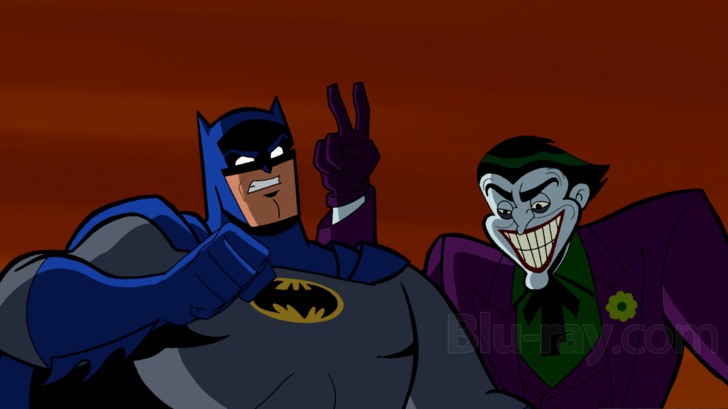
Recommendation: Batman: The Brave and the Bold

I love Batman. I love Batman media, from the Adam West TV show to the dark gothic animated series, from The Batman from the early aughts to the Christopher Nolan trilogy. I fully expect to love The Batman (movie, not series). No, I do not love, or even like, the Joel Schumacher movies, but I do sometimes watch them if I want to laugh and cringe at the same time.

But one show that seems to get overlooked sometimes in the world of Batman media is Batman: The Brave and the Bold, an animated show that aired from 2008 to 2011, before being sadly cancelled in order to make way for Beware the Batman. Not that Beware the Batman was bad, but it didn’t have the heart and soul of Batman: The Brave and the Bold.

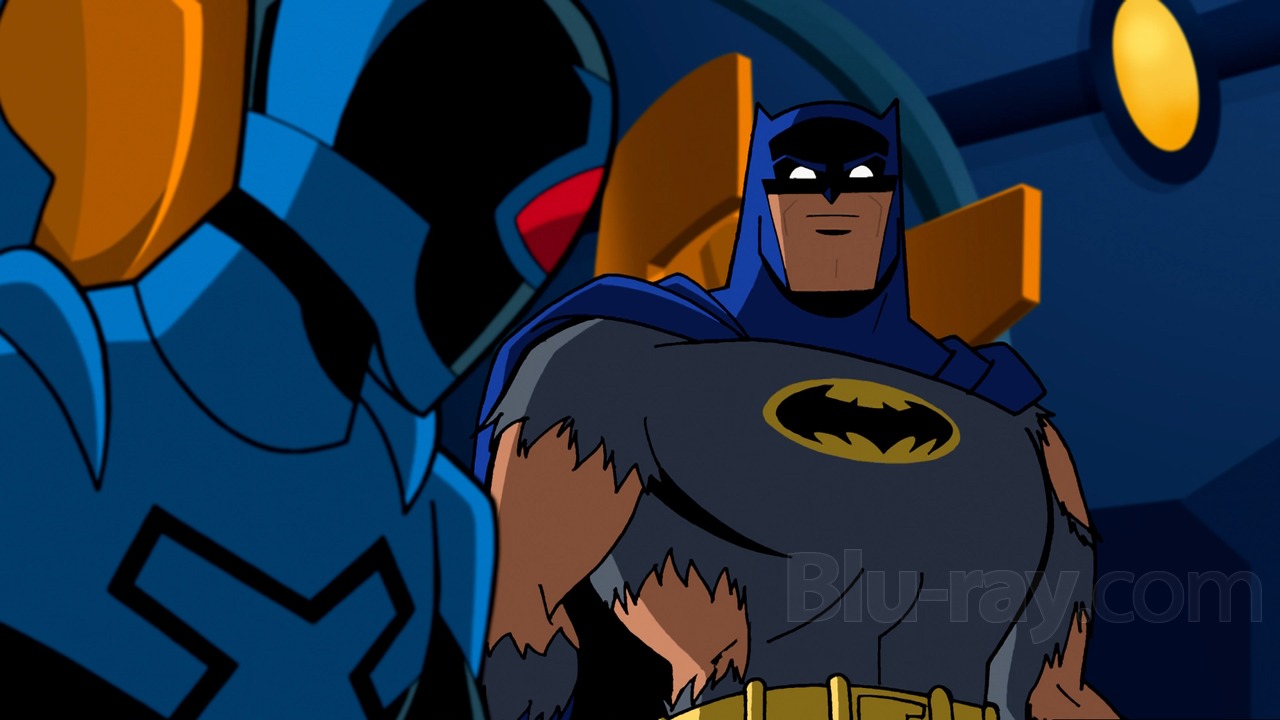
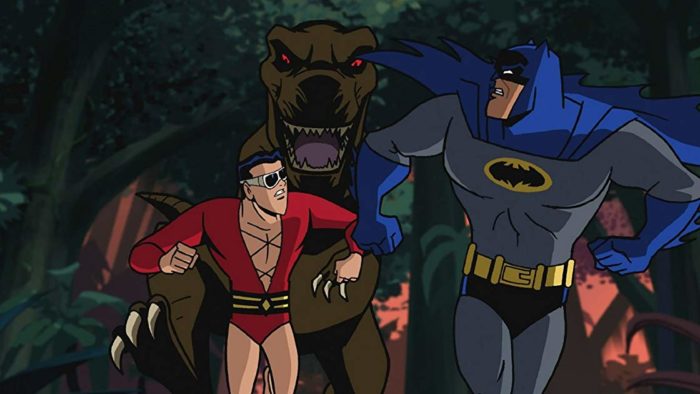
And this heart and soul are easy to identify: the people who made this movie not only love Batman and his history, they love the entire DC Comics universe. Not just the major heroes like Superman and Wonder Woman (who are only introduced in the final season), but characters obscure (the Metal Men) as well as iconic. And old as well as new – lots of characters from decades ago (Adam Strange, Wildcat), alongside newer characters like the third Blue Beetle Jaime Reyes (who has many appearances as a fledgling hero who needs Batman’s guidance) and Ryan Choi (the third Atom).

And it’s all done with immense respect and liking for these characters, whether they’re good or evil. For instance, one of Jaime Reyes’ first episodes sees him trying to investigate the legacy of past Blue Beetles, which allows the makers of this series to pay homage to the previous iterations, especially Ted Kord. You can feel all the love they have for DC’s whole history and all their characters, including the goofy and weird ones. Like, I had never heard of Gentleman Jim Craddock before this – I know technically he appeared in one of the DCAU series, but I honestly don’t remember him because he wasn’t put center stage. Or Red Tornado, who just doesn’t get as much attention as his earnest little robot self deserves. Or the Weeper. There’s actually a supervillain whose signature is CRYING.

Basically, every episode features Batman teaming up with some other superhero (sometimes a group of them, like the teen rebels known as the Outsiders) and dealing with a problem on other planets, or in another time period, or on Dinosaur Island, or England, or parallel universes, or in Batman’s own body (Aquaman and the Atom go on a Fantastic Voyage to cure Batman of silicon-based critters). Sometimes we don’t even know how Batman came to be where he is, such as when he pops up in the Old West to save Jonah Hex (who promptly insults his supersuit).

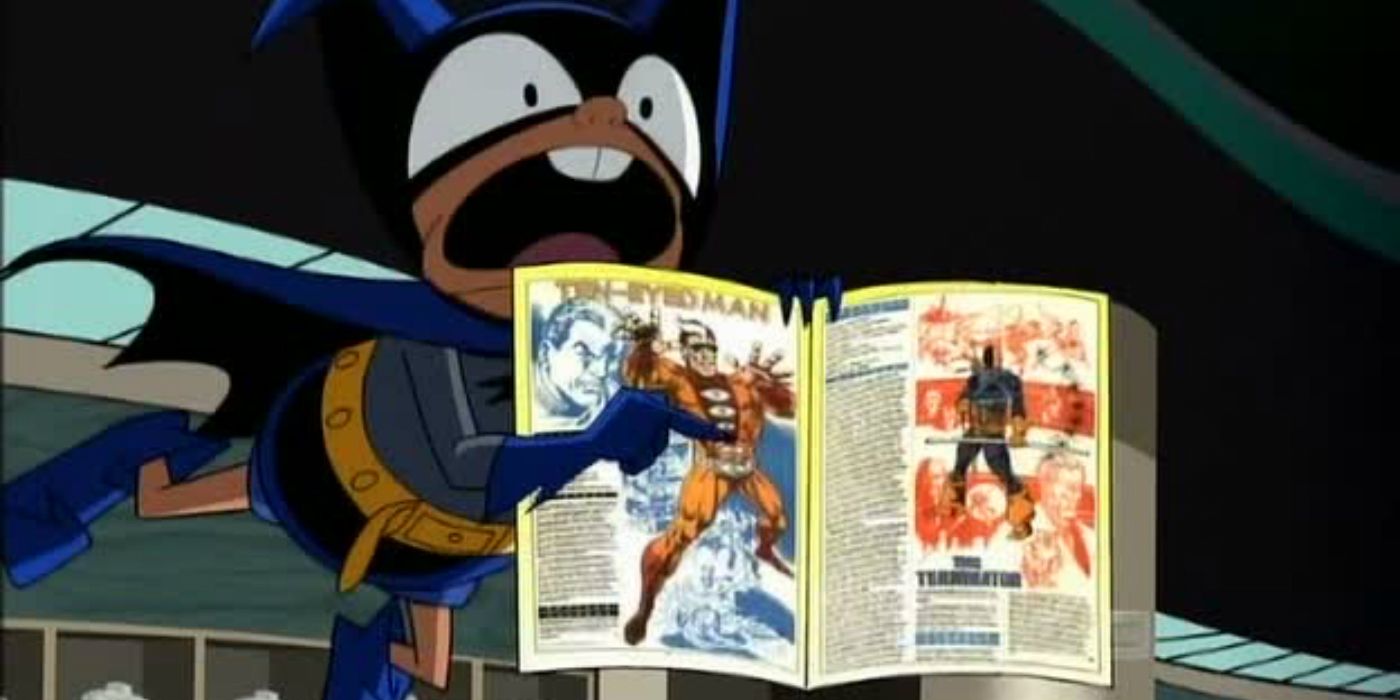
Okay, the focus isn’t always 100% on Batman and his team-up. One whole episode is about Aquaman going on a family vacation, during which he is forbidden to superhero. It even highlights the nature of Batman’s mythos and his fandom in some fourth-wall-breaking encounters with Bat-Mite.

And it’s wonderfully bonkers, and very much embraces the corniness (Diedrich Bader says the most hilariously cheesy things) of old comic books. It wants to be fun, and it IS fun, balancing out plot and characterization with the need to entertain. I mean, one episode has a sitcom version of Aquaman’s life! Another one was clearly dreamed up just because they wanted Batman to team up with Sherlock Holmes.

But it’s worth noting that not all is funny and goofy. There are serious conflicts in here, such as the invasion of Starro that spreads across the second season, and which ends with a truly heartrending loss. Or the ongoing battle against Equinox, a force that seeks to balance out order and chaos, and is willing to do horrifying things to make that happen. There’s also Chill of the Night, a really magnificent and totally serious episode in which Bruce Wayne’s soul is literally held in the balance, as he discovers who was responsible for his parents’ death.

It also has a great voice cast – you’re guaranteed to be a big fan of at least one person who had a hand in this. Diedrich Bader is an outstanding Batman (probably why they brought him back for the Harley Quinn show), and it has homages to Batman’s past by having Adam West and Julie Newmar play the Wayne parents, as well as Kevin Conroy playing an alternate-universe Batman.

So if you’re a fan of Batman, or even just of DC comics and its history, then this series is one you definitely need to see. Even if you don’t normally watch lighter incarnations of the Dark Knight, this is clever and well-written, and its love and joy are infectious.