Review: The Return of the King by J.R.R. Tolkien

Middle Earth is on the verge of falling, and Sauron’s vast armies are about to swarm mankind’s last defenses. Only two things can save the world: a lost king returns to his throne, and a little hobbit makes it to Mount Doom.

So needless to say, there’s a lot of tension in “The Return of the King,” the final installment in J.R.R. Tolkien’s epic fantasy Lord of the Rings trilogy. Tolkien builds up the inevitable clash between good and evil in the form of a final apocalyptic war for Middle-Earth – and rather than cheaping out with “and then they all lived happily ever after,” twines in the bittersweet edge of a man who had seen war and evil.

Gandalf and Pippin ride to the city of Minas Tirith, which is about to be attacked by the force of Mordor – and to make things worse, the steward who rules Gondor is going nuts. Merry finds himself in the service to King Theoden of Rohan, where his determination to follow his lord into battle leads him into a terrifying confrontation. And Aragorn is seeking out allies to fight Sauron on a military scale, even if they can’t defeat him unless the Ring is destroyed. His search will take him to tribes of forest-dwellers, to Gondor — and even to summon an army of the dead.

In Mordor, the unconscious Frodo has been captured by Sauron’s orcs, and taken to the fortress of Cirith Ungol. Sam is desperate to free his friend, but knows that he can’t take on an army, and that Frodo would want him to finish the quest. Sam manages to free Frodo from captivity, but they must still brave more dangers before they can come to Mount Doom, the only place where the Ring can be destroyed. As they travel Sam sees Frodo slipping further and further into the Ring’s grasp. Will Frodo be able to destroy the Ring, or will Middle-Earth be lost?

“The Return of the King” is an impressive juggling act, with Tolkien keeping different subplots and character arcs constantly moving around and alongside each other. And as he did in “The Two Towers,” he further expands the world of Middle-Earth, both by introducing new civilizations and by expanding on the rich history that we get only a slight taste of (the undead army that serves Aragorn).

And in this story, we get some gloriously memorable scenes (Eowyn’s stand against the Witch-King, Sam charging into an orc citadel) intertwined with ones that show Tolkien’s love of the little people who occupy his world (Pippin making friends in Minas Tirith). His writing becomes a bit too exalted in places, especially after the war, but in other places it’s rich and compellingly beautiful.

“The Return of the King” is also the grimmest of the three books in this trilogy. Frodo and Sam are stuck in the vividly horrific Mordor, while the city of Minas Tirith is on the verge of completely crumbling. Tolkien does a phenomenal job of exploring the madness, despair, rage and sorrow that accompany a war, and the way it can affect even the idyllic Shire. And he doesn’t forget the slow period of healing that follows – for people, for civilizations, and even for nature.

And the ending has a feeling of finality; Tolkien shows that in a war like this, there is no true “happy ending.” Even if the good guys win, there will still be scarring, and death, and haunting memories of what once happened. And even if a person survives, he will never be the same.

Frodo Baggins is almost unrecognizable in this book – the bright, naive young hobbit has been worn down to a pale shadow of himself, increasingly consumed by the Ring until he threatens his best friend with a dagger. In contrast, Sam has come into his own, showing his own brand of quiet heroism and strength as he does his best to help Frodo get to Mount Doom, even though he’s increasingly sure that they won’t be coming back.

And the supporting characters are not neglected either, with the younger hobbits being exposed to the horrors of war, Aragorn breaking fully into his role as the future king of Gondor, and Legolas and Gimli continuing to be absolutely delightful. One particular standout is passionate war-maiden Eowyn, whose complicated battle with depression and ambition is handled with far more sensitivity than anyone would expect of a book from the 1950s.

It’s difficult, once the story has finished, to accept that one has to say goodbye to Middle-Earth and its enchanting inhabitants. But as Gandalf says, “I will not say: do not weep; for not all tears are an evil.”

Review: The Two Towers by J.R.R. Tolkien

The ending of “The Fellowship of the Ring” left our heroes teetering on the edge of disaster, and the titular fellowship fractured into pieces.

And the narrative itself reflects this in “The Two Towers,” the second volume of J.R.R. Tolkien’s Lord of the Rings trilogy. The story splits into two or three subplots that follow different people from the fellowship, even as new characters and locations are introduced, and the plot focus widens to show the effects of Sauron and Saruman’s tyranny on all of Middle-Earth.

Aragorn, Gimli and Legolas discover that Merry and Pippin have been abducted by orcs, rather than killed, and they set off in pursuit to rescue the two hapless hobbits. But their travels bring them to the land of Rohan, a country ravaged by orc attacks and ruled by a king under an evil spell… and also brings them back in contact with a dear friend whom they had thought was lost forever. Before they can help the hobbits, they’ll need to save Rohan from Saruman’s malevolence.

Merry and Pippin? Well, they have to use all their wits – and quite a bit of luck – to escape the orcs, and find themselves with a strange collection of tree-like allies who might be willing to help them out. If they can get themselves moving, that is.

Meanwhile, Frodo and Sam head into the evil land of Mordor, being shadowed by the last person they wanted to see – Gollum, the former bearer of the Ring. Frodo manages to turn Gollum into their personal guide to Mordor, despite Sam’s belief that the mentally unstable addict might not be trustworthy. The Ring is weighing more heavily than ever on Frodo, and is starting to reassert its old sway on Gollum.

One of the most noticeable changes in this book is the shift of focus. “Fellowship” was Frodo-centric, since the narration revolved around him, as did all the events and thoughts. But with the breaking of the Fellowship, the narration falls into three categories: Frodo and Sam; Merry and Pippin; Aragorn, Legolas and Gimli. This triple style allows individuals to shine more brightly, when they are called on to do more than hike with Frodo.

Tolkien also expands our view of Middle Earth, bringing us into the Anglo-Saxon-like kingdom of Rohan and the Sauron-ravaged land of Gondor, and showing us the effects of Sauron’s war. The effects on ordinary humans, on the environment, and on the countries unlucky enough to attract the attention of Dark Lords and evil wizards. And we finally get to Mordor, a toxic wasteland crawling with enemies, Nazgul and giant many-legged nightmares.

Needless to say, the story is a lot darker than the first book, especially as it explores the corrosive effect the Ring has on people’s souls. Characters die or are seriously wounded, and one disturbing scene has Pippin’s mind entrapped and tortured by Sauron. But Tolkien weaves in some levity from time to time, such as Gandalf joking when he hears Saruman throttling Grima Wormtongue, or when Sam debates with Gollum about whether they should cook the rabbits.

And the characters are fleshed out in more detail here, particularly Frodo Baggins. His strength and spirit are still there, but he becomes sadder and more introspective as the Ring begins to take hold of his mind and heart. At the same time, we also glimpse the kind of king that Aragorn is capable of being, if he can only get to his throne. Tolkien also introduces an array of new characters to the cast, such as the noble king Theoden and his lonely, desperately-unhappy niece Eowyn.

But where Tolkien really outdid himself is Gollum. Gollum returns, in a substantially different state. Oh, he’s still addled and addicted to the Ring, but he displays a dual love/loathing for the Ring, a weird affection for Frodo (who, from his point of view, is probably the only person who has been kind to him), and displays a Ring-induced dissociative identity disorder. Very rarely can bad guys elicit the sort of loathing and pity from the reader that Gollum does.

One noticeable aspect of this book is friendship. When the Fellowship sets out from Rivendell, virtually everyone is a stranger, with the exception of the hobbits. However, in this book we get our view of how much Sam loves Frodo and wants to help him. Sam is fully aware of how much Frodo needs emotional support, and he’s quite willing to be a pillar of strength for his friend. We see Gimli and Legolas’s affection for Merry and Pippin; and Legolas’s willingness to kill Eomer if Eomer hurts Gimli shows how far this Elf and Dwarf have come.

The middle volume of the Lord of the Rings trilogy is complex and well-plotted, expanding Tolkien’s fictional world in every direction. And like the first book, “The Two Towers” will leave you desperately grasping for the next book.

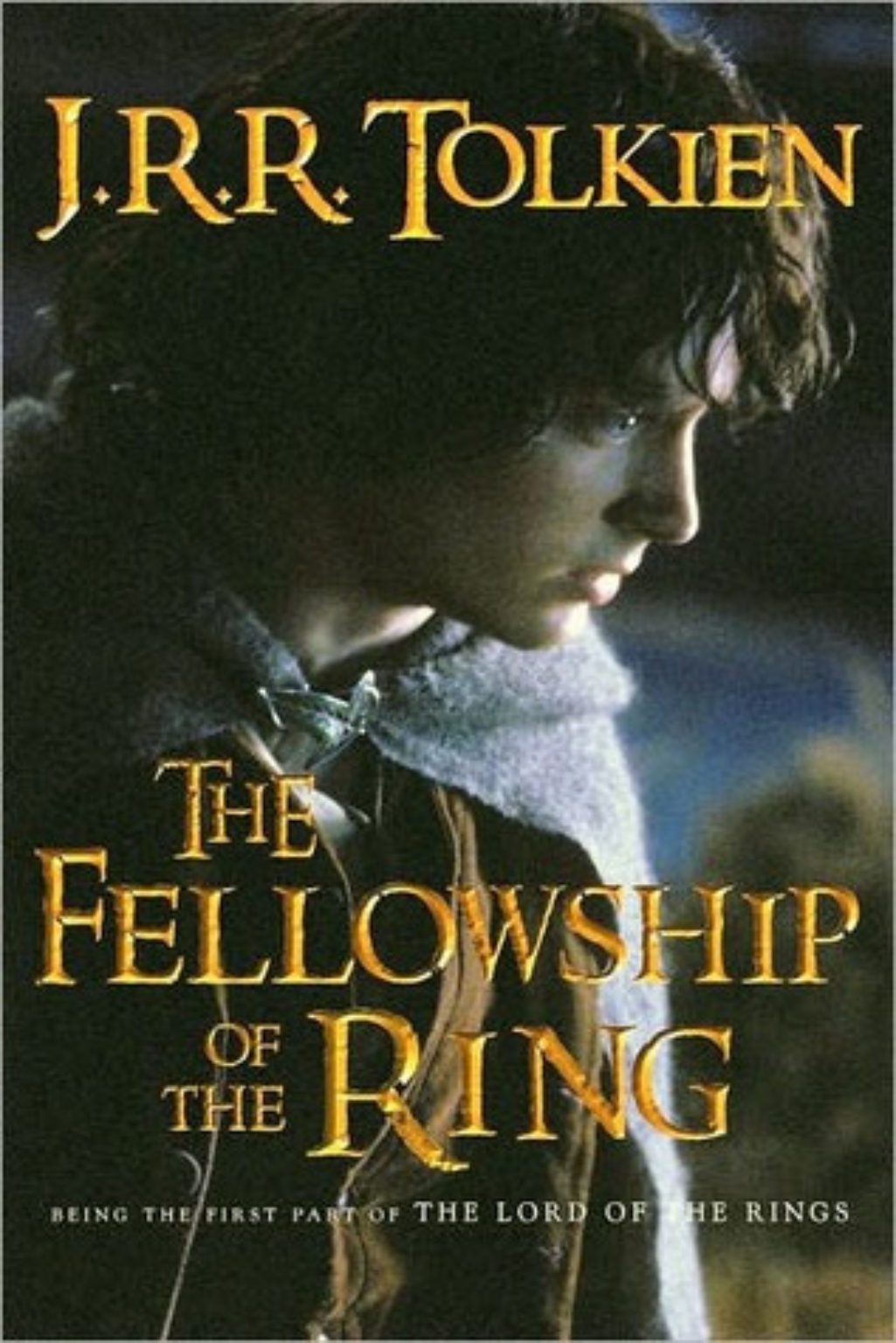
Review: The Fellowship of the Ring by J.R.R. Tolkien

There are books that are popular, books that are well-regarded… and then there are books that reshape the very fabric of literature.

J.R.R. Tolkien’s classic “Lord of the Rings” trilogy is in the third category. And while “The Fellowship of the Ring” starts off with the homey pastoral quirkiness from “The Hobbit,” it doesn’t take long for Tolkien to charge into a gripping, sometimes chilling adventure story about the nature of evil and the strength of a little hobbit to defeat it.

We open some sixty years after the events of “The Hobbit” – Bilbo Baggins is older, not much wiser, substantially wealthier, and quite eccentric (one not-so-affectionate nickname is “Mad Baggins”). He has also adopted his bright young cousin Frodo, who was orphaned at a young age and had led a rather fractured life since then. On his 111th birthday, Bilbo suddenly vanishes, leaving behind all his possessions to Frodo — including the golden ring that allows its wearer to become invisible.

Seventeen years later, Gandalf the wizard shows up again on Frodo’s doorstep, and informs the young hobbit that his ring is in fact the One Ring of the Dark Lord Sauron. It inevitably corrupts those who have it, and most of Sauron’s power is invested in it. Trying to deflect danger from the Shire, Frodo leaves with his best friend Sam and his loyal cousins Merry and Pippin. But Frodo has only the slightest idea of the hideous and dangerous journey ahead of him, that will take him across Middle-Earth to the evil land of Mordor.

Many fantasy cliches were spawned from this book, although obviously they weren’t cliches when Tolkien used them. Orcs, elves, dwarves, halflings, sprawling medieval kingdoms, dethroned kings, gray-bearded wizards and evil Dark Lords. But no one will feel that these are stale; on the contrary, they feel fresh and unused, because that is what they were when the book was first penned.

Narrative-wise, this book begins on much the same note as “The Hobbit”: it’s lighter and more cheerful, since it opens in the Shire. But darker undertones begin to crop up in the very first chapter, when Bilbo begins clutching at the Ring and speaking in a Gollum-like manner. The pace is pretty slow and gradual until the hobbits reach Bree, at which point it becomes darker, faster and harsher in tone and pace. The matter in it also becomes more mature, particularly in the chilling scenes after Frodo is stabbed by a Nazgul.

One of the things that Tolkien did exceptionally well is atmosphere. With a minimum of words, he conveys the menace of the Black Riders, the beauty of the Elves, the decay of the ancient kingdom of Moria, the mystery of such characters as Aragorn. In some areas, he deliberately didn’t elaborate on the such things as the Balrog, leaving the visualization up to the readers. Another strong point is a sense of epic proportions. Too often a fantasy writer TRIES to write an epic, at the expense of individual character development. Tolkien managed to balance both of them, by focusing on the individuals in the center of epic struggles.

Frodo himself is the quintessential “little guy” hero, one of the last people whom you’d expect to be on a mission to save the world. He’s prone to moods of either cheerfulness or sadness, a little immature and bored at the beginning, but incredibly brave and stout-hearted when the pressure is put on him. He has no astounding destiny or special powers to help him. He’s simply an ordinary person.

We also have Gandalf, who is fleshed out from the pleasantly crabby wizard of “Hobbit” — we see more of his hidden sides and powers here. And Frodo is surrounded by a well-rounded cast of characters, including his loyal gardener Sam and his charmingly sneaky cousins, as well as a rich fellowship of ethereal Elves, mysterious men and doughty dwarves.

Tolkien spins a spellbinding tale, rich in lore and heavy with atmosphere, and the biggest problem with “The Fellowship of the Ring” is that it ends, leaving you scrabbling for “The Two Towers.” A must-read for fantasy buffs.

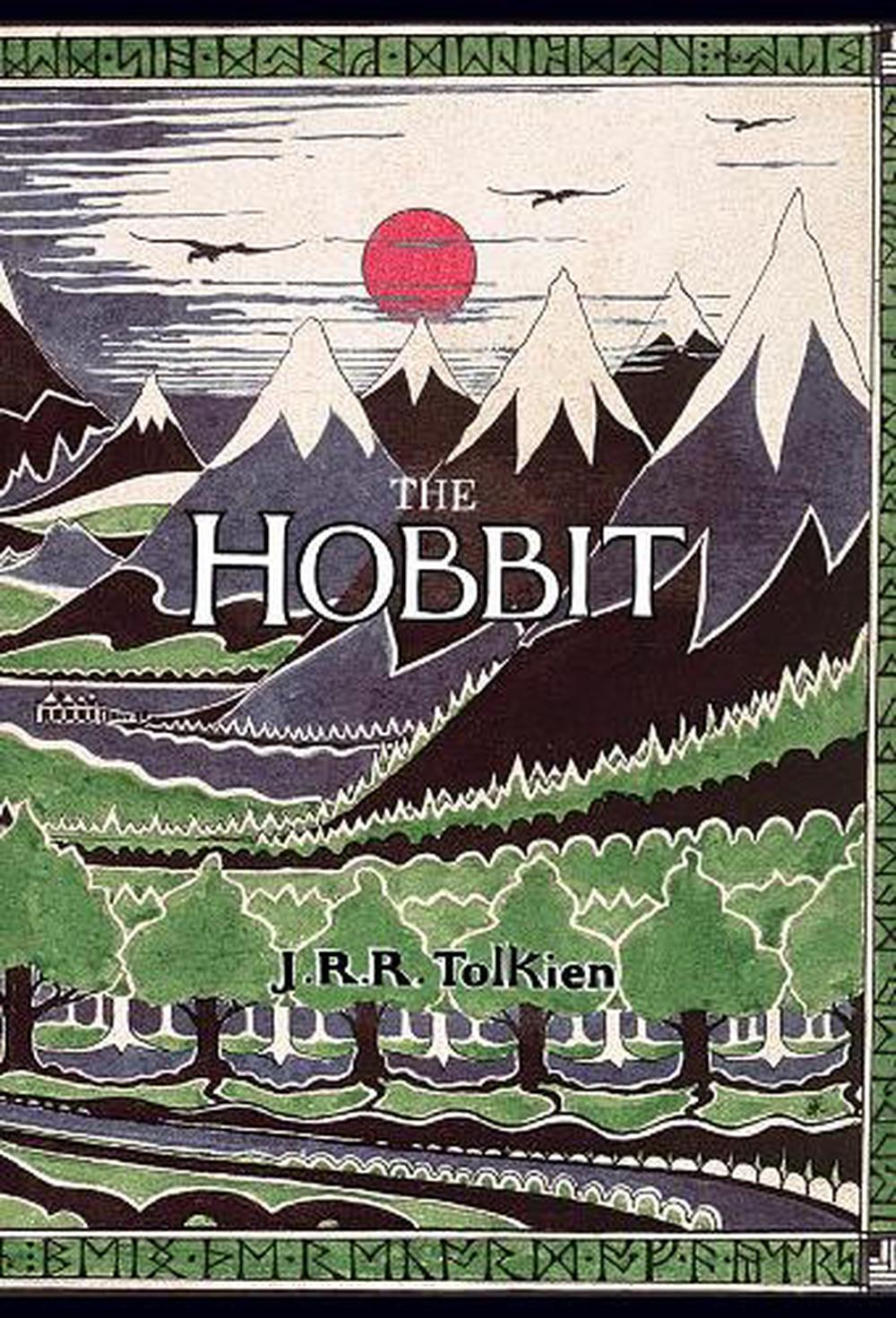
Review: The Hobbit by J.R.R. Tolkien

“In a hole in the ground, there lived a hobbit.” J.R.R. Tolkien first scribbled down the opening line of this book on an extra sheet of paper.

And years before “Lord of the Rings” was seen by anyone outside Tolkien’s circle, Middle Earth was first introduced to readers. “The Hobbit” is simpler and less epic than the trilogy that followed it, but Tolkien’s brilliant writing, magical world and pleasantly stodgy hero bring a special life to this early fantasy classic. And with the first “Hobbit” movie coming out in a few months, it deserves revisiting.

Bilbo Baggins lives a pleasantly stodgy and dull life, in a luxurious hobbit hole under a hill (“it was a hobbit hole, and that means comfort”). He’s the picture of dull respectability. But his life is turned upside-down by the arrival of the wizard Gandalf and thirteen dwarves, led by the exiled king-in-waiting Thorin Oakenshield. They want to reclaim the Lonely Mountain (and a lot of treasure) from the dragon Smaug. Why do they want Bilbo? Because Gandalf has told them that he’d make a good burglar, even though Bilbo has never burgled in his life.

So before Bilbo is entirely sure what is going on, he is being swept off on a very unrespectable — and dangerous — adventure. The quirky little band ends up battling goblins and spiders, nearly getting eaten, and imprisoned by Elves, while Bilbo finds himself in possession of a magic Ring from the treacherous Gollum. But even with a magic Ring, can he defeat a monstrous dragon and win a war against multiple enemies?

Tolkien had been crafting his mythos of Elves, Dwarves, Wizards and ancient Men for years before he ever came up with Bilbo’s quest. But it’s fortunately that he did, because while “The Hobbit” is overshadowed by the epic sweep of “Lord of the Rings” and the “Silmarillion,” it’s still an entertaining story that lays the groundwork for his more famous works — especially the magical Ring that Bilbo finds in Gollum’s cavern.

Tolkien’s writing is swift, light and full of songs and poetry-laden descriptions, such as interludes in the shimmering, ethereal Rivendell and the cold, terrible Lonely Mountain. The pace in this is much faster than in most of his other works — not surprising, when you consider it was originally a bedtime story for his children.

Most of the book’s action is about Bilbo trying to keep himself and the dwarves from getting eaten, torn apart, or rotting in elf dungeons, but with some quiet interludes like a night at Beorn’s mountain home. And the last chapters hint at the epic majesty that Tolkien was capable of, as well as the idea that even little people — like a mild-mannered hobbit or a bird — can change the world.

This book also first came up with hobbits — the peaceful fuzzy-footed countryfolk — in the form of Bilbo Baggins. He’s a likable little guy, if the last person you’d ever expect to be a hero — initially he seems weak and kind of boring, but his hidden strengths and wits come up to the surface when he needs to. By the end, he’s almost a different person.

The dwarves are more comical, and the elves more whimsical in this book, but the supporting characters are still impressive — the crotchety, mysterious wizard Gandalf, the dignified, flawed Dwarf king Thorin Oakenshield, and a Guardsman who becomes a king. Even minor characters like Beorn, Elrond and the menacing Smaug are given plenty of dimension.

“The Hobbit” started as a fluke, grew into a bedtime story, and became one of the best fantasy stories in literary history — a charming adventure in the time that never was. Brilliant.

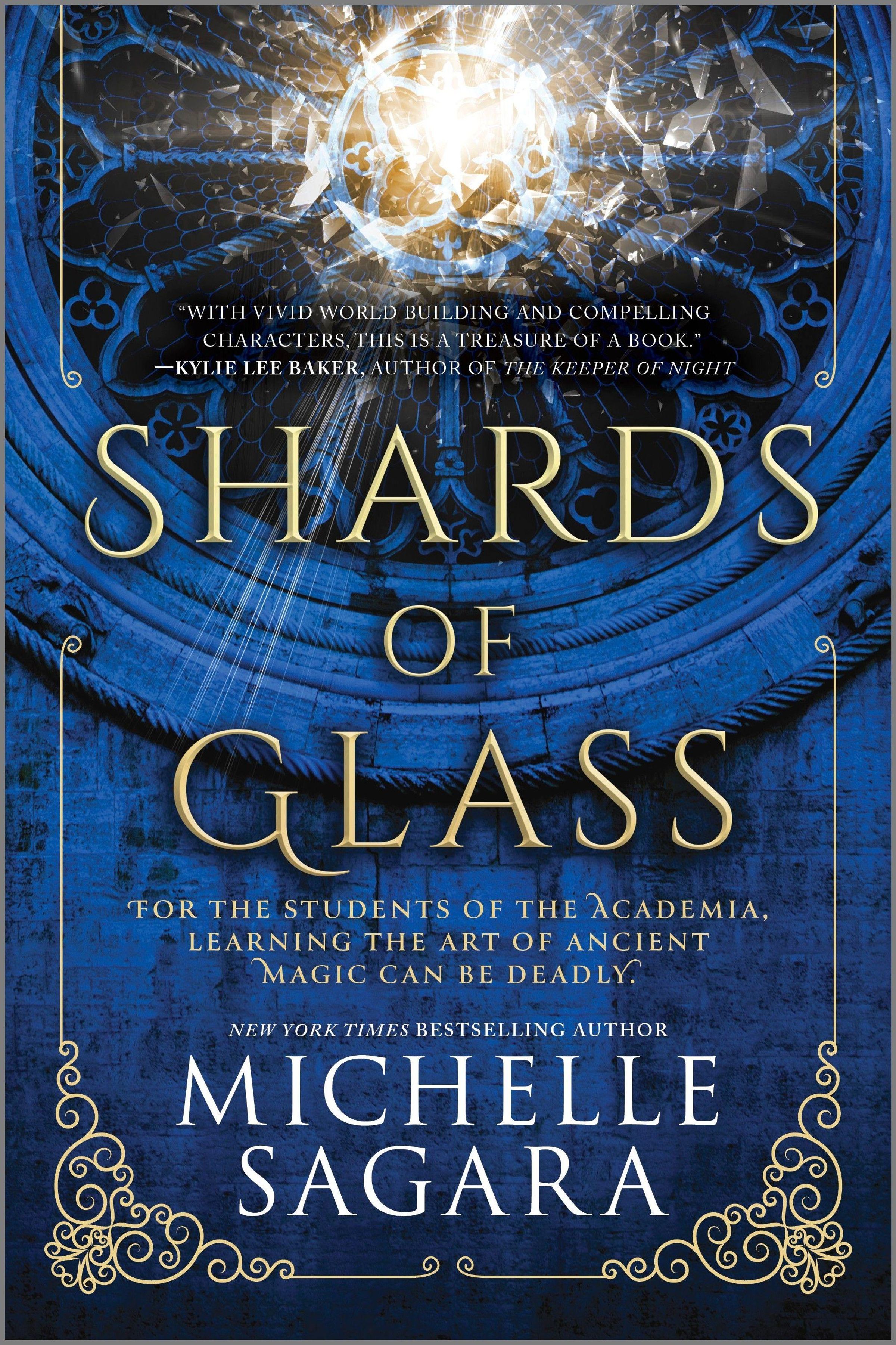
Review: Shards of Glass by Michelle Sagara

Disclaimer: “Shards of Glass” is the first volume of a new series by Michelle Sagara, but it takes place in the same universe as her Elantra series, and harkens back to events from that series. So if you haven’t read that series, you’re going to be confused.

And it seemed to open with a lot of promise, since a magic school opens the doors for a lot of exploration of a fantasy world. And considering the magic school is actually alive, has a dragon for a chancellor and a giant spider for a librarian, “Shards of Glass” seems like it has a good basis for a fantasy whodunnit – but it feels like it gets tangled up in its own mysteries and doesn’t explore the Academia itself very much.

An ancient magic school called the Academia has been brought out of hibernation, and contains new students for the first time in centuries. A young homeless girl named Raven is brought there to find her best friend Robin, who is now a student at the Academia and who thought she would be happy and safe there. Unfortunately, she arrives just in time for a murder – and discovers a piece of glass under the body. In case you’re wondering, Raven collects pieces of glass, metal, and whatever other “treasures” catch her fancy.

But this is no ordinary glass – not only was it invisible before Raven picked it up, but it burns the hands of the Academia’s avatar, Killian. And as more mysterious murders pile up, Robin and the faculty of the Academia discover more mysterious, extremely dangerous glass and metal. They also have more questions about exactly who Raven is and what powers she has, as she might be the key to figuring out exactly what is trying to destroy the Academia.

The Academia itself is perhaps the weakest element of “Shards of Glass” – precisely because we don’t know much about it. Despite being a school of magic, we only meet a few students, don’t know much about what they teach, and don’t know much about daily life there. Michelle Sagara seems more intrigued by the idea of a living campus and immortal library being infiltrated by inexplicable powers. Fair enough, it is interesting. But it feels like we don’t know the Academia enough to worry about its possible destruction.

Instead, Sagara focuses on the whodunnit aspects of the plot, both the murderous and the magical. Her writing is solid and fairly atmospheric, although the characters tend to repeat things a lot (such as the glass not being visible until Raven got it). It’s only at the two-thirds mark that things start to coalesce and the many oddities – both with Raven and the attacks – are given some kind of answers, and the tension amps up as we find out more about what’s going on.

Raven herself is an interesting character – she has some traits in common with autistic people like highly individual priorities, issues with communication and single-minded focus. Yet it becomes clear soon after that her traits are the result of something else, and she herself isn’t what she seems. Robin seems like a fairly generic character, but similarly we learn that he’s not what he seems. Then there’s the eccentric Barrani Terrano, the draconic chancellor, the temperamental professor Larrantin, and the giant spider-librarian Starrante.

“Shards of Glass” takes a while to pull itself together, but once it does, Michelle Sagara’s spinoff book has some truly gripping twists and developments. For fans of her Chronicles of Elantra series, this would be a treat.

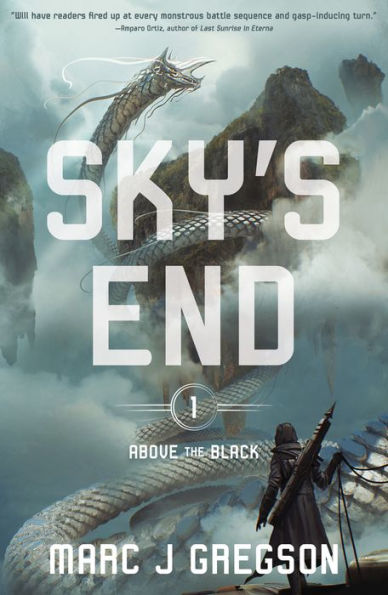
Review: Sky’s End by Marc J. Gregson

Note: I received a free copy from NetGalley in exchange for an honest review.

The Skylands make for some interesting world-building – vast floating islands, vast metal-plated sky-dragons, and seeming nothing below. 

But the biggest danger might come from your fellow trainees and/or friends in “Sky’s End,” the first book in a new sci-fi series by Marc J. Gregson. It’s reminiscent of books like Pierce Brown’s “Red Rising,” where tragedy hardens and propels a young man into seeking power, even as Gregson’s spare but evocative prose propels the story into a more epic, suspenseful territory.

After his uncle murdered his father, Conrad and his mother were reduced to Lows, living in grinding poverty while he tried to scheme a way to get his sister back from their uncle. But when his mother is killed in a gorgontaun attack, he decides to do the unthinkable: he will become his uncle’s heir by entering the Selection of the Twelve Trades, attain greatness in the Meritocracy, and be able to get in contact with his sister.

Turns out, Conrad is Selected for the most dangerous Trade: Hunter. Hunters dedicate themselves to hunting and killing gorgontauns, then harvesting what they need from the corpses. To make things even worse, his large, violent arch-nemesis Pound has also been Selected, and he’s just as hungry to Rise as Conrad is.

The first big challenge of these Hunters-in-training is the Gauntlet, a rigorous gorgontaun-hunting expedition that puts the noobs in command of their own vessels. Conrad quickly finds himself the lowest on the totem pole, serving first Pound and then the vicious, manipulative Sebastian. But he quickly discovers that Rising may not be the biggest problem he’ll face, as a new threat looms over the Gauntlet – one from a place he never dreamed existed.

“Sky’s End” uncoils its world-building as the story unfolds – at first we’re just introduced to floating islands and a society based rigidly on one’s ruthless ability to “rise” at all costs. But as the story unfolds, Gregson scatters in elements that raise questions about how this world came to be, such as the matter of how the islands float and whether the gorgontauns and other metal-plated predators are a natural part of the ecosystem.

All this is woven through a well-paced, brisk story with leanly-muscled writing reminiscent of Pierce Brown for a younger audience. Gregson also juggles various subplots and shifting character relationships, with people becoming hostile or friendly based on circumstances. At the same time, he spatters it with some solid action scenes, usually involving gorgontaun attacks on a wooden airship, and weaves in a brewing conspiracy that threatens the Skylands.

Conrad is a pretty complex hero as well. After his mother’s death, he’s a hardened, coldly-determined lone wolf who sees everyone else as obstacles to his rise to the top, but some of his fellow trainees and choice criticisms by one of the older Hunters forces him to see that nobody can rise if they isolate themselves. He doesn’t instantly become a “friendship is magic” type, but he does begin balancing human friendships with necessary political alliances and plots. And the supporting cast is pretty well-developed, including the brutish Pound, the mysterious Bryce, quiet mastermind Sebastian, and so on.

“Sky’s End” is a clever, complex skypunk novel that weaves solid world-building into a complex, well-written thriller – and it leaves plenty of space for further adventures. Definitely a good read.

Review: The Dark Is Rising Sequence

The fantasy genre has always had a strong connection to Celtic mythology and British folklore, especially if you can somehow weave Arthurian lore into it. And nowhere are those bonds more evident than in Susan Cooper’s “The Dark Is Rising Sequence,” five timelessly lovely books about an ancient war between good and evil that centers on a small group of children. It sounds simplistic, but Cooper’s haunting writing and masterful command of atmosphere is unparalleled.

In “Over Sea, Under Stone,” the three Drew children come to stay with family friend Merriman Lyon. While messing around in his attic, they discover an ancient treasure map that leads to a hidden grail… if they can figure out what the map’s writing and symbols mean. However, they soon discover that they are not the only ones looking for the grail – three sinister people are also in pursuit, and they will do whatever it takes to claim the prize.

“The Dark Is Rising” shifts its focus to Will Stanton, whose wintry eleventh birthday brings about a terrible and beautiful change. He learns from Merriman that he is the last of the immortal Old Ones who are fighting the evil Dark, and as the power of the Dark grows, Will must gather the six Signs that can stop them. But he soon learns that he is not the only one in danger – the Dark is threatening his beloved family as well.

“Greenwitch” brings together the Drews and Will Stanton at a seaside town in Cornwall, where the grail from the first book has been stolen. Will and Merriman work on Old Ones stuff, Jane is haunted by nightmares about the Greenwitch, a symbolic weaving of branches and leaves cast into the sea, and a sinister artist captures Barney. But the Greenwitch is not just a tangle of sticks – it’s alive with wild magic that neither Old Ones nor the Dark can control.

Then there’s “The Grey King,” which won a Newbury Award. An amnesiac Will is sent to Wales to recover from a severe illness, where he meets the “raven boy” – an albino boy named Bran – and a dog with “eyes that see the wind.” Will must lead Bran into a closer connection with the Old Ones, and uncover a hidden treasure for the Old Ones. But when an accident befalls the dog, Bran is angry with the Old Ones – until the truth of his past comes to light.

Finally, the battle between good and evil climaxes with “Silver On The Tree,” in which Will receives visions and messages from Merriman, telling him that the final clash between the Dark and the Light is nigh. But while the Old Ones are almost ready, they don’t have the power of the Lady. For the sake of the world, he must join forces with the Drew children and Bran, and make their final stand against their mortal enemies.

Susan Cooper’s writing in “The Dark Is Rising Sequence” is the kind that comes around once in a generation – it’s lyrical, subtle, elegant and nuanced, able to switch effortlessly between family squabbles and hauntingly eerie glimpses of a whole other world. She’s at her weakest in “Over Sea, Under Stone,” but even then the book isn’t actually bad – just not as brilliant as the other books. It’s an enjoyable treasure-hunt/fantasy adventure.

She also weaves in a lot of Celtic mythology – primarily Welsh, such as the legend of the Grey King – and Arthurian legend, which add a depth and richness to the story beyond a simple good versus evil conflict. It really gives the story the feeling that it is the natural capstone to countless millennia of magical war, between the starkly evil Dark and the powerful but still very human Old Ones, who are able to make errors and feel sorrow despite their age.

The Drew children initially feel like E. Nesbit characters who somehow stumbled into a late twentieth-century book, but they grow more layered and complicated as the series winds on. Will Stanton is a seamless blend of a clever young boy and a timeless immortal that is both wise and ancient in mind. Overseeing them all is Merriman, an all-seeing guardian who can be alternately dignified and forbidding, or kind and grandfatherly.

With its majestic prose and entrancing, otherworldly characters, the “Dark is Rising Sequence” is a remarkable piece of work, and one that deserves many re-readings. Absolutely captivating, and deserving of its classic status.

Review: Solo Leveling Volume 1 (novel)

In the world of “Solo Leveling,” inter-dimensional gates regularly open up to “dungeons” crawling with strange and dangerous creatures. The only ones who can kill the creatures are hunters, who have awakened powers that let them take down the big bosses.

And out of all those hunters… Jinwoo is the weakest.

Needless to say, there’s plenty of room for improvement for the protagonist of Chugong’s “Solo Leveling” – and even in the brief space of the first volume, he makes quite a bit of improvement. The story thus far is bloody, harrowing, but also somewhat wryly funny – especially when the System intervenes to make life more complicated for the hero.

As mentioned before, Jinwoo Sung is the weakest of the lowest-ranked hunters, able to tag along on only the least threatening missions – and even then, he gets badly hurt. But he has no choice, because he needs the money for his family. When the party he’s with finds a rare double dungeon, Jin-woo is determined to explore the vast, eerie stone chamber filled with statues – and ends up in a nightmare that leaves him alone and dying.

Which is when the System intervenes, healing his body and saving his life. While he recovers, the System gives Jinwoo daily quests (mostly exercise) and the opportunity to level up and acquire new items. Just like a video game. He’s achieving the impossible: becoming steadily stronger, with apparently no limits.

Unfortunately, he soon discovers that even his increased power won’t keep him safe from potential harm in a dog-eat-dog profession, especially when he and another young hunter, Jinho Yoo, sign up for a freelance job posting. The problem is, the guy who’s hiring them, Dongsuk Hwang, is not the genial figure he pretends to be, and the biggest danger may be the other hunters rather than anything inside the dungeon.

The world of “Solo Leveling” is a pretty standard urban fantasy setting. It’s the modern world as we know it, except some people have magical powers and inter-dimensional gates allow them to hunt goblins, giant spiders and snakes, statue-gods, and so on. The most interesting aspect of it is the System that effectively turns Jinwoo into the protagonist of his own personal video game, with all the problems and benefits of that status.

The writing is pretty standard for a light-novel/webnovel’s style, spare and lean with lots of onomatopeia. It feels like Chugong is still building up the plot threads in this volume, since the majority of the story is just devoted to Jinwoo ending up in a nightmarish and life-threatening situation, and then spending a lot of time grinding (which is a bit tedious) and building up his strength. But Chugong has some talent at depicting the raw, wild, desperate interiors of the dungeons, and the monsters in them.

Jinwoo is kind of a mixed hero – at the story’s beginning, he’s courageous, unselfish and quick-witted, but still petrified of dying and acutely aware of his almost comical weakness. However, he becomes a lot colder and less likable as the first volume winds on, after he comes to the conclusion that all people are cowardly backstabbers. Hopefully the presence of Jinho – a golden retriever of a rich boy who constantly addresses him as “boss” – will mellow him out in subsequent volumes.

“Solo Leveling Volume 1” has some growing pains, but it’s an entertaining foray into a series with plenty of promise, solid writing, and a hero who wobbles on the edge of antihero. At the very least, it inspires me to check out volume two.

Review: Solo Leveling Volume 1 (manhwa)

In the world of “Solo Leveling,” inter-dimensional gates regularly open up to “dungeons” crawling with strange and dangerous creatures. The only ones who can kill the creatures are hunters, who have awakened powers that let them take down the big bosses.

And out of all those hunters… Jin-woo is the weakest.

Needless to say, there’s plenty of room for improvement for the protagonist of the manhwa adaptation of Chugong’s “Solo Leveling.” The first volume mostly devotes itself to introducing us to the world of hunters and the hideous events that lead to Jin-woo’s chances to improve himself, with a terrifying and bloody series of challenges at the center of the story. The artwork is half the reason to see this – dark, gloomy and beautifully detailed.

As mentioned before, Sung Jin-woo is the weakest of the lowest-ranked hunters, able to tag along on only the least threatening missions – and even then, he gets badly hurt. But he has no choice, because he needs the money for his family. When the party he’s with finds a rare double dungeon, Jin-woo is determined to explore the vast, eerie stone chamber filled with statues, in the hopes that he can scrounge up a little money.

But then the statues come to life and start killing the party members, including a vast “god” statue that has a very specific list of demands. Unfortunately, those commandments are difficult to decipher, and more and more hunters lose their nerve – leading to them being vaporized or squashed into red smears. To survive this nightmarish scenario, Jin-woo will need more than his wits. He’ll need a System, and he’ll start grinding like a pro if he ever wants to get stronger.

The first volume of “Solo Leveling” is dominated by the adventure in the double dungeon, and the entire eerie, bloody adventure is explored in great detail. It’s genuinely nerve-wracking to watch the hunters dwindle as the adventure goes on – especially as some of them turn on each other, lose limbs or panic and try to escape on foot. The fact that it’s overseen by a creepy, sadistic stone “god” with a toothy grin makes the whole thing even more eerie.

And the story is brought to life by the artwork of Jang Sung-rak (aka Dubu), who used color exceptionally, painting the god’s chamber in stark, ghostly, cold blues and the regular world in warm, sunlit tones. The artwork is also very detailed and expressive, lingering on the characters’ faces to show their terror, tension, eagerness and apprehension, and even brief bursts of action (like the murder centipedes in the desert) are wonderfully dynamic.

We also have a good introduction to Jin-woo, who seems like a vividly realistic character – he’s courageous, unselfish and quick-thinking (he unravels all three commandments without help), but still petrified of dying and acutely aware of his almost comical weakness. But after the System accepts him as a player, we see him starting to branch out into becoming stronger, whether it’s racing laps around the hospital or venturing alone into a new dungeon.

The first volume of “Solo Leveling”‘s manhwa adaptation is a nail-biting experience that flies by quickly, before introducing you to the central conceit of the series – and it promises to get more interesting as Jin-woo levels up.

Review: Guillermo del Toro’s Pinocchio

The year 2022 was a weird one. For some reason, there were three different Pinocchio movies released to the public: one so bad it was unintentionally funny (the Russian one), one so bad it was just painfully bad (the Disney one) and one that was… sublime.

The last one – the one that people actually wanted to see – was the Oscar-winning stop-motion adaptation by the magnificent Guillermo del Toro, which reimagines the tale during the rise of Italian fascism. Despite the grimness of that setting, it’s the “Pinocchio” that you would expect from del Toro – darkly exquisite, whimsical in an disarmingly alien way, and bittersweet in nature.

During World War I, talented woodcarver Geppetto loses his beloved son Carlo to a bomb. After many years of loneliness and grief, he drunkenly chops down the tree that grew over Carlo’s grave, and carves it into a wooden puppet that looks like a young boy. Then a blue, winged forest spirit decides to grant life to the puppet, and enlists Sebastian, the memoir-writing cricket living in his chest cavity, to guide and help the wooden boy.

But navigating life is difficult for Pinocchio, since Geppetto isn’t sure what to do with a spontaneous and overly-inquisitive child that causes trouble wherever he goes. The wooden boy becomes a circus performer to earn money for his father, and soon discovers that he is immortal – every time he dies, he comes back from the afterlife, albeit a little later each time. This attracts the attention of the Podestà, who wants him trained as a soldier for the ongoing war with the Allied Forces. But Pinocchio’s only goal is to protect his father.

Guillermo del Toro’s quest to make this film stretches over more than a decade, and unlike Disney’s crassly soulless remake of their own classic property, it overflows with heart, passion and bittersweet beauty. It’s also a story that rings deeply with Guillermo del Toro’s unique style and sensibilities, from the reframing of the narrative against the rise of Italian fascism (Pinocchio personally offends Benito Mussolini) to the mixture of darkness and whimsy (the eccentric designs of Death and the Sprite, who have extra eyes, horns, snake body parts and other such parts).

The darkness/whimsy is due to del Toro and Patrick McHale (responsible for the enchanting “Over The Garden Wall”), weaving together themes of paternal love, mortality, freedom, grief and self-sacrifice. But it also has lighthearted scenes like a newborn Pinocchio wheeling around causing chaos in Geppetto’s home. The entire story is rendered in absolutely beautiful stop-motion, which still manages to have a luminous quality that swings between the ethereal and the grounded.

Gregory Mann is absolutely charming as the titular character, capable of depicting Pinocchio throughout his entire journey. There’s also a superb cast including Ewan McGregor as the erudite insect; David Bradley as Geppetto, who learns to love his new (possibly reincarnated) son; Tilda Swinton as the ancient spirits of death and life; Ron Perlman as the cruel fascist official who wants Pinocchio to be a child soldier; and a number of other like Christoph Waltz, Cate Blanchett, Finn Wolfhard, and so on.

Guillermo del Toro’s “Pinocchio” is not only a charming, timeless stop-motion tale, it is also a heartwarming example of when passion and art triumph. Bittersweet, whimsical and enchanting.