Women and “The Thing From Another World”

The Thing From Another World is usually dismissed as the “original” version of John Carpenter’s The Thing, and considered to be an inferior adaptation of the original short story. After all, 1950s special effects were simply not up to the task of making a shapeshifting monster, and the direction of most 1950s movies cannot measure up to one of the greatest horror/sci-fi movies of all time.

But despite the carrot monster, I do think this is a good movie seen on its own merits. Not because the story is particularly interesting or unique as 1950s sci-fi goes, but because of the way its characters are presented.

Specifically, the female characters.

The 1950s weren’t the best time for female characters in movies. Not saying they were all bad, because the existence of this movie clearly shows that they weren’t. But there were some extremely misogynistic attitudes in many movies that went unchallenged. These weren’t even hateful in many cases – some of them were just people who couldn’t break out of their mindsets, like in Forbidden Planet or It: The Terror From Beyond Space.

So it’s worth noting that The Thing From Another World has a pretty egalitarian approach to its characters, and treats the women with an impressive level of respect. The most basic level is just the fact that they’re there at this scientific/military outpost, holding important positions. And at no point do they fetch coffee for the menfolk, on the assumption that men will turn to sea foam if they make their own food.

But that isn’t enough to really earn my respect. It’s more that the women and men interact casually as equals – the men don’t treat the women with the casual condescension often found in old movies. In fact, they banter and pal around with the female lead in the same way they would with a male character, including when she teases her male romantic partner.

Speaking of which, the romantic subplot is also refreshing. Rather than a macho hero sweeping a woman off her feet, the two have a cute backstory that involved him falling asleep during a date, and being kind of embarrassed by it, especially since she thinks it’s so funny. It feels much more organic and realistic, and less like a personal fantasy.

Furthermore, the women don’t end up as damsels. Despite the DVD cover, there are no screaming women in peril here… or at least, no more peril than the men are in. There is a woman threatened by the monster at one point, where she is forced to hide behind a flaming mattress, but she isn’t screaming and she actually chose to take this perilous position rather than being transparently corralled into it by the screenwriter so the men can save her.

So while The Thing From Another World isn’t a standout as old sci-fi goes, it does have some qualities that bring it above the herd. It can’t measure up to The Thing, but it’s still worth seeing.

Recommendation: Diana Wynne-Jones

I feel like fantasy author Diana Wynne-Jones doesn’t get as much love and attention as she deserves.

Oh, other authors often laud her, like Neil Gaiman, and Studio Ghibli has adapted two of her books into animated movies (one amazing though a loose adaptation, one mediocre). But she’s not a household name despite the charm and imaginativeness of her books, and the movies based on her books are more associated with Studio Ghibli than the original author.

She did experience something of a renaissance several years ago during the Harry Potter craze of the late nineties to late aughts – it was a time when people were hopping on the bandwagon of children’s/young-adult’s fantasy stories, hoping to strike Potter gold. Some of these would-be franchises were good (Artemis Fowl), and some were bleeding-from-the-eyes-bad (G.P. Taylor’s Christian fantasies presented as Potter alternatives).

Diana Wynne-Jones seemed like a natural choice to reprint and promote – she had already written a huge number of fantasy stories, often involving witches and wizards. She was also British, and she had a great deal of the same charm of style and setting that had been presented in Rowling’s books. And she was imaginative – arguably much more so than Rowling – with multiverses, dimensional hopping, twists and even science-fiction woven into the fantasy.

Maybe that’s why she didn’t become as famous as Rowling – her books take more effort to comprehend, and a structure and framework that take more time to comprehend. A school for magic is a little easier to understand than the Chrestomanci universe, which has many different parallel worlds. Or a story based on the ballad of Tam Lin. Or the time-bending antics of A Tale of Time City. Or the plot twists that blow your mind in Archer’s Goon, The Power of Three and Deep Secret.

But obviously, less popular doesn’t mean less good. Jones came up with some wildly clever ideas and plumbed them to their depths, sometimes with clever yet affectionate parodies of the fantasy genre (and many affectionate nods to J.R.R. Tolkien). She was also even better than Rowling at writing twisty mysteries within her fantasy stories.

The Chrestomanci stories are a wonderful series of stories about Christopher Chant, a supremely powerful magician born with nine lives who travels between worlds. He’s not always the center of the stories, because they tend to be focused on the people who become involved with him in these worlds – kids forbidden from using magic, a seemingly ordinary boy whose narcissistic sister is a gifted sorceress, a Romeo and Juliet story, a boy cursed with bad karma, and so on.

Then there are the Magid stories. Sadly, Jones only wrote two of these – Deep Secret and The Merlin Conspiracy, but they are among my favorites. The first one is a bizarre sci-fantasy story set at a scifi/fantasy convention, in which a colorful cast of characters are trying to figure out who the heir of an interstellar empire is. The second is a world-hopping love story between the best character of Deep Secret and a girl from another world, where royalty is magic and a conspiracy may take over magic throughout the multiverse.

I won’t summarize every book she’s written, only say that they involve time travel, Norse gods, a malevolent old woman with supernatural powers, a Goon, a star in a dog’s form, a ghost attempting to solve her own murder, a game diving into everyone’s favorite books, a Celtic-flavored fantasy that I can’t describe without spoiling the twist, and various other things.

So if you like stories with imagination, a dark edge and that clever, slightly quirky Britishness, than her books are a must-read.

Zack Snyder’s Justice League: Part 1 (Spoilers)

Since the Snyder Cut of Justice League is a mammoth four-hour-long expanse, I’ve decided to watch it in sections. This evening, I finished watching the first part of it, with no particular expectations – I’ve been avoiding Youtube videos about it for the past few days, so I could come in with fresh eyes.

And I can definitely say: it’s much better than the Josstice League cut.

Admittedly that’s a low bar – the theatrical cut of this movie was a mess, a mismatched Frankenstein’s Monster of two clashing styles that managed to make each other look terrible. Also, it didn’t feel very epic. It’s fine to have an individual superhero movie with smaller stakes – see Ant-Man and the Wasp – but for a team-up of A-list superheroes, you need everything to feel grand and massive in scale. Nothing about the theatrical cut felt like the whole world was in danger.

That is very much remedied in the Snyder Cut, or at least the first part of it. Things feel bigger, more intense, more expansive.

Flaws? Well, it’s a bit slow. The first part of the film takes its time and unfolds in a leisurely manner… and sometimes it’s a little too leisurely, such as when the Scandinavian women sing, or when Batman is very slowly crossing a mountain range. And yes, if Zack Snyder’s staples like slow-mo bother you, gird your loins, because he does use it.

However, most of the stuff I can note are positives. Almost everything in this cut was done better than in the Whedon cut – sometimes the changes weren’t drastic, but they were notable.

For one thing, there were a lot of smaller scenes that were inserted that make it flow more effectively, such as when the Amazon mother-box first activates – we see one of the Amazons reacting to it and investigating it, before ordering that Hippolyta be told. Or Cyborg sensing the mother-box in his closet activating.

Other scenes were clearly reshot, and frankly they seem a lot better than the ones in the Josstice League version. Batman’s entire conversation with Aquaman has a lot more weight – when Aquaman says “You’re out of your mind, Bruce Wayne,” there’s a subtle hint of menace there rather than humor. And thank God, Batman isn’t spouting Whedon dialogue. Batman should never say Whedon dialogue. Ever. In any situation.

One of the most notable is the scene where Wonder Woman defeats the terrorists and saves a bunch of schoolchildren. The scene is longer, more intense, and Diana feels more like she’s actually angry and disbelieving that people could behave this way. Furthermore, instead of simply throwing the briefcase up in the air, she actually flies through the ceiling a considerable distance, and then throws it. It makes the situation seem more dire that the explosion was so massive.

Furthermore… she seems like more of a badass here, fighting more effectively, flying into the air, and using her superpowers, including that bracer-clashing move of hers. Yet at the same time, the Snyder Cut also highlights her compassion by having her immediately reassure the children and ask everyone if they are all right.

Speaking of how women are depicted, it’s also interesting to me that Zack Snyder presents the Amazons in a far less sexualized manner than onetime feminist icon Joss Whedon, including removing the implied rape threat. Something to think about.

Actually, he depicts the Amazons better in almost every way. In this movie, they’re fiercer, more effective, and the enemy they face is much more imposing, so that their losses feel more earned. Having them all roar “We have no fear!” is a pretty awesome moment, even though you know they are afraid. The fight with Steppenwolf is much more destructive and epic – including a whole temple falling into the sea – and Snyder pauses to let their losses sink in before launching us back into some pretty awesome fight scenes.

Speaking of Steppenwolf, he looks a thousand times better here. This is a CGI render that someone actually finished, and he doesn’t just look like a weird gray guy in a giant hat. He’s bigger, scarier, his voice is deeper and more distorted, and he’s covered with an armor of living needles.

The movie has also been rescored, and honestly I prefer it. The scene of Lois visiting Superman’s memorial feels poignant and heartrending in a quiet, unobtrusive way, without being too on-the-nose with people doing criminal stuff or holding up signs saying “I tried.”

Anyway, those are my thoughts on the first part of Zack Snyder’s masterwork. It’s good, better than I expected so far. I’m hoping it will continue to entertain me. To be continued!

Recommendation: Ghost Hunt

Like many people, I like anime. I’m not one of those people into super-obscure or niche stuff, but I enjoy anime like My Hero Academia, Bleach, Inuyasha, Fruits Basket, Fairy Tail, etc. I used to be into Naruto and Dragonball, until I realized that both of them were ass-numbingly long and I didn’t really like the characters very much.

And one of the lesser-known anime I love is Ghost Hunt, a series that adds a more professional, sometimes more factual aspect to the usual supernatural shenanigans of Japanese urban fantasy. It gets a little silly towards the end (one of the final episodes has a Catholic priest PUNCHING GHOSTS), but it’s an overall enjoyable series that mingles urban fantasy, horror, and a hint of romance.

It follows a young girl named Mai, who accidentally runs into a supernatural detective agency who are investigating a supposedly-haunted building at the school she attends. She accidentally wrecks some of their equipment and injures the assistant, so she ends up working for the paranormal investigator Kazuya Shibuya, whom she nicknames “Naru” because she thinks he’s a narcissist. There are also three other exorcists called in: the not-very-monkly Buddhist monk Hosho, the rarely-successful Shinto shrine maiden Ayako, and the perpetually mellow Catholic priest John Brown. Oh, and there’s a TV medium named Masako, who’s condescending and nasty and can’t take a hint that a man is disinterested in her, and Naru’s assistant Lin, who’s kind of weird and distant from Mai.

As a group, they investigate a number of paranormal cases, including a haunted doll and a child being terrorized, the seemingly-haunted school, a strict school where a girl threatened to curse people, a school game with potentially deadly consequences, a labyrinthine house, and a family being haunted by ancient spirits. There are also some slightly lighter stories, one of them about a child’s spirit possessing Mai, and a ghost that splashes water on couples. The last one is more funny than spooky.

Be forewarned: this series is in fact quite horrific at times, ranging from merely being uncomfortably eerie to having bloody ghosts emerging from walls in a cursed mansion. It’s also a slow-burner for most of its run, with long stretches of talking about equipment, psychic phenomena (and sometimes the fakery of it), psychology, Japanese folk magic, and so on. It’s not boring – there are strange occurrences fairly frequently, and the banter between the characters keeps the energy moving – but it’s not a big splashy anime. It takes its time, as it is a mystery show of sorts.

Youtube Recs: Townsends

Over the last year, I’ve really fallen down a rabbit hole of historical food videos on Youtube, starting with the wonderful Tasting History show, and the Mrs. Crocombe videos that recreate Victorian recipes. But another show with a particular focus is the Townsend’s historical cooking channel.

https://www.youtube.com/channel/UCxr2d4As312LulcajAkKJYw

This is the channel belonging to Jas Townsend and Sons, a company in Indiana who sell 18th-century reproductions of clothes, cookware, food, and many other things. It’s not exclusively devoted to cooking – there is stuff about building a log cabin, not getting your panties in a twist over ephemeral politics, and so on – but a large amount of it is devoted to exploring the cuisine of 18th-century America, ranging from the culinary efforts of the enslaved to the recipes inherited from England.

Townsend is a very pleasant and soothing person to watch, and he chats with the camera about the historical context of his dishes as he makes them. Part of the appeal is just in how unpredictable and odd these dishes are from when you recreate them as accurately as possible. What was fried chicken like back then? Or mac’n’cheese? What recipes did Martha Washington have? And what is fried lobster like?

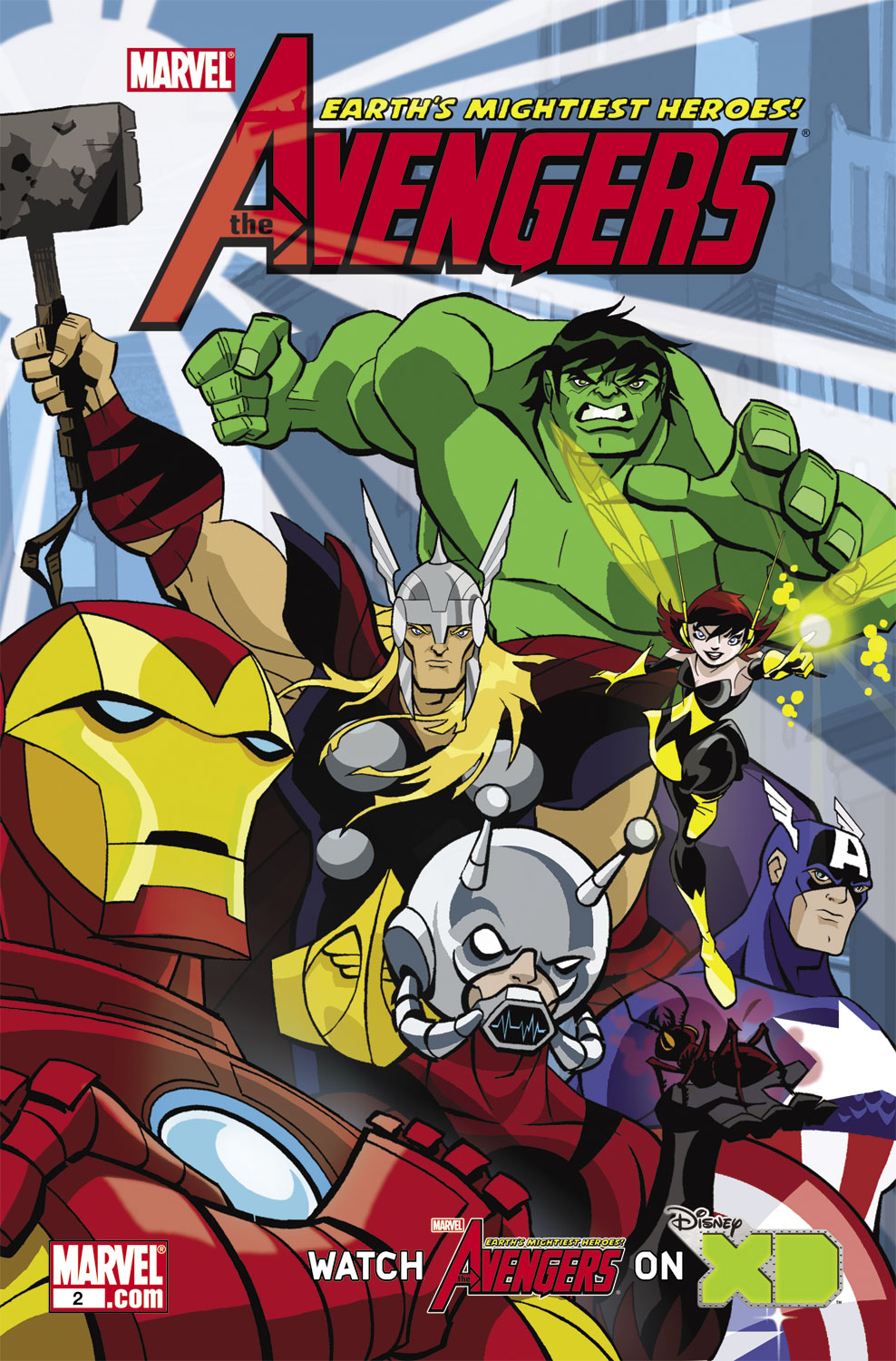
Recommendation: Avengers: Earth’s Mightiest Heroes

The Avengers film series is about as mainstream as you can get today – I could argue that Avengers: Endgame was one of the most anticipated movies of all time.

But back in 2010 the MCU was just getting started, and at that time, we got the best Avengers show – and possibly one of the best Marvel shows – to date: Avengers: Earth’s Mightiest Heroes. While it has some obvious influence from the recent Iron Man movies, this is mostly doing its own interpretation of Marvel’s comics, and it is glorious. It also has one of the most wonderful theme songs of all time. If you don’t believe me, google “avengers fight as one” and check out the music videos people have made.

But aside from the awesomeness of “Fight As One,” this show is amazing. Part of what makes it amazing is that… it isn’t strictly a kids’ show. It’s more a piece of superhero media that happens to be appropriate for children, but it’s serious and intricate enough that adults will probably enjoy it just as much.

The first half of the first season is pretty much about bringing the team together “as one.” You’ve got Tony already established as Iron Man, since the Iron Man movies had already put him in the public consciousness. But it gradually introduces us to The Hulk, Hawkeye, Ant-Man and the Wasp, Black Widow (who is a recurring ally/enemy rather than a full-on Avenger), Captain America, Thor, and sometimes Black Panther.

And for big Marvel buffs, it does indeed have characters that Marvel didn’t have the movie rights to in 2010, like the Fantastic 4, Wolverine, Spiderman, etc, as well as less prominent Marvel characters like Iron Fist and Power Man/Luke Cage, who are absolutely wonderful and deserved their own spinoff show. And it had the Guardians of the Galaxy before that group became big, as well as now-established characters like Vision and Miss Marvel (now known as Captain Marvel, and much more likable and relatable than in the live-action film).

Anyway, after a supervillain nearly destroys New York, Tony Stark decides to assemble the Avengers, a team that can recapture the 75 superpowered bad guys who have just escaped from SHIELD. So they all move into his urban mansion, and have some personal friction with each other. Just because they’re heroes doesn’t mean they all get along at first – the Hulk is grumpy and a little paranoid, Cap and Tony have differing ideas about technology and what’s important, Ant-Man despises Tony because he fights instead of rehabilitating criminals, and Hawkeye is a little pissed at SHIELD because he was framed.

But those rough edges, that friction, those personality quirks are what make the characters feel so likable and real. They’re not perfect, but they are likable, relatable and heroic. When they’re hanging out, or having conflicts, or making jokes, it really feels like they’re reluctant but fast friends.

The story arcs that follow include a lot of really fascinating conflicts, like a time-warping conflict with Kang the Conqueror, a gamma dome that mutates everyone inside it, invasion by the Kree, the Masters of Evil, the murderous android Ultron, a trip to Thor’s home realm of Asgard, etc. The second season has an overarching conflict with the Skrulls, who sow confusion and mistrust among Earth’s mightiest heroes and make things a lot more difficult for them, both amongst each other and towards the world.

Sadly, Earth’s Mightiest Heroes ran for only two seasons, when it was clearly laying out plotlines and groundwork for much more. Apparently Disney didn’t want a story with good writing, intelligence, all-ages appeal, great stylized animation and well-developed characters, so they gave us the bland, simplistic, messy and juvenile Avengers Assemble instead. Bleah.

So yeah, if you can find this series, definitely watch it. It’s packed with plot, excellent writing, and it’s as rewarding a watch for adults as for kids.

YouTube Recs – Ordinary Sausage

Let’s sausage!

I love sausages. Make your sex puns now, get them out of the way. I will try all sorts of sausages, with all kinds of fillings, though my favorite is and remains Italian hot sausages.

Which brings me to Ordinary Sausage, one of the oddest and yet most hypnotic channels you will find on Youtube. It belongs to a very odd man who sounds like Peter Griffin, and who owns a meat grinder and a sausage maker. With that meat grinder and sausage maker, he endeavors to create sausages both divine and satanic, sausages that no sane mind would ever think of.

Sometimes he makes sausages out of various animal organs. Sometimes he makes them out of liquids. Or full meals from restaurants. Or just things like lobster or candy corn that don’t belong in a sausage casing, yet somehow end up in there.

And yes, the water sausage, which actually went viral. Why that one? I don’t know.

I find water sausage and air sausage and ice sausage to be the least interesting videos he’s done, because… you know what they taste like. There’s no suspense, no mystery. As opposed to, “What will a Slim Jim sausage taste like? Or a candy apple sausage?” where you really do not know what the answer will be.

And these videos are, to put it simply, quirky. It would be pretty dull if he just ground up ingredients and put them in a sausage, but he has funny running gags, rants, visual embellishments, songs, and of course sometimes his grinder just gives up and stops working right because he fed it nuts or a fish skeleton.

Once I found this man’s channel, I spent the next few hours watching every sausage tutorial he had. Hopefully you’ll do the same.

LET’S SAUSAGE!

Tasting History – Youtube Recs

There are a lot of online cooking shows that focus on foods from other countries, or relatively obscure foods, such as EmmyMadeInJapan.

But I recently found out about a relative new Youtube show called Tasting History, which focuses on relatively obscure dishes… because they’re from centuries or even millennia ago, as well as often from different cultures. Ever had syllabub, a foodstuff that sounds like it was named by a drunken Wolverine? Wonder what King Alfred burned? Want to make super-historically-accurate tortillas? Want to know the authentic way to prepare the drink of Grecian heroes?

And our host doesn’t just show us how to prepare these dishes, he gives the history and context of the dishes, as well as highlighting the obscure ingredients that were common at the time. For instance, in one episode he prepares Parthian chicken, and not only explains the importance of the unusual ingredients like lovage and asafoetida, but also the significance and the societal role of the Parthian empire.

https://www.youtube.com/channel/UCsaGKqPZnGp_7N80hcHySGQ

So give his videos a try, and be sure to subscribe if you like what you see. He seems like a cool guy, and I’m still checking out his backlog of videos.

Recommendation: Murder She Wrote

I have some murky memories of certain TV shows my parents watched when I was very small, and sometimes I didn’t even recognize what these TV shows were until I saw them as an adult, and went “Ah, that’s where I saw it!”

But one TV show I never had trouble identifying was Murder She Wrote, the murder-mystery series that followed English-teacher-turned-mystery-writer Jessica Fletcher. Jessica has to be one of the most prolific writers in the history of literature, because she seems to be writing a new book in almost every episode. She is the Bella Forrest of mystery writing… except I’m pretty sure Bella Forrest is a pen name for multiple people.

Anyway, there were basically two different kinda of MSW mysteries. One kind was that Jessica would travel to some other city, town ranch, archeological dig, convent, billionaire’s mansion, circus, or perhaps stumble across a murder on a plane or bus. And there was an enormous amount of variety in the places she would go, and the stuff she would do. For instance, one episode has her impersonating the almost-victim of a murder attempt, and discovering that the woman has inherited… a brothel. Or she goes to New Orleans and witnesses the murder of a jazz musician. Or she’s at a ski resort where someone is shot with an arrow during a blizzard in mid-jump.

The other kind of episodes are the ones set in Jessica’s hometown of Cabot Cove, Maine. This is your basic small town with a crotchety doctor, eccentric spinsters, sheriffs of varying temperament, gossipy older ladies, a mayor who really contributes nothing, and lots of locals who are just colorful enough to be memorable without being too ridiculous… well, most of the time.

And honestly, as wonderful as the episodes where Jessica goes to exciting places and meets new people are… I always loved the Cabot Cove ones the most. Despite the obvious high murder rate, Cabot Cove feels like one of those cozy places that that would be relaxing and pleasant to live in. Not flawless, but a place where most of the people are pretty nice and likable, and where you could hide from the unpleasantness of the rest of the world.

That is a big factor in why that proposed MSW reboot that was being waved around some years ago was never embraced by anyone. I actually would have accepted a new actress and a new fresh attempt to tell MSW stories if they had kept the core consistent with the older series… but no, they wanted to switch her from Cabot Cove to some large city, and make her a doctor instead of an English-teacher-turned-writer (because… I don’t know, being an English teacher is too stereotypically feminine or something?). Thank God, public disapproval killed that reboot. If you’re going to remake MSW, it has to have Cabot Cove and it has to make her a writer. Those things were the core of Jessica’s character.

Okay, I was slightly incorrect in saying that there were only two kinds of episodes, because admittedly they did switch up the formula every so often. For instance, some episodes featured Jessica “presenting” a mystery starring someone else, either a real mystery that happened to one of her billions of friends or loved ones, or a fictional story she had written. Another episode was revealed (spoilers!) to actually be an elaborate dream that Jessica had when she dozed off at a dinner party, starring the other people at the table.

I will say that it has aged somewhat, especially in how it deals with technology. There are some episodes that deal with the development of CDs, desktop computers, VR video games, and stuff like that, and it’s… kind of quaint. Like “aww, they were just developing email,” and stuff like that. Personally, I can imagine that today Jessica would probably have a trusty smart-phone and iPad with her at all times.

Angela Lansbury is really the reason this show was as good as it was, because… her Jessica is just an incredibly likable person. She’s this very dynamic woman of maybe sixty, intelligent, well-educated, generous, compassionate, funny and clever. It’s always fun to see her navigating the sometimes-insane situations she ends up in, and encountering the weird people that shock her.

Anyway, fans of mystery TV may enjoy Murder She Wrote, if they can enjoy the aesthetics and storytelling of the mid-eighties to mid-nineties. It’s not a perfect show – it had its fair share of bad episodes – but it’s a fun, lovable series for me, and something I return to again and again.

Currently you can watch it free with ads on Amazon Prime and IMDB, so if you are subscribed to that service, I would recommend giving it a look.

Youtube’s Comic Tropes

On Youtube, I’m subscribed to a few comic-book related channels (Linkara, obviously), and I recently stumbled across a guy called Comic Tropes, who does retrospectives, reviews, histories and trope analyses of various comic books. Not just DC and Marvel, although obviously he focuses mostly on those.

He’s got a lot of energy, and he does some fun little self-competitions like when he counts the tropes in a given creator’s comic book, and he drinks something weird whenever an individual trope comes up. In one video, for instance, he drinks different flavors of moonshine. And he’s very fair-minded, such as when he examined whether Rob Liefeld had improved over the years.

If you enjoy Linkara or ComicsDrake or other such reviewers, then please check out this guy, and preferably subscribe.