Every author has a trail of half-finished outlines, ideas or books that just didn’t work out. Books in embryo, which may or may not eventually be finished and released to the public. And apparently Brandon Sanderson is no different… he’s got whole novels that just aren’t published.
I’ve been reading them lately, and honestly, it’s a shame that these books weren’t published and canon to the Cosmere, because they’re pretty good overall. Although I understand why, obviously, Way of Kings Prime isn’t – it’s basically an earlier draft of a now-published novel that is drastically different in form now. It’s interesting as a look into the evolution of the novel we eventually got.
But the other two books are different. One was revised and released as a graphic novel, with some significant changes (such as a supporting character’s gender and family life) and the other just hasn’t been published officially in any form, although as I understand it, the worldbuilding is canon. White Sand takes place on a tidally-locked planet where half of it is in darkness and half in light, and the main character is a very weak sand mage who ends up accidentally becoming the leader of his order. And also they’re on the verge of being disbanded, and most of them have been murdered, and he has to somehow fight with sand-magic without being able to do more than a small amount of it.
The other is Aether of Night, kind of a cross between a Shakespearean comedy and a high-stakes high fantasy. It follows a prince/priest who ends up becoming king when his identical twin brother, who was the actual heir, is killed by mysterious shadow creatures, along with their father and a lot of other people. And those mysterious creatures are constantly invading their country and trying to overwhelm the populace, and they’re associated with a pair of feuding gods.
… and at the same time, there is also this comedic aspect, in that the former-priest-turned-king has to also select a wife from several candidates. They’re from different countries, religions and cultures, with different attitudes towards getting the prize, and some of them have their own agendas, and there are diplomatic repercussions to his choice. So as much as I enjoyed the book, I can see why Sanderson wasn’t really satisfied with the combination of high-fantasy potential apocalypse/Shakespearean comedy. You’re like, the world is potentially ending and over half the population is gonna die… so why are we hearing about some guy trying to figure out which girl he’ll marry?
And I just found out that he has another unpublished book called Dragonsteel, which I do not know anything about and which I now have to read. So stay tuned.
I don’t understand a word of any language spoken in India.
But somehow, that isn’t really a barrier when watching the Village Cooking Channel, a pretty major channel with 26 MILLION followers. Sure, the only part of the video I can really understand is “always welcome you,” but the content is so much fun and so wholesome that it doesn’t really matter.
The contents of the channel are pretty simple: half a dozen Indian men from a rural village go out into a remote field, start a fire, and cook. They cook a lot. They cook very, very large quantities – sometimes it looks like they’re cooking enough for their entire village. Whole goats filled with biryani, five hundred fried chicken legs, giant whole tuna, dragon fruit milkshakes, the world’s largest popsicles, hundreds of quail, and huge quantities of popcorn.
And some of the dishes are either unusual or unknown to American palates – think chickens cooked inside watermelons, soan papdi, goat brains, chicken in bamboo, stingray, rose cookies, goat feet, kizhi parotta, jelly cake, and so on. It’s a fascinating glimpse into how other cultures eat and the wide variety of foods that have developed in India. And despite the frequent deep-frying, most of it is probably much healthier than the average Western diet.
The guys in it are pretty fun to watch – they’re energetic and shout out the names of the ingredients as they prepare the food. They harvest some of it themselves, and so everything they make is pretty much entirely made out of whole ingredients that practically glow with freshness. Even the water looks delicious in these videos. I don’t know how you make water look delicious, but they’ve managed it.
And the best part? After the men have eaten generous portions of the food they’ve prepared, they always give what they haven’t eaten to elderly poor people living in their community. It’s heartwarming to see, and a reminder of what actual organic community looks like.
I didn’t really expect a series about Godzilla to go into detail about the nature of time.
In fact, the series has a distinct lack of Godzilla about 90% of the time, which my brother found to be its biggest flaw – if you’re going into it to watch kaiju punching each other in the face, you will be sorely disappointed. There are kaiju, sure – there are a bunch of pterodactyl-like Rodans, there’s an Anguillas, there are some sea monsters and giant monster-spiders and so on. But they are more like unstoppable forces of nature whose origins and nature are a mystery, and who scare the pants off us feeble humans.
About 90% of the time, the story is divided between dealing with various non-Godzilla kaiju, and examining nonlinear timestreams, such as receiving information from the future, and particles that can’t be detected, and artificial intelligence. It’s a very intellectual series with Godzilla as the primal draw and the ultimate culmination of everything it’s building towards, so if you just want Godzilla in particular punching monsters you are not going to enjoy it. There’s a lot of talking.
Also red dust. Sooooooo much red dust. It makes sense in context.
The rest of the 90% is divided pretty evenly between trying to unravel the mysteries of time and trying to stop kaiju in creative ways. Especially since there are different people with different motives, and different knowledge, sometimes working together and sometimes kind of undermining one another. The story mostly revolves around a small group of oddballs – a nerdy girl majoring in imaginary creatures (now THERE’S a complete sink for your student loans), a crazy old man building a giant robot to save the world (because Japan), and a young man who seems to have a real knack for figuring out the kaiju and programming artificial intelligence.
It also takes notes from Shin Godzilla by having Godzilla evolve through different forms over the course of the series. In fact, sometimes you can only tell it’s him because of that classic Godzilla musical sting. His final form has a mouth that could eat an entire meatball sub in one bite.
Also: my brother noted that the female lead reminded him of Velma from Scooby-Doo… and I kinda see it. Nerdy, clumsy, chin-length hair and glasses, into weird esoteric stuff… she’s like Velma turned into a cute anime girl, only her interest is insects who are their own grandpa instead of the occult.
I’d say that its biggest flaw, aside from a lack of Godzilla, is that it probably takes a few viewings to understand the theories behind it. The concepts and theories are a bit dense at times, and it sometimes treats viewers as if they are already aware of the science, or the explanations sort of dart by so fast that you might not notice.
If you like thinking-style anime like Steins;Gate and a hefty dose of kaiju chaos, then Godzilla Singular Point is something you might enjoy. Even if you don’t know if you might like those things, it’s worth checking out simply because it is such an unusual beast.
I will probably write a full-blown review of this TV series sometime in the future, once I figure out how to summarize fifty plot-packed episodes that bounce around the timeline of almost twenty years.
So, quick sum-up: The Untamed is a Chinese xianxia TV show that became a hit on Netflix because… well, people are starved for good TV, and it’s a good TV show. It’s based on the Mo Dao Zu Shi/Grandmaster of Demonic Cultivation books by Mo Xiang Tong Xiu (pseudonym), which recently got published in the United States. The original novels are part of a genre called danmei, which refers to books aimed at the female reading public that focus on a romantic relationship between two men. But because of Chinese censorship laws, the TV show just has the most intense bromance you will ever find.
The bare-bones summary is that it takes place in an ancient-medieval-styled fantasy world where Daoist magic allows people to have superpowers, fly on their swords, manipulate spiritual energy, and so on. A mentally ill man summons the spirit of Wei Wuxian, who was sort of the bogeyman of the cultivation world. Before he died sixteen years ago, he used demonic magic and rebelled against all the various sects, so they regard him as being a sort of low-level Sauron. Wei Wuxian ends up in the body of the mentally-ill man so he can enact revenge against the guy’s family, and ends up tangled in a weird supernatural mystery. He also reconnects with Lan Zhan, who was his best friend in his old life, despite them having opposite personalities.
It’s a little hard to understand what’s going on in the first two episodes, but it quickly flashes back for about thirty episodes to reveal everything that got the main characters to the present day. Basically, refined uptight boy Lan Zhan despised Wei Wuxian at first because Wei Wuxian was a free spirit who regularly flouted the rules, but eventually grew to admire and care about him. At the same time, the various sects have to deal with the Wen clan, who are effectively taking over everything, and Wei Wuxian ends up sacrificing everything to help other people, but is branded a monster for doing so. He’s also being framed by somebody who is only revealed much later on.
After that flashback, it’s a good idea to go watch the first two episodes a second time, now that you know who everybody is and what their history consists of. After that, it follows Wei Wuxian and Lan Zhan as they try to figure out who the mastermind behind all this is.
The biggest problem of the story is obviously the censorship. Not just because they had to remove the romantic elements, but because it won’t allow such things as ghosts and zombies… in a story about a necromancer. As a result, there are some scars and stitch marks in the narrative where things had to be excised or drastically changed.
But if you can get past that, it’s a great show. The casting is one of the most perfect ones I’ve seen since Lord of the Rings – every actor is giving a pitch-perfect performance, and some of the roles are pretty difficult. The roles of the two leads are particularly hard. Lan Zhan is a sort of defrosting ice prince who conveys a lot of emotion with very few words and extremely understated facial expressions.
And the actor playing Wei Wuxian is called on to play a mercurial quirky genius. He could have been a very irritating character in a less talented man’s hands, but he’s absolutely charming instead – and it’s worth noting that Wei Wuxian goes through a LOT of development. He suffers a complete mental breakdown, is tormented for months until he’s suffering from PTSD, has a fixation on family relationships, has a crippling fear of dogs, and so on and so forth. He overall grows from a brilliant but cocky youth into a clever and more insightful man, all without losing his mischievous streak or his ADHD.
And there are billions of characters in this drama, and many of them have their own stories and development as well. Hell, a few of them get whole side-stories, such as the psychotic Xue Yang and the pure-hearted Xiao Xingchen.
A few cultural details require explanations to understand, but the backbone of The Untamed is just really good storytelling, excellent acting and a gripping, complex story that will keep you mesmerized right to the end.
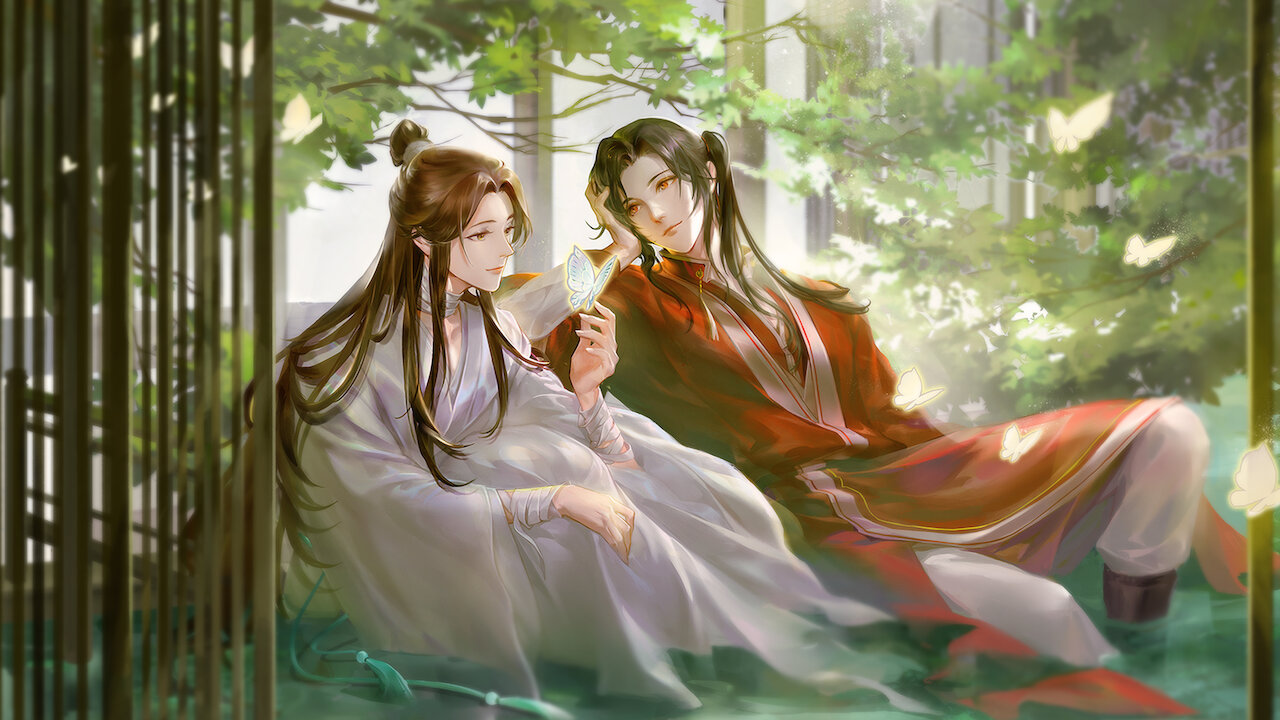
Once upon a time, Xie Lian was the beloved crown prince of a beautiful kingdom, who ascended to godhood in his teens. But then he interfered in mortal affairs, made things worse, and was cast out. He ascended to godhood a second time… and was kicked out again.
And in “Heaven Official’s Blessing: Season 1,” we find out what happens when this unfortunate godling ascends to deityhood for the third time. This donghua series (think anime, but Chinese) based on Mo Xiang Tong Xiu’s novels of the same name, is a slow-burn that mingles romance with a uniquely Chinese brand of high fantasy, where the powerful or virtuous can become deities, but the tormented and tragic may become something else.
Upon his third ascension to godhood, Xie Lian discovers that nothing has really changed – he’s deeply in debt, and none of the other gods like or respect him. The usual way to pay off his debt is by receiving merits from the worship of mortals… except people stopped worshiping him eight hundred years ago. But there is another way – he can investigate a certain mysterious problem on a rural mountain, where seventeen brides have been abducted by a mysterious “ghost groom.”
With the assistance of the sulky, combative Fu Yao and Nan Feng, he goes undercover to find out what is abducting the girls – and ends up being escorted up the mountain by a handsome, mysterious stranger dressed all in red, who turns into a swarm of silver butterflies. But that man was NOT the ghost groom – which leaves Xie Lian to uncover the horror that lives atop the mountain. To make matters worse, the locals are also searching for the ghost groom, which only makes things more complicated when things inevitably go pear-shaped.
After that, Xie Lian decides to set up a shrine to himself in an abandoned shack, with the help of a young man named San Lang, who is very obviously not what he pretends to be. But trouble finds Xie Lian again when someone tries to trick him into going to the Half Moon Pass in the Gobi desert, near the dead city-state of Banyue. Even weirder, the other gods seem to avoid talking about this.
Along with San Lang, Fu Yao and Nan Feng, he sets out to the pass to find out what’s going on there, and ends up encountering a sandstorm, a few dozen merchants… and a cave full of scorpion-snakes. But that’s only the beginning of the undying terrors that still dwell in Banyue, killing anyone unlucky enough to pass through. And soon Xie Lian realizes that someone in Banyue has a very strong connection to him.
I personally like my romance stories with a heavy dose of plot, which makes “Heaven Official’s Blessing” perfectly balanced – even if the slow-blooming romance weren’t part of the story, it would still be a solid fantasy-horror series with gods, ghosts, goblins, zombies, and a really freaky undead face in the ground. The ethereal beauty of the lead characters and their sparkling heavens is a stark contrast to the nightmarish creatures that lurk in the mortal world below.
It’s also a fantasy that feels distinct from its anime cousins – its world and cosmology are uniquely Chinese, drawing heavily from Taoism and other Chinese beliefs. The two supernatural mysteries are pretty well-developed, both horrifying and yet tragic, and the stories occasionally slow down a little for either some mild comic relief (Fu Yao and Nan Feng’s constant fighting) or an ethereal romantic moment between Xie Lian and his mysterious red-clad man of the silver butterflies.
The animation is quite lovely for the most part, with some really beautiful moments standing out in the Puqi Temple or when the red-clad man escorts Xie Lian up the mountain. The only area where it falls down is when CGI is inserted, usually where it’s not needed. It’s very clunky.
Xie Lian is an easy character to like – perpetually unlucky and unpopular, yet unfailingly earnest and kind to everyone around him (as long as they don’t beat up girls). Howard Wang gives him a low-key, soothing kind of voice even when he’s upset. The mysterious Hua Cheng (whose identity is blatantly obvious) makes for a solid love interest, and the cast is rounded out by Fu Yao and Nan Feng, a couple of clashing, abrasive young men who actually do care about the disgraced prince.
“Heaven Official’s Blessing: Season 1” is an animated show that perfectly balances out a slow-growing romance, beautiful animation, and solid fantasy/horror. For those seeking an alternative to anime, this might do the trick.
Right now this particular reviewer is getting his butt kicked by the Youtube algorithm, probably because he puts out videos devoted to science fiction, Asian cinema, cult movies and horror rather than… well, I don’t know what does well in the Youtube algorithm, because I don’t watch it.
And of course, Godzilla movies. He’s fun, dramatic and has luscious hair, and seems like a very nice person. So please support him in whatever way you can!
No, I haven’t finished it, but something struck me when I was considering the excessive largeness of the cast and how it probably could have been pared down to at least half without losing anything.
In addition to the fact that none of the characters are developed very well, and there are way too many of them, they aren’t interesting to me because… they all have the same backstory. They all come from the same place, with the same mission and goals, and for about six-and-a-half thousand years they pretty much do the same things over and over with each other around. That gives their characters a sameness that just isn’t appealing in an ensemble cast.
Let’s compare them to the Guardians of the Galaxy, a similarly obscure team who was a rousing success and instantly beloved instead of… whatever the Eternals are. Each of the Guardians comes with a different backstory – they each have experiences, tragedies and struggles that are unique and distinct, but which bind them together when they do finally find friends. Rocket’s backstory is wildly different from Drax’s, and his experiences logically affect the way he sees the world and interacts with other people.
That’s why the Guardians feel like such well-rounded characters by comparison – each one is different. With the Eternals, all the differences feel very shallow and surface-level, because there’s not really anything in their histories to make them stand apart from each other.
I mean, imagine if every single character in the MCU was some variation of a rich, talented, arrogant man who is badly injured and humbled, and ends up becoming a nobler version of himself who uses his power and influence for good. That’s fine for Tony Stark. Some people complained that Dr. Strange was too similar, but their wheelhouses are far enough apart that it’s tolerable. But if every character came from the same background and experiences as Strange or Stark, it would be dull and none of them would stand out.
That’s why Ikaris and Sersi’s relationship feels so boring, dull and flat. What do these characters see in each other beyond “I’m hot, you’re hot, let’s do it”? It’s one of the worst romantic relationships I’ve ever seen, because neither one has any actual characteristics that could lead someone to find them attractive beyond the purely physical. Yet we’re supposed to believe they were so in love that they got married and spent over six MILLENNIA together.
And that’s not including the fact that many things about the Eternals that don’t make sense if you think about them for half a second. If they’re basically fleshy androids designed for their mission, why do they feel attraction? Why are they given the capacity to disobey and think for themselves, rather than being designed and programmed to simply do what they were designed to do? Why not just design them so they value the Celestials above all other life, and humans simply won’t matter to them outside of their function for the Celestials? That seems a lot more efficient than constantly tricking them and mind-wiping them so they’ll never find out the truth.
And if you could design a perfect artificial life-form, one indistinguishable from an organic being and possessing immense superpowers… why would you DELIBERATELY give them a handicap like deafness?
This movie is just very poorly-made, poorly-conceived, and very dull. Marvel has a reputation for putting out shiny, competent blockbusters, but they’ve been very shaky lately – Shang-Chi was just okay from what I heard, and Black Widow was a trainwreck. The Eternals just has so many elementary things that should have been fixed in the early stages of screenwriting, long before it went into production.
I mean, this is a movie where Kit Harington is one of the most dynamic and engaging characters. Kit Harington. A man who made a career out of making puppy eyes and sad mouths, and nothing else.
I’m kind of fascinated by scandals, and hoaxes, and the like. And one that has drawn me in in recent years is a scandal from perhaps fifteen years ago, when author JT Leroy was outed as being an incredibly elaborate literary hoax.
As a general explanation, JT Leroy was a famous writer of edgy semi-autobiographical fiction, who became extremely famous and beloved by a lot of people. His unique quality was that he was a former child prostitute who had been a drug addict, who had been homeless, who was gay and genderfluid and HIV-positive. He was this sort of fragile, ethereal artist who produced romanticized tales of his past, being sexually abused by men and emotionally and physically abused by his beautiful mother Sarah. Celebrities loved him, he was a bestseller, he was rich and famous, a movie was made from one of his books.
And then it came out – he didn’t actually exist.
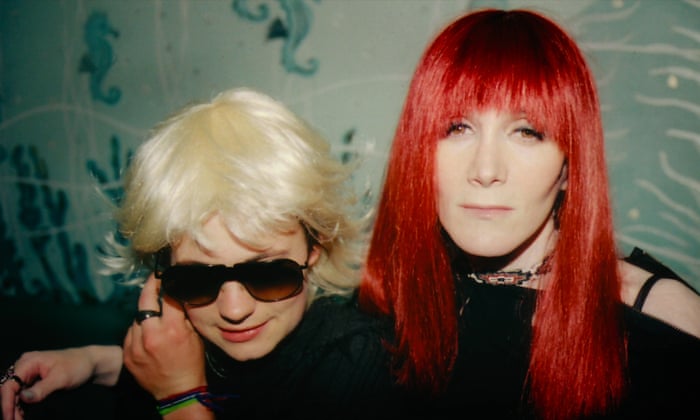
He was a fictionalized persona created by his supposed foster mother (who also faked her own identity by pretending to be a British woman named Emily), Laura Albert, who had a weird habit of calling help lines and pretending to be a boy. The physical presence of JT Leroy was Albert’s boyfriend’s sister Savannah Knoop, who dressed up in androgynous clothes and a bad wig and pretended to be the person in question (Savannah also wrote a memoir about it some years ago, which I recommend).
This is explored a lot morein the documentaries Author: The JT LeRoy Story and The Cult of JT Leroy, both of which I watched recently. These documentaries actually complement each other perfectly, because they tell both sides of the whole hoax. Author is almost exclusively told from the perspective of the hoaxer, Laura Albert, as she tells the whole thing from her perspective and her life story and so on. Cult focuses more on the people who were taken in by it, how they feel and see it. And I don’t mean the customers buying the books – I mean people who thought they knew and had deep, close relationships with JT Leroy.
Author has a big bias. Normally I don’t disbelieve people with stories of abuse, both sexual and physical, and so on. But it becomes very obvious in this documentary that Laura Albert fetishizes child molestation and abuse. She romanticizes it. She wrote literally nothing else in her JT Leroy phase, and it was revealed to be all made up. I don’t feel comfortable believing anything she says about her past that cannot be confirmed by a reliable third-party source.
Remember, this is a woman who literally lied for a living, for a decade. She tries to claim that no, it wasn’t a lie or a hoax, it was “real” and JT Leroy was real to her – but we all know it wasn’t. You literally cannot believe a person like this; you should be skeptical of the things they claim, especially if they try to get your sympathy or argue that their sins and crimes are not that bad.
Always remember: if someone has a motive to lie to you about something, you should question every word that comes from their mouth.
In a way, Cult almost feels like a response to Author. This movie eventually centers on Laura Albert from the perspective of people who met her, including her ex-boyfriend Geoff, who confirmed the hoax after they separated. It’s a lot less flattering – a lot of people in it, including Albert’s psychiatrist, offer their viewpoints on her behavior, and it ranges from “mentally ill” to “she’s just a trained con artist.”
It also deals with the repercussions of the hoax and the lies. Author downplays the actual effects of Albert’s lies, presenting it as not being that bad, or even not being “real” lies at all.
But Cult bluntly presents the effects that those lies had on the many people who admired and followed him. Not the celebrities who latched onto the trendy it-kid of the literary world, but the authors, agents, doctors and fans who spent years conversing with him over the phone and emails, crafting seemingly-deep and emotionally-intimate relationships with him, and sometimes even coaching him through mental crises and suicidal periods. They formed online groups and communities, had readings of his work, and bonded over their love of him.
And it was all a lie – all those people were earnestly devoting their love and energy and time to someone who… wasn’t real. It was just some lady with a fetish for pretending to be a damaged, sexually-abused boy.
It wasn’t just the people who actually “knew” JT Leroy who were hurt. One scene in Cult features LGBTQ teenagers living in a shelter in San Francisco, and many of them are homeless, many have drug addictions, many prostitute themselves, and many have sexually transmitted diseases. I can utterly understand why these people were angry when JT Leroy was revealed as a fake – because their lives are hard and painful and sometimes very short.
And yet this woman used their suffering and their experiences as an “edgy” backstory for her fictional alter ego. It trivializes the reality of what they experience, and that is a terrible thing to do to anyone who is suffering.
For the record, I’m not saying an author can’t represent things they haven’t experienced in their fiction, because I don’t believe anyone should be forced to “stay in their lane” when it comes to writing. Write whatever characters with whatever backstory – do it sensitively and with respect if the experiences are something that others have had, but don’t let people tell you “it’s not your story to tell.”
But that isn’t what Laura Albert did. She basically played pretend with these serious issues, and presented this as reality – and that was a lot of what JT Leroy was. It made him stand out, it made people empathize with him, and it made up his fiction.
I know I’ve spent most of this blog post ranting about Albert and her lies, and how she hurt other people, but I really do recommend watching both Author and Cult. Watch them in that order – get Laura Albert’s side of the story, then flip around the narrative and listen to the thoughts, feelings and experiences of the people she hurt.
It’s a fascinating story, and I really wish someone would write an in-depth, all-the-nuts-and-bolts, every-possible-perspective chronicle of the entire ten-year saga. If you enjoy reading about stranger-than-fiction escapades, it might be fun.
The Thing From Another World is usually dismissed as the “original” version of John Carpenter’s The Thing, and considered to be an inferior adaptation of the original short story. After all, 1950s special effects were simply not up to the task of making a shapeshifting monster, and the direction of most 1950s movies cannot measure up to one of the greatest horror/sci-fi movies of all time.
But despite the carrot monster, I do think this is a good movie seen on its own merits. Not because the story is particularly interesting or unique as 1950s sci-fi goes, but because of the way its characters are presented.
Specifically, the female characters.
The 1950s weren’t the best time for female characters in movies. Not saying they were all bad, because the existence of this movie clearly shows that they weren’t. But there were some extremely misogynistic attitudes in many movies that went unchallenged. These weren’t even hateful in many cases – some of them were just people who couldn’t break out of their mindsets, like in Forbidden Planet or It: The Terror From Beyond Space.
So it’s worth noting that The Thing From Another World has a pretty egalitarian approach to its characters, and treats the women with an impressive level of respect. The most basic level is just the fact that they’re there at this scientific/military outpost, holding important positions. And at no point do they fetch coffee for the menfolk, on the assumption that men will turn to sea foam if they make their own food.
But that isn’t enough to really earn my respect. It’s more that the women and men interact casually as equals – the men don’t treat the women with the casual condescension often found in old movies. In fact, they banter and pal around with the female lead in the same way they would with a male character, including when she teases her male romantic partner.
Speaking of which, the romantic subplot is also refreshing. Rather than a macho hero sweeping a woman off her feet, the two have a cute backstory that involved him falling asleep during a date, and being kind of embarrassed by it, especially since she thinks it’s so funny. It feels much more organic and realistic, and less like a personal fantasy.
Furthermore, the women don’t end up as damsels. Despite the DVD cover, there are no screaming women in peril here… or at least, no more peril than the men are in. There is a woman threatened by the monster at one point, where she is forced to hide behind a flaming mattress, but she isn’t screaming and she actually chose to take this perilous position rather than being transparently corralled into it by the screenwriter so the men can save her.
So while The Thing From Another World isn’t a standout as old sci-fi goes, it does have some qualities that bring it above the herd. It can’t measure up to The Thing, but it’s still worth seeing.
I feel like fantasy author Diana Wynne-Jonesdoesn’t get as much love and attention as she deserves.
Oh, other authors often laud her, like Neil Gaiman, and Studio Ghibli has adapted two of her books into animated movies (one amazing though a loose adaptation, one mediocre). But she’s not a household name despite the charm and imaginativeness of her books, and the movies based on her books are more associated with Studio Ghibli than the original author.
She did experience something of a renaissance several years ago during the Harry Potter craze of the late nineties to late aughts – it was a time when people were hopping on the bandwagon of children’s/young-adult’s fantasy stories, hoping to strike Potter gold. Some of these would-be franchises were good (Artemis Fowl), and some were bleeding-from-the-eyes-bad (G.P. Taylor’s Christian fantasies presented as Potter alternatives).
Diana Wynne-Jones seemed like a natural choice to reprint and promote – she had already written a huge number of fantasy stories, often involving witches and wizards. She was also British, and she had a great deal of the same charm of style and setting that had been presented in Rowling’s books. And she was imaginative – arguably much more so than Rowling – with multiverses, dimensional hopping, twists and even science-fiction woven into the fantasy.
Maybe that’s why she didn’t become as famous as Rowling – her books take more effort to comprehend, and a structure and framework that take more time to comprehend. A school for magic is a little easier to understand than the Chrestomanci universe, which has many different parallel worlds. Or a story based on the ballad of Tam Lin. Or the time-bending antics of A Tale of Time City. Or the plot twists that blow your mind in Archer’s Goon, The Power of Three and Deep Secret.
But obviously, less popular doesn’t mean less good. Jones came up with some wildly clever ideas and plumbed them to their depths, sometimes with clever yet affectionate parodies of the fantasy genre (and many affectionate nods to J.R.R. Tolkien). She was also even better than Rowling at writing twisty mysteries within her fantasy stories.
The Chrestomanci stories are a wonderful series of stories about Christopher Chant, a supremely powerful magician born with nine lives who travels between worlds. He’s not always the center of the stories, because they tend to be focused on the people who become involved with him in these worlds – kids forbidden from using magic, a seemingly ordinary boy whose narcissistic sister is a gifted sorceress, a Romeo and Juliet story, a boy cursed with bad karma, and so on.
Then there are the Magid stories. Sadly, Jones only wrote two of these – Deep Secret and The Merlin Conspiracy, but they are among my favorites. The first one is a bizarre sci-fantasy story set at a scifi/fantasy convention, in which a colorful cast of characters are trying to figure out who the heir of an interstellar empire is. The second is a world-hopping love story between the best character of Deep Secret and a girl from another world, where royalty is magic and a conspiracy may take over magic throughout the multiverse.
I won’t summarize every book she’s written, only say that they involve time travel, Norse gods, a malevolent old woman with supernatural powers, a Goon, a star in a dog’s form, a ghost attempting to solve her own murder, a game diving into everyone’s favorite books, a Celtic-flavored fantasy that I can’t describe without spoiling the twist, and various other things.
So if you like stories with imagination, a dark edge and that clever, slightly quirky Britishness, than her books are a must-read.






 The Forest